

This One Milk Mistake Could Be Unintentionally Ruining Your Coffee Foam
We may receive a commission on purchases made from links.
Take it from this veteran barista: Even more than a dialed-in espresso grind or a perfect pour, the main thing that separates home baristas from the cafe pros is an expert milk-steaming game. Today's milk-frothing tip is for folks who use a home espresso appliance; handheld, submergeable "milk-frother" tools don't apply here. But, for espresso machine users, we're deep-diving into how to nail the perfect coffee foam structure every time: It's all about avoiding over-aeration.
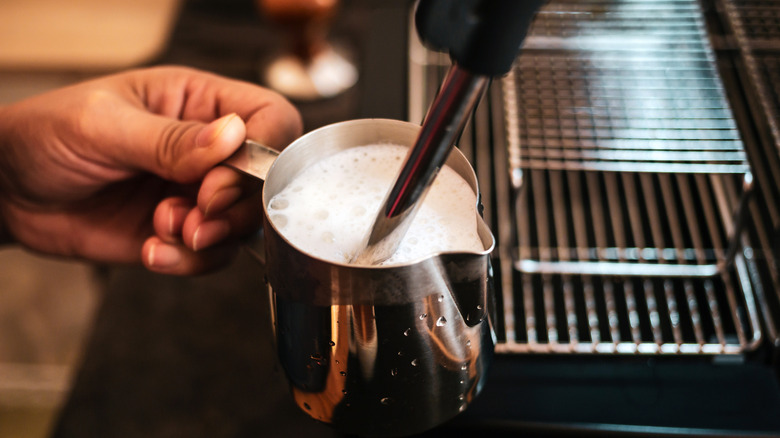
Home espresso appliances are equipped with a dizzying array of features, from grinder to hopper to portafilter and more. For the purpose of creating coffee foam, we're focusing on the steam wand attachment, which is affixed to the right or left extremity of the appliance (including the Ninja Luxe Café Espresso Machine, a favorite tool here at Tasting Table). To use a steam wand, milk gets added into the metal steaming pitcher, then the pitcher is raised up to meet and submerge the wand, and the "on" switch gets flipped — thereby forcing hot, highly-pressurized steam from the wand into the milk. The result is aerated, "stretched" milk which has been pumped full of hot air bubbles — aka coffee foam. But, just as adding air bubbles to the milk is fundamental to creating foam, over-aerating your milk can be just as impactful in a negative way, ruining the structure of your latte or cappuccino. Too much time under the steam wand and milk becomes a clumpy, unusable, amorphous glob that's too thick to work with.
Don't overdo it on the aeration

Stretching milk with an espresso machine's aeration wand is crucial to create stiffness for both latte-art-worthy foam and any espresso drink's structural body. The proper aeration technique when making foam is all about precision. To do it, fill (not overfill) your milk pitcher; add cold milk until just below the base of the pour spout inside the pitcher. This allows adequate room for the steaming and stretching we're about to do. Want to make a bigger latte? Don't just add more milk and hope for the best — grab a larger pitcher.
Next, raise up your milk-filled pitcher to submerge the steam wand, securing that wand inside the crevice of the pitcher's pour spout. This base will help stabilize the wand as you steam, preventing excessive motion and giving you more control over the action. Then, flip on the steam wand, releasing the flow of hot air while keeping the wand submerged at the bottom of the milk. Once the milk expands (aerates) to nearly the top of the pitcher, lower that pitcher so that the steam wand is submerged only in the top ½-inch of the milk. Ideally, the top layer of milk in the streaming pitcher stiffens into foam, while the bottom portion retains a luscious, paint-like consistency. That's a solid visual cue that your milk is steamed correctly.
Plant-based milks are thinner than whole milk, and require slightly longer aeration
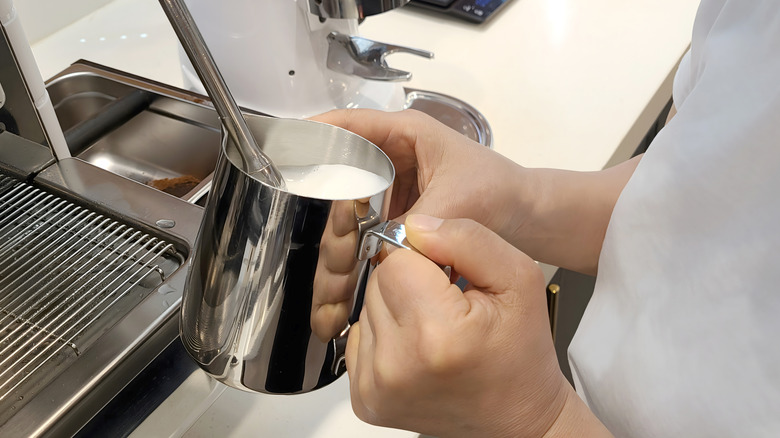
This two-stepped deeper-then-superficial submersion is what creates that top layer of foam — which is where latte art, gibraltar dollops, and a general frothy mouthfeel come from. But, good or bad, coffee foam begins with milk. When frothing milk for lattes and other craft espresso beverages, always start with cold milk. Chilled milk is packed with denser, more tightly-coiled protein structures, which are crucial for forming a stiff structural body.
Keep in mind that some types of milk are easier to steam than others. Plant-based alternative milks (especially soy milk and oat milk) are even easier to over-aerate or scald than whole milk, which yields the thickest, most luscious body. Beyond unpleasant thickness and a gross mouthfeel, over-aerated milk often makes a drink taste bitter or scalded. To adjust your steaming technique for plant-based milks and their thinner structural bodies, "stretch" the milk for slightly longer than you would for whole milk, then shorten the heating step by the same degree. This helps plant milks thicken without scorching. Word to the wise: Give that still-hot steam wand a wipe with a wet washcloth immediately after using it. It's part of regular machine maintenance, and a quick step to avoid clogging.