

The Unique Ingredient That Transforms Your Basic Breakfast Skillet

We may receive a commission on purchases made from links.
A traditional breakfast skillet can come to life in your kitchen in many ways. You may have eggs, bacon, sausage — even a can of diced potatoes or frozen hash browns — that can all be combined to make a satisfying morning meal or midday brunch. From there, anything goes in terms of seasonings and additions, but there's one ingredient that you may be missing from your breakfast skillet. Sauerkraut is the high-fiber, probiotic condiment most beloved as a hot dog topper, and it's an excellent way to level up a breakfast skillet.
Adding sauerkraut to any dish with sausage is a game-changer. The Germans were onto something when they first paired this staple condiment with meats like sausage. Sauerkraut is a naturally fermenting food with a tangy crispness that cuts the richness of high-fat meat. It also adds a crunch to a breakfast skillet containing eggs and potatoes, and it flavors the dish without the addition of extra salt. In fact, traditional sauerkraut is made by simply fermenting cabbage with a salt brine. Most commercially made sauerkraut contains vinegar. You can use either type for a breakfast skillet, depending on your penchant for zest.
To incorporate sauerkraut into a comfort breakfast like this smoked sausage and sauerkraut skillet, you need to drain it properly to eliminate any extra liquid. Use a fine-mesh strainer to first drain the sauerkraut for at least 5 minutes, then use the back of a large wooden spoon to squeeze out any excess moisture. You can also compress the kraut in a cheesecloth.
Tips for a breakfast skillet brunch
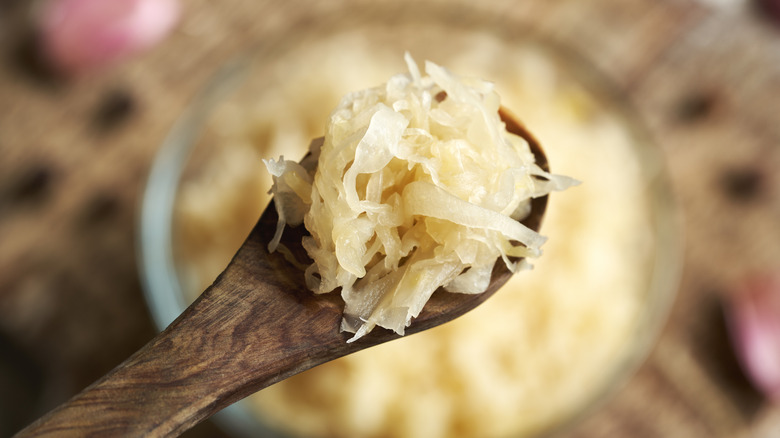
While ensuring your sauerkraut doesn't release too much liquid starts with making it as dry as possible, there are a couple of other ways to keep its signature crunch. Nobody wants a soggy breakfast skillet, so add the kraut to your pan after everything else is cooked through. Cook it for only about 2 to 4 minutes, longer only if you want a little caramelization. A cast-iron skillet is the ideal cookware for this, since it cooks evenly and retains heat. Here's a tip: If you want the maximum benefit of the sauerkraut's probiotics, leave it in the pan for the shortest amount of time possible (only until it warms). Overcooking sauerkraut will deplete it of its good bacteria. If you aren't concerned, you can cook sauerkraut until it becomes golden brown.
Are you preparing your breakfast skillet for a brunch and want some complementary breakfast and brunch recipes? Fruit is a perfect refresher any time of day, and helps to cut the richness of a breakfast skillet with sauerkraut. In contrast to the smoky tang of the kraut, a fresh fruit salad can really hit the palate the right way, but you can also try this oven-roasted fruit recipe for a twist. No brunch is complete without a side of bacon, and this sweet and spicy cowboy bacon will steal the show. Add some indulgence (read: carbs) with delicious drop biscuits, or take one extra step to turn canned cinnamon rolls into dreamy pancakes.