

9 Michelin-Starred Restaurants You Might Want To Think Twice About Eating At

Prestigious accolades like Michelin stars can be both a blessing and a burden to restaurants. Though these honors offer prestige and increase traffic, they also subject businesses to intense pressure and scrutiny. Opinions on these high-end establishments are sometimes polarized, with some diners praising their refined service and culinary artistry and others dismissing them as elitist and exorbitantly priced. So, we have compiled a list of notable Michelin-starred spots from around the world that have received backlash from customers and food critics alike. While acknowledging their selling points, we've highlighted issues like ridiculously small portions, bland dishes, and condescending owners and waitstaff.
As a reminder, stars are typically awarded by Michelin Guide inspectors based on cooking techniques and food quality and balance. One star indicates premium ingredients and standout flavors, while two stars signify elevated, creative items. As for three stars, they represent the pinnacle of the art through timeless, iconic dishes that will always be linked to a chef or a restaurant's legacy. Surprisingly, service itself and wine programs are never taken into consideration, which may explain why certain controversial venues retain their distinctions.
On that note, some acclaimed spots have had a rough few years, with many suffering downgrades or even the complete removal of its stars. Despite still maintaining Michelin recognition, the following venues have drawn surprising negative feedback, so let's examine the shortcomings of nine Michelin-starred restaurants.
Alchemist (Copenhagen, Denmark)
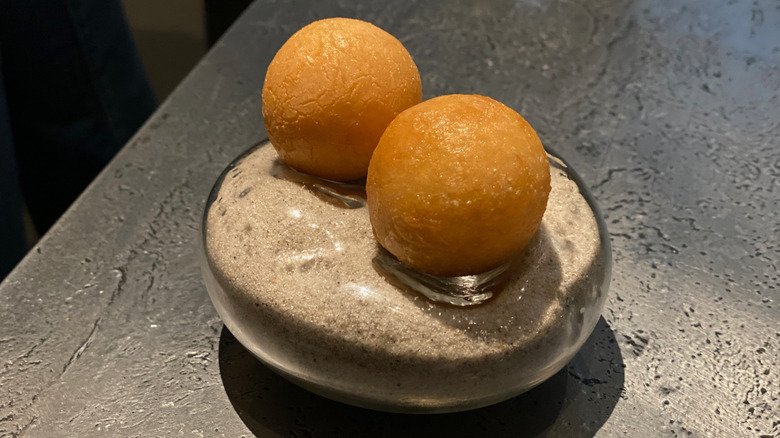
Alchemist, one of the most expensive Michelin-starred restaurants across the globe, provides a holistic culinary experience across different themed areas, where guests get to sample around 50 dishes for four to six hours. It's a lengthy, elaborate artistic show that tackles social, environmental, and scientific topics like organ donation, marine pollution, and child labor. Despite being co-owned by award-winning chef Rasmus Munk and holding two Michelin stars, this establishment still manages to split opinions.
Its clientele has complained about this overpriced, over-the-top theatrical indulgence, deeming it more exhausting than enjoyable. Yes, these presentations are truly memorable, but hungry guests would rather not overspend on disappointing textures and flavors and confusing ingredients. Ultimately, although Alchemist promotes worthy causes, its atmosphere is deemed "disturbing." Besides, isn't it contradictory to serve chicken while addressing unethical meat production and consumption, as many have noted?
Moreover, one customer's viral video in 2025 sparked widespread backlash about the kitchen's use of controversial ingredients, such as edible butterflies, live bugs, lamb brain, and blood-forward desserts. For its part, The Globe and Mail was unenthusiastic about the food and atmosphere, while Esquire pointed out people would much prefer to shell out on palatable dishes rather than be uncomfortably reminded about issues like climate change.
Mugaritz (Errenteria, Spain)
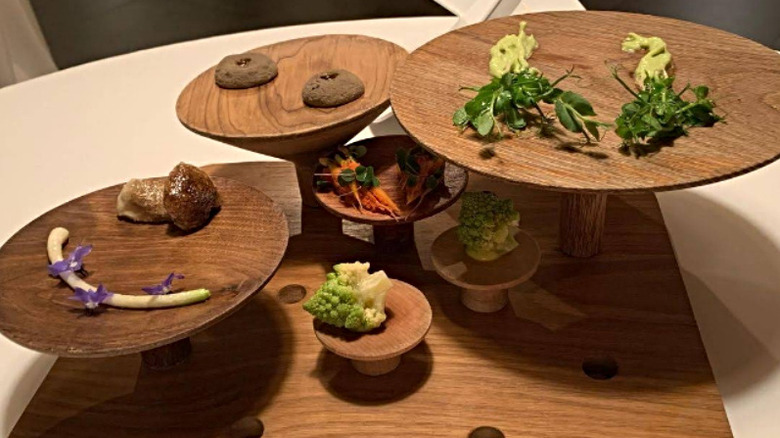
Mugaritz lies in the Basque Country of northern Spain and holds two Michelin stars. It is led by chef and cookbook author Andoni Luis Aduriz, winner of the 2025 Diamond Award for Excellence from the Spanish Luxury Association. Nevertheless, his 30-dish tasting menu may be a stretch for some palates. It's been dubbed by some bewildered customers as an ostentatious show rather than a satisfying meal, and labeled a tourist trap with bland, indigestible dishes and perplexing flavor profiles and textures.
A 2020 review in the Sydney Morning Herald expressed both disgust and fascination, praising the vintage wine program but deeming the food strange and affected. In 2024, the Western Australia Today stated excessive experimentation showed a lack of consideration for customers (and their pockets). Additionally, Gastromondiale previously noted the rushed service and unpleasantness of some textures. Other reviews have lamented the food and overall experience.
However, the most viral criticism of this restaurant came from famous travel vlogger Chloe Jade Meltzer. Her brutal 2024 reviews garnered millions of views as well as global media coverage. Not only did she compare one dish to lip gloss and another to "a soggy cigar," but she also captured a customer who felt cheated and almost got arrested for refusing to pay.
Mirazur (Menton, France)
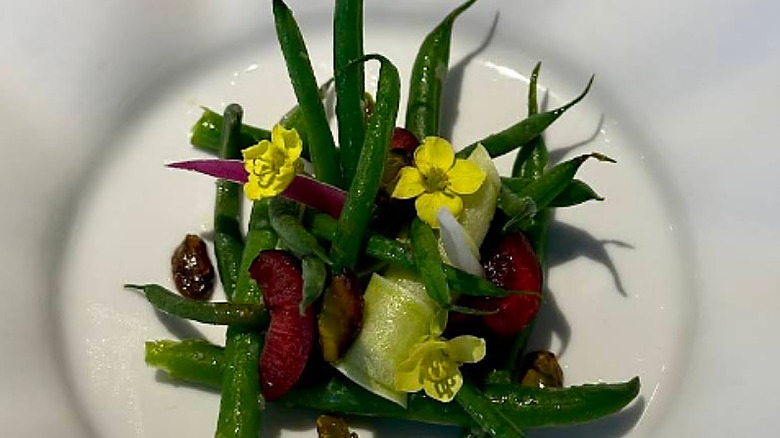
Hailed for its scenic waterfront views of the French Riviera, Mirazur, a Relais and Châteaux partner, promotes sustainable, locally sourced ingredients. It holds three Michelin stars as well as the Passion Dessert distinction. Nonetheless, many guests have complained about the tiny, minimalist bites offered, the lack of flavor depth and innovation, and the mediocre (bordering on neglectful) service. It's rather surprising that an establishment of this caliber has sparked remarks regarding excessively sour or salty dishes as well as underbaked bread, undercooked proteins, soggy and mushy leafy greens, and heavy salad dressings.
Accordingly, Mirazur was named one of the Worst Michelin Three-Star Restaurants in the World for 2022 by 24/7 Wall Street. A 2023 review by the Luxury London criticized the flavor, texture, and even color palette of a few dishes and sides before concluding that such a high price tag definitely warranted a more luxurious experience.
The Fat Duck (Bray, England)
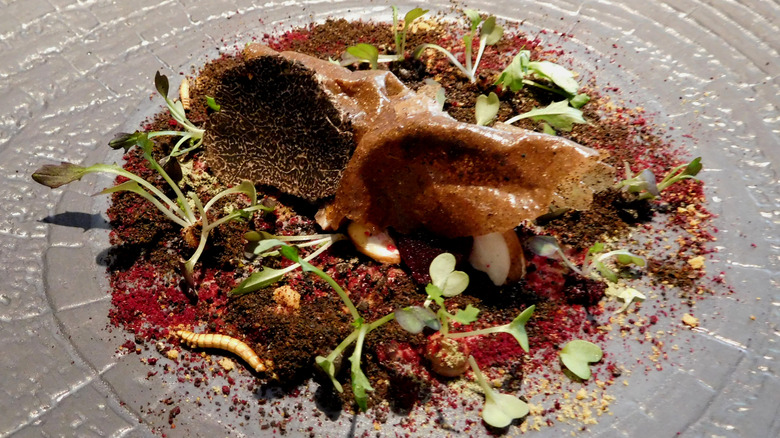
Located an hour from London, The Fat Duck specializes in molecular gastronomy, a technique invented in the 15th century. It's a bucket-list destination led by celebrity chef Heston Blumenthal, an Officer of the Order of the British Empire. Despite boasting three Michelin stars, this venue has been criticized for its confined space, stiff service, and underwhelming flavors and wine pairings. Customers have noted a decline in consistency, suggesting the experience has lost its luster. They've been served cold dishes with average ingredients that prioritize appearance over flavor.
In short, The Fat Duck's lazy and gimmicky storytelling may be in need of a modern touch. Back in 2009, this establishment closed temporarily after a norovirus outbreak. Notable outlets like The Guardian, ABC News, The New York Times, Time, and BBC News reported that diners became ill after consuming shellfish contaminated with sewage. Five years later, sister location Dinner by Heston Blumenthal was also forced to shut down after customers fell ill with food poisoning.
In 2025, Restaurant Online reported that these businesses' parent company was suffering from revenue losses. That same year, The Fat Duck introduced a menu with even smaller portions for guests on weight-loss drugs — Blumenthal apparently uses one himself, according to The Guardian. Gordon Ramsay, for one, was quick to slam that controversial trend.
Ynyshir Restaurant and Rooms (Machynlleth, Wales)
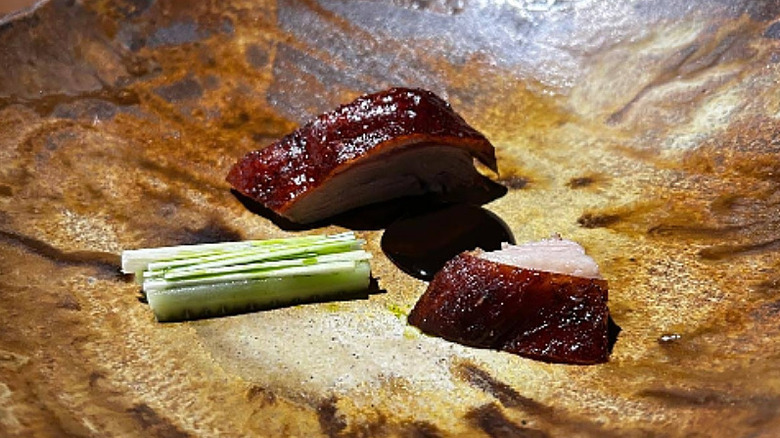
Led by chef-owner Gareth Ward, Ynyshir offers an Asian-influenced tasting menu of about 30 courses. It holds two Michelin stars and was named National Restaurant of the Year in 2022 in 2023.
Nonetheless, this highly coveted establishment has seen its share of customer drama. According to The Guardian, Chef Ward called a client an obscene word in June 2023 because she didn't enjoy his food, and he even went as far as to challenge her husband to a fight in the parking lot. This restaurant also made headlines after being hit with a one-star rating out of five for hygiene in November 2025.
Furthermore, the BBC reported in February 2026 that health inspectors had noted various violations across the venue, such as pest activity, unsanitary floors, poor hand-washing stations, and damaged equipment that posed a contamination hazard. With that in mind, it may not be worth stopping here if you're in Wales.
Gaggan Anand (Bangkok, Thailand)
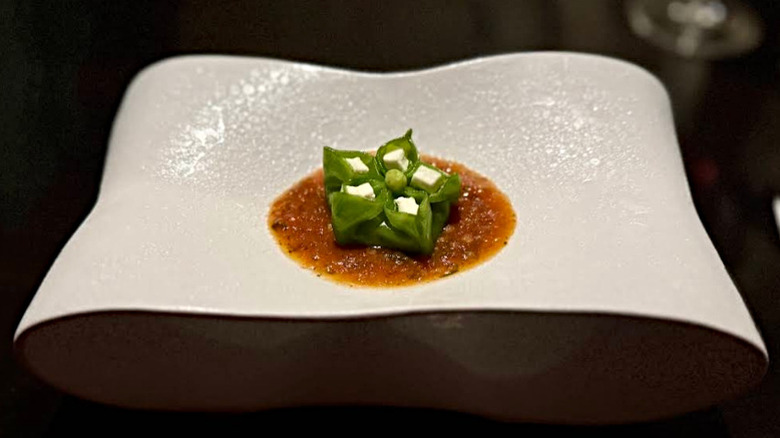
Chef Gaggan Anand owns a namesake establishment in Bangkok's bustling Sukhumvit area where he serves up modern twists on some of the most delicious Indian dishes you should try. It has earned one Michelin star and was voted one of Asia's 50 Best Restaurants for 2023, 2024, and 2025 as well as one of the World's 50 Best Restaurants for 2025. For all these honors, though, this coveted spot has let down many customers, who see it as nothing more than a bar that prioritizes excessive theatrics over tantalizing flavors. Some guests have even left halfway through their meal, disappointed and exhausted by the arrogant, noisy staff, the loud music (which is supposed to be part of the experience), and the overall dismissive service.
For his part, the Sydney Morning Herald's Ben Groundwater slammed both the owner's attitude and the restaurant's faux punk-rock aesthetic in 2025. Indeed, Chef Anand has a reputation for being rather temperamental, boastful, difficult, and patronizing. According to an incident reported by the Hindustan Times in 2026, he threw a customer out just for telling him that she liked his take on Indian cuisine, even though it's not usually to her taste.
Per Se (New York City, NY)
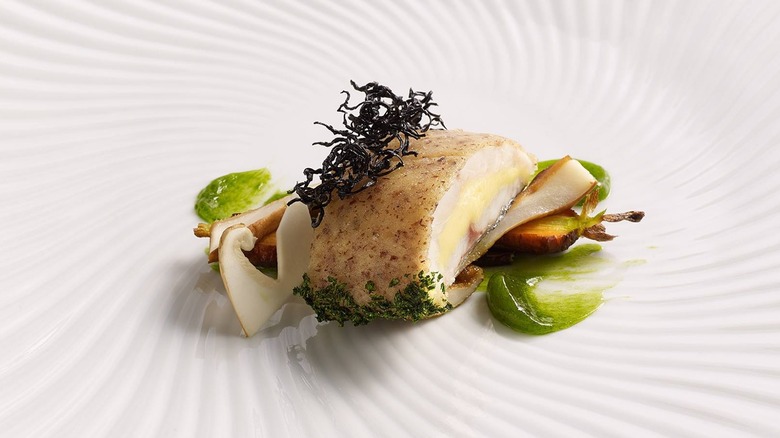
A member of Relais and Châteaux, Per Se is a New American and French restaurant situated at The Shops at Columbus Circle. It offers views of Central Park and daily nine-course chef's tasting and vegetable tasting menus as well as an award-winning wine selection. Moreover, this establishment holds three Michelin stars and is owned by cookbook author Thomas Keller, who has earned multiple awards from the James Beard Foundation. He was also the first male American chef to be appointed as a Knight of the French Legion of Honor.
That said, Per Se isn't immune to negative feedback. Back in 2014, Eater New York already deemed its offerings "tired," highlighting a heavy reliance on surcharges. The most infamous negative review to date was published in 2016 by The New York Times, with the writer forced to issue a public apology afterwards. In 2024, the publication still didn't have high praise for Per Se, finding the dining area as impersonal as a conference room, while criticizing the texture of the custard and the oysters.
Influencers and customers alike have expressed reservations about the establishment too, highlighting the staff's condescension, impatience, and aloofness as well as the rushed service and underwhelming plating. They've also complained about poorly handled dietary preferences, overly salted meats, and insipid desserts. A Redditor was even so displeased with the food they went to Taco Bell afterward. As for famous YouTuber UA Eats, he was generally pleased with the service but wasn't impressed with the view and found the offerings inconsistent and overpriced.
Lazy Bear (San Francisco, CA)
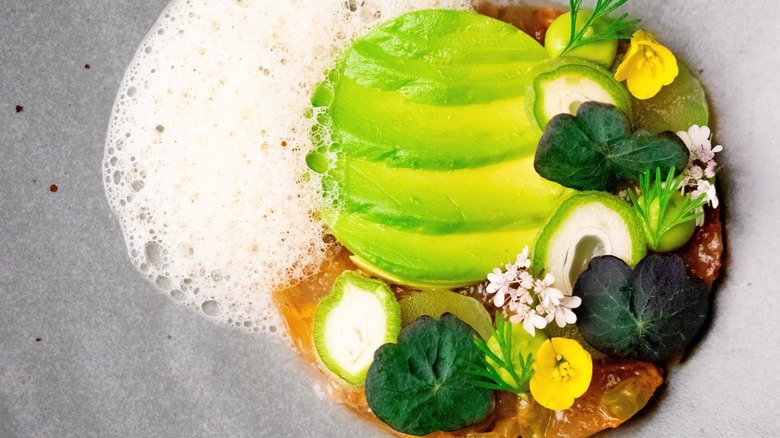
Housed in a mid-century-modern building, Lazy Bear is a stylish, contemporary American restaurant offering seasonal ingredients sourced from the San Francisco Bay Area and an award-winning wine list. Not only does it boast a two-star Michelin rating, but its beverage director, Jacob Brown, was also named a James Beard Foundation finalist in 2025. Nevertheless, this establishment has faced significant backlash.
For instance, some customers have reported long waiting times for their tables (even with prior bookings), discourteous staff, and portions too insignificant, too salty, or too sweet to justify the high cost. Others have noted a disappointing lack of effort on special occasions like birthdays and anniversaries, having only been offered a generic card.
Additionally, in August 2020, Eater San Francisco published a piece by commis chef Selasie Dotse, who claimed she had been regularly subjected to racism at Lazy Bear. "A white chef once pulled me aside when I was casually talking about racism and anti-Blackness with a colleague and asked me to stop talking about it because 'nobody cares about race,'" she wrote. "Out of the five restaurants I have worked at in the Bay, I have been the only Black kitchen staffer at three of them."
Alinea (Chicago, IL)

Led by Chef Grant Achatz, who reinvented peanut butter and jelly and earned the Jean Banchet Award for Culinary Excellence Lifetime Achievement, Alinea is nestled in the Lincoln Park neighborhood. Thanks to its modernist tasting menu, it currently holds two Michelin stars, having lost its third one in 2025. Despite being known as one of the hardest reservations to snag in Chicago, this popular venue has been faulted by online reviewers for its sloppy, dismissive waitstaff and uninspired, excessively seasoned dishes that sometime cause digestive discomfort. A shocked customer once reported being bluntly told that the chef had no interest in her feedback.
En Primeur Club has noted a lack of flavor depth, while both Chicago Magazine and the Chicago Tribune have reported overly salted and sickly sweet items. As for The New York Times, it deemed the caviar extremely dry and compared the lobster to an excessively salted chicken.
Methodology
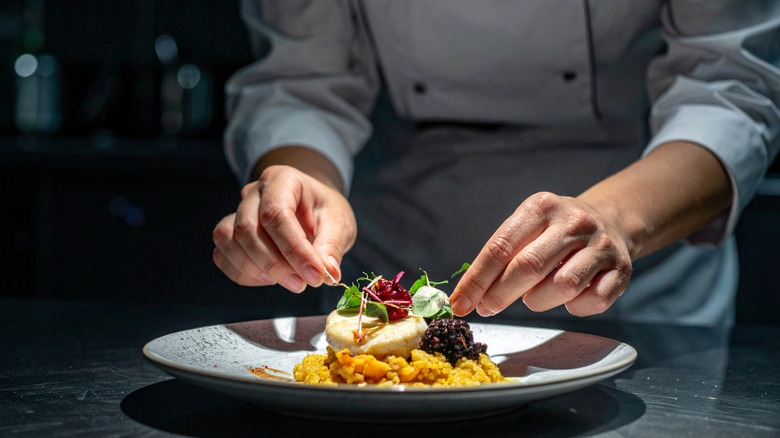
Receiving a Michelin star or any other prestigious honor doesn't make a restaurant immune to negative feedback, so we rounded up a few controversial high-end restaurants from different countries to discuss some of their shortcomings. We narrowed down the list so as to cover various concepts and cuisines and selected the most negative remarks from notable food critics as well as customers on platforms like Google, TripAdvisor, TikTok, and Reddit.
We took into consideration key factors, such as quality inconsistency, unbalanced flavors, hygiene issues, sloppy or rude service, and uninspired dishes. In the interest of fairness, we also highlighted the strengths of these establishments, keeping in mind that acclaimed spots always face higher expectations, even on so-called off days. Ultimately, these places may not be worth the exorbitant cost or the complicated effort to secure reservations, though whether you still plan to visit them despite the divisive reviews is up to you.