

What Happens When You Use All-Purpose Seasoning On Your Barbecue (And Why To Avoid It)
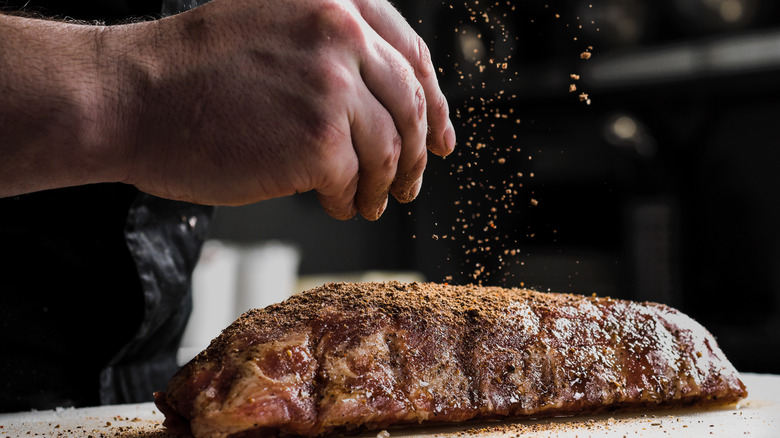
You could be the greatest pitmaster out there, but if you don't know how to season your barbecue, you could end up with a piece of meat that tastes anything but delicious. If that sounds like you, never fear: There's one tip that can absolutely change the flavor of your barbecue once and for all. A common meat-seasoning mistake home chefs often make is opting to use an all-purpose seasoning. While it might seem like a convenient shortcut, this "one-size-fits-all" approach should be avoided. Instead, according to seven-time world barbecue champion Melissa Cookston, you'll find that tailoring your seasoning to each type of meat you're preparing does wonders.
In our exclusive interview with Cookston, she warns against using all-purpose seasoning on your barbecued meat because these rubs are far too general. The problem isn't the individual spices that exist within the all-purpose seasonings — all-purpose seasoning is usually made up of things like salt, pepper, onion powder, garlic powder, paprika, and dried herbs. Instead, it's the ratios that can seriously impact the meat's flavor profile.
You can purchase these rubs at the store, but they often lack the refined quality a homemade barbecue seasoning mix has, which is absolutely necessary, since each type of protein has distinct differences and shouldn't be treated the same. Plus, without the ability to adjust salt and sugar, you risk over-salting your barbecue or burning the sugar during a long smoke. Instead of using an all-purpose seasoning, Cookston recommends being more strategic in choosing your seasonings so that they pair well with the specific type of meat you're making.
Choose flavor over convenience
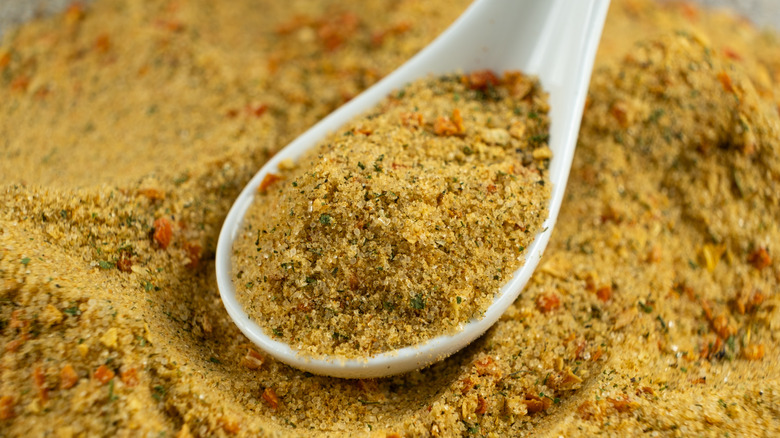
To avoid overpowering flavors and incompatible combinations, making your own seasoning mix to fit the type of protein you're making is the way to go. For example, for pork and chicken, Cookston recommends using a seasoning blend that doesn't have any "forward flavors." "You need a well-balanced flavor, so I try to get a little sweet, a little salty, a little umami, maybe a little heat in the back," she says.
When it comes to seasoning BBQ chicken and pork, brown sugar is a great ingredient to add that hint of sweetness Cookston recommends. Not only does it help enhance flavor, but it also helps your meat form a nice crust and crispy texture. Salty flavors can, of course, come from simple kosher salt, but you can also use other types of salts if you want to take it to the next level, such as celery salt or garlic salt.
Umami can come from all sorts of spices, but among the most popular are garlic and onion powders, which add an excellent layer of depth to your BBQ. And finally, heat can come from a variety of sources, depending on your preferences and your tolerance for spice. Chili powder, cayenne pepper, and red pepper flakes are great for those who prefer extra-spicy (although you don't want one note to be overpowering), while paprika is great for a milder, smokier spice.
Red meats, on the other hand, will accept "a little heavier flavor," Cookston says. Instead of a complex rub, she'll add coarse salt and cracked black pepper. To maximize flavor, be sure to refill your pepper grinder to crack your own pepper. This will give you a much more aromatic experience — and you'll be so glad you chose to season with intention instead of smothering it in a generic all-purpose seasoning.