

8 Unwritten Rules To Know Before Visiting A Brewery
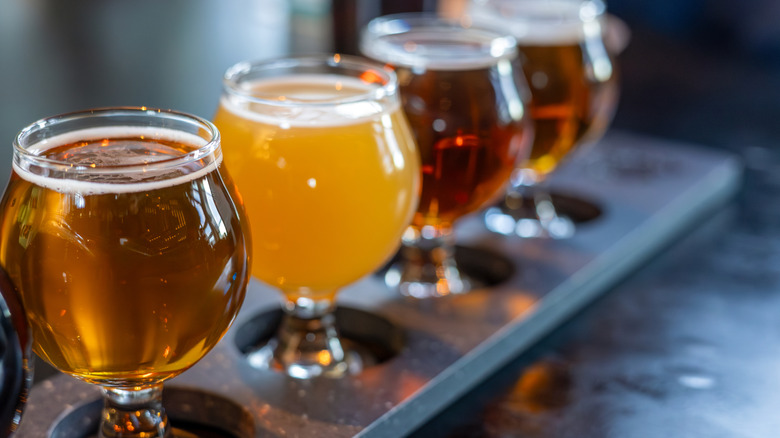
Going to a brewery is usually a pretty casual affair. You might meet up with friends or family, grab a few drinks, and chat about your week. Perhaps you take a brewery tour to learn more about beer production, and maybe you opt for a flight to try a variety of the spot's brews. Although a brewery trip sounds simple enough, that doesn't mean that there aren't any rules you should abide by when you visit a brewery. These rules may not be explicitly written down anywhere, but rather function as general brewery etiquette that you should probably know before you set foot into these spaces.
But don't worry — we're here to explain some of those unwritten rules so you can have a more positive experience the next time you visit a brewery. We've spoken to beer experts, including Jerry Coreas, head brewmaster at Cotton Creek Brewery; Matt Cromwell, brewer at Tannery Bend Beerworks; and Grant Wood, brewmaster at BERO, to learn about the rules that you might not think of (but definitely should) when you go to a brewery. Knowing these rules will help you feel more confident when you're touring a brewery and ordering beer, and better ensure that you don't commit any serious beer faux pas. Just make sure to avoid these brewery red flags as well.
Don't touch any of the production equipment or ingredients before asking first

Going on a tour is one of the most exciting parts of going to a brewery. It's often an add-on experience apart from the basic tasting room space, and it offers an inside look into how that specific brewery makes their beers. Generally, you'll be able to ask questions about the production process, and you may even get to taste some samples that have yet to be bottled or canned. However, it's important to remember that breweries are food production spaces that have to follow strict hygiene and safety standards, so you can't just go touching whatever you see.
When asked about unwritten rules visitors should know about before visiting a brewery, Jerry Coreas of Cotton Creek Brewery told us, "Respect the production space: Avoid touching brewing equipment or ingredients." Of course, there may be instances in which you actually can touch some equipment or ingredients during a brewery tour. But it's very important that you ask ahead of time whether you can touch something. And if the person giving the tour says no, you should respect that response and move on. Otherwise, you could negatively affect the brewing process (and may even get asked to leave the space).
Don't just drink the beer — actually taste it

Sure, some of us like going to breweries because we want to feel that familiar beer buzz. You can enjoy that, of course, but if you're opting for a brewery over a dive bar with cheap domestic beer, you should probably actually care about what you're drinking. "Don't ever ask for 'whatever's strongest," says Matt Cromwell of Tannery Bend Beerworks. "And if you're doing a tasting, actually taste [the beer] ... Breweries put enormous craft into every style, not just high-ABV offerings."
If you're not sure what to order, you can always tell the bartender what you usually like to drink or what flavors you like in beer, and they can direct you toward the right selection. Alternatively, you can ask what the staff is into to give you a better idea of which brew you should choose. And, of course, you should definitely take advantage of flight offerings if you really want to get a good sense of a specific brewery's style. "Tasting flights are meant to help you explore, so take your time, ask questions, and engage with the beer," suggests Cromwell. "You'll get a much better pour, a better conversation, and a much better experience than slamming a flight like shots."
Branch out and try something new
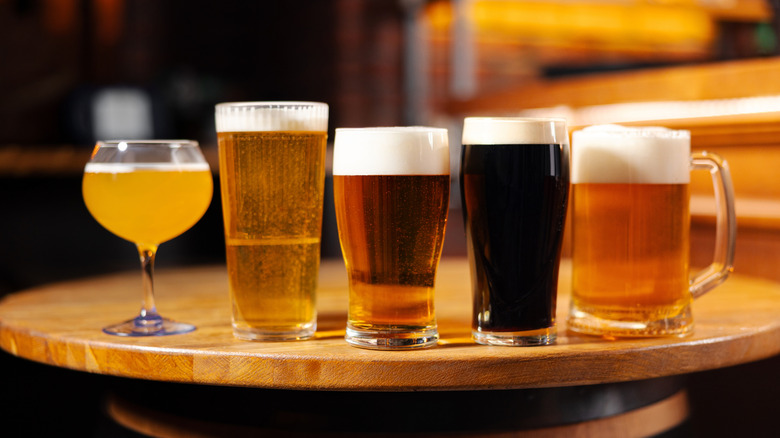
If you don't know a ton about beer — which is probably true of most brewery-goers — then it may be tempting to order the same style of beer you usually go for. Perhaps you like the lighter, more refreshing flavors of a light lager, or maybe you already know you love the bitterness of a good IPA. But going to a brewery is an excellent opportunity to try something that you otherwise wouldn't. That's especially true if you're ordering a flight. Since you're only getting a small pour of each beer, you can really experiment with different styles and flavor profiles.
This is one of Jerry Coreas' brewery rules: "Explore the menu," he encourages brewery visitors. "Try a wide variety of brews rather than sticking only to what you know." Of course, it helps to know a bit about various styles before you head to a brewery, which is why we created this guide to 20 different types of beer. Read up on these varieties, and you'll have a better idea of what you may want to try out the next time you go to a brewery.
Don't let kids and pets wander around

While you probably wouldn't take your kids to a bar, breweries are often framed as being rather family-friendly spaces. It's not unusual for people to bring their kids along with them. And if there happens to be some outdoor space at the brewery, dogs might be welcome, too. If the brewery allows you to bring your kids and pets with you, then you should absolutely take them. However, it's your responsibility to make sure you know where they are at all times. This, according to Matt Cromwell, is an important unwritten brewery rule to follow.
"We genuinely love seeing your kids and your dogs. They make the taproom feel like a community," says Cromwell. "But a brewery is an active industrial environment, and unsupervised little ones or off-leash pups near tanks, pumps, and heavy equipment is a real safety hazard."
Cromwell adds that at Tannery Bend Beerworks, he and his team had to actively keep young children away from fermentation tanks, and they've had similar issues with dogs. "Keep the kids close and the dogs leashed," he advises, "because the last thing any of us wants is an accident that could have been avoided."
Even beyond causing accidents, children and animals can be loud and cause disruptions that may be annoying to other customers. Keep that in mind, and consider leaving if your child won't stop screaming or your dog keeps jumping on other guests.
Don't compare the beer you're trying to beers you've had from other producers
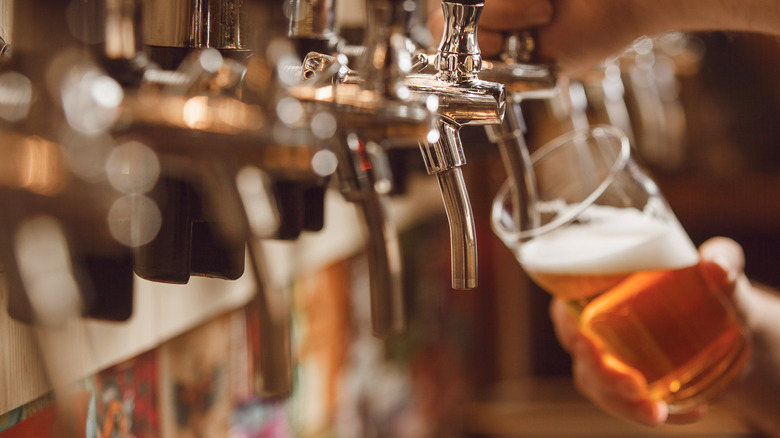
We all have our favorite beers from our favorite breweries, and it's only natural to compare similar types of beer to one another. But if you want to make friends with the staff at a brewery, it's probably in your best interest not to compare the beer you're drinking with beers from other producers.
According to Grant Wood of BERO, a good rule to follow when you're visiting a brewery is to avoid "comparing the brewery's beer to other beers you like and complaining out loud that it doesn't compare favorably." We don't have to tell you that this is a pretty rude move. It's not like the staff can tweak the beer once it's already in your glass, so it's kind of a pointless statement. Therefore, you should learn to keep your thoughts to yourself or to tell your friends instead of the staff. "First, it's your opinion," says Wood, "and second, enjoy the beer on its own merits." If you taste with a more open mind, you might find that you can actually enjoy a wider range of flavors and styles than you previously thought possible.
Understand differences between quality and preference

At some breweries, you may get the opportunity to speak with staff about your thoughts on certain beers you try there. Of course, if you're at a busy brewery taproom, you may just grab your beer and go, but in a more intimate setting, it's always a good idea to learn how to talk to the beer professionals on the other side of the bar. According to Jerry Coreas, you can definitely provide constructive feedback at a brewery. In fact, some breweries may specifically enjoy hearing feedback from their customers. But that doesn't mean bashing a beer just because its flavor profile is different from what you tend to like.
"Understand the difference between 'I don't like it' (personal preference) and 'It's not good' (a quality issue)," says Coreas. There are plenty of beer faults that occur that can make a beer taste bad. These are technical faults where something went wrong during the beer-making process, resulting in a flawed brew. But if you choose an IPA and then complain about how bitter the beer is, you're not really talking about a flaw — you're just describing how a beer doesn't match up to your palate. Expressing that kind of opinion can come across as impolite and unhelpful, so you may just want to keep those thoughts to yourself.
Don't be a beer snob

The wine world has a reputation as being somewhat snobby, which is what turns a lot of people off the beverage. They think that they have to know a ton about wine to enjoy a bottle, which just isn't the case. While the beer industry may seem more casual and laid-back, according to Matt Cromwell, gatekeeping is definitely a thing in the beer world, too. It's great if you know a lot about beer, and it's totally fine to pose questions that a basic beer drinker might not think to ask. But ultimately, it's a good idea to try to avoid snobbery so you're a bit more approachable as a fellow drinker.
"Don't be the person who scoffs at someone's pint because it's not 'serious' enough," says Cromwell. "Whether someone is on their first beer ever or their thousandth craft pour, everyone deserves to enjoy what they love without judgment or condescension." You don't like it when others judge you, right? Then, don't do it to others at a brewery, even if they have different tastes from you. Per Cromwell, you should "drink what makes you happy, let others do the same, make a friend, and leave the snobbery at the door."
Don't tell the staff what kinds of beer they should have in their lineup

"You should make a sour!" you exclaim, hoping that the brewery you're at will roll out your favorite style of beer. It may seem like a harmless comment, but it's one that you're better off not making if you don't want to earn an eye roll from the staff member you're talking to. According to Matt Cromwell, you probably shouldn't be telling brewery owners, brewers, or employees what beers should be in their lineup.
"Don't tell the staff what styles they should be making," instructs Cromwell. "Brewers choose their lineup carefully and intentionally." He says that there's a lot to consider for each and every beer that ends up on the menu. The staff has to think about the kinds of equipment they have access to, where they're going to get the ingredients they need to make specific styles, and what styles are financially viable for them, among other considerations. In fact, they've probably already thought about making the style of beer you're suggesting they make — and there's likely an excellent reason why they're not making it.
The good news is that there's a ton of unique breweries in the U.S., so there's definitely a brewery out there that specializes in your favorite styles. Seek out the ones that are making the kinds of beers you love, and accept that others have their own preferences and specialties.