

Why You May Want To Skip Epsom Salt On Your Basil
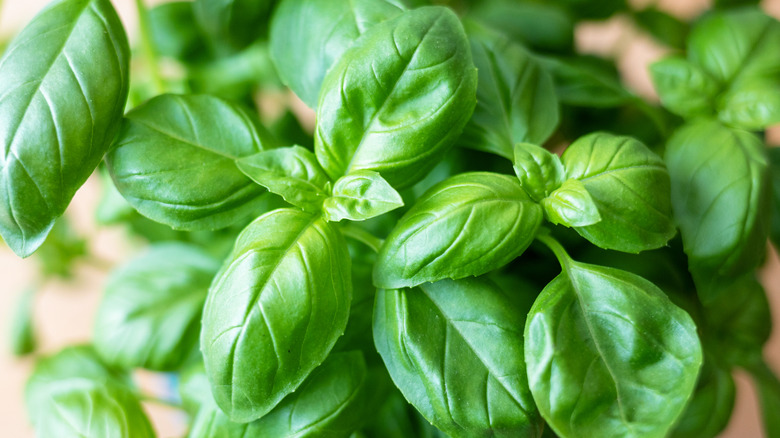
Some gardeners, especially those of us who prefer avoiding potentially dangerous chemicals, often look to inexpensive household products that can serve a dual purpose in the garden. A quick Google search reveals plenty of recommendations for using Epsom salt as a fertilizer. But, as is the case when using things like baking soda to control weeds or coffee grounds to improve soil quality, it's always best to err on the side of caution, because more is not always better. And there seems to be a lot of contradictory information on the benefits of Epsom salt in the garden.
Epsom salt, also known as magnesium sulfate, contains magnesium and sulfur — important macronutrients necessary for plants to thrive. Magnesium is crucial for producing chlorophyll, and sulfur aids in protein production. However, unless you are growing basil on a large scale in soil that has been depleted of magnesium over time, you probably won't need to add Epsom salt to your plants.
A lack of magnesium in basil can be misdiagnosed as a micronutrient deficiency, so adding Epsom salt will not fix the problem if that's the case. Even worse, if you add too much Epsom salt, you might cause magnesium toxicity and prevent your basil from absorbing calcium, as it competes with magnesium for uptake by the plant. Also, spraying the plants with an Epsom salt solution can cause leaf scorch, and nobody wants that. To be safe, have your garden soil tested so you know if it needs any minerals and which they are.
Easy ways to keep your basil plants thriving
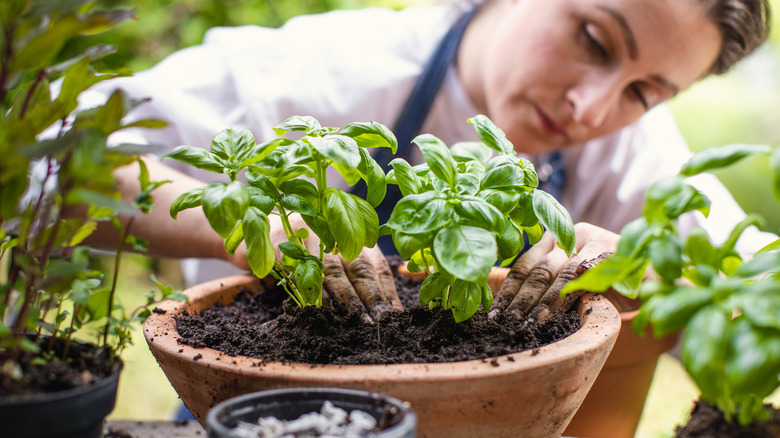
Basil is a very easy herb to grow that belongs in every beginner's garden. It sprouts quickly, and the plants can live in pots on a sunny windowsill or on the balcony. Once they are established, there are many ways to keep your basil plants healthy and growing without needing to add anything.
If you're growing in containers, chances are the potting mix you're using already has all the nutrients you need to grow basil year-round. Make sure you're not stunting the growth of your basil plant by using the wrong size container. Maintain the right temperature and humidity levels if growing indoors, and water only as needed to prevent the roots from rotting and encourage fungal diseases.
A cool trick to keep your potted basil healthy throughout the year is to refresh the soil periodically. As the nutrients get depleted, fresh potting mix will add back the nutrients the plants need, perhaps amended with a bit of compost. In any case, if you decide to try adding Epsom salt, it's recommended you use no more than 1 teaspoon for a 3-gallon pot, and if growing in the ground, add no more than a sprinkle. Plant your basil near your tomatoes, too, as they are excellent companions not only on your plate but also in the garden.