

Your Kitchen Is Probably Hiding Grease In These Spots Everyone Overlooks
We may receive a commission on purchases made from links.
As you cook, aerosolized cooking fats, oils, and smoke are released into the air. Particles will eventually land on surfaces, covering them with a sticky film that can be very hard to get off. Removing kitchen grease will become more difficult the longer you let it sit, making it even more important to give surfaces a deep clean every week. You should also get in the habit of checking all of the hidden places you might not think to clean in your kitchen for built-up grease and grime.
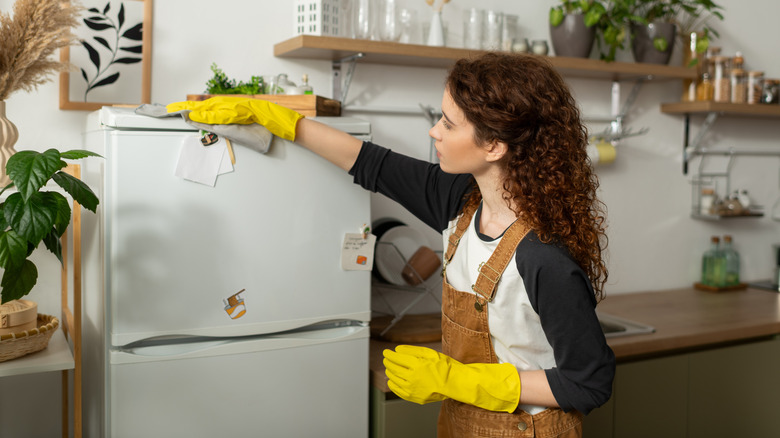
The most commonly overlooked spots in kitchens where grease loves to hide are the tops of the refrigerator and cabinets, the exterior of your oven door, and on kitchen walls behind appliances. When cleaning, it's always best to start high and work your way down to keep dust from settling on already cleaned areas. To remove grease from the top of the fridge, start by wiping away dust and dirt with a clean, dry cloth or towel. Then spray the surface with a store-bought kitchen degreaser or make your own by mixing Dawn dish soap or white vinegar with warm water in a spray bottle. Spray small sections at a time, letting the solution sit for a few minutes on the surface to soften the grease before wiping it away with a clean sponge or cloth. When finished, wipe the top with a damp, clean cloth and then dry the surface thoroughly. To minimize future cleaning, keep the top of your fridge clear to prevent grease from settling on pots, pans, and other items you may have been storing up there.
Cleaning grease from kitchen cabinets, walls, and oven doors
You can use an easy, three-step cleaning method to reduce build up on your kitchen cabinets for months. Start by cleaning the tops of the cabinets via the same method you used to clean the top of your fridge. After degreasing, place sheets of parchment paper on top of the kitchen cabinets (and refrigerator) to trap grease. Each week when you clean, you'll just need to remove the pieces of parchment paper and throw them away, then replace them with new sheets.
Next, move on to clean your kitchen walls. Start by using a long-handled mop like the CHOMP extendable wall cleaner to remove dust. To remove grease from your kitchen walls, spray them with a combination of white vinegar or Dawn dish soap and warm water. Wipe away grease with a soft sponge or cloth, using circular motions and working your way down. When you're finished, wipe away the cleaning residue with a damp towel and then dry the walls completely to prevent mold growth.
Before cleaning your oven door, check your manual to see what products are recommended. There are many deep-cleaning products that bring crusty, greasy ovens back to life, but you don't want to accidentally scratch the glass or stain or damage the frame by using the wrong one. For an all-natural solution, make a paste of baking soda and water. You can also safely use Scrub Daddy Power Paste on stainless steel, ceramic, and glass. Use a few dabs of the paste along with a non-abrasive sponge or microfiber cloth to get rid of caked on grease quickly. Finish by wiping away all residue with a damp cloth and drying the door thoroughly.