

Changing Up Kitchen Wallpaper? This Common Cleaner Makes The Peeling Off Process Painless
If you inherited kitchen wallpaper from a previous homeowner or have just grown tired of the pattern you picked out years ago, you aren't stuck with it forever. Removing wallpaper can be an arduous task, but a simple household cleaner can make it far less painful. Windex can help you get even the most stubborn wallpaper residue off of your kitchen walls — but there is one caveat: It has to be Original Windex, which contains ammonia.
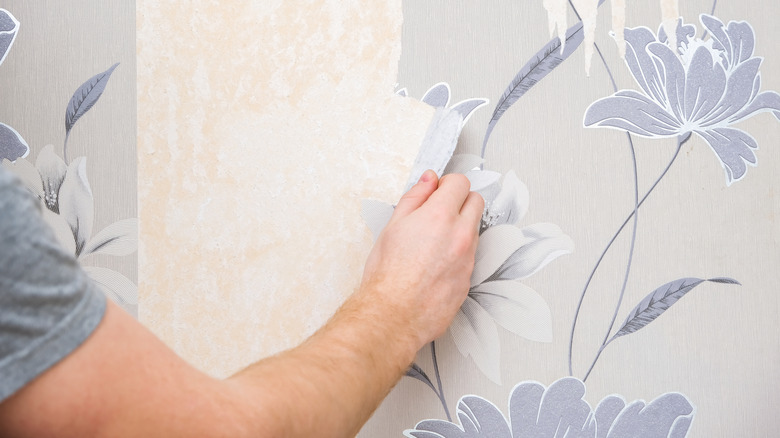
Windex is an unexpected household cleaner that can degrease your kitchen and dissolve wallpaper glue and residue. That's because the ammonia in Original Windex is a solvent that breaks down the adhesive properties of glue in wallpaper, allowing you to wipe it off the wall easily. Start by removing as much of the upper layer of wallpaper as you can with your hands and a plastic paint scraper. Then wet the remaining paper with very hot water and mild dish soap and use a scrub brush to get off stubborn residue.
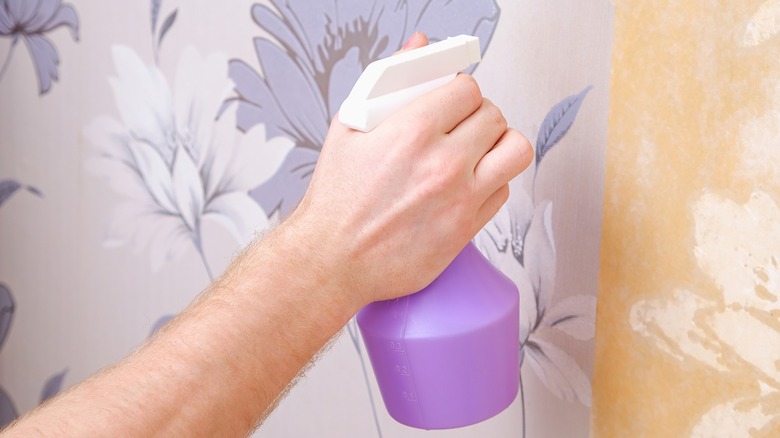
Finally, for any gooey, sticky areas that remain, grab a bottle of Windex Original Glass Cleaner, which contains ammonia. Use masking tape or painting tape to secure a towel in place over areas with gooey wallpaper glue residue. Then spray the towel with enough Windex that it becomes very damp or saturated, ensuring the wet cloth is firmly pressed against the areas with residue. Leave it there for at least two hours, resoaking it if you notice that it is drying out. When you remove it, you should be able to wipe away the sticky wallpaper residue or scrape it off with a plastic putty knife.
Follow up by cleaning the wall so it's ready to paint or apply new wallpaper
Once you have completely removed all traces of the old wallpaper, you'll want to give your wall a deep clean. Use a sponge, mild dish soap, and warm water to get rid of any remaining grease or goo, and remove all traces of Windex from the wall. This will prepare it for your next step: either repainting the wall, or applying new wallpaper. To decide between paint and wallpaper, consider your budget, the amount of time you have, your future plans for your home, and your overall aesthetic goals.
Painting is a quick, affordable way to revamp your kitchen, and it can be retouched or changed easily if you decide you want a different look later. You can even use stencils to create patterns on an accent wall. If you plan on selling your home in the future, paint will be easier for a new homeowner to change if they want to. Whether you're color drenching your kitchen for bold impact, or painting a single accent wall, opt for a high-quality satin finish paint that resists food and grease stains and is easy to clean.
Wallpapering your kitchen is a durable, versatile option that allows you to add a touch of luxury and elegance to your kitchen, or commit to a bold, dramatic makeover. Quality wallpaper that is heat- and water-resistant, can be cleaned easily, and may last up to 15 years. It can also hide wall imperfections and revamp an otherwise boring kitchen. The best types of wallpaper to use in your kitchen are vinyl-based options, whether they are vinyl-coated wallpaper or vinyl peel-and-stick products.