

You'll Know You Crafted The Perfect Paloma If It Tastes Like This
We may receive a commission on purchases made from links.
Craving a paloma? You're in good company. The paloma is the national drink of Mexico, surpassing even the margarita in popularity. Happily for eager sippers, this simple, refreshing cocktail is wicked easy to make — no shaker required.
A classic Mexican Paloma is a two-part highball with tequila and fizzy grapefruit soda, plus a squeeze of lime juice and a pinch of salt. Any grapefruit soda offering will get the job done (such as this organic Pink Grapefruit Italian soda by Whole Foods Market, currently $4.99 for a four-pack on Amazon). If you happen to live near a specialty Hispanic grocery store, snag a bottle of Jarritos grapefruit soda for the best paloma flavor. Alternatively, other mixologists prepare their palomas using fresh grapefruit juice and soda water, plus a splash of simple syrup or agave nectar to capture the soda's sweetness.
Ultimately, a paloma made by any means should still taste like (you guessed it) a paloma — which is tart, subtly sweet, a touch bitter, and above all, grapefruit dominant. The grassiness of the tequila counterbalances that ultra-bright citrus fruit with a pronounced vegetal tone, the hallmark of this distinctive sipper. Palomas should be tart and refreshing, but never too sweet, leaning toward dryness. Pro tip: Take a sip. If the taste is too sweet, squeeze in some extra lime juice. Too tequila-forward? Just wait for the ice to melt; a little dilution can go a long way.
Refreshing palomas should be tart, vegetal, and more dry than sweet
Achieving this balance also means using a quality tequila that holds up on its own. Especially in such a stripped-down cocktail, every ingredient matters. There's no need to bust out your top-self sipping tequila here, but opt for a mid-priced, quality offering such as Espolòn Blanco or Jose Cuervo Silver (both of which are made from Blue Weber agave). It's worth noting that some mixologists prefer to craft their palomas using aged reposado tequila (as we did in this zesty paloma recipe), which lends both a bolder taste and a dark golden hue to the cocktail. However, unaged blanco tequila is customary for making a paloma, and allows the grapefruit to shine unobstructed. This clear liquor also yields the cocktail's signature pink color.
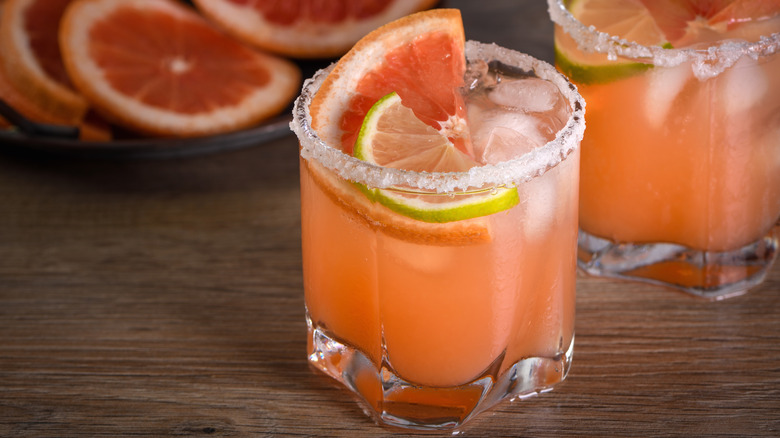
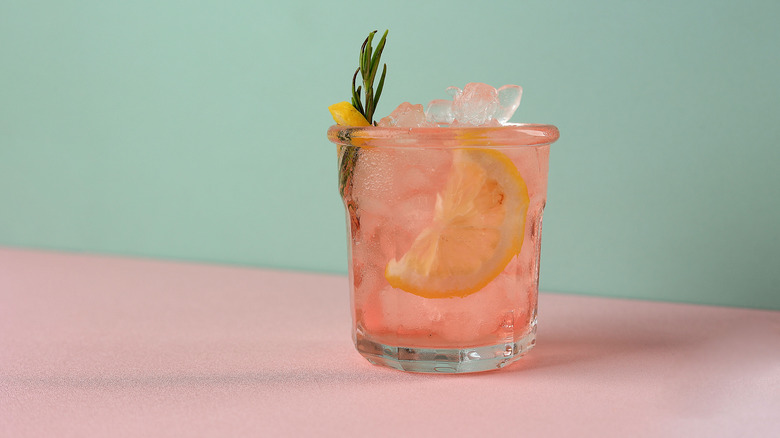
To assemble a paloma, the tequila, lime juice, salt, and simple syrup (if using fresh grapefruit juice) are stirred together in the bottom of a Collins glass. Then, the glass is filled with ice, and the grapefruit soda (or fresh grapefruit juice and soda water) is poured on top to the brim. Finish with a lime or grapefruit wheel perched on the rim. Some bartenders also rim the glass with salt or Tajìn, neither of which is customary but both taste great. Here at Tasting Table, we even like to infuse our palomas with fresh herbs such as rosemary or thyme. The herbaceous dimensionality complements the bright tartness of the cocktail's grapefruit base.