

15 Tips For Growing Perfect Peppers
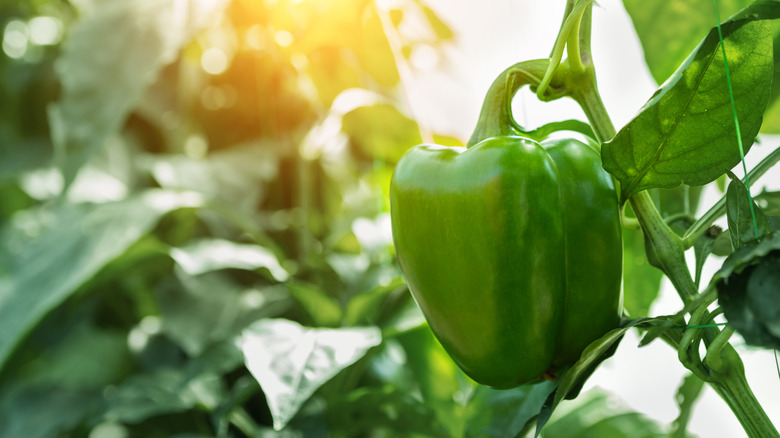
Growing perfect peppers doesn't happen by accident. It requires knowing exactly how to meet their requirements and support growth. This is especially important for those who live in a temperate climate as peppers are native to the more tropical temperatures of the Americas. Peppers are one of those plants that do need specific care, but without anything too technical or complicated to worry about. Once you're comfortable with the right steps, you can easily grow healthy peppers year after year. Whether you enjoy the versatility of a bell pepper, love a jalapeño kick in your meals, or can handle the fire of a habanero, this list is for you.
I've been growing and selling peppers of different varieties for many years now. Being based in the U.K., I also know how to navigate growing a tropical plant when the weather isn't playing ball. This allows me to separate gardening noise from the experience-backed tips that actually make a difference. With peppers having a long growing season, this matters. You don't want to spend months of time and energy on what can ultimately be a bad harvest. By the end here, you'll have the confidence to grow healthy plants that produce beautifully tasting peppers.
Get started as early as possible
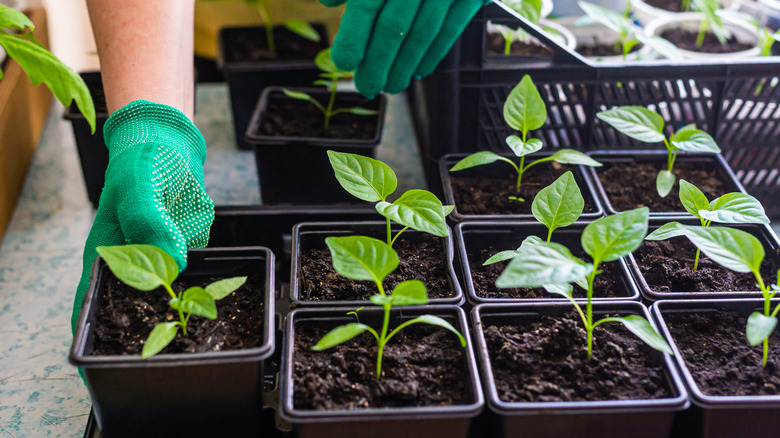
If you are growing from seed, peppers are one of the few great plants you can get started in late winter. Anywhere up until late April should still give you a harvest, but it can depend on where you live. It's difficult to go too early with peppers as they are slow growers. If you are only growing a handful, you can simply keep your seedlings on a sunny windowsill for as long as required. It's highly unlikely they will outgrow their space before the weather turns warm. The downside to starting too late is that you may never get a harvest.
For most gardeners who live in a temperate climate, peppers are technically perennials but are practically annuals. That's because, while they can live for several years, the plant will be killed by a frost. So, unless you want to nurse your pepper plant indoors all winter, a missed harvest means all your work has gone to waste. If it has gotten to late April and you've not sown your seeds, it would be better to look to buy a young plant instead of growing your own.
Time and warmth are needed for germination
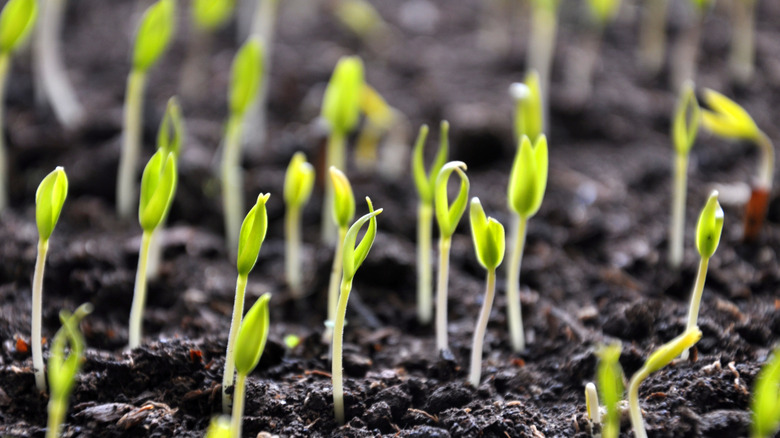
A common misconception for beginner gardeners is that all seeds need light to germinate. What's fascinating is that some of the most sun-hungry plants can be germinated in the dark. Peppers fall into this category. While light is not required, time and warmth are. Germination is going to be most effective when the soil temperature is in the ballpark of 80 to 90 degrees Fahrenheit; however, I've found success from temperatures a little lower than that.
Windowsills can be great for seedlings, but they aren't always ideal for seeds, as temperatures can fluctuate. If you feel as though consistent heat will be an issue, a heated propagator can be useful. In my experience, any heated room in your home will give you high germination rates. During this time, you need to be patient, as germination can take up to three weeks. I usually aim to put around two to three seeds per cell to ensure each one generates at least one seedling. Once you provide the heat and moisture, commit to the waiting game.
Keep soil consistently moist
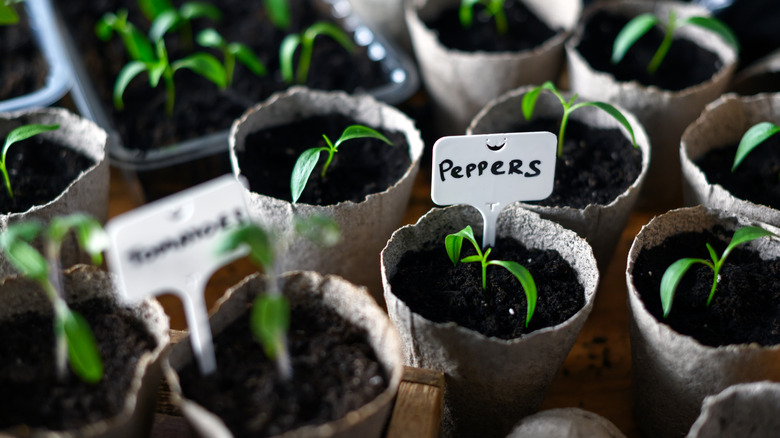
When it comes to watering peppers, use the same method for seeds as you do for established plants. You want your soil to be moist, but not overly wet. That essentially means it's always damp to the touch, but if you gently squeeze it in your hand, no water drips out. You may assume that means you need to give the plant small and frequent waterings, but that may only wet the soil surface.
Instead, you want to give your plant a deep watering every time the soil starts looking a little dry. There is no set time to do this. In the height of summer, a potted pepper may need a deep watering twice a day. A pepper planted in the ground during a rainy and mild period may not need watering at all until the weather turns. Your watering decisions should always be driven by the moisture in the soil. If you push your finger into the soil and it feels dry about 2 inches below the surface, it's ready to be watered. This may sound labor-intensive to keep on top of, but it isn't. Quickly, you'll get into a routine and gain a feel for when your peppers need watering.
Use healthy soil for healthy growth
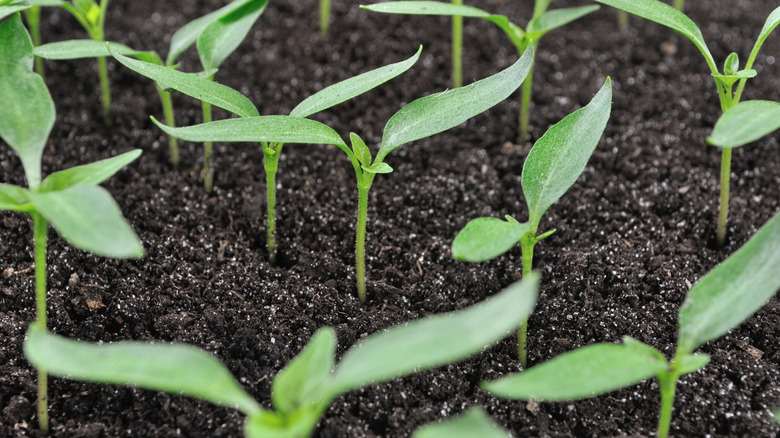
If you're growing any type of fruit or veg, it's best to assume that it needs well-draining soil unless told otherwise. This means that excess water can pass through the soil and either drain out of the bottom or sink through deeper soil. In pots, this is a little easier to control. You want to ensure there are drainage holes in the bottom for excess moisture. Peppers will thrive best when planted in the ground, but you need to be extra careful here.
For example, you may plant your pepper with a big handful of high-quality compost. However, if the soil below is compacted and clay-based, the plant may be effectively sitting in an almost watertight bowl. If in doubt, add a bit more compost a little deeper to ensure water isn't pooling beneath the surface. Compost is required as it's rich in organic matter. This will give it a high level of natural nutrients, but it will also hold on to any additional nutrients you feed it over time.
Utilize extended cold hardening
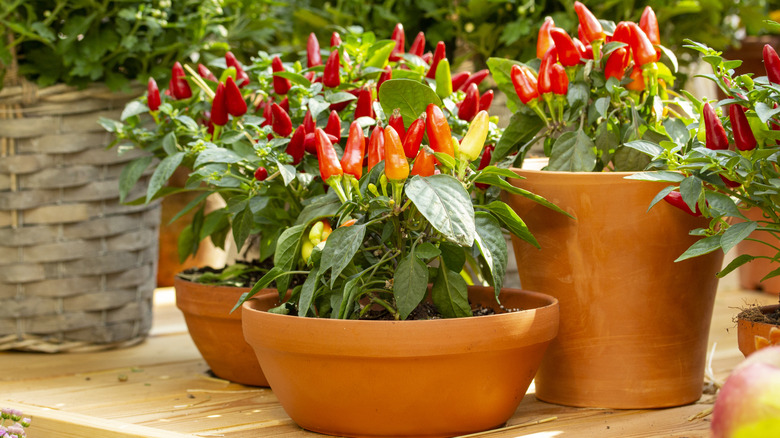
Peppers are native to the tropical regions of the Americas. This is good to know, as it shows that pepper plants prefer warm conditions. This makes them quite sensitive to cold, and therefore, you shouldn't rush them outdoors when those seeds sprout. This is because they can suffer from something called cold shock. This will generally result in structural damage to the plant throughout the leaves, stems, and roots. The extent of this damage can vary, but in the most severe cases, it will be fatal to the plant.
This is why you need to go through a process called cold hardening. This is where you gradually introduce your seedlings to the outdoor environment. I first do this by placing the seedlings on a windowsill next to an open window. The next step is placing them outside on a mild day for an hour. Over the course of 10-14 days, you can put them outside for longer until eventually you can keep them outside on a mild night. Keep in mind that temperatures below 40 degrees Fahrenheit can badly damage or kill the plant, despite being hardened. Even with a patient approach, plants can show some signs of shock with a little wilting. If your pepper plant starts looking unhealthy, keep it fully inside until it recovers.
Give them as much sun as possible
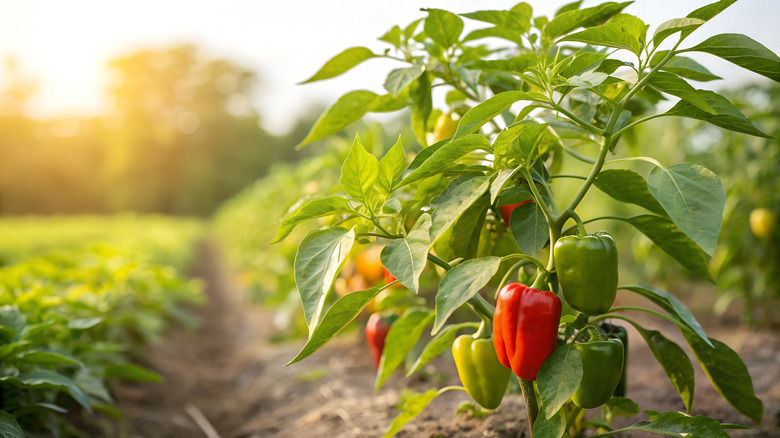
When it comes to growing needs, peppers are a strong contender for the food source that needs the sun the most, along with tomatoes. As I mentioned, they don't need sun to germinate, but once those seeds break through the surface, strong and consistent light is essential for them to grow. Without enough light, your seedlings will become leggy and weak as they desperately reach for the sun. Without enough sun when they're established, the peppers you eventually harvest won't be as abundant and likely undersized.
For the most successful harvest, your peppers should be in a position that gets the most sun. This is generally a south-facing spot, but that can be impacted by surrounding buildings or trees. If you think light will be an issue, buying some grow lights can be a good idea. When outside, a mini greenhouse can also be a good idea. Of all the tips here, a lack of sunlight will have the most negative impact on the end result.
Plant them a little deeper than their existing plot
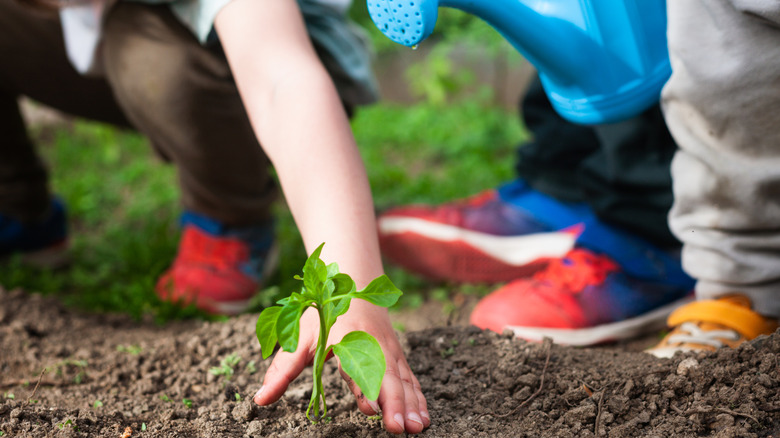
One of the most fascinating aspects of growing tomato plants is how they can grow roots from anywhere on their stem. Sadly, this is one similarity the two plants don't share, but it's still a good idea to bury peppers a little deeper when potting up. The main reason for doing this is stability. As pepper plants grow, they become increasingly top-heavy as the fruits develop. Planting them a little deeper will help to anchor the stems and support growth.
When young, this helps them better cope with outdoor conditions, especially wind. Yet, unlike tomato plants, you don't want to bury them too deeply. An inch or so deeper than their previous pot is usually all you need. Too deep and you increase the risk of rot. Without enough stem support, the plant will be more vulnerable. A little deeper will serve the plant well until it's time to give it more structured support.
Don't give them a general fertilizer once established
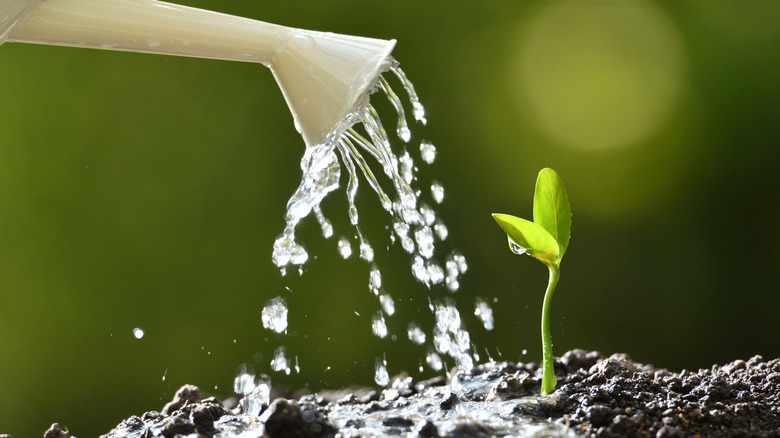
While general fertilizer is suitable for seedlings and young plants, it's detrimental once the plant starts to develop flowers. General fertilizers support leaf, stem, and flower growth in equal parts of nitrogen, phosphorus, and potassium. Instead, you'll need what's commonly called tomato feed (or something similar). This fertilizer is more heavily weighted toward providing the plant with more potassium. And while it's often called tomato feed, it's suitable for any plant that fruits.
This type of feed will still support leaf and stem growth, but the extra potassium is useful for larger and more developed fruits. Each brand is different; the frequency and volume of this feed will change depending on the manufacturer's instructions. Peppers will grow out of cute white flowers. As soon as you see these flowers starting to emerge, that's what you want to make the switch from a general feed to a tomato one. Calcium and magnesium are also important for the development of healthy fruit, which you can provide with bone meal or Epsom salt.
Ensure they can pollinate
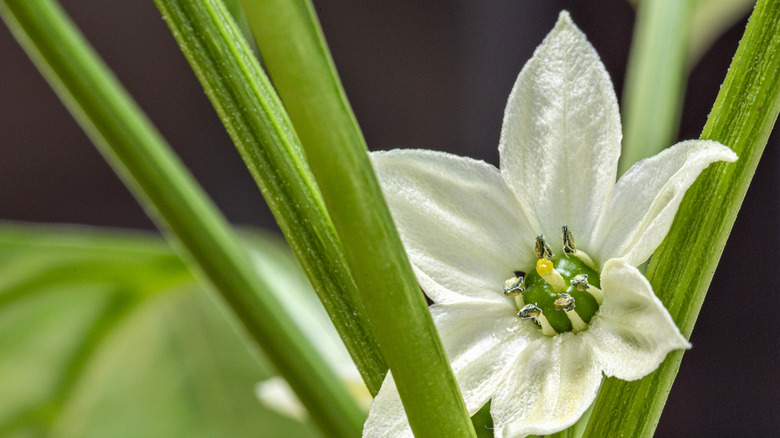
Pepper plant flowers contain both male and female parts. However, the pollen still needs to get from one part of the plant to the other. Thankfully, this happens easily in nature. All a plant needs is a little wind or insect disturbance from the likes of bees or other pollinators. However, for those in temperate climates, keeping peppers in greenhouses or indoors means the plants aren't in the natural ideal setting for pollination.
In these conditions, the air usually remains still, and there's no insect activity, which means the flowers go unpollinated. If this happens, flowers will drop off, and only a few, if any, will produce peppers. If you are growing in these environments, then your plants may need manual help. The easiest way to do this is to shake the plant or gently tap the stems. In a larger greenhouse, introducing a fan is a good idea to improve air circulation. All you need is a little disturbance to get that pollen airborne.
Supporting them will lead to bigger and better fruits
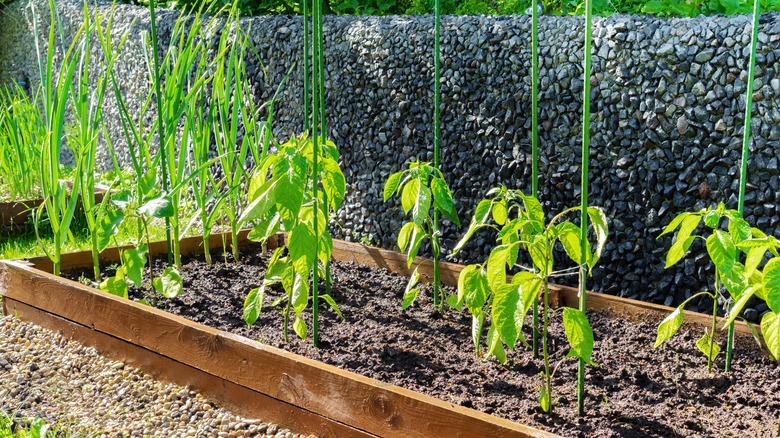
As I mentioned, peppers can become extremely top-heavy. Without support, the plant will think it doesn't have the capacity to grow large, juicy fruits. Being top-heavy also makes the plant more susceptible to branches snapping and to wind. As a result, you want to support your pepper plants with a cane, stake, or other support structure. While this is helpful for established plants, you don't want to give a pepper support when it's too young.
If supported as a seedling, the plant can rely too heavily on support and not develop as strong a stem as you'd like. The best time to do this is when you are transplanting them into their final position, usually when they are around 6 to 12 inches tall. Once supported, the healthy plant can then put more of its energy into fruit production. Without any bending or sagging, the plant will also have better circulation and light exposure. The bigger the pepper, the more top-heavy the plant will become. So, while not vital for the likes of slimmer cayenne peppers, it becomes vital for a bountiful bell pepper harvest.
Be mindful of disease prevention
Peppers aren't especially prone to disease. This is obviously a positive, but you don't want to get complacent and presume everything will be fine. Peppers suffer from many of the same issues as tomatoes, with most of them being an easy fix if caught early. Therefore, you want to keep an eye on any signs of plant stress. Prevention is always easier than the cure, so you want to put your pepper plant in the best position to be disease-resistant.
Airflow is huge in this regard. It allows leaves to dry out quickly, reducing the chance for the likes of mildew and fungal infections to take hold. As I mentioned before, avoiding overwatering is also crucial in preventing root rot and excess humidity. Finally, crop rotation is also important. Soil-borne diseases can build up over the years, so planting your peppers in a different spot/pit from one season to the next is a good idea.
Check plants daily for pests
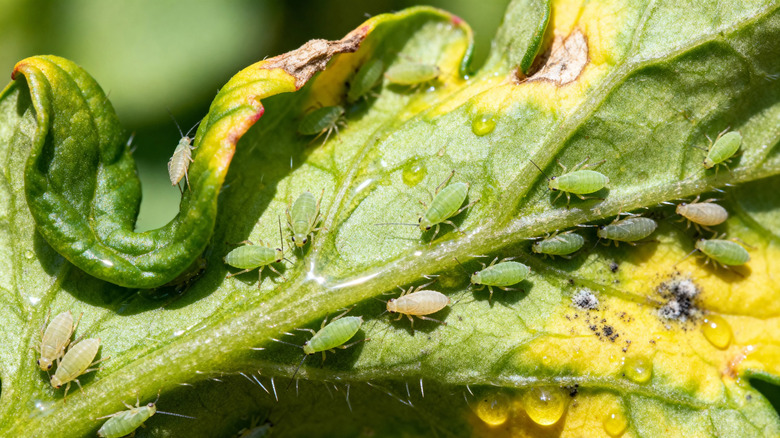
As well as checking for disease, check for any pests. The importance here is knowing what is and what isn't a problem. Bees are notoriously good for plant life; however, the likes of ladybugs, lacewings, and hoverflies are also beneficial. Ants, random flies, and beetles are just passing through and won't harm your plant. What you do want to look out for are aphids, spider mites, whiteflies, and thrips. These are small, so they don't do much damage on their own. Yet if left to reproduce, large numbers can quickly overwhelm your plant.
For small numbers, simply wiping them off or blasting them with water is enough. Soapy water is an easy solution for larger gatherings. Added to this, you also want to check for bigger pests, namely slugs, snails, and caterpillars. These three are more active at night, so you may not spot them so much as the damage they cause. Creating physical barriers and picking them off is usually good enough here, as thankfully, they'll damage the leaves, but not the fruits themselves. As with diseases, the earlier you spot an issue, the easier it is to deal with.
Remove yellow leaves and investigate the issue
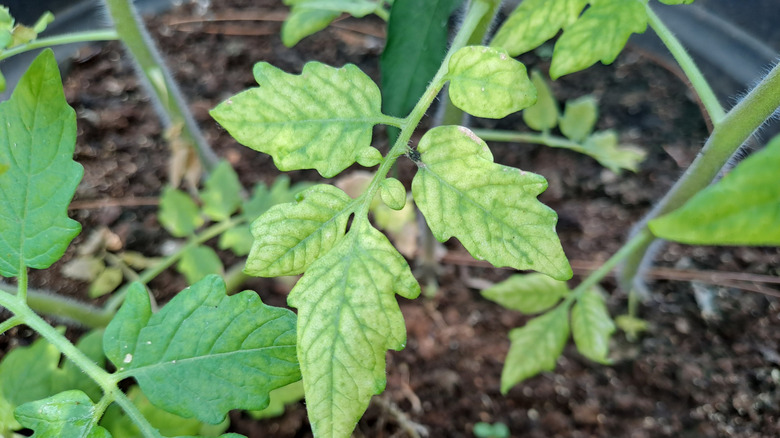
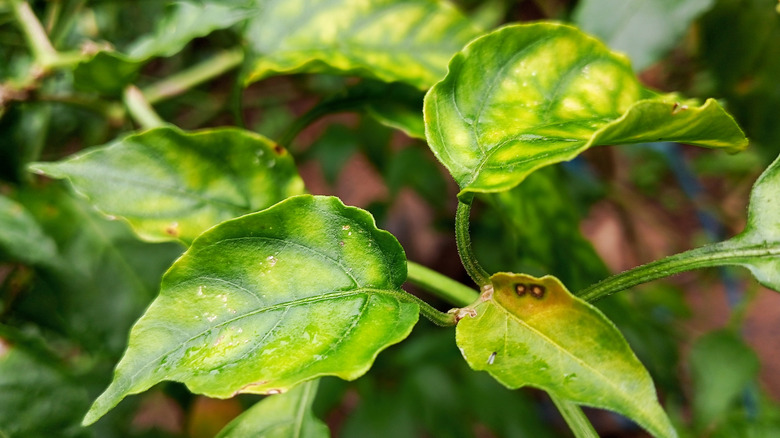
If there is an issue with your pepper plant, the color of the leaves is usually the first indication. However, this isn't always a problem. For example, if you have a large, healthy plant, then some of the older lower leaves may struggle for sunlight, and the plant will shed them. If that happens, just remove them to keep checking to see if the yellowing is spreading upwards. If you are noticing the yellowing becoming more widespread, it's most likely a feeding issue.
Overwatering may be suffocating the roots, underwatering may be starving the plant, or a lack of fertilizer could mean a nutrient deficiency. Your first solution is to be consistent with your watering and feeding, as we discussed above. Aside from watering and feeding, think about anything else that could stress your plant. Examples include a lack of sunlight, temperature stress, and pests. Yellow leaves aren't usually a sign of a big issue on their own, but they usually indicate stress. If your plant remains stressed, that can severely impact its long-term health.
Pick fruits often with sharp, sterile tools
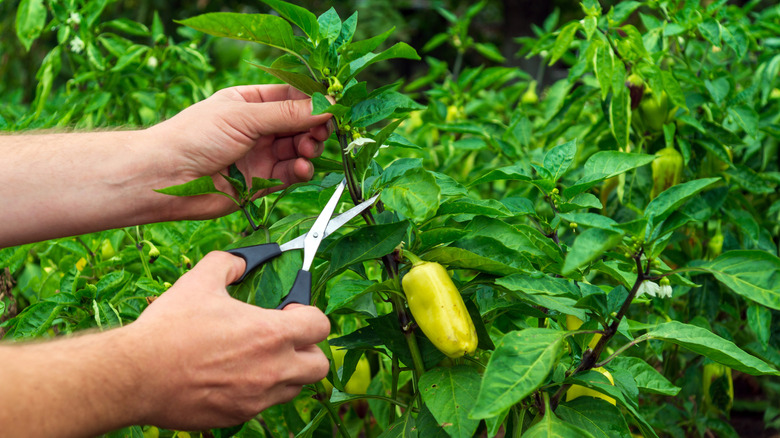
It's best not to pull your peppers off the branch for a few important reasons. It can snap the branch, damage the main stem, and create a bigger wound that the plant will need to heal. Instead, you want to cut them off with sharp and sterile pruners or scissors. This will give you a clean cut without damaging the rest of the plant. Sterile tools are important, as you can potentially introduce disease if you have just used the pruners on an infected plant, for example.
This sterilization process doesn't need to be complicated; wiping them down with disinfectants and placing them in hot water after use will suffice. As for harvesting, you also want to harvest the peppers as soon as they are ready. Overripe fruit can signal to the plant that its job is done, and it can slow down production. It's best to pick and store rather than leave the plant alone. Regular picking will mean a continued harvest. Given that peppers usually freeze well, it means you can often enjoy your own harvest throughout the winter.
Stay patient and trust the process
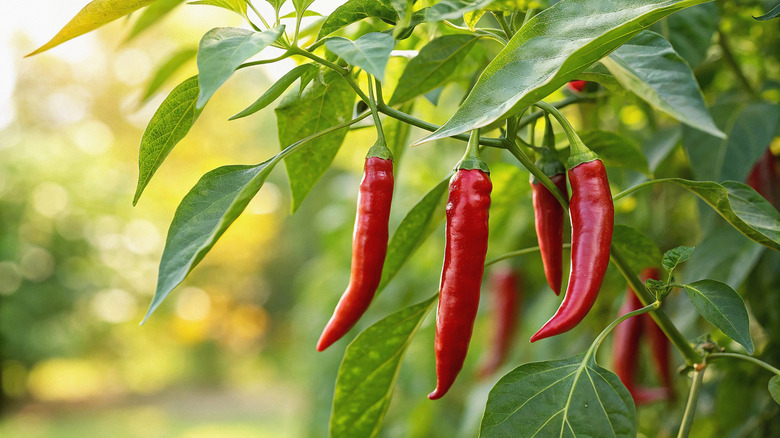
Peppers are fairly easy to grow, which makes them great for beginner gardeners. Often, the biggest challenge to growing them is patience. They can be slow to germinate, slow to grow, and often won't give you a harvest until later on in the growing season. This is why gardeners can be tempted to interfere or to presume they are doing something wrong. Tomatoes have similar growing requirements but generally grow more quickly and produce earlier harvests. Peppers just grow at their own pace.
The temptation can be to overwater, overfeed, disturb seeds, or keep moving a plant around. If you follow all the tips above, then you'll get great peppers. As with many plants, they love consistency. Once conditions are right and the plant is established, peppers will start to emerge quickly, and your hard work and patience will be rewarded. Some fruits and vegetables give you encouraging visual signs of their growth. With peppers, you have to trust the process.