

When To Season Ground Beef So It Holds Maximum Flavor, According To Gordon Ramsay

Gordon Ramsay is widely renowned for his strong opinions on Beef Wellington — never skip the secret ingredient and always slice it to the precise right thickness — but it turns out he has something to say about the more humble ground beef, as well. His advice starts before the meat even hits the pan. In a video shared on his YouTube channel, Ramsay starts off his chili beef lettuce wraps by seasoning the raw meat first, then drops it into a hot pan, explaining that this step helps build flavor from the beginning, instead of having to retroactively fix bland beef later. In the video, he's working with "mince meat," the endearing British term for ground meat, but it's basically the same thing we call "ground beef" across the pond.
Ramsay's seasoning method is very straightforward. Salt and pepper get sprinkled on the meat while it's still raw, then slightly mixed so the seasoning is distributed throughout. The seasoned meat is added to a hot pan with a little olive oil in it. From there, he breaks up the meat as it warms up, allowing a bit of browning to happen so the flavor comes through. Ground beef starts releasing moisture quickly, and has a lot of surface area, so once it starts cooking, you're in a race between browning (also scientifically known as the Maillard reaction) and steaming. Ramsay explains, "Color is so important. If this pan wasn't hot, the mince would boil, a horrible gray color on there, and no flavor on your mince." Oh, dear, not horrible, boiled-gray mince!
Beef needs browning
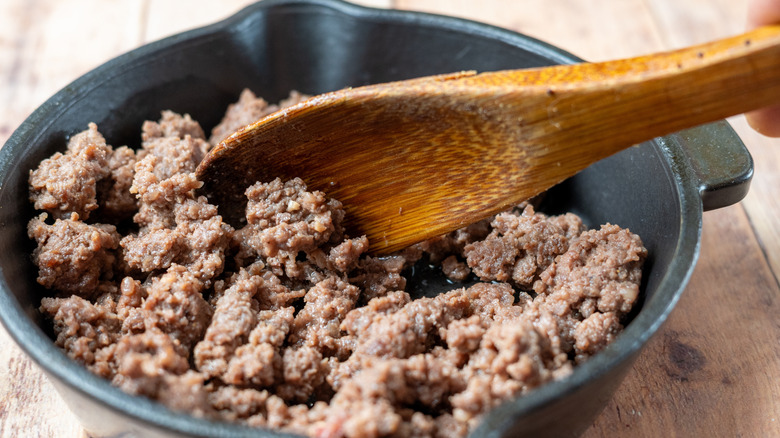
We all know salt makes things taste salty, but it also plays a role in the chemistry of cooking. Given a little time, salt pulls moisture toward the surface of the beef through the magic of osmosis, which might sound counterproductive — won't that just make steam? That's exactly why the pan needs to be hot enough — so the liquid that is pulled out of the meat by the salt and heat evaporates, quickly cooking off so that the browning can begin.
Ramsay also brings up an important reminder in his video: "Mince is made of three cuts, brisket, belly and short rib, so — it needs help," he explains. What he means by that is that, unlike steak, which is a single, pristine muscle cut that has a protected interior, ground beef is broken up from the start. Once it hits the pan, crumbled, nearly every part is directly exposed to the heat, and there won't be a juicy, flavorful center to cut into. Seasoning it while raw ensures the many little pieces have flavor built in from the start.
Ramsay's tip applies to much more than chili beef lettuce wraps, because ground beef is the foundation of many fast, weeknight cooking recipes — dishes like taco filling, pasta sauce, burgers, etc. In every case, the meat needs to develop flavor before the wet ingredients come in. Seasoning after the fact should still be part of the routine, but it doesn't do the same thing as getting s&p on the meat from the start.
Layering in the aromatics
This seasoning method is one of those professional kitchen lessons that sounds super basic till you taste the difference. Cooks are trained to season in layers and to taste as you go. That means that the meat should be seasoned, then the onions or garlic should be seasoned, then the finished dish should be adjusted, and garnished with aromatics and finishing salt, before serving. Waiting till the end makes food that tastes salty on the surface, but hollow underneath, even if it technically has plenty of sodium and spices applied.
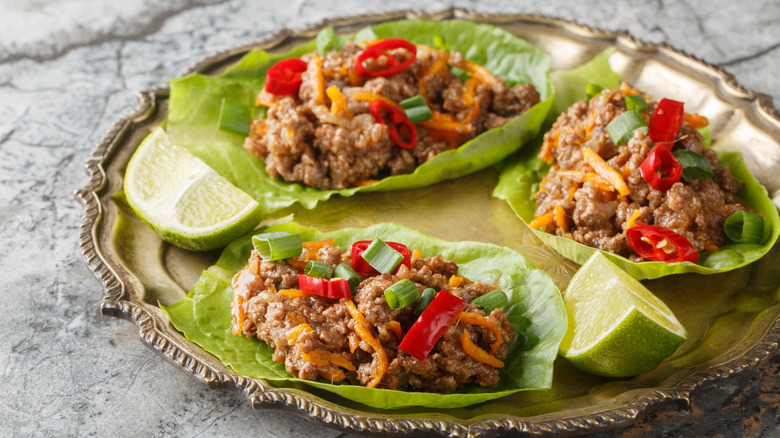
Ramsay does this in his lettuce wrap recipe; after browning the beef, he builds on it with more flavorful ingredients. After pulling and draining the seasoned, browned mince, he drops the Chinese aromatics into the hot pan so they can bloom in the residual beef fat. First, he adds chili, ginger, and garlic, then, after a beat or two, the liquid seasonings, the sesame oil, fish sauce, and lime juice. That collection of assertive ingredients brings it all together, but in due time.
Ramsay opens his video saying, "Cooking should never be a chore. The more you cook, the more confident you become; that way, you actually start to enjoy it, and that's the key to good cooking — have a bit of fun along the way." Building these kinds of little skills and good habits in the kitchen is exactly what accomplishes that.