

Peas Grow Quicker And More Uniformly In Your Garden When You Make This Step First
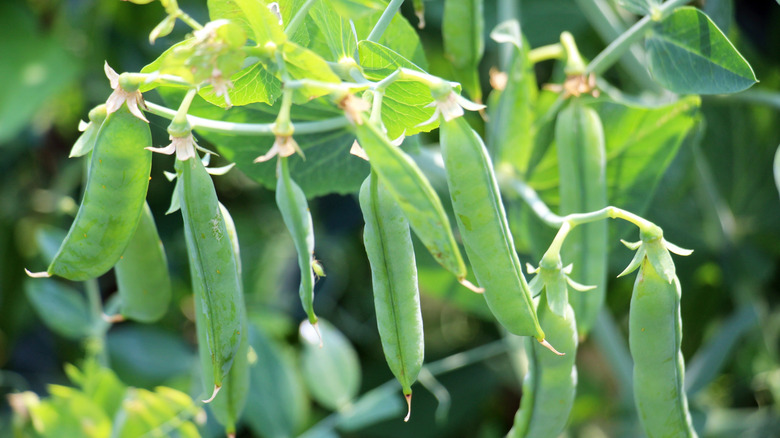
As the weather starts changing from winter into spring, you might find yourself with a bad case of garden fever. If you're thinking the time has come to stop perusing seed catalogues and gardening websites and get your hands in the dirt, you're absolutely right — it's time to start planting vegetable seeds in your kitchen to get a head start so they will be ready for your garden when the weather starts to warm.
Peas are among the many easy fruits and veggies you can grow even if you're a beginning gardener, and you can keep some of them in containers so they'll be ready to harvest sooner. You can actually grow this sweet green veggie indoors through the winter. If you start them indoors now to eventually transplant them to the garden, give them a boost by soaking the seeds before planting them.
Soaking pea seeds allows them to wake up from dormancy and germinate as it softens their coat, which allows water to penetrate more rapidly and trigger the process of sprouting. Softening the coat also increases absorption of essential nutrients, which makes for healthier, vigorous seedlings. Another benefit of soaking pea seeds is a quicker and more uniform germination and even distribution of seedlings, which ultimately makes the pea plants look more organized and visually appealing once planted in the garden.
How to soak and plant peas for the best results
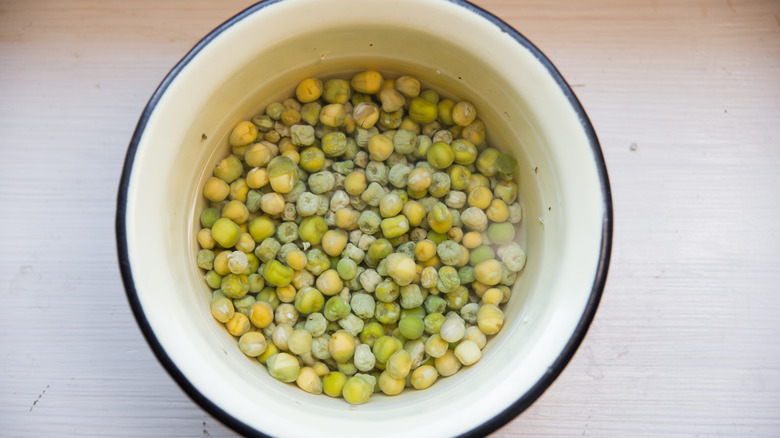
Regardless of which type of peas you want to grow, you need to soak the seeds in lukewarm water for eight to 12 hours overnight to give them the perfect head start. Pay attention to the soaking time and don't let seeds remain immersed for too long, as oversoaking can lead to problems like seed rot. Since the peas will swell as they absorb water, be sure to use a container that will leave them ample space to prevent them from sticking together.
The next day, drain and rinse the peas and sow them in seed trays — or better still, repurpose containers you'd otherwise discard — filled with fresh growing medium. Plant them about 1 to 1.5 inches deep in well-draining medium and water them gently. Keep the soil damp but not waterlogged. When they begin to sprout, place them where they'll receive bright, indirect light. They will be ready to transplant outdoors in nine to 12 days, and will need a trellis to climb as they grow.
According to gardening experts, planting peas on St. Patrick's Day is a tried and true practice, as that's the perfect time to set up a vegetable garden or planting boxes. Peas are a cool weather crop, so getting them ready now will guarantee you'll have a great harvest before temperatures get above 80 degrees Fahrenheit. If you don't have a garden, you can grow some varieties of peas in containers. Look for dwarf or bush peas which will only grow 2 to 3 feet tall. You'll need a container about 10 inches deep and some sort of support as they will climb, too. Worst case scenario, you can grow and cultivate tender pea shoots from a sunny windowsill.