

The Sweet Green Veggie You Can Grow Indoors All Winter Long
We may receive a commission on purchases made from links.
Growing vegetables indoors is one of the easiest ways for beginner gardeners to learn the tricks of the trade. If you're interested in starting your own home garden but aren't sure where to begin, start with this sweet green vegetable you can grow indoors this winter: green peas. Food Republic spoke to Angelika Zaber, lawn care specialist and gardening expert with Online Turf, to get her advice on growing peas indoors in the winter.
"Peas tend to grow well indoors during winter since they prefer cooler temperatures and generally do extremely well in a container," she said. Peas are one of the best seeds to grow in your kitchen because they are cool-season plants that need consistent temperatures that can be harder to achieve outside in the winter. Young plants can survive at temperatures above 40 degrees Fahrenheit, but pea plants do best in temperatures between 55 and 65 degrees Fahrenheit.
Because they self-pollinate, green peas are easier to start and cultivate indoors. For beginner gardeners, starting plants indoors offers more control over temperature, moisture, and light so that you can hone your skills and figure out what works (and doesn't). According to Zaber, the best varieties of peas to plant indoors are "dwarf and compact varieties...such as Super Sugar Snap peas, Dwarf Grey Sugar peas, Little Marvel peas, and Green Arrow peas." You can find these online or at your local nursery or home improvement store.
How to successfully start and cultivate peas indoors
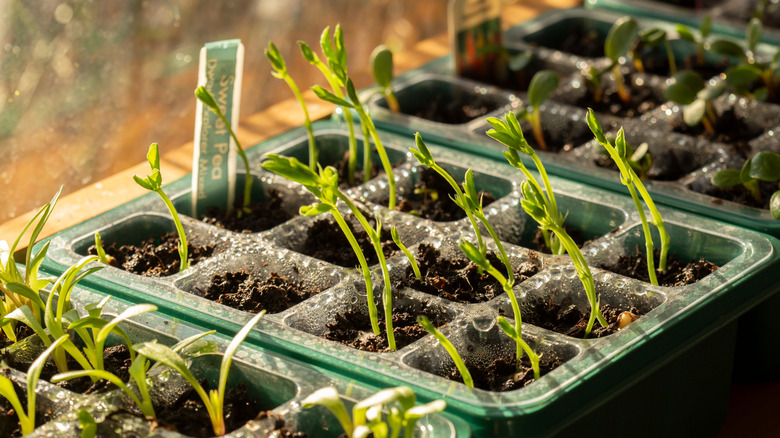
One of the best beginner gardening tips we can offer is not to underestimate the importance of soil quality. When planting peas indoors, you want to choose a well-draining, indoor organic potting soil like a mix of equal parts FoxFarm Ocean Forest Potting Soil, compost, and Perlite Bliss #3 Organic Perlite. Put the soil in paper cups or pots that are at least eight inches deep, or start your seeds in takeout containers. Put a few seeds in each container, pressing them about 1/2 to one inch deep into the soil with your fingers.
The plants need about 10 hours of sunlight per day, so you'll have to supplement natural light with grow lights, like the Leoter adjustable four-head gooseneck grow light. The soil should be consistently moist but not soggy, so check its moisture level each morning and evening. Fertilize your peas every two weeks using a nitrogen-rich organic fertilizer.
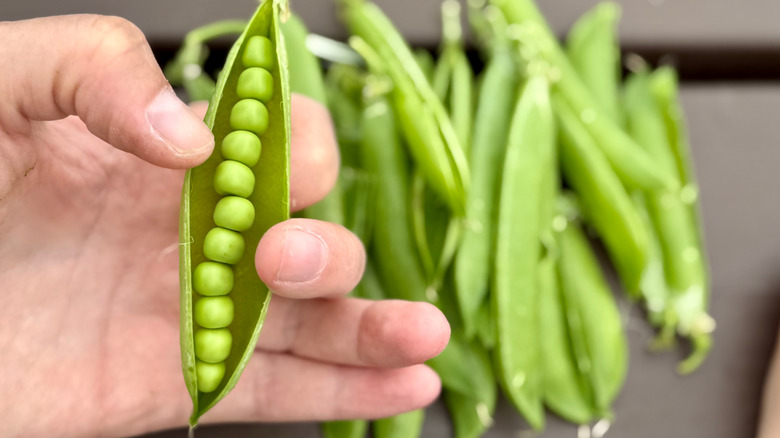
As the plants grow, use stakes or trellises to provide support, prevent breakage, and improve air circulation. When moving or transplanting the plants, handle them carefully and don't disturb the roots. The majority of pea varieties need to grow for about 60 days before you harvest them. Once you see flowers and pods developing, check your plants daily. Harvest your indoor pea plants when the pods look plump and bright green and feel firm to the touch. Harvesting the plants regularly can encourage them to produce more flowers and pods.