

If You Spot This At A Pizzeria, Think Twice Before Ordering A Slice
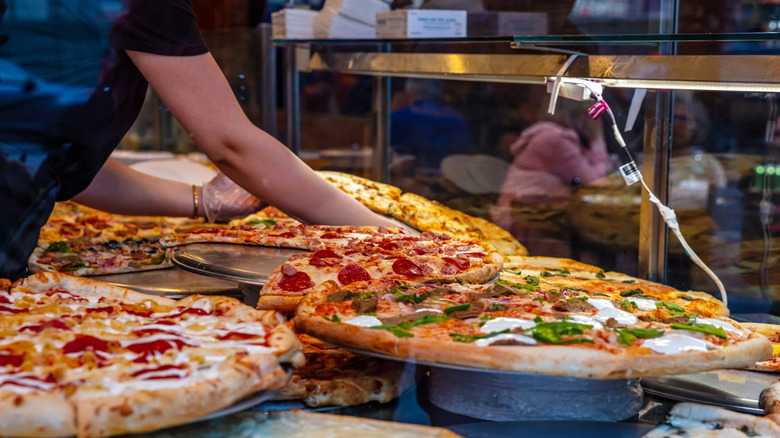
In a classic slice shop, you approach the display window, point to the pie you want, and the person behind the counter transfers that already-cooked slice back into an industrial oven to reheat. Maybe the pizzeria will offer specialty pies like buffalo chicken, vodka rig, or spinach and artichoke. Maybe it'll just serve cheese and pepperoni. What's certain, though, is that it's worth taking a closer look behind that display window before you order. Even bad pizza is (usually) still better than no pizza, but if the slices in the case are dry or unappetizing-looking, it's a red flag.
Not only is scabby-looking cheese off-putting, but it can also indicate that the pizza has been left in the case too long or not properly stored. As a general rule, cooked pizza (even plain cheese slices) can safely sit out for just two hours before running the risk of foodborne illness. Commercial display cases in the U.S. are often heated to a holding temperature of 145 degrees Fahrenheit. On top of this holding temp, it's customary industry practice to toss a slice back into the oven for roughly one minute as a final "freshening up" before selling, thereby redistributing the oils and transforming the texture from potentially-rubbery to crisp. A trip through an ultra-hot commercial oven can work wonders, bordering on magic, to revive a wilted slice. But, ultimately, a little reheat action can only do so much. If the displayed slices don't inspire appetite at eye level, try another pizzeria.
Dried-out, crusty cheese can't be miraculously saved by a trip in the oven
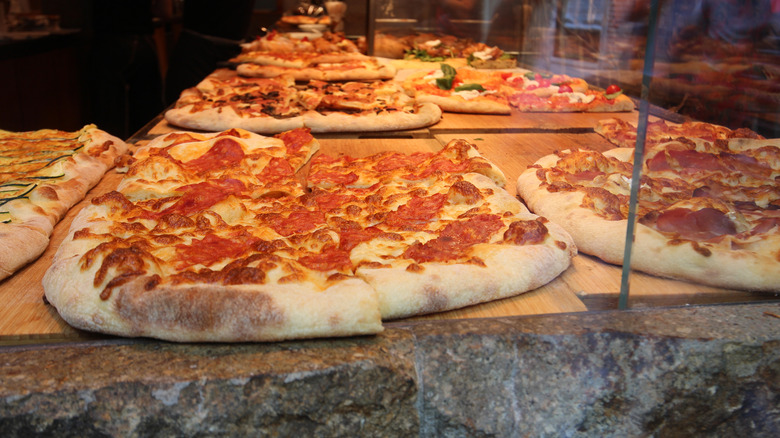
When hungry patrons arrive en masse, pizzerias can go through multiple whole pies in a matter of minutes – especially in the high-volume slice shops like the one residing on every corner in New York City, where a utility slice costs the same as one-way subway fare (or, it used to...). Those piping hot, industrial convection ovens (which can hold as many as 40 pizzas per chamber and cook a whole pie in just five minutes) are designed for this kind of quick-turnaround volume. But, on a slow day, maybe that pie has been sitting there for a while, waiting for you to walk in. We advise you to walk right back out.
An ultra-long menu isn't a good sign, either. "Hooray" for options, but if a pizzeria is stocking that many different pies, chances are the finished product is getting less attention to detail than a smaller menu. This menu-length rule is particularly true at slice shops, where the pies are premade (not made to order) and sit waiting. A popular pie like standard pepperoni might sell twice as quickly as a mushroom and gorgonzola slice. In a similar vein, it can also be a red flag to see a full pie in a pizzeria's display case. Unless you spot visible drops of condensation moisture on the inside of the glass, indicating a hot, fresh-out–of-the-oven pizza, chances are it's been sitting there untouched for a while.