

Don't Put This Type Of Seafood Down Your Sink Drain
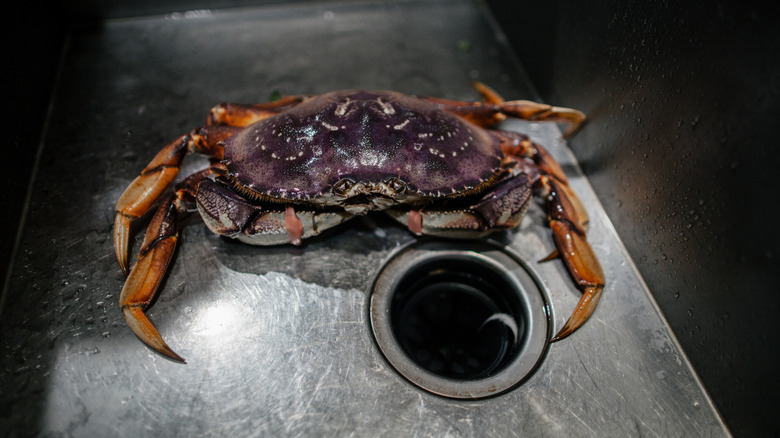
A home kitchen garbage disposal feels like a powerful machine, giving the illusion that with a flick of a switch, any undesirable food prep detritus can be reduced to oblivion. Despite the name, it's not actually meant to function as a full-service trashcan or compost bin. Shellfish, including shrimp shells, crab legs, lobster claws, and mussel and clam shells, should never go down your sink drain.
The modern garbage disposals promise fewer scraps in the trash, less odor and more efficiency — but they're not woodchippers. Rather, they function more like a blender. Inside, spinning impellers use centrifugal force to mash food waste against a grind ring, breaking down soft organic matter into smaller chunks that can flow through plumbing. While great at shredding up carrot peels, deconstructing the heels of bread, or pulverizing the end of a bowl of (cooked) chili beans, there's a long list of seemingly biodegradable materials and food scraps that a garbage disposal just can't deal with.
Mainly, they cannot macerate super fibrous materials, like celery or corn husks, or the hard-as-rock exoskeletons of mollusks and crustaceans. Shells are these creatures' bones, and they are all made mostly of chitin, a tough structural compound designed by nature to protect the soft little creature inside. If you would not toss a handful of rocks into your blender, you should not send a pile of oyster shells into your disposal. The machine might spin, but it will never win.
Clams down the sink? Shell no
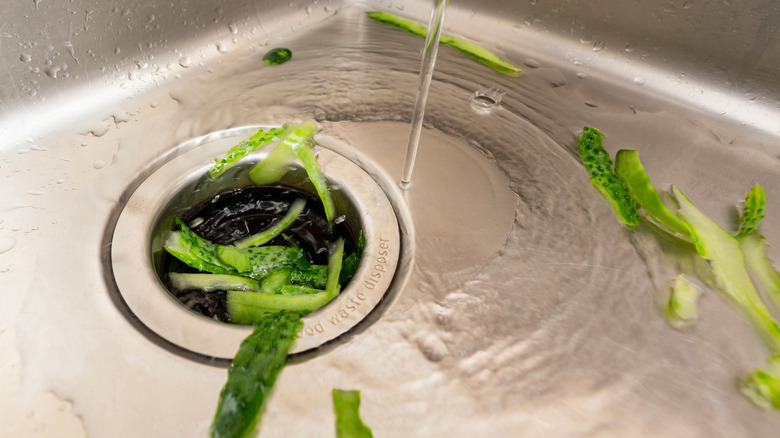
Shellfish shells don't easily break down. Across North America, Indigenous communities once created enormous shell middens — layered mounds of discarded oyster, clam, and even today's endangered abalone shells — which not only didn't biodegrade over time, but reshaped shorelines, becoming part of the coastal landscape. This extreme structural fortitude is why they're incompatible with the machinery of the garbage disposal.
While shellfish shells jam up the impellers, they also dull the grinding components and potentially get wedged in the drain trap under the sink. Even if the blades manage to shatter them, small fragments make it through the disposal chamber. They're heavy and build up in pipes, particularly if they're combined with used cooking oil or congealed butter from seafood boils. Over time, the buildup restricts water flow and increases clog risk. This is why many rentals and older apartment buildings skip installing disposals. In New York City, for example, garbage disposals were illegal until 1997. Property managers would rather avoid the repair calls than trust every tenant to conscientiously only deposit soft scraps.
If you're cooking shellfish at home, the safest route is the most obvious one: toss the shells in the trash. You can wrap them in a paper bag to help contain odor. If you want to extract maximum value first, simmer the shrimp, crab or lobster shells into a broth. Once they've given up their flavor, discard the rest. Your garbage disposal is for incidental food scraps that deconstruct and rinse away easily, not armor-tough shells that survived the ocean floor.