

The 8 Biggest Complaints Boomers Have About Restaurants Today
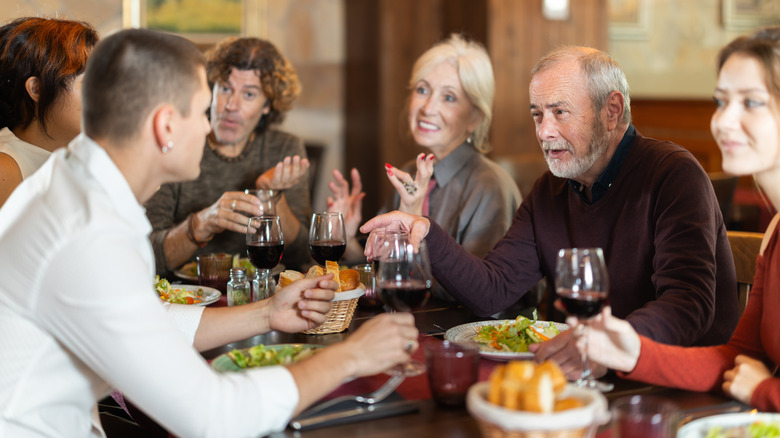
From the young kids and teenagers of Gen Alpha to the baby boomers pushing 80, we've all got something to gripe about. The topic of some of the loudest of these kvetches? Going out to eat. As a millennial, I have plenty of nits to pick when it comes to going out for a meal, but we're not here to discuss the bellyaches of my generation (putting a $25 price tag on pasta with olive oil and garlic should be a federal crime). Instead, we're discussing the complaints of the baby boomers. They're parents and grandparents, they're great aunts and great uncles. They're the result of a lot of excited husbands and wives post-World War II. And after all they've been through, they've got a few qualms to discuss.
For insight into what really grinds the gears of restaurant-dining boomers, I talked to various boomers and boomer-adjacent people, including my aunt, who is a boomer, and my best friend, who has boomer parents and in-laws. Overall, their complaints don't really fall into the "old man yelling at cloud" category; these people have been around long enough to see legitimate transformation take place in the restaurant industry, and while youngins' may see a lot of these gripes as silly or outdated, they aren't unreasonable. I love the boomer generation — I wouldn't be here without them, but when it comes to going out to eat, they have a little beef to chew on. Let's jump in.
Food and drink costs
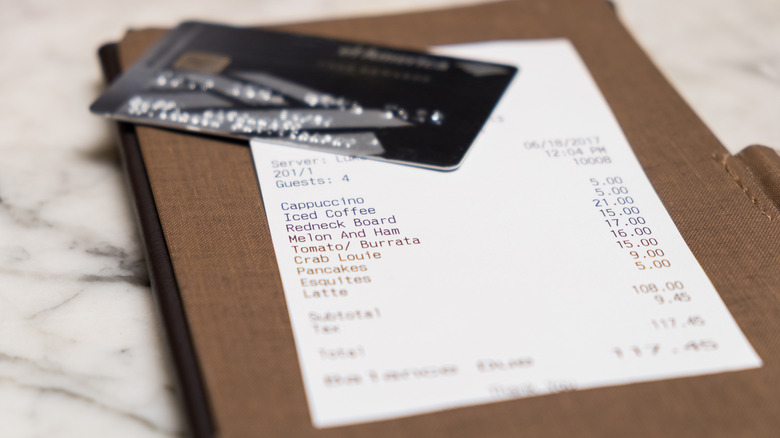
The complaint about food costs may come from a boomer, but truth be told, it spans the generations. "We go to the same old places that are a lot less costly, so I'm not able to enjoy all of these new up-and-coming places because I'm not comfortable paying those prices," noted my aunt Teri. Not that her normal haunts are bad or not worth going to, but looking at a menu for a new place and feeling offended by the prices is more than enough reason to keep going back to the places where you know the food is good, and the prices are right.
Guess what, Teri? You're right about balking at restaurant prices. According to the National Restaurant Association (NRA), food prices have been slowly but surely increasing, and with that, restaurant menu prices are going up, too. A report released by the NRA in February of 2026 noted that in 2025, food prices away from home managed a monthly growth of 0.4%, and menu prices have risen 4% since January 2025 year-over-year. These menu price increases impact your area, no matter where you happen to live. In 2025, the Northeast experienced a 4.2% increase in menu price growth, with the West growing at 4.1%, the South at 3.9%, and the Midwest at 3.8%. Safe to say this isn't just a boomer complaint; food is getting more expensive, and that means going out to eat is becoming a pricier experience, no matter where you go.
Pets in restaurants that aren't service dogs
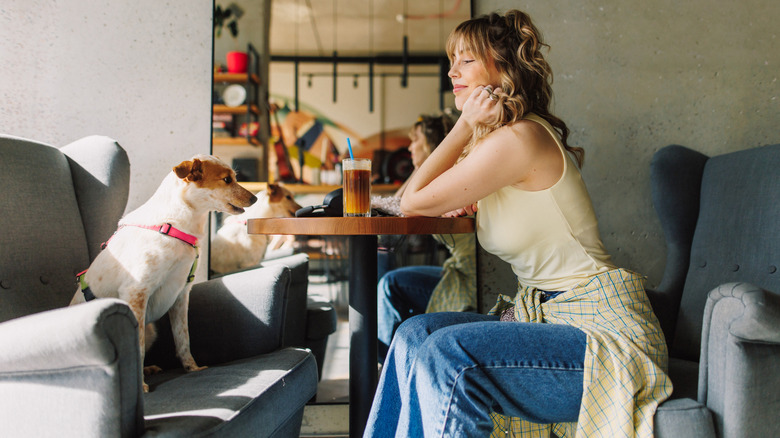
Let's make one thing clear: Service dogs should always be allowed in a restaurant. If someone requires an animal to get around in their everyday life, then the dog is a non-negotiable. According to the Americans with Disabilities Act, if it isn't obvious what service the dog is providing, staff can ask two questions: Is the dog a required service animal because of a disability? And what work or task has the dog been trained to perform? They can't ask about a disability specifically, nor can they ask to see documentation for the dog — and it's this point that has my aunt in a complaining mood.
My aunt doesn't support bringing a non-service dog into the same restaurant where she's having lunch. Yes, the dog is cute, and yes, my aunt loves dogs and supports you owning one. Even if that dog is well-behaved and out of people's way, there's something to be said for ignoring the "only service dogs allowed" signage because you simply don't want to be inconvenienced.
In the r/AskNYC subreddit, a heated discussion took place about non-service dogs being allowed into food establishments. A coffee shop employee noted the potential dangers of an untrained dog in a small, busy space, particularly when it comes to being around hot water and coffee.
"I'm just waiting for a dog to trip a patron and to have that coffee spilled all over them, the dog, a kid, etc. JUST. LEAVE. THEM. OUTSIDE. PLEASEEEEEEE."
Families bringing babies to high-end restaurants

My aunt and uncle, parents of four grown sons and grandparents to eight grandchildren under the age of 13, are more than familiar with the trials and tribulations of going out to eat with kids. And while they typically have no issue with going out to a meal with kids around, it isn't something they look forward to or even expect when eating at a more high-end restaurant. And yet, it ends up being a consistent issue when going out for a nice meal. "Most restaurants today, they're family-friendly and people go out with their kids," said Teri. "If they aren't my kids, I can tune it out, but if we're out for my birthday or an anniversary, somewhere nice, I don't want to sit near a family with young kids."
I don't have kids, so I don't have any personal insight on whether or not it's acceptable to bring a young child to a nice restaurant. However, if the situation is unavoidable, there are ways to avoid a potential meltdown. Consider some of these tips and tricks for bringing kids to a nice restaurant, including letting the restaurant know ahead of time that you're bringing a child, eating during off-hours, bringing small snacks for your kid, and going for a walk every so often to avoid any in-seat fussiness. My aunt and other boomers like her have been eating out at nice restaurants for decades, and they just want to enjoy the meal without hearing a baby shrieking one table over.
Background music is too loud, and lights are too low
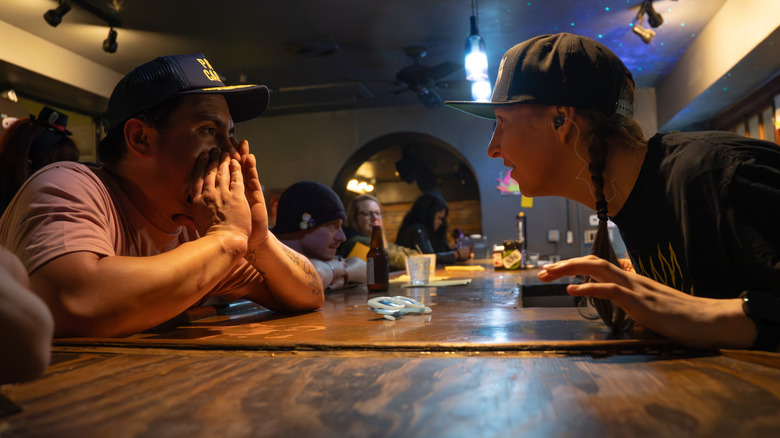
Eating at a restaurant shouldn't be the same as sitting at a concert — at least that's the sentiment that my friend Rachael's boomer parents have about going out to eat these days. The music is booming, the lights are too dim, and it's taking away from the enjoyment of the restaurant experience.
In this case, however, this boomer complaint is right on the money. In an article from the Huffington Post, Gregory Scott, the creator of SoundPrint, an app that can measure decibel levels in public places, talks about the frustration he felt going out in public places and not being able to have a conversation because of the noise. In 2023, SoundPrint found that 63% of restaurants were so loud that it was difficult to have a conversation, with the app categorizing the restaurants tested as either loud or very loud.
People end up eating and drinking more in these louder environments, which really comes down to the science of how our brains and bodies respond to the noise. According to Dr. Qian Janice Wang, who is an associate professor of consumer psychology at the University of Copenhagen, louder music can distract people from how full they're feeling. "Overeating may be a way of dealing with the awkwardness of not being able to talk to your companion," said Wang in the HuffPost article. So, are restaurants turning up the volume to ensure we consume more? Perhaps. But, as every boomer parent once asked, can you just turn the music down a little bit?
Food descriptions are so fancy, it's hard to know what I'm even ordering
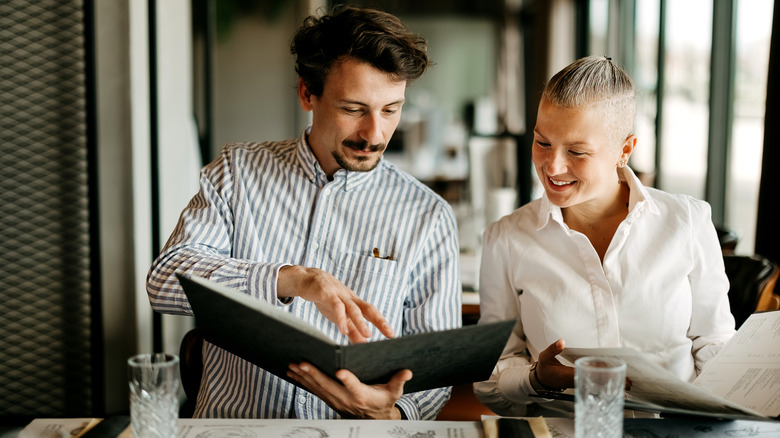
Burger and fries. Ribeye steak with potatoes and carrots. Waffles with whipped cream and maple syrup. These descriptions are simple enough for just about anybody to understand. However, depending on the restaurant, things can start to get a little fancier. It's not just duck pot pie; it's a short-crust tartlet with confit of duck and vegetables in a creamy bordelaise. Items are topped with gremolatas, foams, pearls, and any other gastronomy terms that come to mind. For boomers who don't have a food terminology dictionary at the ready, decoding a menu can feel like trying to learn a foreign language for the first time.
My friend told me about going out to brunch with her boomer parents on one occasion. "My dad ordered French toast, and he wasn't sure it was even made out of normal bread. 'Dad, it's brioche,' I told him. He acted like he'd never heard of it." While this is a pretty simple example of simply not knowing that brioche is a type of bread, it's not uncommon to look at a restaurant menu and be stumped by the lingo. The general ask here isn't to be talked down to by a restaurant menu, rather, to simply use more universal terminology when describing an item. Boomers don't want to be confused by what they're ordering; they just want to appreciate the food without wondering what may end up being put in front of them based on purely insider speak.
Portion sizes are so large that they're wasteful
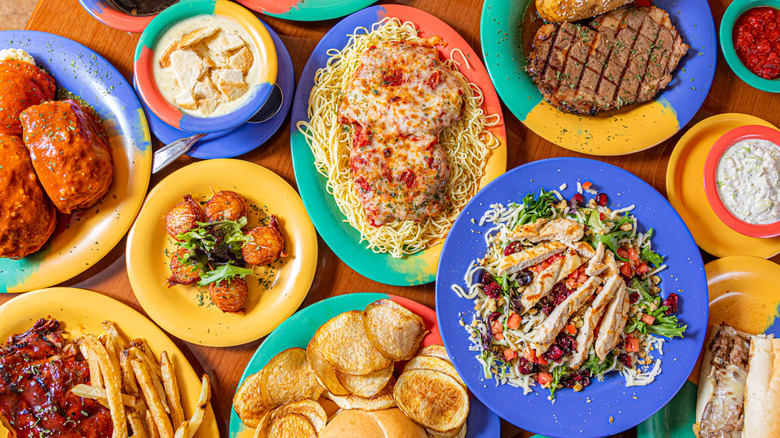
My friend has gone out to eat with her parents, and on more than one occasion, they've ordered a dish, had the plate put in front of them, and been absolutely gobsmacked by the portion size. Unless you're eating at a restaurant that does tasting menus or small plates, this sort of large portion conundrum is fairly common. And unless you're into leftovers, getting a giant plate of food that won't be finished is, for the boomer mind, an incredible waste.
Being overwhelmed by the size of portions these days isn't just boomers overreacting — portion sizes are definitely getting bigger. "Portion sizes of food prepared outside the home has increased significantly over the years and exceed federal guidance for dietary guidance and food labels," said the American Heart Association.
Food waste in the restaurant industry is a problem, but it's a work in progress. According to Feeding America, more than half of the 92 billion pounds of food that's wasted every year comes from the food industry. Boomers heard stories growing up from their parents about the Great Depression and living through world wars — times when food was scarce. They just don't want to see perfectly good food go to waste.
Using QR code menus instead of traditional paper menus

The Covid-19 pandemic brought a lot of changes to the restaurant industry. In addition to more outdoor dining and takeaway meals, it also encouraged restaurants to fully accept using digital menus. According to a 2021 CNBC article, Quick Response Codes, or QR codes, have been around since 1994, and entered the mainstream when smartphones with cameras came about. In 2026, QR codes go even further than the actual menu, offering guests the option to order and pay for their entire meal via their smartphone. But what about those who, despite these technological advancements, simply want to hold a paper menu?
Of all the restaurant complaints I got from my friend's boomer parents, they felt most passionate about the use of QR codes. While there are certainly benefits for restaurants, like increasing cost efficiency, reducing environmental impact, and ease of updating or changing a menu, there are downsides to it, too. According to Get Sauce, 62% of QR code scans come from 18-34 year olds, meaning older demographics aren't using them as often. This could be as a result of older guests not being as tech savvy, issues with accessibility, or simply not feeling comfortable using a phone to order. Offering QR menus is fine as an option for those who want to use it and won't feel burdened by it, but it shouldn't be the only option. The boomers simply want you to put your phone down at the table and have a nice conversation. Is that so much to ask?
Fancier, upscale condiments
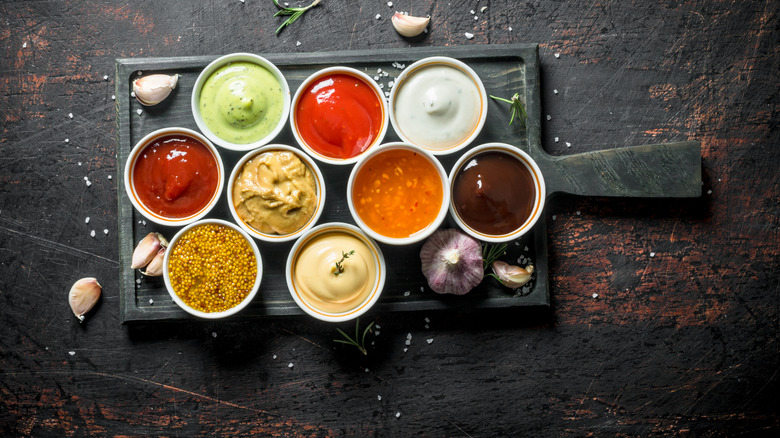
Have you ever opened up your refrigerator, looked at the inside of the door, and asked yourself, "What even are these condiments?" When it comes to dining out, boomers, like Rachael's parents, are asking the same question. Questions like 'what is aioli?', 'why can't we just call it mayonnaise?', and 'hey, where's the regular ketchup?' are frequent and frustrating.
This may seem like a bit of a curmudgeon-esque complaint, but the trend of bolder, more outgoing sauces and condiments is very much a real thing. According to Food & Beverage Magazine, major trends in the 2025 sauce landscape included more briny flavors, fermentation, umami, and the combination of sweet and spicy, or swicy. In addition to items like hot honey, more restaurants are playing with combinations like gochujang-maple, chili-spiked chocolate, and spicy fruit chutneys. As far as fermented sauces, seeing a pickled ramp vinaigrette in the place of a typical Italian vinaigrette or a pickle-brined hot sauce to replace Tabasco was not uncommon. And then there's the integration of mushrooms, with specialty mushrooms like lion's mane and king trumpet being the star ingredient in steak sauces and gravies.
The boomers are hoping for the good ol' fashioned ketchup and mustard, but in this case, we think they should lean into the trends. Restaurants are embracing these flavor and ingredient trends and using them in beautiful, delicious ways, and while it's easy to revert to the old reliable, change, even (and especially) when it comes to something as simple as dips and dressings, is a good thing.