

10 Scandals That Rocked Aldi
Decades since it was founded in the early 1960s in Germany by the Albrecht family, Aldi has become a household name around the world. In the U.S. alone, there are more than 2,600 Aldi stores, with hundreds more set to open very soon. Of course, the discount retailer is loved for its low prices and private-label products, but like most major corporations, Aldi is not perfect.
In fact, Aldi has survived several serious scandals over the years. We're talking about everything from wage theft accusations to hygiene breaches to major lawsuits and exploding burgers. Yes, you read that correctly. Aldi, it turns out, has quite a colorful history.
Intrigued? We were, too. Keep reading to discover some of the biggest scandals that have rocked Aldi in the past. Spoiler alert: This list involves more than one incident with a cocaine shipment. We told you, colorful history.
It got sued by Mondelēz
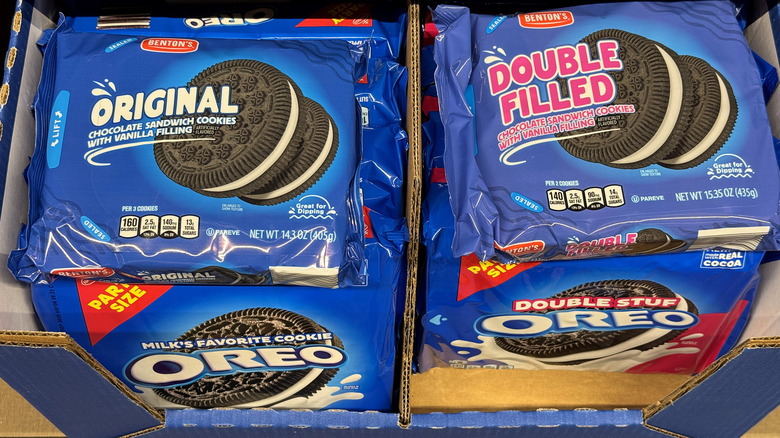
Aside from budget-friendly prices and the "aisle of shame," Aldi is best-known for its range of private-label products. In fact, more than 90% of the products it stocks are private labeled. Another huge part of Aldi's strategy is that those private-label products look just like popular branded items. But while it might be effective, this approach is risky. It has actually gotten the discount retailer into hot water on more than one occasion.
In 2025, for example, it was sued by Mondelēz International for selling chocolate sandwich cookies in packaging that looked almost identical to Oreos. The cookie brand is a huge seller for Mondelēz — research suggests that more than 20 billion Oreos are sold in the U.S. every single year. This is why, when Aldi (which is quickly becoming a key player in the American grocery market) started selling its own very similar version of the cookie for a lower price, Mondelēz felt threatened enough to file a lawsuit.
In fact, the snack giant even claimed that if Aldi doesn't change its packaging, it might cause serious harm to the Mondelēz brand. Aldi was also accused of copying several other Mondelēz products, including Wheat Thins, Chips Ahoy! cookies, and Nutter Butters. This isn't the first time Aldi has faced a lawsuit over copying popular products. In the U.K., it has also faced legal action from brands like Robinsons, Thatchers, and Marks & Spencer.
The $150 million deliberate wage theft accusations in Australia
Wage theft is a huge problem in the U.S. In fact, research suggests that every year, millions of American workers are not paid their full wages. It's a serious issue, especially for low-income workers, who are more likely to be victims. But the problem is not limited to America — Australians also have to deal with the issue of wage theft.
In fact, in 2023, the Shop, Distributive and Allied Employees Association filed a lawsuit against Aldi for wage theft. The union, which represents retail workers in the country, including those from Aldi, accused the chain of forcing workers to work an extra 30 minutes doing tasks like cashing up and emptying bins on each shift without pay. The union noted that this was happening at Aldi stores across the country. At the time of writing, the lawsuit was still ongoing and accepting new claimants.
Three years before the claim in Australia, Aldi workers in California filed a similar lawsuit. The legal action resulted in Aldi having to pay out $2 million to around 2,000 employees.
Its turkey burgers started exploding

Yes, you're reading this right. Aldi really did once sell turkey burgers that started exploding. It sounds comical, but it was actually quite dangerous. One woman from Pennsylvania claimed that after following the cooking instructions on a packet of turkey burgers from Aldi, and placing a patty into a hot, oiled pan, the entire thing exploded, leaving her with painful second-degree burns.
As a result of the incident, which left her with permanent scars, the woman filed a lawsuit against Aldi in 2019. She initially sought $35,000 from the retailer in damages, but while the lawsuit was settled in 2020, it's not clear how much money she received in compensation. Aldi has had to pay out for injuries on several occasions, although claims are not always related to its products. In fact, the retailer has had to pay out hundreds of thousands of dollars because of claims related to slips and falls in its stores.
It had to plead guilty to hygiene breaches because of mouse droppings
One thing you don't want to see when you're deciding between chocolate sandwich cookies, thin wheats, or peanut butter creams (sorry, Mondelēz) is mouse poop. But unfortunately for customers in one of Aldi's U.K. stores, this was a real threat.
In April 2020, after purchasing an Easter egg from an Aldi store in London, one customer found droppings and fur on their candy. Yes, for real. If your stomach is churning, you're not alone. The customer quickly contacted local Environmental Health Officers, who found further evidence of a mouse infestation in the Aldi store. They found droppings on food packaging and near open bread and milk display areas, which is a serious hygiene violation.
Rodent droppings are not just gross; they're also a pretty big health risk. They can transmit Salmonella, for example, as well as hantavirus (although this is rare in the U.K.). As a result of the investigation, Aldi was taken to criminal court and had to pay around £64,000 in fines (which is almost $87,000 USD).
Aldi breached European law with fake discounts
Aldi is already known for pretty low prices, but it's not beyond offering discounts. In fact, it regularly offers specials and deals on products throughout its stores, helping customers save even more on their groceries. But in Europe, the budget-friendly chain has been called out for some less-than-savory discount tactics.
In 2024, the Court of Justice of the E.U. ruled that Aldi had broken the law by offering discounts on products soon after raising their prices. Its promotional leaflets in Germany had advertised big savings on items like bananas and pineapples ... only it wasn't entirely transparent, because the prices weren't any lower than the previous month's prices for those items. In short, Aldi was deceiving customers into thinking they were getting better deals through shady pricing strategies.
The ruling had big implications. Now, in the E.U., retailers can only advertise price reductions if the crossed-out price on the leaflet or tag is genuinely the lowest price that the item has been at in the past 30 days. Otherwise, it's no dice.
It received millions of dollars' worth of cocaine instead of bananas multiple times
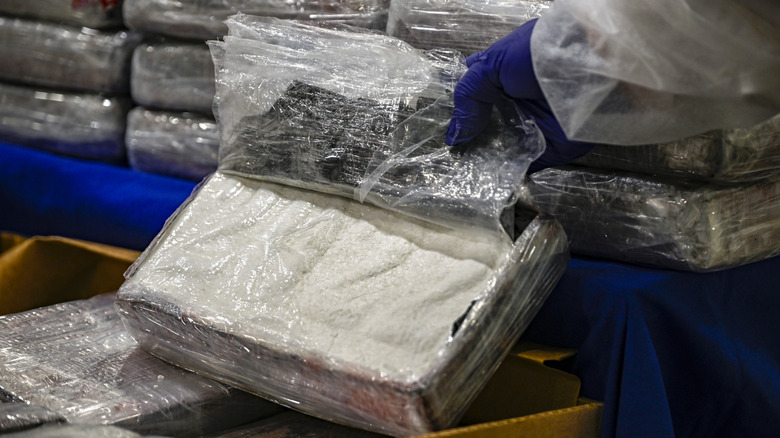
Unloading shipments of food is a regular activity for most retail workers. And needless to say, this is a task that doesn't usually involve coming into close contact with millions of dollars' worth of illegal drugs. But if you're an Aldi worker in Berlin, Germany, this might have actually happened to you not once, but twice. For real.
In 2014, 140 kilograms of cocaine were found in a shipment sent to Aldi stores in Berlin and Brandenburg. Workers opened up the shipment, expecting to find bananas from Colombia, but instead, they found cocaine. It was a huge logistical error, and was the biggest shipment of illegal drugs found outside of Germany's ports for decades. So, on that basis, you'd think that this is a once-in-a-lifetime situation; there's no way it could happen a second time. Yet, that's exactly what happened. One year later, Aldi stores in Berlin received another huge cocaine shipment from Colombia.
Surely, it couldn't happen a third time, right? We promise you we are not making this up. In 2019, six Aldi stores in the city of Rostock and a warehouse in Jarmen received a regular shipment of banana crates. Inside? Over half a ton of cocaine, of course.
One of its egg suppliers tried to publicly push back on animal welfare regulations
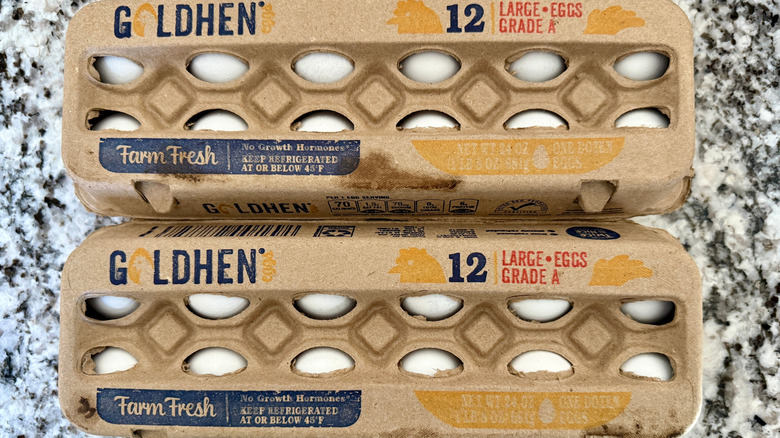
If you've eaten one of Aldi's Goldhen eggs, there's a chance you've eaten an egg produced by Rose Acre Farms. In fact, if you've eaten eggs from anywhere in the U.S., there's a chance they've come from this particular Indiana supplier, because it's one of the leading egg producers in the country. But this particular company comes with some serious controversy.
While Rose Acre Farms' website states a commitment to animal welfare, some of its actions give the opposite impression. In 2019, it went on public record to state its concerns about proposed Prop 12 animal rights regulations in California, notably pushing back on the amount of space hens should be allowed.
The letter, which Rose Acre Farms wrote to the California Department of Food and Agriculture, came less than 10 years after it was the subject of an investigation by The Humane Society of the United States (HSUS). In 2010, the animal rights charity reported it had found evidence that Rose Acre Farms was deceiving consumers by claiming its eggs were kept in humane conditions. It reported that hens were kept in cages so small they couldn't open their wings. At one of the company's farms, HSUS said hens were stacked on top of each other in eight levels of confined cages.
Aldi once accidentally sold horsemeat

In 2013, people in Europe realized that they might have been eating horsemeat unknowingly, and panic ensued. The scandal started in Ireland when several supermarket meat products tested positive for horse DNA. Tests continued, and soon, multiple retailers in multiple European countries were implicated. Six years later, French meat-processing firm Spanghero and two Dutch meat traders were tried in Paris. They were accused of profiting from the sale of horsemeat that had been produced in Romanian abattoirs and sold as beef.
Back in 2013, horsemeat was suddenly everywhere, including on the shelves of Aldi. In February of that year, the popular budget retailer confirmed that some of its beef lasagnas might have actually been made with 100% horsemeat. Fortunately, experts didn't believe that the meat would have been unsafe to consume, but still, Aldi pulled products from the shelves. Both Aldi and its customers expressed anger that they had been mistakenly selling and buying the wrong meat. And yes, selling horsemeat was a mistake, not a purposeful move, like some incorrectly believe.
Its seafood was linked with North Korean human rights abuses
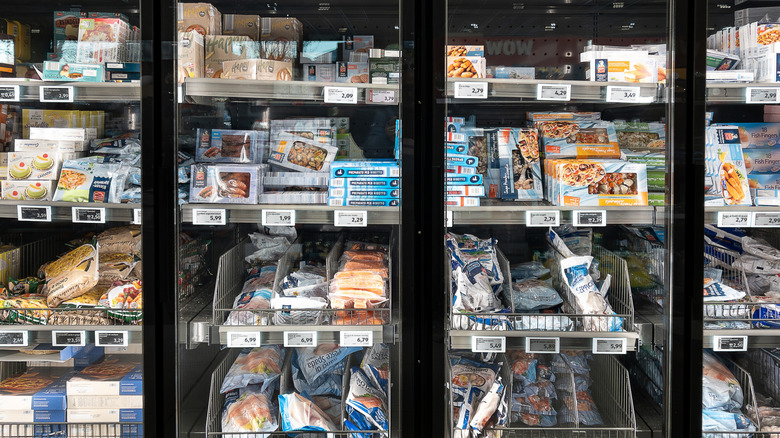
While many adore Aldi's seafood, the store has run into some serious problems with this category in the past. In 2017, for example, an AP investigation linked Aldi's fish supply chain with North Korean human rights abuses. It turns out, alongside Walmart, the grocery store chain had been buying salmon processed by North Korean workers in China. The workers had been sent there by the North Korean government — the same government that was taking a huge chunk of their salaries (as much as 70%).
This meant that not only were Aldi customers paying for seafood processed in places with little regard for human rights (the report suggested that the workers were not allowed privacy or access to any outside communication), but they were also potentially paying to fund activities by the North Korean government. Activities that might include building nuclear weapons.
Unsurprisingly, the investigation was a widely reported-on scandal in 2017. After all, buying products made by forced labor is actually illegal in the U.S. Unfortunately, things haven't improved much. In the years since the AP investigation, reports have continued to link Chinese seafood companies (including the ones that export to the U.S.) with the forced labor and abuse of Uyghur and North Korean workers.
Aldi staff were once accused of upskirting
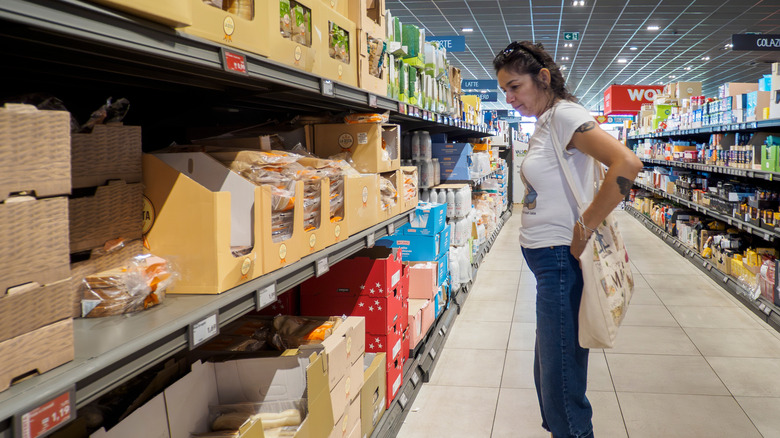
Upskirting, which basically involves taking a photo or filming underneath someone's clothes without their permission, has been illegal in Germany since 2021. But that doesn't mean that people caught doing it in the country before the law came into force didn't have to face consequences.
In 2012, several Aldi managers in the state of Hesse were caught secretly filming women as they bent over to pick up groceries. They would then burn the footage onto CDs, which would be passed around to their colleagues. At the time, Aldi said that it would investigate the issues and, if necessary, take disciplinary action against the employees.
Aldi isn't a stranger to hidden camera accusations. In 2013, a year after the upskirting incident, a private detective who went undercover at the store said he was told to secretly spy on staff. Aldi denied the accusations, though.