

9 Kitchen Features Boomers Grew Up With That Are Suddenly Cool Again
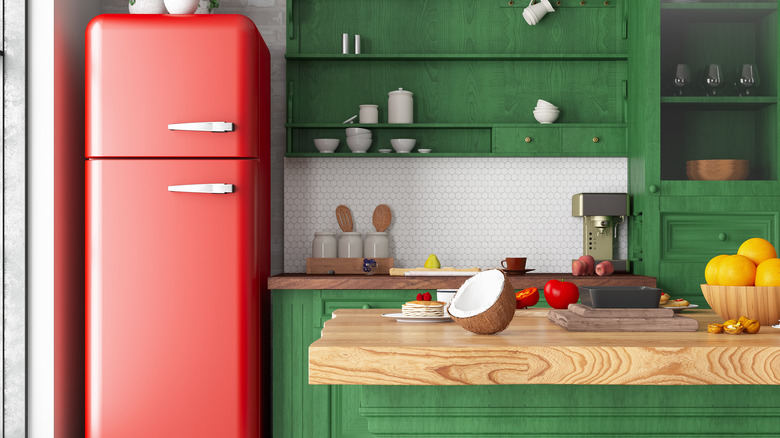
Some kitchen features of the past that should really stay in the past. Carpets, for example, were popular in the 1960s, but most would rather they didn't make a comeback. For one, the kitchen is a place where mess and spills happen frequently, and let's be honest, carpets are just not as easy to clean as a wooden, linoleum, or marble floor. Another trend that should probably stay in the past: Popcorn ceilings. The textured style was popular in the 1970s, but not only are they now dated, but they're probably not that safe, either, as some were made with asbestos.
But some things deserve a revival. Many boomers grew up with kitchen features like butcher block countertops, home bars, hanging houseplants with rattan planters, and pink walls, and honestly, they've stood the test of time. Keep reading to find out the kitchen features of the 1950s, 1960s, and 1970s that are suddenly cool again. You'll probably find yourself wanting to start wallpapering the kitchen and painting everything green. Don't say we didn't warn you.
Butcher block countertops
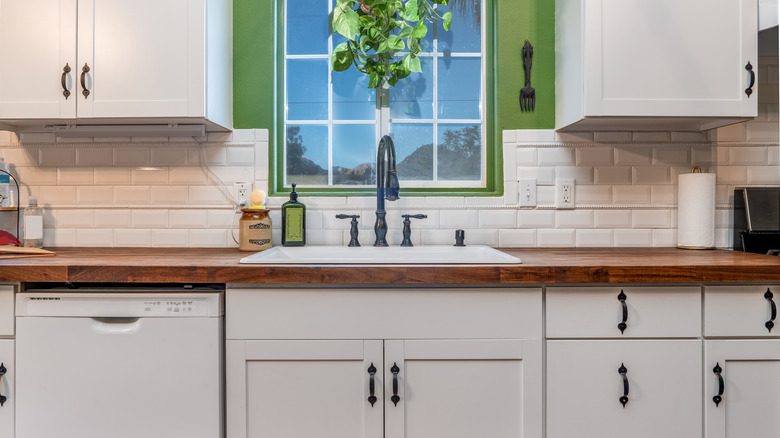
If you walked into a kitchen in the 1970s or 1980s, there's a good chance you'd come across thick, wooden butcher block countertops. As is already clear from the name, these countertops were inspired by the kind that butchers use for preparing large cuts of meat. Traditionally, they're made from multiple cuts of hardwood, which have been glued together. But back in the 1970s, not everyone went for the authentic version; many opted for fake laminate butcher block countertops to get the look without splashing the cash.
Butcher block countertops are having another moment right now. While you can still buy faux laminate versions, many people prefer the real thing for a classic aesthetic and optimum functionality. These countertops don't just bring a warm, rustic vibe to a kitchen; they're also incredibly durable and can last for a long time if they're cared for properly. They'll need regular cleaning and oiling, for example, and don't be tempted to place a hot pan directly onto the countertop, as the wooden surface is not heat-resistant. But take care of a butcher block countertop well, and it could last you years.
Dumbwaiters
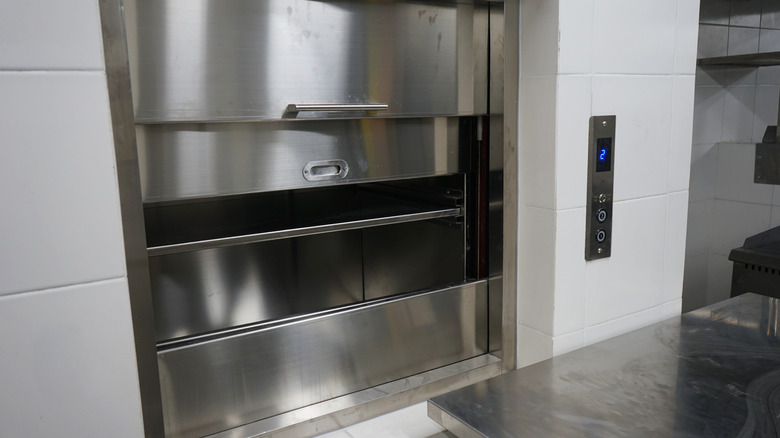
Some people who grew up in the 1940s and 1950s will remember dumbwaiters. The handy contraption is basically a very small elevator, which is used to transport food from the kitchen to the dining room. The first mechanical version was invented in the 1880s, and from then on, they became a popular installation in large mansions, hotels, and restaurants. Fun fact: The name was coined by the writer of the 1960s play, "The Dumb Waiter," which revolves around the kitchen staff of a large house, who use a dumbwaiter to communicate with other characters in a different room.
Let's be honest, most houses and apartments these days don't require the use of a dumbwaiter. There are many reasons for this (most of us don't live in mansions, for one), but also, open-plan kitchen-diner spaces have boomed in recent years, rendering a dumbwaiter totally useless. But the dumbwaiter market is experiencing movement, and it's predicted to grow significantly over the next decade.
Granted, most of the demand is coming from the hospitality industry, but some designers have noticed that some people are starting to take an interest in separating their kitchen and dining rooms by floor again. Because of this, several have requested dumbwaiters to make serving food much smoother and mess-free.
Pink walls and cabinets
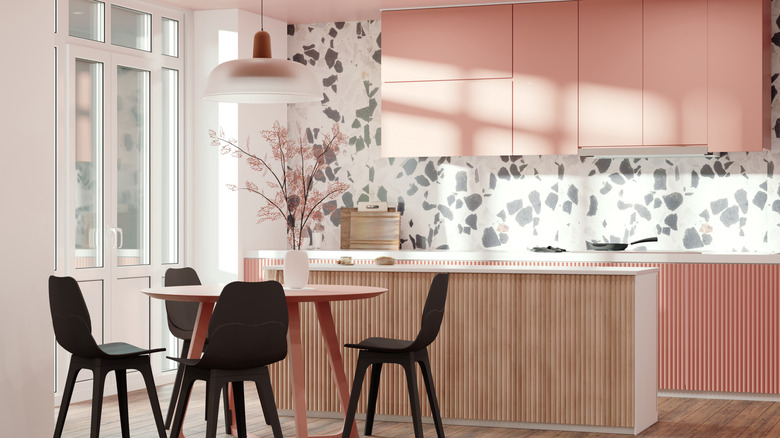
When the boomers born in the late 1940s were starting school, making friends, and whipping up mud pies in the yard, their parents were thinking: Isn't it time we added a splash of color to this kitchen? Yep, the 1950s is when kitchens started to get really vibrant, and the trend continued for the next few decades. Painting the walls and cabinets pink was particularly popular.
After years of Millennial grey and all-white kitchens, color is starting to come back in a big way, and once again, many people are choosing to embrace pink. While some are going for the all-out 1950s-style pink-everything Barbie Dreamhouse look, others are being a little more selective.
Experts say a great way to start experimenting with pink in your kitchen is to just add a touch here and there, and leave the rest neutral. You could go for a pink lampshade, for example, or go even further by painting small sections of the walls pink. You could opt for pink cabinets, or play it even safer by just choosing pink appliances.
Adding a splash of green
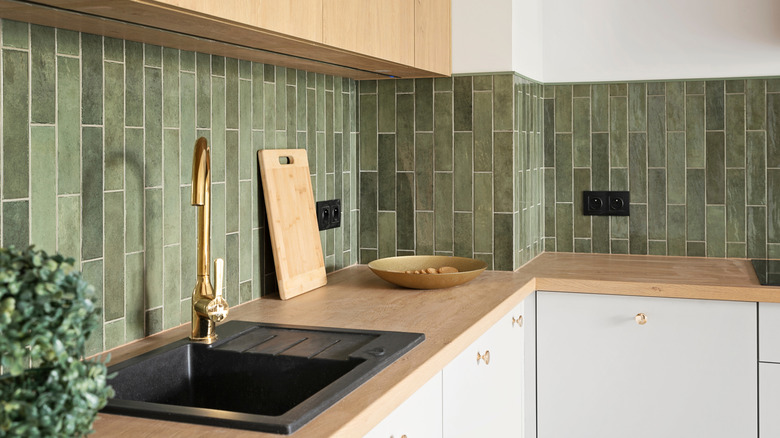
Green was also a pretty popular home color during the 1940s, 1950s, and 1960s. Ming green was particularly loved (named after the Ming Dynasty, apparently), and would often make an appearance in both kitchens and bathrooms. Mint green was also a common choice, and in the 1950s, it would sometimes be combined with pink, too.
Decades later, green is making a comeback. In 2020, Dakota Johnson's green kitchen went viral after she did an Architectural Digest home tour. People loved her pea green cabinets and metal fixtures. In the mid-2020s, people are leaning more towards pistachio green, which gives kitchens a nice retro vibe but with a modern feel. In fact, pistachio green is dominating everything, from interiors to fashion. This led Good Housekeeping to declare pistachio green as its color of the year for 2025.
Other shades of green that people love for modern kitchen designs include forest, sage, and olive. Basically, name your favorite green, and chances are you'll be bang on trend.
Wallpaper
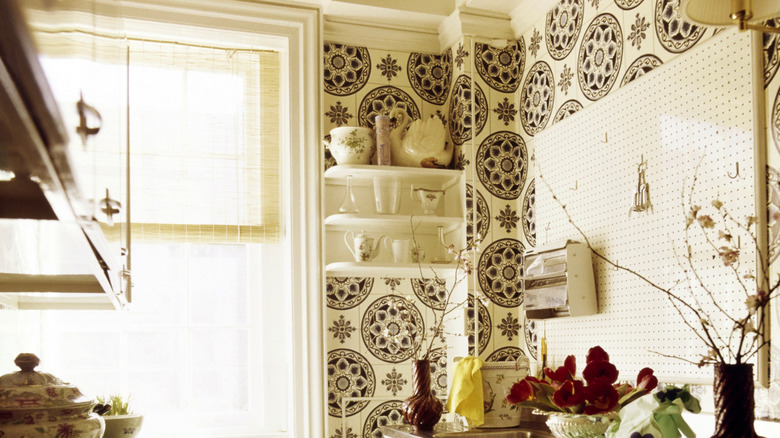
Wallpaper designs in the 1940s and 1950s were often fun and playful. People loved busy, floral designs, pastel shades, and eccentric stripes and patterns. And they would use this wallpaper to decorate most rooms in the house. Yep, even the kitchen. This wallpapering trend continued for a few decades; many people remember their parents' and grandparents' kitchens being covered in wallpaper in the 1970s and 1980s, for example.
But around the 1990s, wallpaper took a back seat to paint, which was far easier to apply. People were also starting to crave a sleeker, more neutral look after many decades of busy wallpaper patterns. Not anymore, it seems, as kitchen wallpaper is starting to make a comeback. It's unsurprising, really. In the 1990s, people rebelled against busy patterns, and now in the 2020s, people are rebelling against all-white kitchen designs. Some are opting to go full retro and wallpaper the whole kitchen, while others are opting for a more subtle nod to the era by going for an accent wall.
In some cases, people choose wallpaper as a backsplash. However, if you're going to do this, it's important to choose a type that's easy to scrub clean and maybe consider a clear glass guard to install in front of it, too.
Home bars
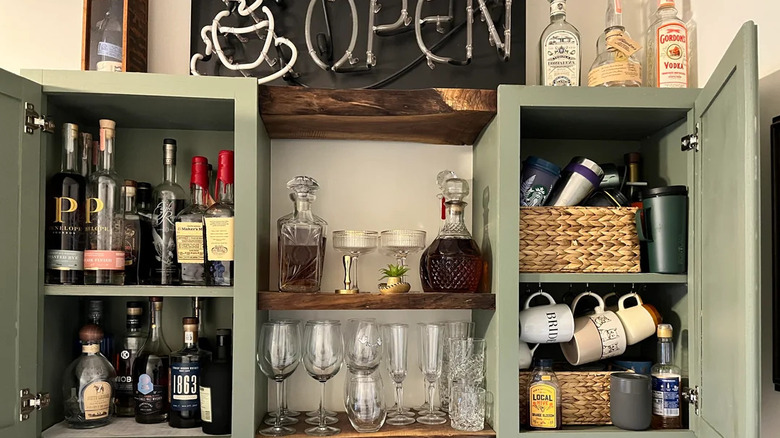
In the 1950s, the U.S. was enjoying a period of prosperity. After the difficult years of the Great Depression and two World Wars, people were enjoying having more income to spend on exciting possessions to enhance their modern lifestyles. They could buy televisions, cars, and, you guessed it, home bars. Yep, in the 1950s, home bars became serious business, and they stuck around for quite a while. In the 1970s, people were still entertaining their guests from the comfort of their own home bar, which was usually a dedicated area in the corner of the room with a stocked liquor cabinet, a small bar, and a few chairs.
In the mid-2020s, people are experimenting more with vintage home designs, and these home bars have started to make a resurgence. Finding the perfect placement is important; some prefer to install them in the corner of the living room, but others have opted to make use of a small kitchen nook, or a concealed cabinet, to create their own fun home bar area. Some people have even installed home bars in old chimney alcoves, while others have decided to make them an entire kitchen feature with specially installed sinks and taps.
Hanging houseplants
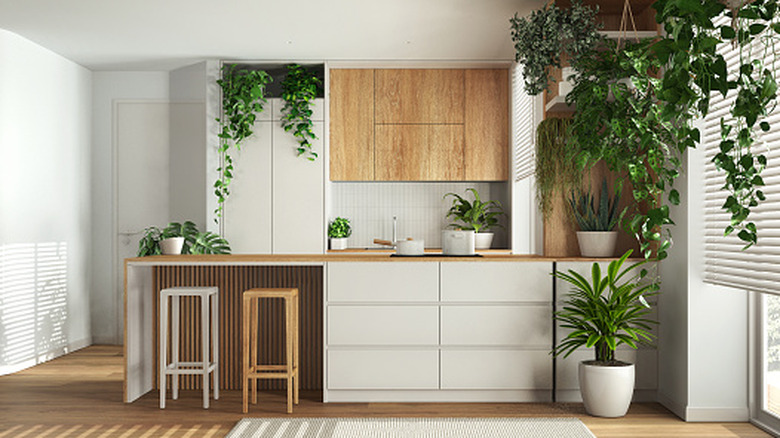
If you grew up in the 1970s, the chances are either your home had hanging houseplants in it, or you knew someone else who lived in a rainforest. We say rainforest, because these houseplants were usually hung from the ceiling, leaving their leaves and stems dangling down over the kitchen below, making everything feel distinctly tropical.
And in good news for plant-lovers, this trend is firmly back. People are loving bringing some natural vibes to their homes and kitchens by adding more trailing plants, like vines, to their space by either placing them on shelves or hanging them from the ceiling above.
Bringing more plants into your kitchen doesn't just look good, it can also have some serious health benefits. Research suggests that filling your space with houseplants may help to reduce stress, for example, and they may have a positive impact on air quality, too.
Colorful appliances
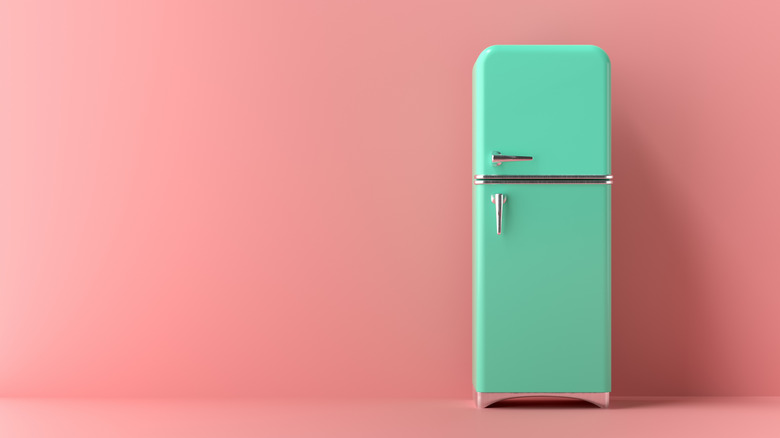
We mentioned earlier that having a colorful kitchen was all the rage in the mid 20th century. But these splashes of color weren't reserved just for the walls or the cabinets; people wanted colorful appliances, too. Some of those pink kitchens of the 1950s also had pink appliances, because why not go all-in on your favorite color if you can? One General Electric advert of the 1960s takes things beyond pink and advertises everything from blenders and mixers to can openers in colors like red, yellow, and green (or, as it named them, Flame, Harvest, and Avocado).
Fast forward to the mid-2020s, and people are loving colorful appliances again. Mixers and kettles come in a whole range of colors, for example, and a colorful Smeg fridge has also become quite the status symbol. At the time of writing, the popular appliance brand offers its retro-style refrigerators in bright reds, mint green, orange, pastel blue, and even Dolce & Gabbana's iconic blue and white pattern.
Rattan
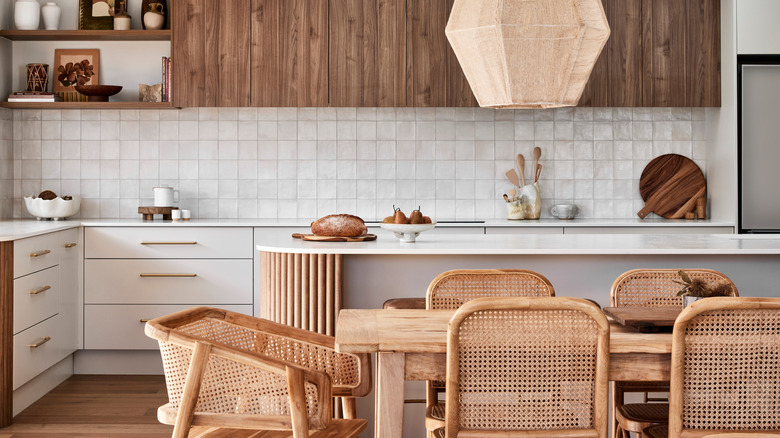
You've probably encountered rattan before. It's a type of wooden material that is often used in furniture. It's incredibly flexible, and, when steamed, it can be manipulated into different shapes and designs, which is why you often see rattan chairs with twisted or plaited backs and arms. In the 1960s and 1970s, people really loved rattan. Remember those hanging plants? Often, they would be hung from rattan planters, for example. People also liked rattan kitchen chairs and rattan wall hangings.
Many consider rattan to be a pretty timeless material (Ina Garten is a big fan), which is why it has made a comeback. It gives kitchens and dining rooms a nice, relaxed summery vibe, for one, but it's also a very durable material, which means it's a long-lasting investment, too. There are many ways to incorporate rattan into your kitchen design. You can choose a kitchen light made with the material, for example, or perhaps opt for chairs or even bar stools (maybe to go with your new home bar).