

10 Foods And Drinks Where Country Of Origin Actually Matters
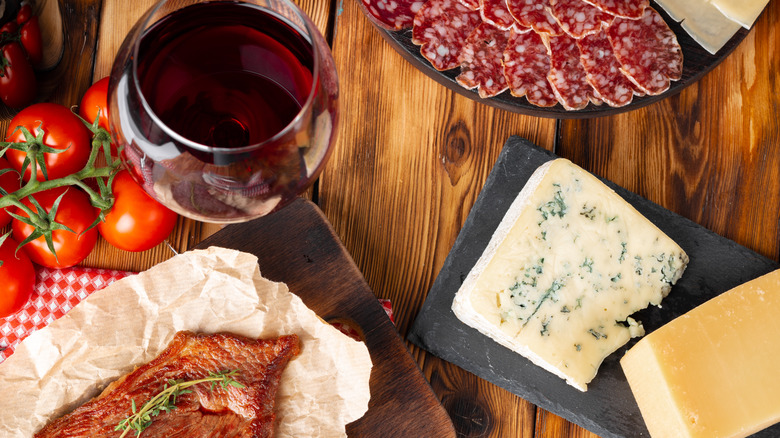
Country of origin labeling became mandatory on all international products entering the United States in 2009. The goal was to ensure American consumers knew where the products they were buying came from, enabling shoppers to make informed buying decisions. These products include everything from Mexican avocados to French wine to pasta from Italy, with the latter thankfully safe from recent U.S. tariffs. However, does the location a product comes from actually matter?
Yes, the place where a food or drink product comes from highly impacts the final flavor profile. The French call it terroir. It is the combination of the natural environment, including the amount of sunshine a piece of land receives throughout the year, the soils, the temperature swings throughout the day, the slope of the land where a product grows, and the rainfall throughout the year. These elements contribute to the taste, aroma, and texture of the final product, whether it be a glass of wine, a fresh vegetable, free-range eggs, or steak from grass-fed cows.
Beyond terroir, the location that products age, whether it be in wine caves, cheese cellars, or barrel rooms, will contribute to a product's character. Then there is the influence of the human factors, with grower practices and generations of history contributing to the final product's taste. To guarantee the authenticity of various products, regional and national regulations govern their production, further ensuring their quality. This is specifically true with the 10 items featured. Each is distinct thanks to their production location.
Champagne

To hold the official Appellation d'Origine Controlée (AOC) designation for the sparkling wine known as champagne, growers must follow a set of strict guidelines laid out by the French government. To begin with, the only place producers can make authentic champagne is in the defined Champagne region of France. Champagne earned its AOC designation in 1936. However, the area's history of producing sparkling wines and defending its quality dates back hundreds of years. The designation guarantees champagne's quality, authenticity, and status as an unique product tied to the region, while protecting it from fraudulent imitators.
Lying about 90 miles outside of Paris, the region enjoys one of France's coldest, wettest growing seasons. Here, cool climate, high acid grape varieties thrive, including chardonnay, pinot noir, and pinot meunier. Vintners plant vines in the white, fine-grained, calcareous soils of the Paris Basin. Chalky soils are well-draining, forcing roots to dig deep into the earth to find nutrients, increasing the quality of the fruit.
The harvest occurs by hand, yields are limited each year, as are the pressing yields. Primary fermentation typically occurs in stainless steel tanks, while the secondary fermentation, creating the bubbles, must occur in the bottle. Aging the wine on the lees, spent yeast strains, during the secondary fermentation helps tame the high acidity, with each variety contributing to the wine's overall elegance, weight, and finesse. Non-vintage champagne ages a minimum of 15 months in the bottle. The longer the bottle maturation, the more richness, creaminess, and texture will develop in the wine.
San Marzano Tomatoes
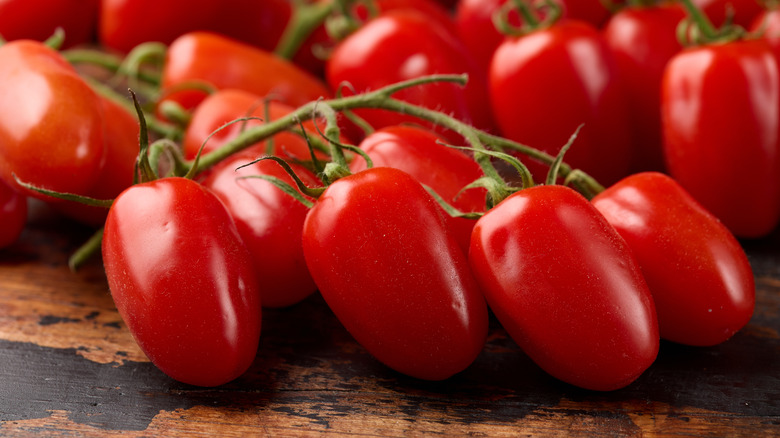
Italy's San Marzano tomatoes are widely considered the pinnacle of tomato quality worldwide. Originating in Southern Italy's Campania region, producers must grow San Marzano tomatoes in the Agro Sarnese-Nocerino Consorzio agricultural area. Fleshy San Marzano tomatoes offer a sweet, tangy, straight-off-the-vine flavor that enhances a range of Italian dishes.
The area's mineral-rich, volcanic soils contribute to the unique flavor of the tomatoes. Campania's hot, humid Mediterranean climate allows for a long growing season during which the tomato's full-flavored taste can slowly develop. Cultivation occurs naturally, with laws strictly forbidding any practices that might alter the tomato's natural, seasonal development. Harvest occurs by hand, and in waves, ensuring the fruit's optimal ripeness.
In 1996, the European Union awarded San Marzano tomatoes with the Protected Designation of Origin (PDO) status. The European Union designates the PDO classification for products due to their unique ties to the region, with the geographical location and terroir contributing to their unique flavor, texture, and aromas. These products combine the unique flavors of the region, along with the history and traditions that generations before have passed down. And with the designation, comes the name, as no other place in the world can produce San Marzano PDO. tomatoes.
In 1999, local producers established the Consortium for the Protection of San Marzano PDO Tomato to ensure producers uphold quality standards. Every can of authentic San Marzano tomatoes bears the PDO seal and the Consortium logo.
Ibérico Ham
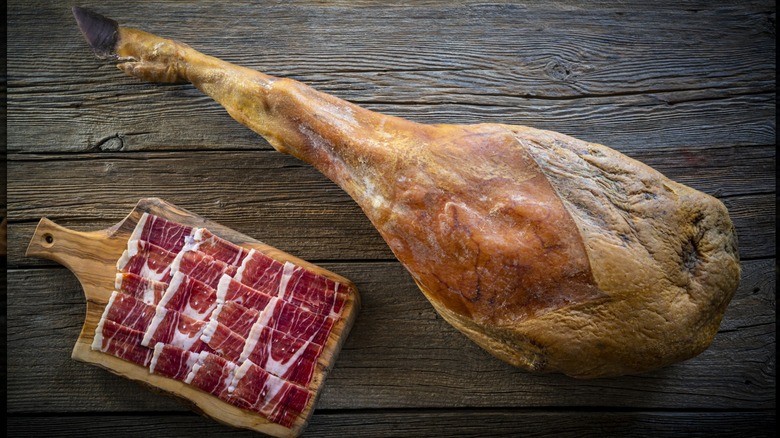
Spanish cured ham is more than simply a cold cut. It is a gourmet treat, and the finest is Jamón Ibérico deBellota, acorn-fed ham. The premium selection comes from Ibérico pigs that throughout their lives naturally infuse fat into their muscles, creating well-marbled meat with an unctuous, buttery texture.
Free-grazing Ibérico pigs enjoy a diet of acorns during the montanera season from late October through March. Antioxidant-rich acorns balance protein, fat, and carbohydrates, particularly the nuts from cork oak and holm oak trees, which thrive in the dehesas throughout Southern Spain's four Protected Designation of Origins (PDOs). The dehesa is a biodiverse ecosystem of oak forests, pastures, and animals that coexist harmoniously. Hams from the dehesa PDOs are representative of the land. The oak tree's acorns lend the signature savory flavor, velvety texture, and nutty, earthy aroma to meat.
The extensive process behind Jamón Ibérico has remained unchanged for generations. Producers follow traditional practices throughout the curing and aging over several years. After slaughtering, the Ibérico shoulder is heavily salted to remove moisture. Hams are then washed and hung to dry in well-ventilated rooms, allowing the meat's rich aromas to develop. Lastly, the Ibérico ages in temperature and humidity-controlled cellars for 36-48 months, achieving optimal, savory flavor and melt-in-your-mouth texture. Regulations around the ham's production ensure producers meet quality standards. A black seal indicates authentic Jamón Ibérico de Bellota.
White Alba Truffles
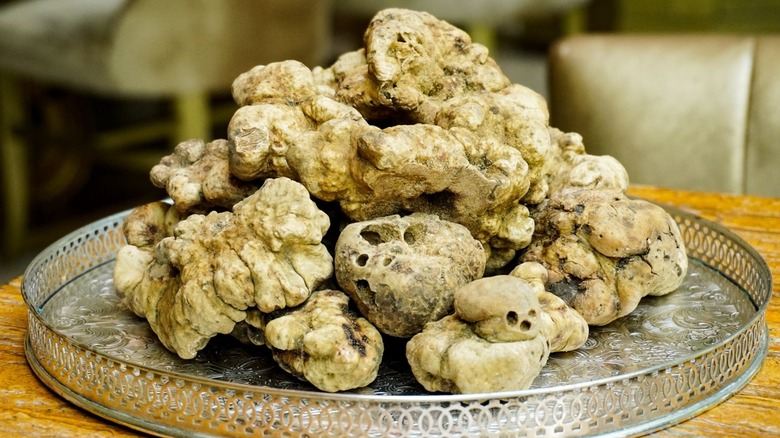
At a price that would fetch a king's ransom, white Alba truffles, or their technical name, Tuber magnatum Pico, are a seasonal delicacy that transform risotto, pasta, eggs, or a simple slice of buttered baguette into a treasured culinary masterpiece. Where black truffles are best for cooking, white truffles are the adornment to a dish. Their fresh, delicate shavings have intense, ethereal, and unmistakable earthy aromas with a subtle woodsy flavor.
Other parts of the world grow white truffles, as do other Italian regions. However, Northwest Italy's Piedmont region around Alba is ideal for growing the high-priced fungi. The location combines the necessary elements for truffles to thrive, including a rainy, humid climate, moderate temperatures, well-draining, nutrient-dense calcareous soils, and the presence of host trees and other plants, known as comari, necessary for their development.
Truffles grow underground at the base of deciduous trees such as oak, poplar, and hazelnut. Here, they form a beneficial relationship with the tree's roots, known as mycorrhiza. The roots supply the fungi with sugars and carbon. The truffle takes nutrients from the soil, which the tree's roots absorb. The truffle's maturity take up to 10 years.
During the autumn harvest season, truffle hunters, known as trifolau, spend long days in dreary, cold, damp conditions with faithful, well-trained hunting dogs searching forests for truffles. Their work is not in vain. A fresh white Alba truffle can fetch $500 an ounce. Cultivation of white truffles has proven largely unsuccessful, contributing to their rarity.
Parmigiano-Reggiano
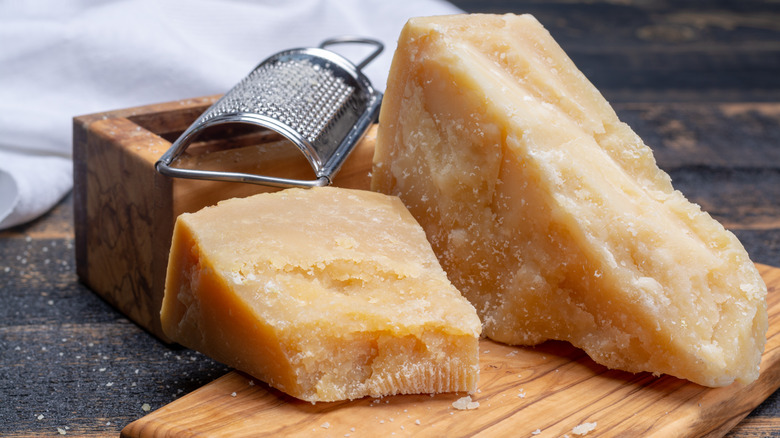
Parmigiano-Reggiano PDO is uniquely Italian. Although you can find cheese labeled as parmesan from producers outside of Italy. However, authentic Parmigiano-Reggiano PDO can only come from the provinces of Parma, Reggio Emilia, Modena, Bologna, and Mantua, within Italy's Emilia-Romagna. The cheese earned Protected Designation of Origin status in 1996. The EU designated it as a Mountain Product in 2012, coming from a mountainous region, with the product's regulatory body, the Parmigiano-Reggiano Consortium, further guaranteeing its caliber by certifying Parmigiano Reggiano as a "Quality Project – Mountain Product."
The history of Parmigiano's production dates to the Middle Ages, when regional Benedictine and Cistercian monks sought to produce an age-worthy cheese. They used salt from the Salsomaggiore salt wells in Parma with milk from cows bred on the monastery farms. They produced a cheese free from additives or preservatives, which they formed into wheels for aging. The biodiversity of the regional grasses enhanced the milk's flavor. The local salt helped preserve the milk while seasoning its flavor. The Duke of Parma gave the first designation of origin in 1612.
Today, authentic Parmigiano must come from the area's grass-fed cows' milk. The milk has abundant microbiological bacteria due to the local flora, enhancing the overall flavor. The cheese's production process remains unchanged. Producers use only regional cow's milk and locally sourced salt. The cheese requires 12 months minimum aging. However, aging 24 months allows optimal, umami-rich taste of the cheese to shine. The marks of origin on the rind ensure its authenticity.
Balsamic Vinegar
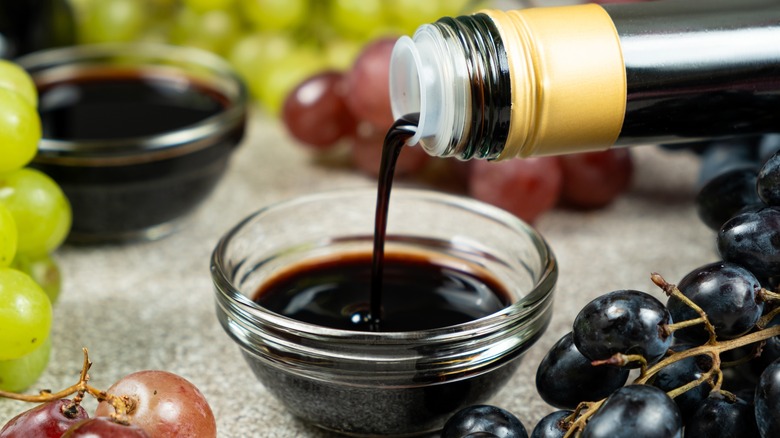
Emilia-Romagna is Italy's food valley. With a rich agricultural history, fertile soils, ideal climate, and a location that spreads from the Apennine Mountains to the Adriatic Sea, the region is home to 44 European Union-awarded Protected Designation of Origin (PDO) or Protected Geographical Indication (PGI) products, the most in Italy. Each is inherently tied to Emilia-Romagna, including Aceto Balsamico Tradizionale of Modena PDO and Aceto Balsamico Tradizionale di Reggio Emilia PDO.
If this has you wondering if your bottle of balsamic is fake? Authentic aceto balsamico can only come from the provinces of Modena and Reggio Emilia, using grape varieties grown locally. Producers cook the grape musts from these varieties, including lombardy and trebbiano, to half their volume over a 12-24 hour period. The resulting thick, concentrated liquid then ferments over several months using airborne native yeast that exists in the wild throughout Emilia-Romagna.
When the must's natural sugars convert into alcohol, producers transfer the wine into mother barrels where the bacteria transforms the alcohol into vinegar. The vinegar then ages in barrels, moving from cask to cask as its volume reduces. Aging occurs for a minimum of 12 years, with some vinegars aging 25 years.
Time, oxidation, and barrel's characteristics enhance balsamic vinegar's complex aromas and flavors. By law, producers can not add coloring, thickeners, wine vinegar, or other ingredients to PDO-certified balsamic vinegar. Additionally, 100% of the production must occur in the noted province. The red and yellow PDO seal on the bottle ensures its authenticity.
Sauternes
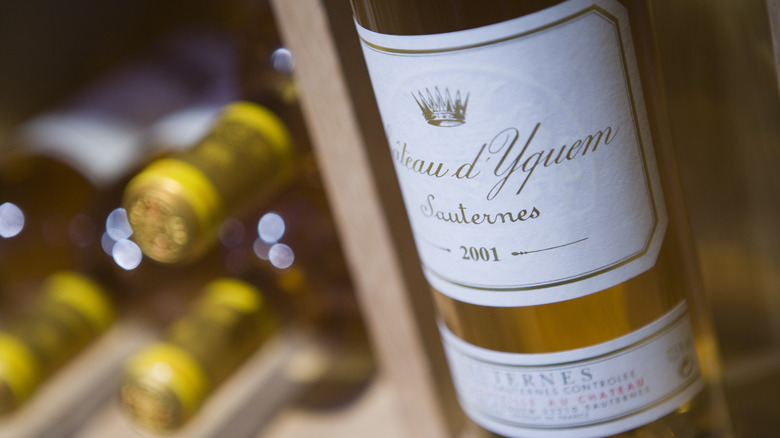
There are few wines as luxurious as Sauternes, France's liquid gold. The sweet dessert wine from within the country's Bordeaux region blends delicate, thin-skinned sémillon with sauvignon blanc grapes grown within the appellation. Producers can also add small amounts of muscadelle and sauvignon gris. The sauvignon blanc provides necessary acidity, ensuring the final wine has freshness, cutting through the syrupy sweetness and preventing a cloying taste.
What makes these grape varieties essential to Sauternes is their susceptibility to the Botrytis cinerea fungus. Also known as noble rot, botrytis is a naturally occurring fungus that infects grapes left on the vine well past their optimal ripeness. Foggy mists on cool autumn mornings rise from the nearby Garonne River and Ciron tributary, settling throughout Sauternes vineyards. The environment is conducive to botrytis development. Warm, sunny afternoons dry the grapes. This cycle occurs over several weeks in which the grapes shrivel, lose water, and concentrate their natural sugars.
The result is a late harvest wine with honey, marmalade, candied ginger, tropical fruit, and citrus flavors. There is a high amount of residual sugar in authorized Sauternes Appellation d'Origine Controlée wine, as fermentation stops before all sugars convert into alcohol, at least 45 grams per liter. Still, some have up to 220 grams per liter. The wine's thick, velvety texture coats the palate in sweet drops of sunshine, with a finish that lingers for days. This combination of Bordeaux white grape varieties and the region's natural terroir promoting botrytis defines Sauternes.
Kashmiri Saffron
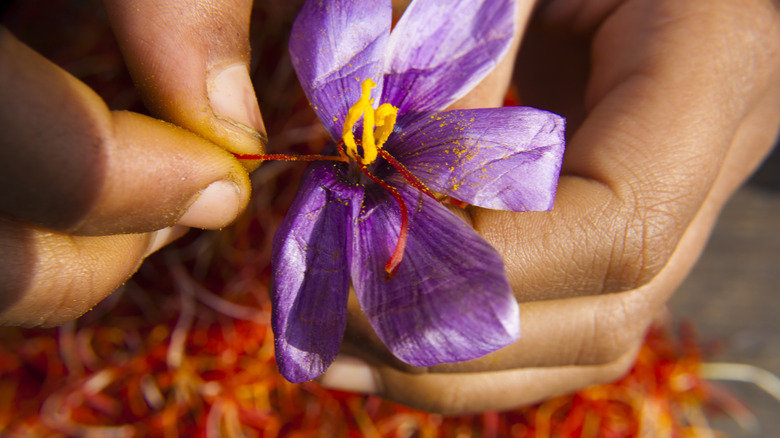
Saffron is the most expensive spice in the world. While Iran is the largest saffron producer globally, India's Kashmiri Mongra saffron is widely considered as one of the highest quality spices internationally. So much so that in 2020, Kashmiri saffron was awarded the Geographical Indication (GI) tag for its quality and the significance of its cultural heritage. The GI tag guarantees the quality and authenticity of the spice.
From high elevations in the Pampore region of Kashmir, India, the flowering, purple Kashmiri saffron crocus flourishes in nutrient-dense, well-draining soils. Winter temperatures are cold and constant, and summers are mild. The terroir contributes to the intensity of the saffron's color and flavor. The flowers enjoy a long and slow growing season, allowing rich, full-flavored compounds within the red, thread-like crocus stigma to develop.
Each flower contains only three of these stigmas. Through a laborious process, all flowers are hand-harvested, with removal of the stigma occurring on the same day. It takes approximately 75,000 flowers to produce one pound of dried saffron. Kashmiri saffron is known for its high crocin count, contributing its deep mahogany-red color and bold, floral, earthy, slightly bitter tastes.
The robust intensity of antioxidant-rich Kashmiri saffron makes it ideal for using culinarily and medicinally. The bold taste is the ideal enhancement to a saffron-rich chicken biryani. Challenges around climate change, industrial development, and government inaction to support farmers have seen the production of Kashmiri saffron drop in recent years, further contributing to its rarity.
Tequila
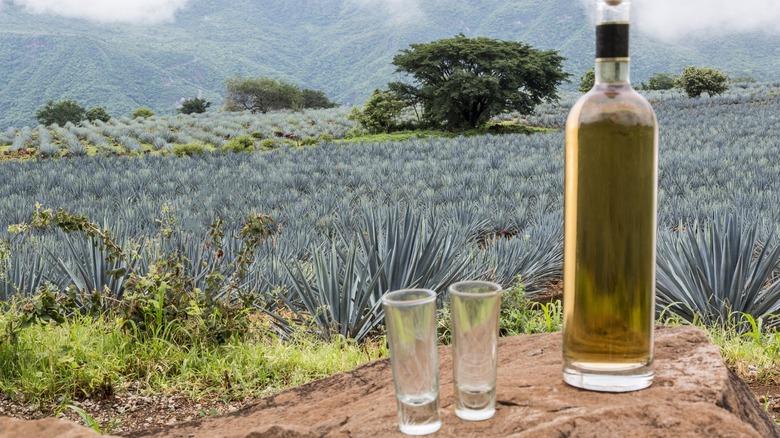
In recent years, the tequila market continues to grow. It seems almost daily that a new tequila brand, often backed by celebrities, arrives on the market. However, tequila is more than the base of a classic margarita. It is a product with a rich history tied to the land. Mexican regulations state tequila can only be produced from the hearts of weber blue agave from specific areas within Mexico, including Jalisco, Guanajuato, Nayarit, Tamaulipas, and Michoacan. Mexico registered the Appellation of Origin for tequila in 1978, protecting the product internationally. Every bottle of tequila will contain a 4-digit NOM code indicating where the liquor's production location, guaranteeing its authenticity.
So why is this Southwestern Mexican location so ideal for tequila's production? Tasting Table asked Jorge Llauro, Chief Marketing Officer of the Casa Azul tequila what makes the terroir of Jalisco essential to tequila production. Llaura shared that the organic tequila producer's focus on sustainability and craftsmanship, combining traditional practices with modern techniques, creates a tequila representative of the land. He says, "More broadly, location is essential in tequila production because tequila is shaped by its environment—the soil, climate, and water all influence the character of the spirit."
The entire ecosystem and terroir surrounding the agave fields will affect tequila's quality and taste, similar to wine. Highland tequilas, sitting at higher altitudes with iron-rich soils, produce agave with sweeter flavors. Lowland tequilas have earthy, herbaceous flavors. While consistency is essential, the terroir's influences are what make each tequila unique.
Kobe Beef
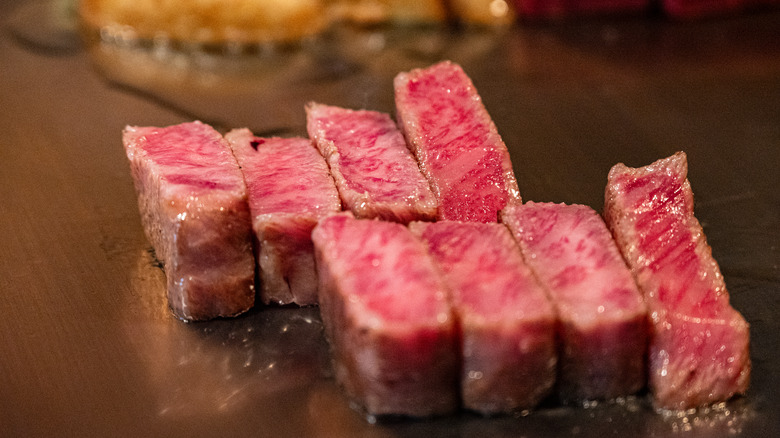
Only Wagyu beef from the Tajima strain of Japanese Black cattle, raised and processed in Japan's Hyogo Prefecture, is authentic Kobe beef. Farmers raise cattle around Kobe City, the capital of Hyogo. Only 3,000 to 4,000 cows earn the distinction of Kobe beef annually. It's unusual that one of the world's finest meats comes from a country where historically beef was not a large part of the diet. However, international influence from business travelers and tourists led to the development of what would become the thriving market for one of the world's most expensive cuts of meat, Kobe beef. Regulations governing how farmers raise and process the meat are set by the Kobe Beef Marketing and Distribution Promotion Association, ensuring the meat's quality and authenticity. Kobe beef is stamped with a chrysanthemum and includes a 10-digit ID code.
If the high price tag has you wondering what's so special about Kobe beef? It is the texture and flavor of the well-marbled meat that sends hearts racing. Kobe beef must come from a heifer or a steer that is at least 28 months old, but not more than 60 months old. It typically has a yield score noting the amount of meat to bone of A4 or A5 grade, with a beef marbling standard (BMS) rating of 6 or higher. The higher the scores, the more marbling, umami-rich flavors, and buttery textures, leading to a higher quality cut of beef, and a price tag north of $400 a pound.