

Apple Cider And Gochujang Braised Pork Recipe

We may receive a commission on purchases made from links.
One could argue that braising meat is the best way to do it. Cooked low, slow, and in a flavorful braising liquid, large cuts of meat become impossibly tender, so much so that they pull apart with just the prongs of your fork. It's a particularly decadent way to enjoy beef, pork, and chicken, especially when using liquids like wine, soy sauce, or cider. One of the best cuts of pork for braising, pork shoulder, is often braised into pulled pork, which can be eaten with mashed potatoes, paired with mac and cheese, or piled onto buns for sandwiches. Pork shoulder is far more versatile than just BBQ, though, and can even be cut into steaks for quicker braising.
This apple cider and gochujang braised pork recipe developed with Michelle McGlinn first sears thick cuts of pork shoulder steaks before submerging them in a rich and spicy broth of gochujang, apple cider, soy sauce, and Shaoxing wine. Inspired by bulgogi, a staple of Korean BBQ, this buttery-tender pork is pulled into thick pieces and served over rice, using the braising liquid as a warm and soothing broth. The result is a Korean-inspired pulled pork that makes a perfect meal both on the coldest nights of the winter and the warmest days of summer.
Gather the ingredients for apple cider and gochujang braised pork
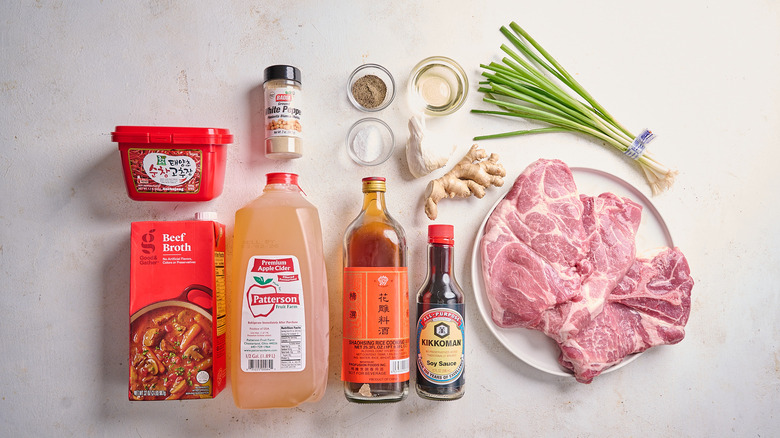
The first ingredient you'll need is pork blade steak, which is pork shoulder sliced into 1-inch thick steaks. They may be labelled as pork shoulder steaks or pork blade steaks, and will look like fattier, thicker pork chops. From there, you'll need salt, pepper, and a neutral oil such as vegetable, as well as aromatics like scallions, garlic, and ginger. To build the braising liquid, you'll then need gochujang, soy sauce, Shaoxing wine, apple cider, beef stock, and some white pepper.
Step 1: Heat up the oven

Preheat the oven to 300 F.
Step 2: Season pork steaks
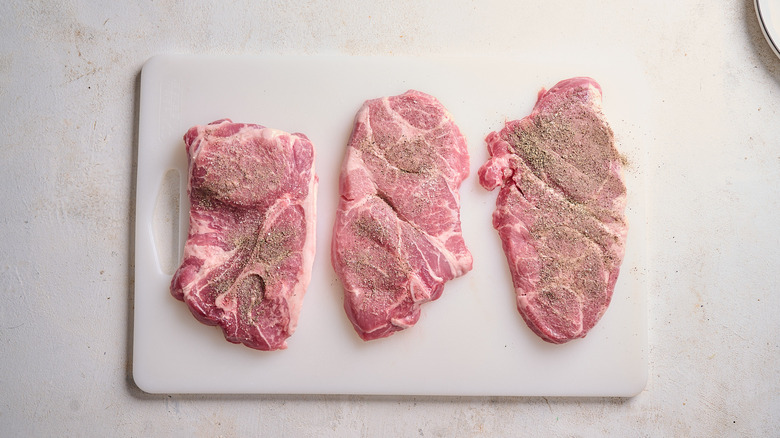
Season the pork steaks with salt and black pepper on either side.
Step 3: Heat oil in a braising pan
Heat vegetable oil in a braising pan over medium heat.
Step 4: Sear the pork steaks
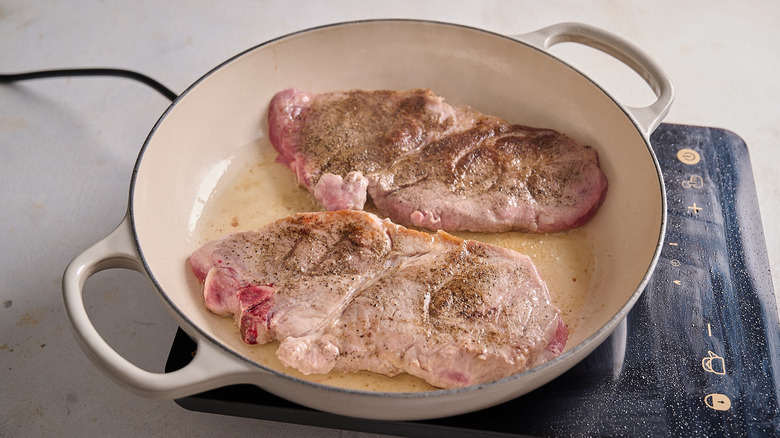
Add the pork steaks and sear on either side to form a crust, about 3 minutes per side. Remove the pork steaks from the skillet and set aside.
Step 5: Add the aromatics
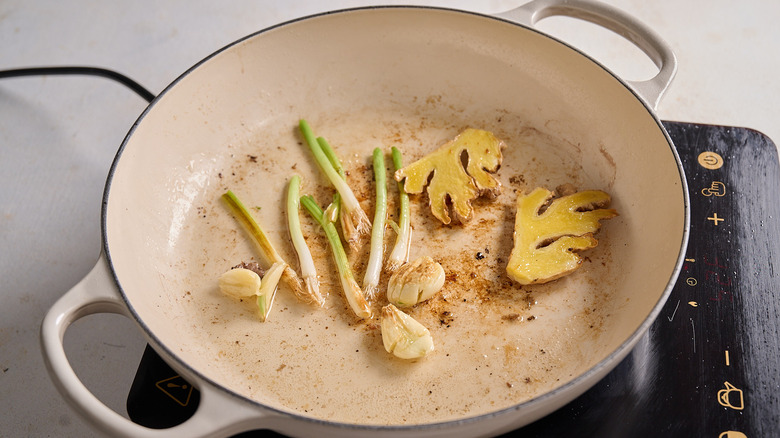
Add the scallions, ginger, and garlic and sear until beginning to brown, about 5 minutes.
Step 6: Cook the gochujang
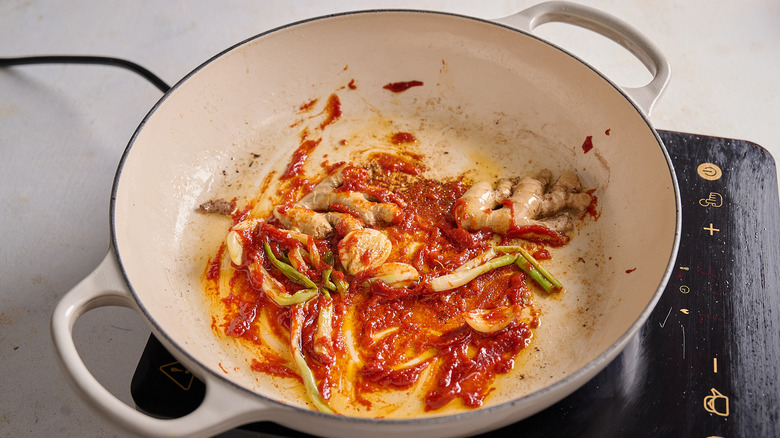
Stir in the gochujang and cook until beginning to stick to the bottom of the pot, about 2 minutes.
Step 7: Deglaze with wine
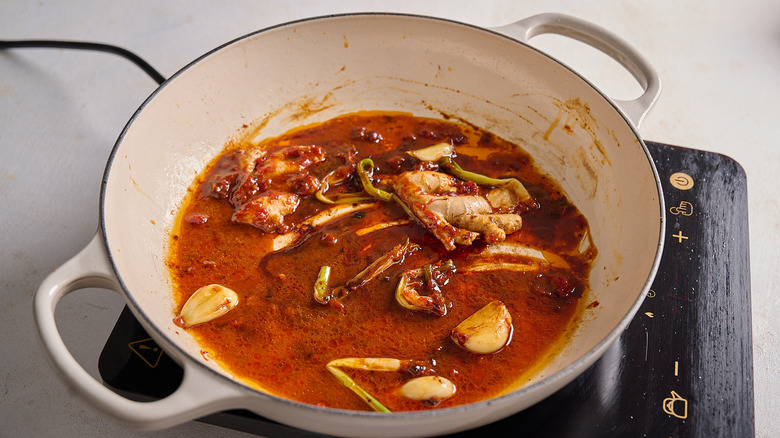
Deglaze the pan with the Shaoxing wine, scraping any browned bits off the bottom of the pot.
Step 8: Add the liquids
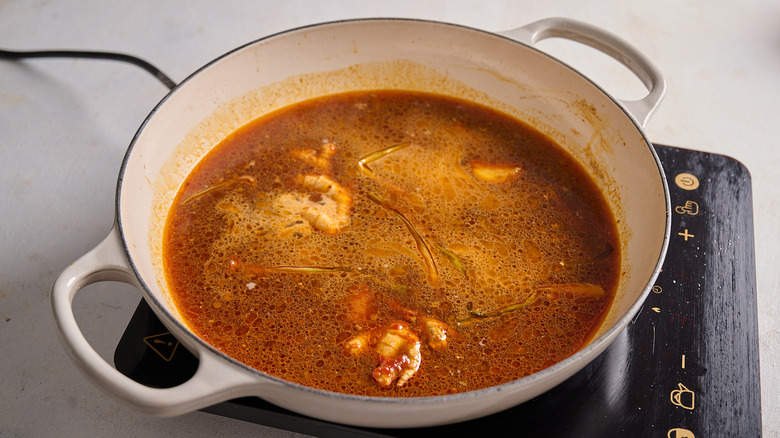
Add soy sauce, apple cider, beef stock, and white pepper and bring to a simmer.
Step 9: Return pork to the pan and braise
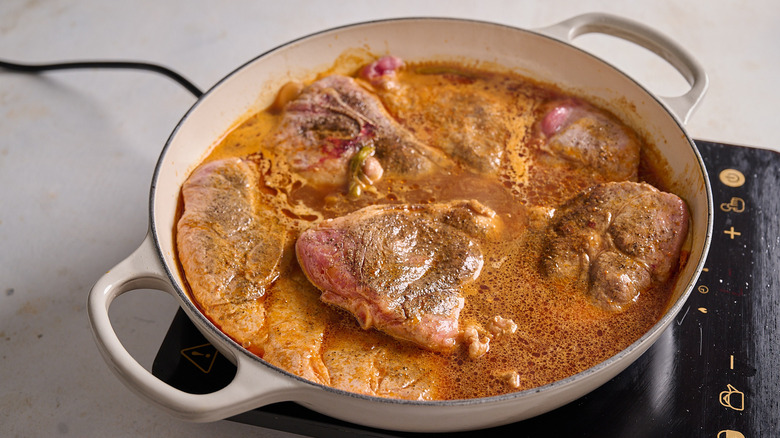
Nestle the pork steaks into the braising liquid until mostly covered. Cover the braising pot and transfer to the oven. Braise for 1 hour, 30 minutes, or until pork is pull-apart tender.
Step 10: Uncover and roast the pork
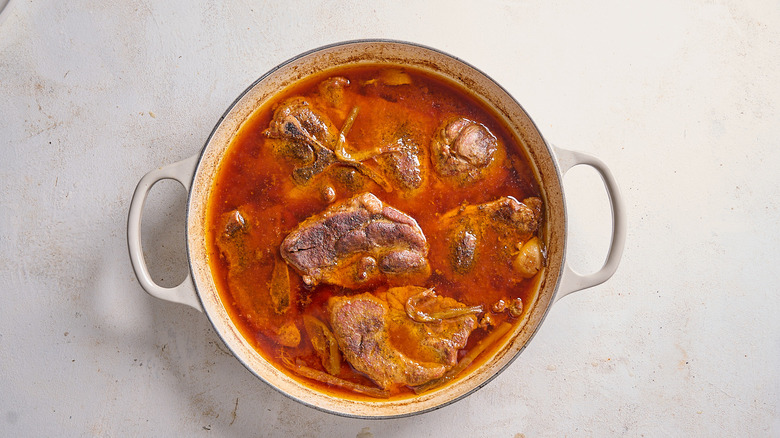
Uncover the pork and roast for another 15 minutes, until browned.
Step 11: Pull apart the pork

Once tender, remove the steaks from the pot and pull apart using two forks. The pork will tear easily away from the bone.
Step 12: Serve the pork in the braising liquid
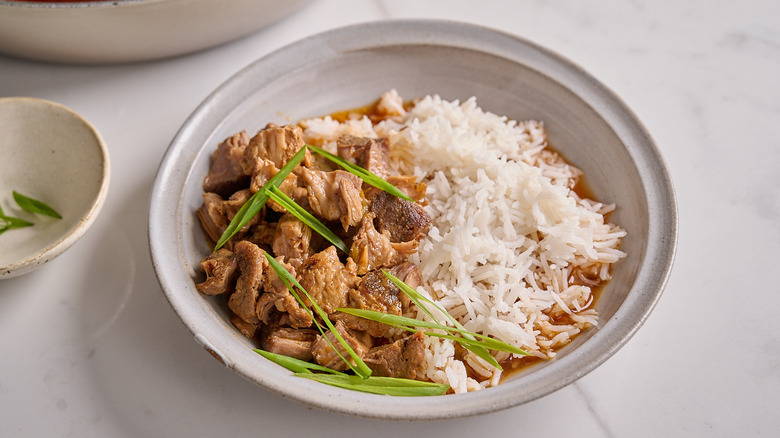
Return the pulled pork pieces to the braising liquid to serve.
What to serve with apple cider and gochujang braised pork
Apple Cider and Gochujang Braised Pork Recipe
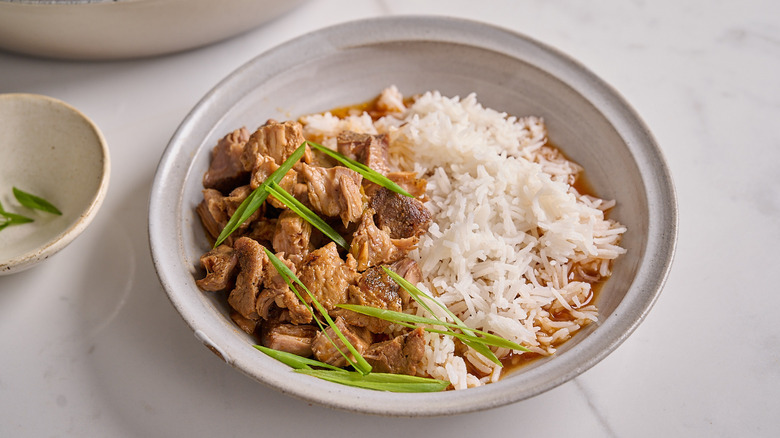
Tender, juicy, tangy, and perfectly spiced, this braised pork recipe makes for the perfect weeknight dinner, served simply over a bed of rice.
Ingredients
- 3 pounds pork blade steaks
- 1 teaspoon salt
- 1 teaspoon pepper
- 2 tablespoons vegetable oil
- 6 scallions, green tops sliced and reserved for serving
- 1 (3-inch) piece ginger, halved lengthwise
- 3 garlic cloves, peeled and smashed
- 2 tablespoons gochujang
- ½ cup Shaoxing wine
- 1 tablespoon soy sauce
- 1 cup apple cider
- 1 cup beef stock
- 1 teaspoon white pepper
Directions
- Preheat the oven to 300 F.
- Season the pork steaks with salt and black pepper on either side.
- Heat vegetable oil in a braising pan over medium heat.
- Add the pork steaks and sear on either side to form a crust, about 3 minutes per side. Remove the pork steaks from the skillet and set aside.
- Add the scallions, ginger, and garlic and sear until beginning to brown, about 5 minutes.
- Stir in the gochujang and cook until beginning to stick to the bottom of the pot, about 2 minutes.
- Deglaze the pan with the Shaoxing wine, scraping any browned bits off the bottom of the pot.
- Add soy sauce, apple cider, beef stock, and white pepper and bring to a simmer.
- Nestle the pork steaks into the braising liquid until mostly covered. Cover the braising pot and transfer to the oven. Braise for 1 hour, 30 minutes, or until pork is pull-apart tender.
- Uncover the pork and roast for another 15 minutes, until browned.
- Once tender, remove the steaks from the pot and pull apart using two forks. The pork will tear easily away from the bone.
- Return the pulled pork pieces to the braising liquid to serve.
Nutrition
| Calories per Serving | 791 |
| Total Fat | 50.0 g |
| Saturated Fat | 15.4 g |
| Trans Fat | 0.4 g |
| Cholesterol | 210.9 mg |
| Total Carbohydrates | 14.7 g |
| Dietary Fiber | 1.6 g |
| Total Sugars | 7.6 g |
| Sodium | 1,254.5 mg |
| Protein | 62.6 g |

Can I use a full pork shoulder instead of pork steaks?
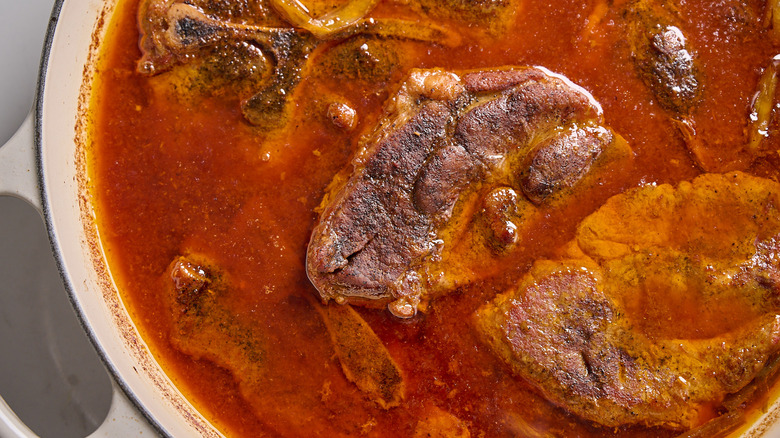
Pork steaks are cut from the pork shoulder, which makes them thinner, easier to cook portions of the whole cut, similar to a pork chop. They work well for this recipe because they cook more quickly and in a more shallow pan, with less braising liquid than a full shoulder requires. You can also serve the steaks as full pieces instead of pulling them apart, making the serving method versatile, as well. Pork blade steaks are often sold alongside full (or half) pork shoulders, but if your store doesn't have them, there are alternative ways to make the recipe.
If you want to make the recipe as-is, you can cut the pork shoulder into steaks yourself by first slicing the meat away from the bone, then slicing against the grain into 1-inch thick steaks. If you'd rather adjust the recipe than trust your knife skills, you can also use a half pork shoulder (about 3-4 pounds), beginning the recipe in a Dutch oven instead of a braising pan. Once seared, continue the recipe in the Dutch oven, adding ½ cup extra cider and broth as needed, or enough to cover ¾ of the pork shoulder. Then, adjust the cook time to 3-4 hours to fully tenderize the pork.
Can I serve the steaks whole instead of pulling them apart?
Part of what makes pork blade steaks so versatile is that they can be served whole, as steaks, instead of being pulled into pieces. You can serve the steaks this way, and guests will likely not even require knives to enjoy the tender pieces. This presentation benefits from being served over pureed parsnips or celery root puree, or even being served alongside seared scallions and risotto.
Unlike with pork shoulder, which requires a long cook time in order to be edible, pork blade steaks can actually be seared quickly and eaten like pork chops. You can make a similar recipe without braising by first searing the pork steaks, then using half of the amount of the remaining ingredients to make a sauce, simmering until reduced. Returning the steaks to the pot, you'll have a quick pork dinner with a brighter, spicier, sweeter sauce.