

What Those Circular Shapes On Your BBQ Grill Grate Are Actually For
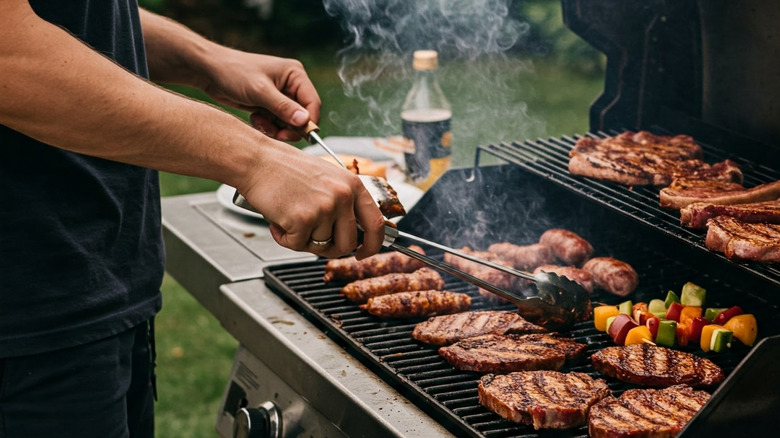
The shape of a grill's grates might seem fairly standard, like they figured out the best design on the first try, maybe some time back in the iron age — just straight, evenly spaced bars, a kind of fence that keeps your food from falling into the coals. But there is a curious design deviation that has some grillers googling, with good reason, "what are these circular shapes on my BBQ grill?!"
These features are usually built in to more elaborate cast-iron or segmented grates designed for hands-on, bespoke fire management, and not so much on gas grills or super basic, single-piece cooking surfaces. The circles are not labeled, and unless you have owned a charcoal setup with modular parts before, it is easy to misunderstand, overlook, or underutilize these round elements. What they do is expand the potential of your grillage, and they are pretty cool (er, hot?) once you realize how they are meant to be used.
In an exclusive interview on Food Republic, grill master Scott Thomas, owner of The Grillin' Fools, reveals that these circular cutouts are intentional access points to the fire below, "The circular cutouts in grill grates are for adding fuel and smoke wood or aromatics like garlic, onion, and/or herbs to the fire," Thomas said. In some designs, he says, smaller cutouts function as mounting points for attachments like upper racks or rotisserie hardware. So, unlike the still-unsolved mystery of crop circles, there is a practical explanation for their existence. On charcoal and wood-fired grills, heat and smoke are not set-and-forget variables. They are essential tools in every grill master's arsenal that can be mastered and manipulated. These cutouts allow cooks to add fuel and fine-tune flavor mid-cook, without undertaking the dangerously precarious task of removing a big, hot, fully loaded grate.
Heat, smoke, function
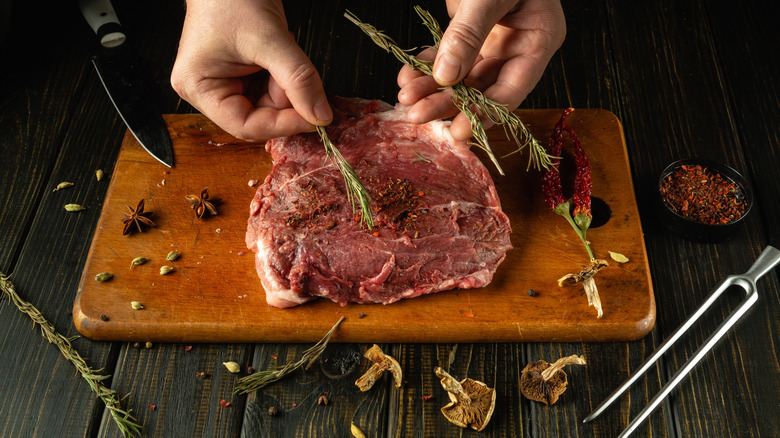
Grilling is fundamentally a high-heat, direct-contact cooking method, but these cutouts point to something more nuanced. Even at grilling temperatures, smoke and airflow still play an active role in the subtle art of flavor development. The difference in technique is scale and timing. Whereas smoking needs long exposure to low, steady smoke, grilling uses shorter, more concentrated bursts that interact quickly with food.
That's why the cutouts work best with chunky, whole aromatics, not chopped or powdered ones. Under high heat, smaller ingredient pieces would burn too fast to contribute meaningful smoke, and powders will combust almost instantly. They're just flammable dust in this context. With this method, whole onions, garlic heads, herb sprigs, citrus peels, or small pieces of hardwood are the best ingredients to reach for because they will release aromatic compounds as they char, producing a brief but influential window of fragrant smoke before burning down. This does not entirely turn grilling into smoking, but it does blur the boundary between the two techniques. The smoke here is intentional and transient, a moment in time layered into the cook, but not sustained throughout. Used strategically, aromatic smoke is a nice way to add subtle complexity to your grilled goods, without overwhelming the primary flavors of the food.
This kind of aromatic smoke pairs especially well with foods that can spend enough time on the grill to absorb flavor without being overwhelmed. Thick cuts of meat, bone-in chicken, sausages, and sturdy vegetables like cabbage wedges, eggplant, or squash would all be improved with these short smoke exposures, which will add dimension without masking their natural character. Even quick-cooking items can take advantage of the technique when added near the end of grilling, allowing the smoke to cling briefly to hot surfaces before the food comes off the heat.
Use it, but don't overdo it
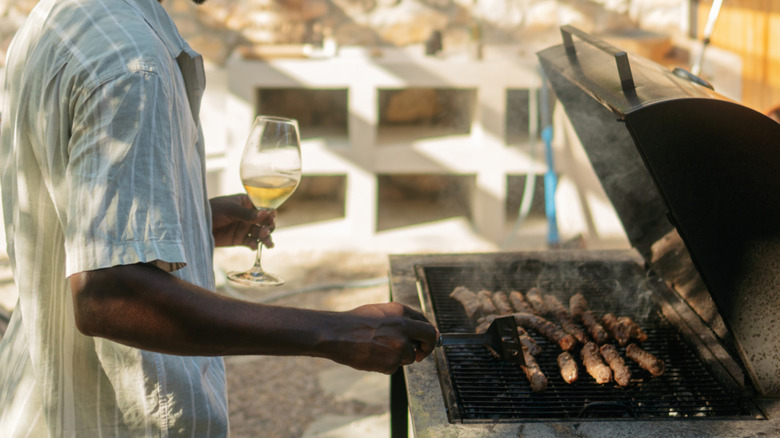
These circular cutouts are present on grills fueled by charcoal or wood, not gas, because dropping aromatics or fuel through them only makes sense when there's an open fire beneath the grate. On gas grills, doing so would cause flare-ups or damage components without producing useful smoke. Knowing which type of grill you are working with is the first step to using this feature safely.
For cooks new to the technique, restraint is key. Save the creativity for when you have mastered the technique. At grilling temperatures, both fire and smoke are hard to control, and too much too soon can engulf the whole project in flame, or impart a bitter, charred flavor. As Scott Thomas suggested, large onion halves, whole garlic heads, or sturdy herb bundles are all low-key, forgiving ingredients to start with. Once you are comfortable, meaning you know when and how to lift the hot circular elements (maybe using heat-proof tongs or tweezers) to safely place the desired items inside the coal-zone, you can graduate to more tricky additions, like citrus peels or soaked, whole spices, which can add more specific aromatic notes.
More ambitious grillers can play around with pairing small wood chunks with aromatics for layered smoke, but even then, quantities should start slow and stay modest. Aromatics are best added once the fire is established and the food is already cooking, not during ignition. Sugary or sopping wet ingredients added too early can flare or cool the fire unevenly. After cooking, ash and residue should be cleared so the cutouts stay functional for the next cook. Grilling is an ancient form of food preparation, but there is always room for small, thoughtful innovations that make the process more responsive.
Static Media owns and operates Tasting Table and Food Republic.