

6 Red Wines On The Olive Garden Menu, Ranked
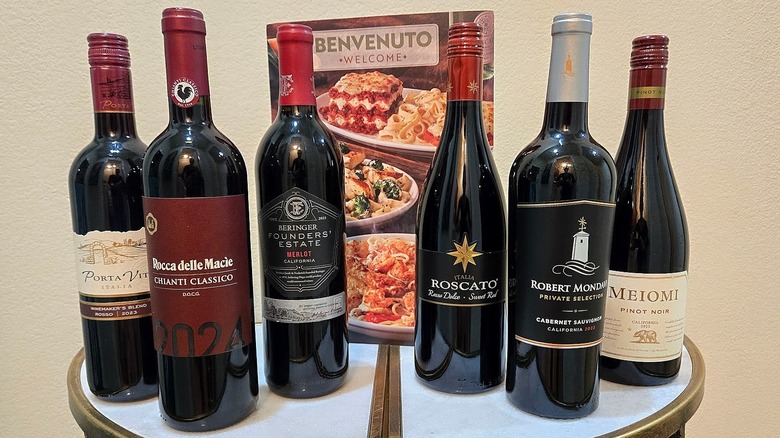
Olive Garden is one of America's favorite, family-style chain restaurants. With over 900 locations across the country, Olive Garden is known for serving classic Italian-American food in large portions at generally affordable prices, including its unlimited soup, salad, and breadsticks. Like its meals, Olive Garden's wine list offers over a dozen affordable options available by the glass, generally 6-ounces, or a grande pour, equivalent to a glass and a half. You can also order a standard, 750-milliliter bottle. And, a bonus if ordering take-out, the restaurant also sells its wine by the bottle to go.
The list includes selections from popular, large production brands and options that are exclusive to the restaurant. However, while inexpensive, we were curious if these wines are any good, or will pair well with the items on Olive Garden's menu, particularly the six red wines currently available? To decide, I acquired a bottle of each and conducted a taste test. I utilized my training, knowledge, and expertise as a certified sommelier to analyze each wine, ranking them from worst to best.
6. Meiomi Pinot Noir
There is a scene in the 2004 film Sideways in which the characters Miles and Maya describe pinot noir. Actor Paul Giamatti's character, Miles, describes the grape's demanding, finicky nature, requiring the perfect growing conditions and the utmost care. Its thin skin and tight grape bunches make it prone to mildew and disease.
However, when vintners tame the grape's temperamental nature, their wines are complex and alluring. The delicate variety thrives in moderate temperatures, with warm daytime temperatures and cool nights, allowing the fruit to fully ripen while maintaining the natural acidity. The palate is typically medium-bodied, tannins are moderate, and the alcohol content is usually low to moderate. Wines from the grape are pretty, elegant, and ethereal.
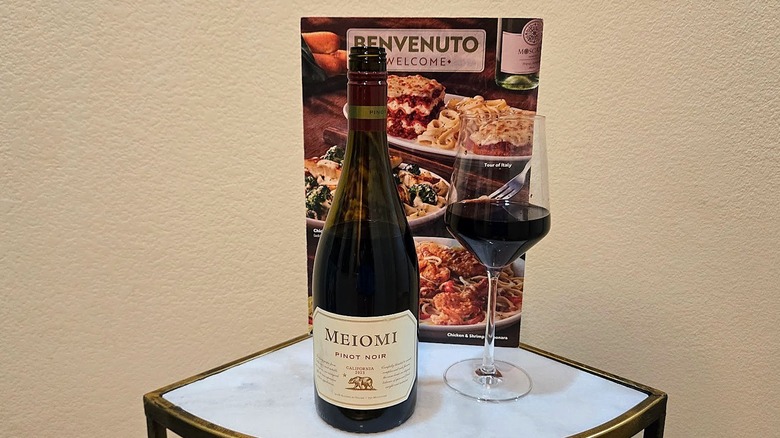
There is nothing soft or subtle about the priciest wine on Olive Garden's menu, Meiomi pinot noir. Costing $11.75 for a glass or $33.75 for a bottle, the California appellation wine is fleshy, ripe, fruit-forward, and somewhat aggressive. Aromas of vanilla, toasted spice, and burnt licorice are followed by stewed black fruits, vanilla, and dark chocolate, leaving an unnatural, sugary finish on the dense palate.
The wine's profile indicates a period of barrel aging. However, the barrel's influence masks the variety's delicate nature. Sundrenched California vineyards push the fruit's alcohol content, which in Meiomi's selection is a high 14.5%. The resulting wine tastes more like syrah than pinot noir. The wine lacks authentic character, elegance, and structure, coming across as flabby, placing it last on the list.
5. Roscato Rosso Dolce Sweet Red
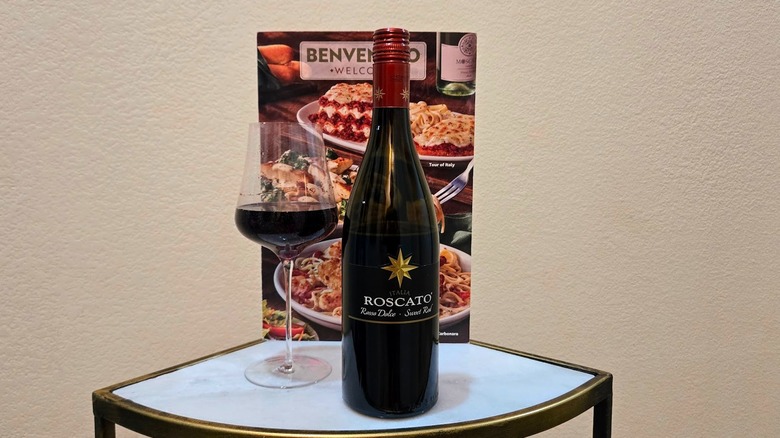
The goal with any wine is that it accurately represents the variety, region, and production style. Roscato Rosso Dolce successfully fulfills expectations as a sweet red wine. The wine hails from Northern Italy's Trevenezie IGT area. The Idicazione Geografica Tipica or IGT designation refers to the wine being typical of the geographic area, representing the region. Although the production requirements are not as strict as those of the higher tier designations, including DOC and DOCG, IGT wines are of a higher quality than your everyday table wine. Some winemakers even label their wines as IGT instead of the higher tiers to allow greater freedom of expression.
Roscato's sweet red wine is a blend of international varieties grown throughout the region. After harvest, the grapes are macerated at cool temperatures for an extended period, enhancing the fruit's sweet flavors and fruity aromas, without losing the natural freshness. With a low alcohol content of only 7%, the juicy, sweet selection shows blackberry jam, chocolate-covered cherries, and blueberry pie. A slight effervescence helps to cut through the wine's sweetness, as does serving it chilled.
While I would avoid pairings with hearty meals, like many served at Olive Garden, as it does not have the structure or complexity to complement the richness. However, it is affordable, priced at $8.25 a glass and $24.75 a bottle. The wine's sweet freshness will awaken the palate as an aperitif or add a sweet finish to a meal, ranking it above others.
4. Porta Vita Winemaker's Red Blend
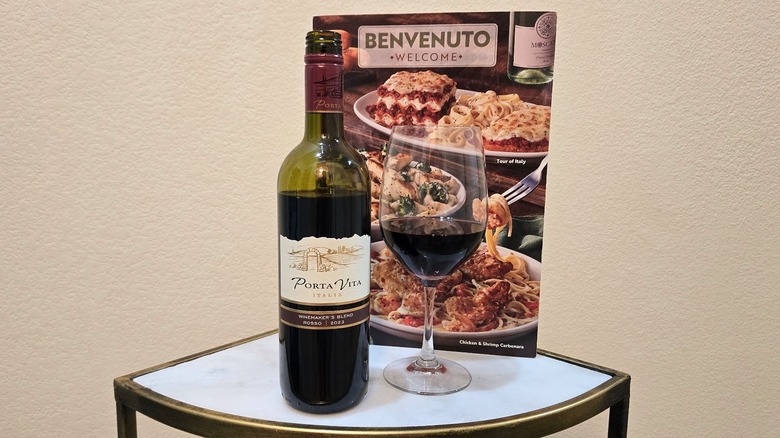
Porta Vita Rosso Winemaker's Blend is Olive Garden's house pour. From Trevenezie IGT, the red wine is a blend of 50% merlot, 30% schiava, and 20% teroldego. Although merlot is not native to the area, winemakers have been cultivating the variety since the late 1800s, showcasing a range of styles from fresh and fruit-forward to hearty, robust, inky selections. Native Italian Schiava grapes grow in full bunches with large, cylindrical berries, often hanging from pergola vines, creating a canopy of fruit overhead. Schiava wines are soft and light, with fruity flavors and low tannin. Teroldego produces wines with juicy, black fruit flavors.
Combining the three varieties, Porta Vita creates a fresh wine with a light body and soft, fruity flavors that is best consumed young, shortly after bottling. This is not age-worthy wine. The key characteristic of this wine is its soft, smooth palate and exceptionally low alcohol content of 12%, making it perfect when pairing with food. There is an initial pop of freshness on the front palate. However, it fades by the finish. Red berries, cherries, and schiava's trademark cotton candy flavors appear on the front palate, fading towards the back. Still, Porta Vita's light body and low cost as the least expensive red wine at Olive Garden, available for $8.25 a glass or $24.75 a bottle, place it in the middle of the pack. Pair the wine with lighter dishes at Olive Garden, such as its delicious salad and unlimited breadsticks.
3. Beringer Founder's Estate Merlot
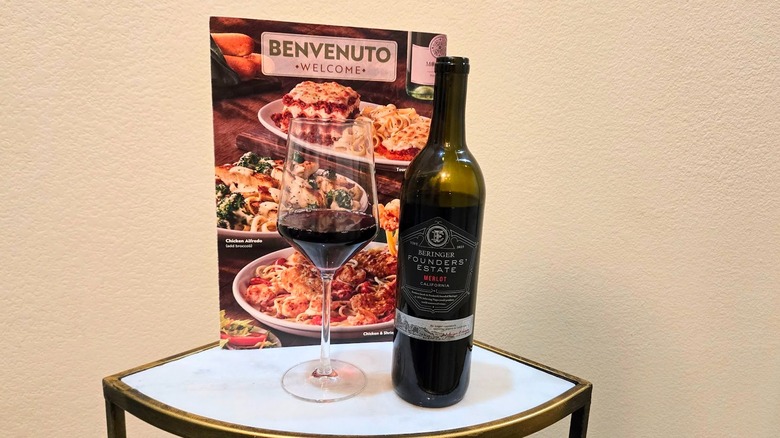
Blending merlot fruit from California's Central and North Coast, as well as Lodi and California delta regions, Beringer Founder's Estate creates a wine from fruit that enjoys a cool climate, maritime influence, and fruit from a warm, interior, continental climate. The resulting wine has juiciness and ripe fruitiness, with freshness and acidity. The winery highlights these attributes in a wine that is fresh and balanced due to its natural approachability. Merlot wines tend to have soft tannins, moderate acidity, and fruit-forward red and black fruit flavors.
The tannins are smooth and the medium-bodied palate is soft. Berigner complements these flavors by adding a touch of full-bodied petit verdot and petit sirah, adding weight to the easy-to-drink wine. Beringer Founder's Estate Merlot ages for five months in oak barrels, lending toasty, spicy notes of vanilla, allspice, and milk chocolate to the blackberry jam, ripe plum, and cherry flavors. With 13.5% alcohol content, the wine's well-rounded flavor profile will complement some of the best dishes on Olive Garden's menu, including seafood, beef, or chicken dishes. The wine is available for $8.75 a glass or $26.25 a bottle, making it also one of the more affordable options, which, when combined with the wine's easy style, lands it high on the list.
2. Robert Mondavi Private Selection Cabernet Sauvignon
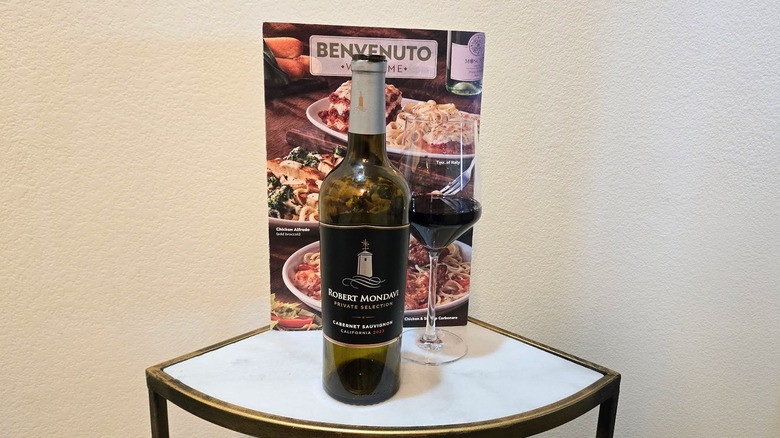
Legendary winemaker Robert Mondavi helped to put Napa Valley as we know it today on the international wine radar. Establishing his Napa winery in 1966, Mondavi traveled the world sharing his passion for why Napa Valley is, to this day, so ideal for growing wine grapes, while modernizing tools and techniques at home. Over the years, Mondavi established less expensive, large-production, value-driven, secondary labels from the historic brand, including Woodbridge and Robert Mondavi Private Selections. The Private Selection portfolio offers everyday, accessible wines that you will find lining grocery store shelves, typically priced under $10.
Robert Mondavi Private Selection Cabernet Sauvignon is a California appellation wine with black cherry, blackberry, mocha, and toasted vanilla, with a moderate 13.5% alcohol content. Costing $9.25 a glass or $27.75 a bottle at Olive Garden, the wine is a drinkable option. While the wine is not flawed, there is nothing particularly noteworthy or distinctive about it, keeping it from taking the top spot in the ranking. The wine lacks terroir-driven story or distinct varietal character, attributes that early Mondavi wine selections were known for. However, there is enough tannic structure, with a bit of fresh acidity, to pair with fatty foods, such as beef or cheese, which are typical options for enjoying with cabernet sauvignon. Pair it with Olive Garden's steak gorgonzola alfredo. The combo is the ultimate pairing.
1. Rocca delle Macie Chianti Classico DOCG
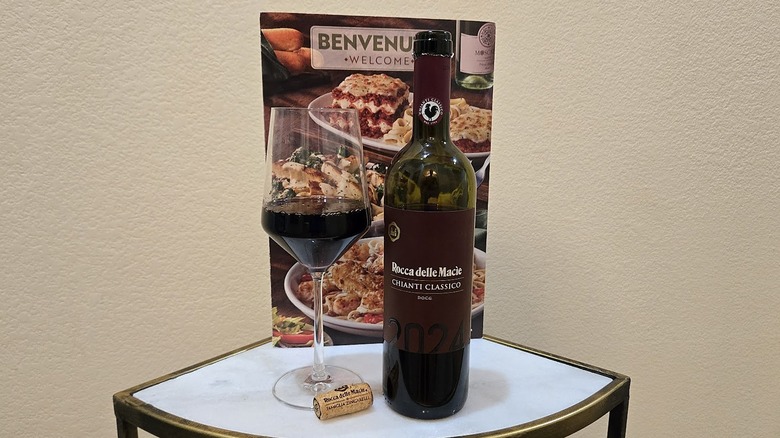
There is an old saying that "if it grows together, it goes together," and nothing is more perfect than pairing a Chianti wine from Tuscany with regionally inspired Italian foods. It is one of the best types of wines to pair with tomato sauces. Sangiovese is the primary grape variety in Chianti wine. The fruit has naturally high acidity and a savoriness that pairs well with the sweet, tangy brightness of a tomato sauce and with fattier dishes, such as Italian meatballs.
Rocca delle Macie has been showcasing sangiovese wines from its historic vineyards within the Chianti Classico region for over 50 years. Located within the larger Chianti region, the fruit for Chianti Classico DOCG wines generally comes from high-quality, hillside vineyards. The DOCG designation, or "Denominazione di Origine Controllata e Garantita," is the highest quality tier for Italian wines. Producers are required to follow strict regulations within the vineyards and winery during the production of DOCG wines. And with the rules come some of the best quality Chianti wines.
Sustainably produced Rocca delle Macie Chianti Classico DOCG opens with aromas of violets, wet leaves, black fruits, and wild herbs. Flavors of blackberries, cherries, savory wild herbs, and toasted spice follow. There is ample acidity, balanced tannic structure, and a moderate 13.5% alcohol content. Available for $29.25 a bottle or $9.75 a glass, the wine's authentic character and easy pairing ability with full-flavored, unctuous Olive Garden appetizers and entrees earn it the top spot.
Methodology
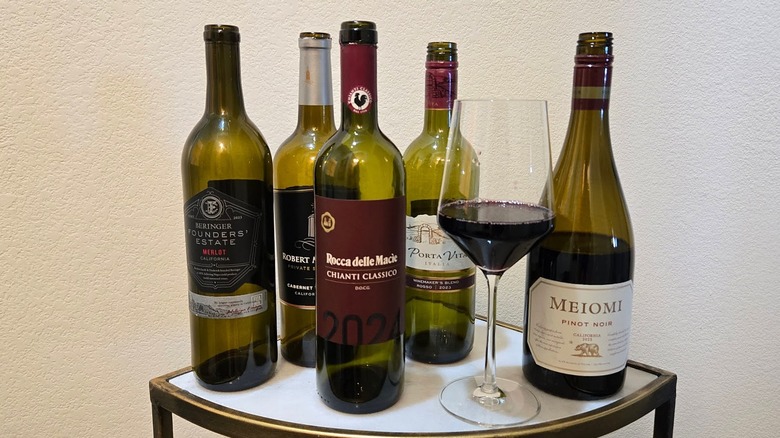
To rank the red wines at Olive Garden, I gathered the selections currently available on the restaurant's menu. I then conducted taste tests of each wine, trying them on their own and then with a simple pairing of angel hair pasta with a simple, classic marinara, to mimic one of Olive Garden's pasta dishes. My analysis took into consideration each wine's aroma, texture, concentration, complexity, and flavor, as well as their overall authenticity based on the variety. I also thought about their ability to pair with the typical dishes on Olive Garden's Italian-American menu.
While the provenance of each wine was not an overall determining factor, I did make note in the wine's review for reference. I did consider the price of each, as far as whether the wine's cost matched with the quality and pairing ability. I utilized my skills, knowledge, and training as a certified sommelier, certified specialist of wine, and wine writer with 20+ years of experience to aid in determining the ranking.