

The Prep Step That's Crucial For A Successful Beef Bourguignon
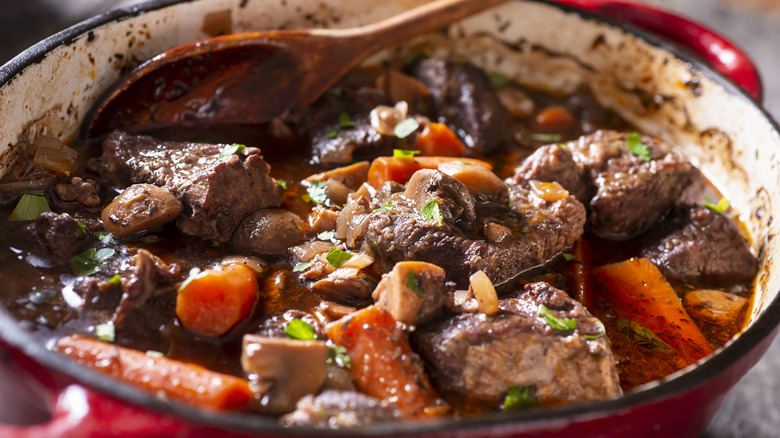
Beef bourguignon is famously one of the trickier recipes of the French culinary canon. It's also one of the most worthwhile, and maybe even one of the best beef recipes in the world — but it can easily spiral out of control if you don't set yourself up for success with the mise en place method.
Most cooks have experienced the chaos of a multi-step recipe getting the better of us. Smearing a tomato-pasted finger across the page of the cookbook, trying to follow the instructions as the hot oil shimmers in the pan, ready for the onion you don't have brunoised. Quick! Turn off the heat, grab a (hopefully) sharp knife, (carefully) rush through the prep, turn the burner's flame back on, and hope nothing scorched or became soggy in the interim. Wait, what about the carrot and celery and... In professional kitchens, this is called being "in the weeds," but this particular scenario is totally avoidable because this is a structural problem, not a skill issue.
Many recipes, especially more traditional, layered ones that call for sauteing or braising, assume the prep work is finished before cooking begins. This means the aromatics are chopped, the spices are measured, and all is ready to go and within reach. Once the flame of the stove gets turned on, timing is unforgiving and ingredients need to hit the heat, usually in quick succession. There isn't time built in to wash, peel, and measure. That's the entire purpose of the magical system of mise en place. The phrase translates to "everything in its place," but in practice, it means sequencing your effort. Mise en place means doing the slow, interruptible work first, while your attention is still relaxed and nothing is literally on fire.
Do the work once
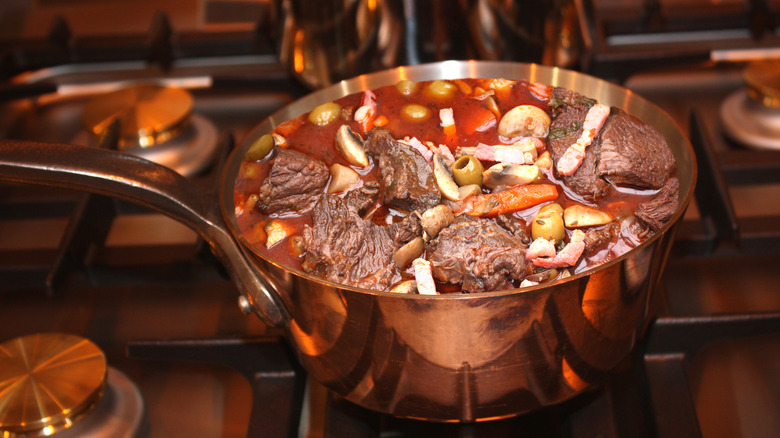
Beef bourguignon is a perfect example of why mise en place is so crucial. The recipe itself is fairly rustic, so it isn't full of fancy technique and it isn't that difficult in any one moment. However, it depends on time sensitive, sequential steps coming together perfectly. It asks for your close attention in many moments, back to back: lardons need to be rendered before the beef goes in, then the beef needs space and patience to brown properly. Aromatics quickly follow into the hot, rendered fat, then tomato paste (which can quickly scorch), then flour, wine, and stock. Mushrooms and pearl onions are cooked later, separately, then incorporated at the end.
If you're stopping to chop veg while the fond darkens in the pan or measuring (or spilling) flour while the bacon fat cools, the rhythm becomes disjointed, your brain scrambles, and everything gets out of sync. If any little thing goes wrong with those ingredients (a flaccid carrot or pantry moths in the flour), you can't be finding out when the pan is hot. Ingredients should be waiting in the wings for their moment. When everything is prepped in advance, beef bourguignon comes together like a well-oiled machine. Brown, deglaze, build. You're responding to what's happening in the pot, and each step naturally leads into the next. The path (or bowls of prepped ingredients) rises up to meet you.
That's the power of mise en place. It makes cooking calmer. By breaking a complex project into bite-sized, resolved pieces before you begin, you free your attention for timing and taste. That methodology applies well beyond French stews. Any project with multiple steps benefits from the same approach: decide what needs to happen, prepare for it fully, then move through the work without fighting it.