

14 Kitchens That Are A Master Class In Mixing Textures And Materials
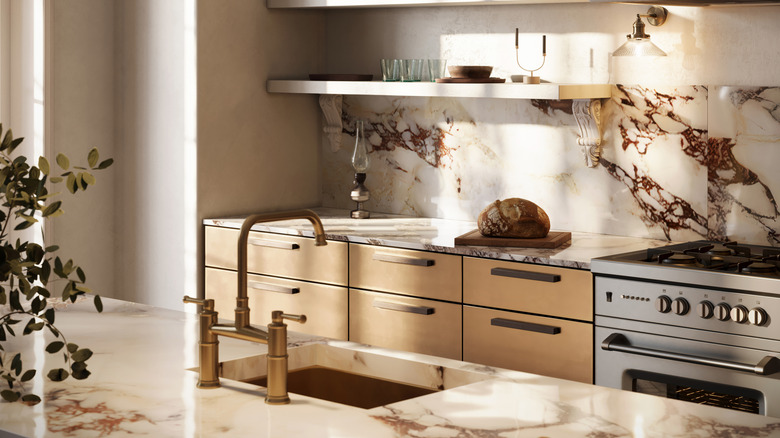
Most of us have a preferred kitchen style in mind when decorating our culinary space, but one of the most common kitchen design mistakes you could make is leaning into that one single style too much. Making one aesthetic your end-all be-all can turn a space with potential into a monotone room that's severely lacking character. Therefore, it's important to consider mixing materials and textures that give your kitchen personality, depth, and lots of dynamic focal points.
The easiest way to play mix-and-match is to choose one main, defining element that will serve as a backdrop for the other textures and materials — a concrete wall, a marble island, wooden cabinets... you get the gist. Then, complement this element with two or three other materials to create contrast in the areas that feel stale. If you're predominantly using one material, try to use different textures and colors of it.
Below, you'll find 14 examples of kitchens that encapsulate the philosophy of mixing materials in a brilliant way — showcasing the importance of variety as well as its ease. Small tweaks can lead to a unique, personalized kitchen that doesn't settle for one single style but instead embraces design trends that add big personality.
The marriage of light wood and marble
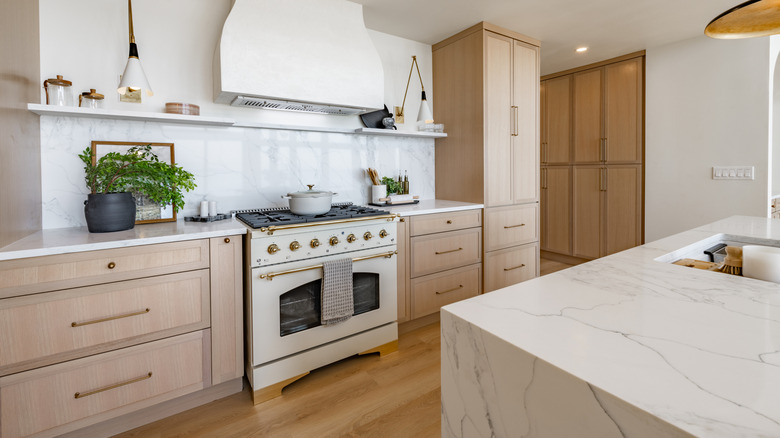
The downside of marble-heavy modern kitchens is that they all end up looking exactly the same. That doesn't mean you have to give up the fancy marble countertops; the example above pairs them with soft wooden cabinets and floors, adding brass hardware to the mix for the extra spark.
A texturally interesting kitchen can still be elegant
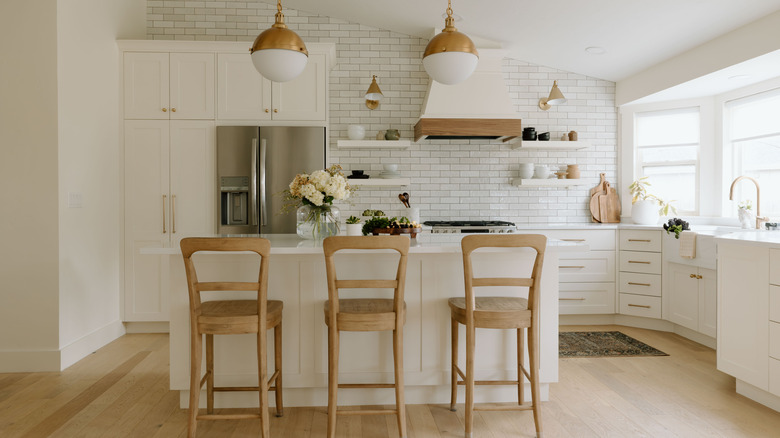
This kitchen seamlessly incorporates several materials without losing its elegance: hardwood floors, rustic chairs, subway tiles on the wall, quartz countertops, and metal light fixtures. Still, not a single element looks out of place. The wooden elements match the color of the metals, and the tiles match the quartz — a great example of how different materials within a similar color scheme create a dynamic but cohesive look.
Colorful tiles add texture that breaks the monotony
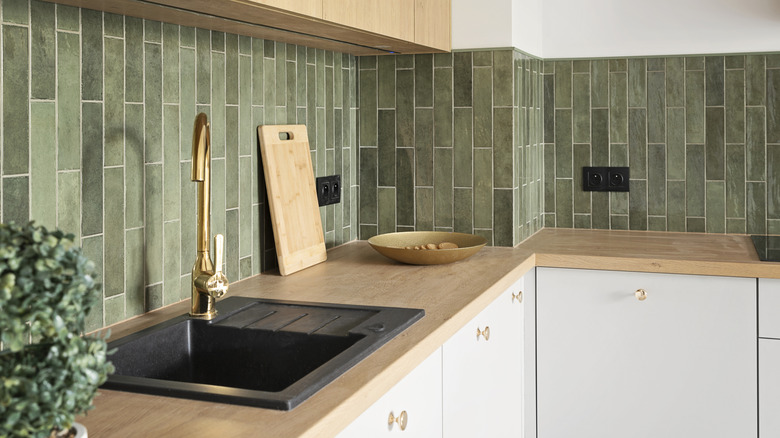
Wood is a beautiful and traditional material for countertops and cabinets, but it can get a bit boring and unintentionally dated. A pop of color is always a great idea to break the monotony, and this particular kitchen goes a step forward with the green, vertically tiled backsplash. This single element brings colorful material and textural novelty into what would otherwise be a basic space.
Wooden countertops beautifully contrast the black marble
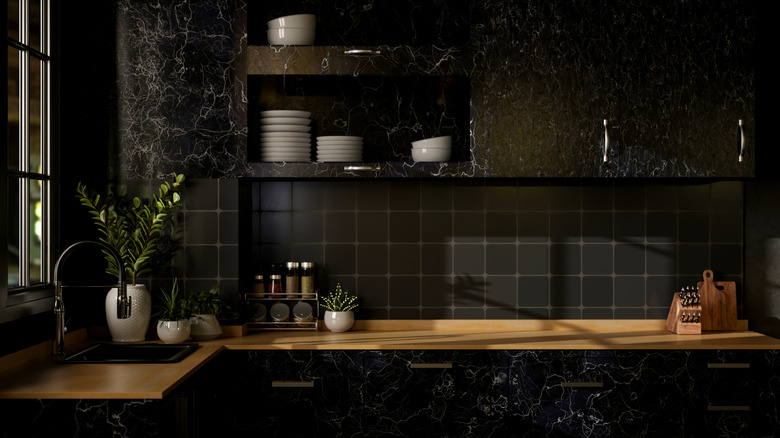
Black kitchens create an edgy yet timeless space, but with such a dominant color, you desperately need some contrast. Marble has an interesting texture, making it a great pick for cabinets that look so much more interesting than a casual black plank. Still, the kitchen pictured above would undoubtedly feel too dark if not for the wooden countertop bringing in a brighter focal point and the dark gray backsplash that creates a soft contrast.
Stainless steel binds together the many textures of this kitchen
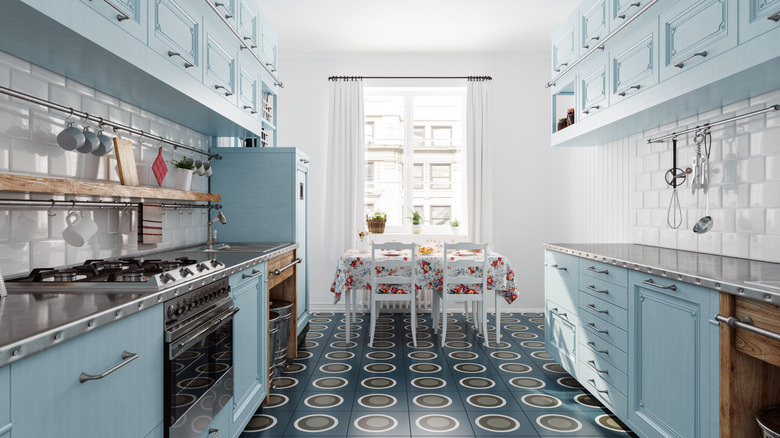
Stainless steel counters are usually used in professional kitchens, but they can be an interesting element in your home as well. There are many stylish color combos that work beautifully with stainless steel countertops, and this particular kitchen goes for light blue. Another visually interesting feature is the two different tile styles and the transition into the white paneled wood at the end of the room.
This kitchen doesn't settle for one decor style, and we love it
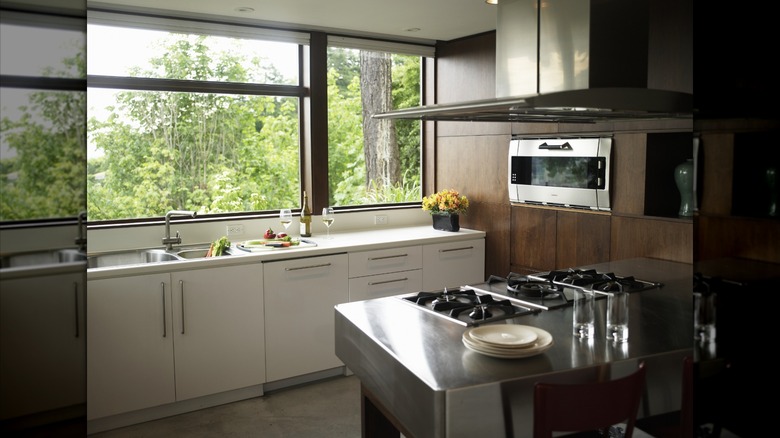
Another example of how stainless steel can be incorporated into a regular home is this kitchen that effectively combines three different decor styles. The warmth of the wood balances the cold of the steel, while the white cabinets create color contrast. Stainless steel is neutral enough to match both dark and light materials — and this kitchen clearly makes the best of it.
A stunning blend of concrete and wood with metal accents that add character
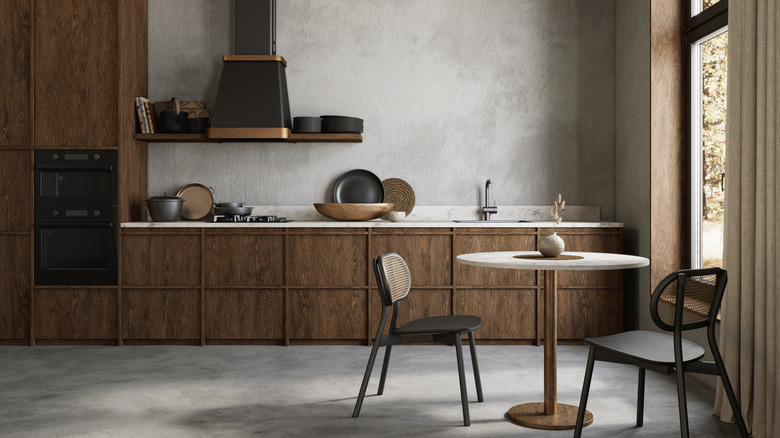
Introducing a fresh material to your kitchen doesn't have to be reserved only for big elements like countertops and floors. It can be much simpler than that with copper pans, metallic bowls, and other small additions here and there. The kitchen above showcases a mix of dark wood and concrete, which visibly benefit from the tiny metallic elements that subtly build its character — including the rim of the hood, the leg of the marble dining table, and, of course, the cookware.
Exposed brick is the backdrop for textural variety in this space
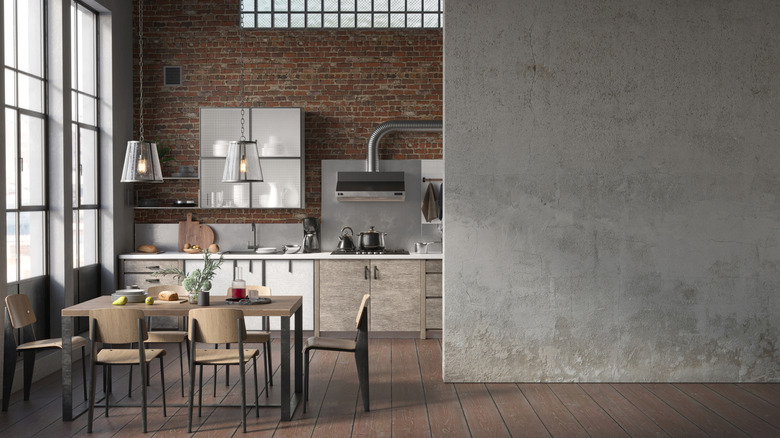
Working with natural materials is definitely one of the many British-inspired kitchen design trends you should follow. The big benefit that neutral colors naturally look good when paired together, which removes much of the guessing. This kitchen is a solid example of that, with the exposed brick wall as the main focal point, textured wooden elements in the foreground, and the concrete wall seamlessly dividing the space.
A minimalist kitchen that nails the blend of different materials without overdoing it
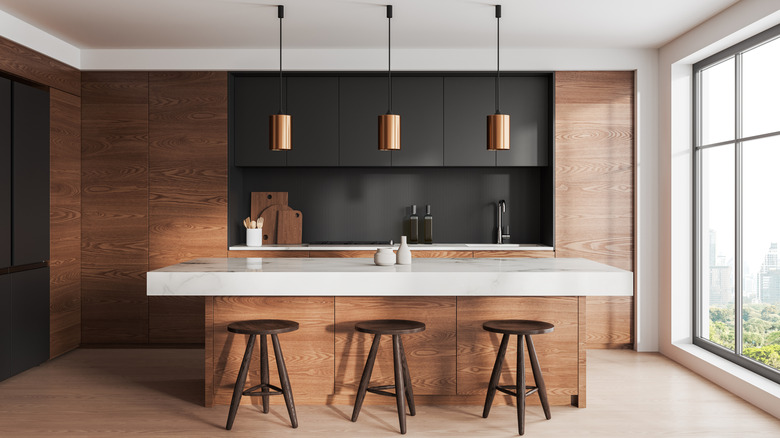
The notion of mixing materials in one space can feel scary. What if you overdo it? What if it looks messy and inconsistent? Well, this lovely kitchen shows that blending materials can still look minimalist and uniform. There are three different styles of wood, copper lights, flat black cabinets, and a paneled black backsplash — all perfectly contrasted by the thick marble countertop in the center of the room.
Matching the brass hardware to the light wood
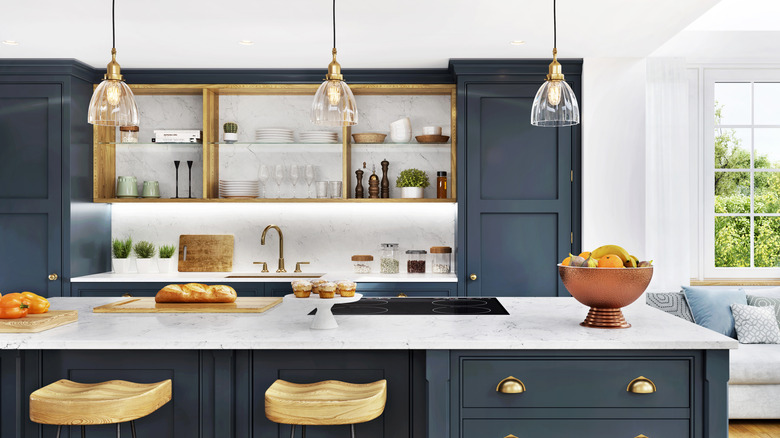
By now you have probably noticed that an easy trick for blending materials is to make sure the colors are within the same palette. The previous kitchen matched dark wood to copper, and this one pairs brass hardware with light wood. Together with the marble surfaces, the brighter features are easily contrasted by navy blue cabinets that give this kitchen some much-needed depth.
A modern kitchen that actually feels warm
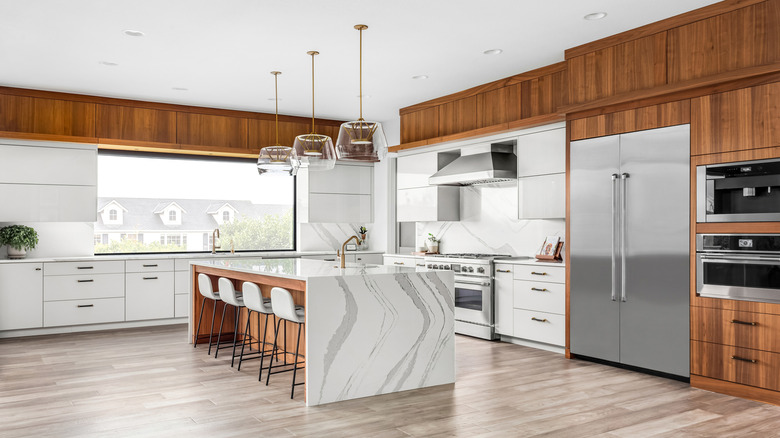
Modern kitchens tend to feel cold due to the overuse of white, beige, and gray materials. You don't have to entirely give up the greige aesthetic if you like it, but you should balance it with warmer materials. This kitchen confirms that the charm of warm tone wood is a match made in heaven for cool-toned stone, each contributing what the other lacks.
Don't underestimate the power of glass elements
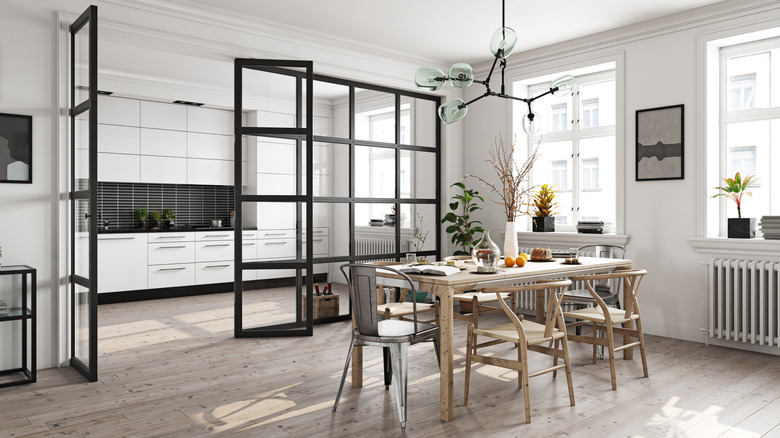
Glass is a great material to incorporate in your kitchen because it really opens up the space. If the partition wall in the picture above was made from a different material, the room could feel suffocating. Instead, the glass creates a softer separation, plus the black muntins easily play off of the kitchen backsplash while contrasting with the wood materials of the rest of the room. The feature is especially helpful if you're building a transitional kitchen design.
These cabinets feel like a luxury bar
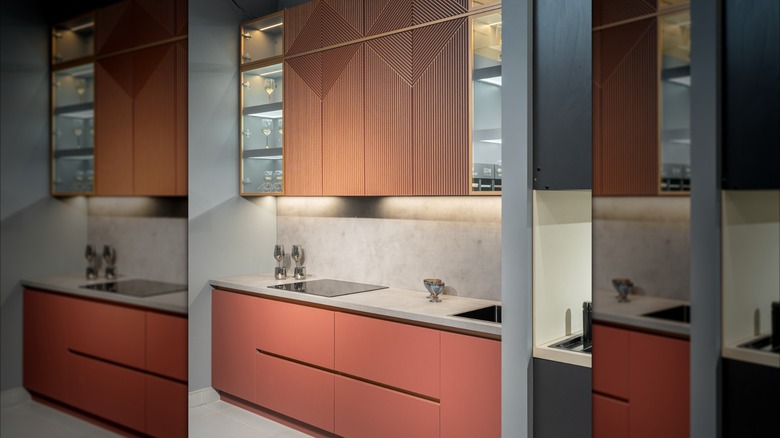
Textures and materials can be diverse within a single element of the kitchen, too. This kitchen creates variety in the cabinets, instantly taking the space from casual to high-end. At the core of it is, once again, the incorporation of glass. The upper cabinet panels display a symmetrical diamond pattern, while the lower cabinets are painted in a coral-pink shade. There's so much going on, but the minimal finishes on the lower cabinetry and counter top balance it all out.
A bold decision of contrasting floors
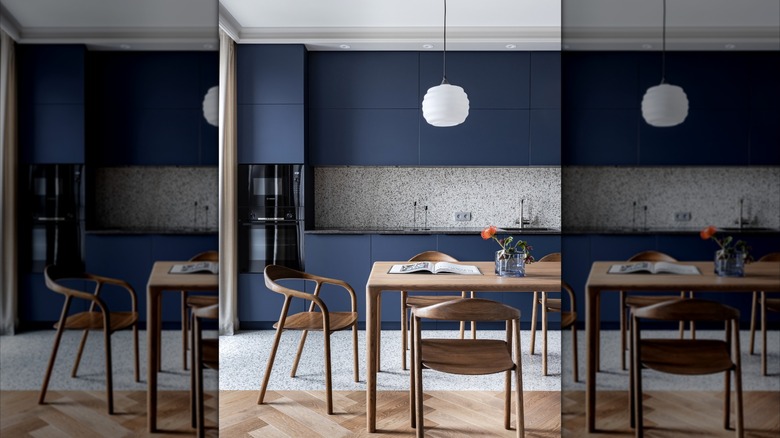
Ever been in a situation where you and your partner couldn't agree on the material for kitchen flooring? The solution might just be to opt for two. Yes, it's a bold choice, but the example above shows how great it can look — that is, as long as you add a binding element. Here, the combo of dotted granite and herringbone — the trendy patterned flooring replacing basic hardwood — is tied together by the wooden table and chairs to make the space feel perfectly balanced.