

This Trendy Patterned Floor Is Replacing Basic Hardwood In Many Kitchens

Current kitchen aesthetic directions vary, but most have one goal in common: moving away from minimalism and toward artful touches, rich dimension, and more unique style overall. But, one of perhaps the most unexpected kitchen design trends that promises big personality to come up in recent trends is herringbone floors. Herringbone is a type of a parquet floor, which refers to repeating patterns made with uniform wood pieces, that have been a chic approach since the 16th century in France. This pattern started replacing comparatively dull, basic hardwood floors in 2025, and it's on track to be all the rage in 2026, though the reasons it's so popular now might be a little different.
Herringbone isn't a loud pattern that will overwhelm your space, but it does add some dimension and intrigue. It tends to make small spaces look larger and a bit more elevated. That balance between understated artfulness has helped herringbone floors be a favored choice for centuries – meaning that, while they're trending now, they won't suddenly look outdated in a few years. Plus, as elegant as herringbone floors look, you can use luxury vinyl plank (LVP) flooring to make the design surprisingly accessible and affordable. A dead ringer for hardwood, LVP flooring is one of the best ways to save money on your kitchen renovation – and both are durable and fairly low-maintenance, which are vital factors to consider for kitchen floors.
How to install and care for herringbone floors
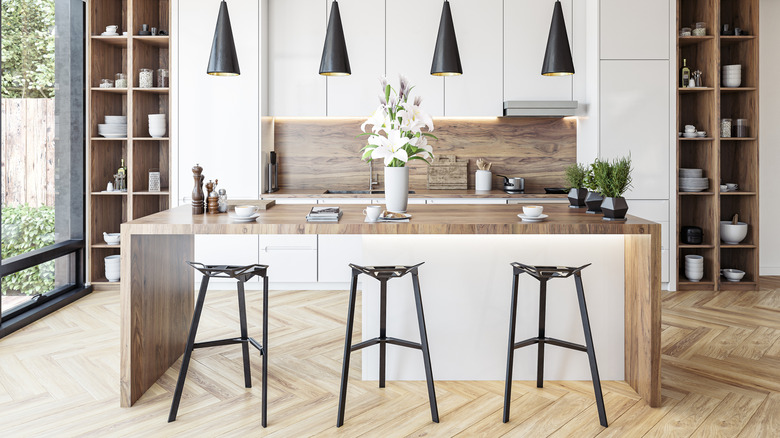
To start planning your own herringbone floor installation, consider the pros and cons of different kitchen floor materials. Hardwood is a traditional approach to herringbone; it's rich and classic, and offers a wide range of hues. But there are reasons to pass on hardwood for your kitchen floor. While otherwise easy to care for, it doesn't do great with moisture and can start to warp. Plus, it's pricey both as a material and to have installed — though some companies are starting to make perfectly sized planks to make the installation of parquet patterns like herringbone easier.
Aside from hardwood, you could also choose tile or stone materials for your herringbone floors, however these will be pricey and require professional installation too. They don't have much give for when you're standing and cooking for long periods of time either. Knowing that, LVP or laminate are the best alternatives to hardwood. These materials give you the luxe look of hardwood but better withstand moisture. Plus, they're easier to clean and longer lasting. Not to mention, they're cheaper — and they often come in adhesive or click-in tiles that you can install yourself.
To care for herringbone floors, make sure you clean spills immediately — especially if you opt for real hardwood. Whether you're doing the installation yourself or hiring someone else to do it, make sure the pattern is tight, leaving little room for build-up between planks. It's also necessary to seal the floors post-installation. Clean them regularly with a gentle solution and give re-seal them every one to three years, and you'll get to enjoy your herringbone floors for decades to come.