

The Types Of Grits You Need To Know About For Down-Home Southern Cooking
We may receive a commission on purchases made from links.
Venture too far out of the Southern U.S. and grits quickly disappear from restaurant menus and grocery store shelves alike, but for a significant portion of the country this corn product is not just a staple of the breakfast table, but a dish with a spot at any meal. At its core, grits is just a porridge of ground corn cooked until soft. It is a simple, basic dish that is central to kitchens in the South, but which has existed in the Americas since well before the concept of "Southern cuisine."
Corn was first domesticated around 10,000 years ago by native peoples in what is now southern Mexico, and by the time the first Europeans arrived, it was a staple crop throughout much of North America. There isn't a whole lot of food history that dates back quite that far, but grinding grains and cooking them into porridge is a simple and universal food preparation, as evidenced by its presence in cultures around the world. As such, it stands to reason that grits in some form have likely been a staple dish in the Americas for thousands of years.
Over time, of course, the methods by which corn is made into grits have changed, with a proliferation of different techniques and styles. When it comes to picking the right grain for your Southern-style menu, a bit of knowledge about the various flavors, textures, and preparation methods of these different types of grits — as well as the best ingredients to elevate them — can make a world of difference.
Stone-ground grits
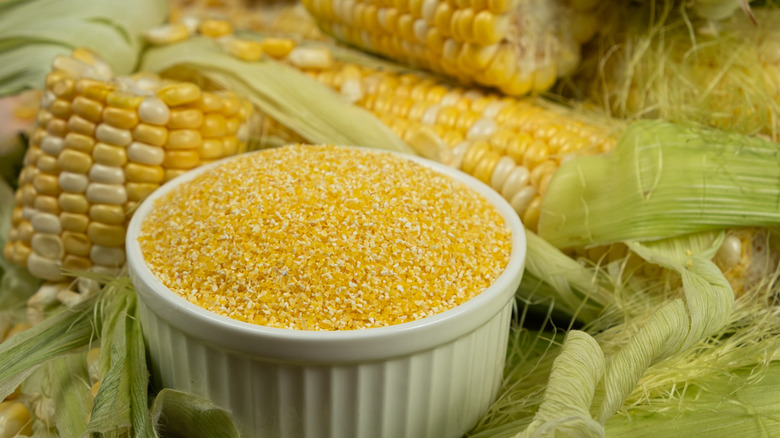
You might see some grits on the shelf at the grocery store labeled as "old fashioned," but if you are looking for the real deal, stone-ground grits are what you're after. These grits are made from whole dried corn kernels ground in the proper old fashion, between the stones of a grist mill. This processing technique results in a coarser grind that takes a bit longer in the pot, but is more than worth it for the flavorful porridge it produces.
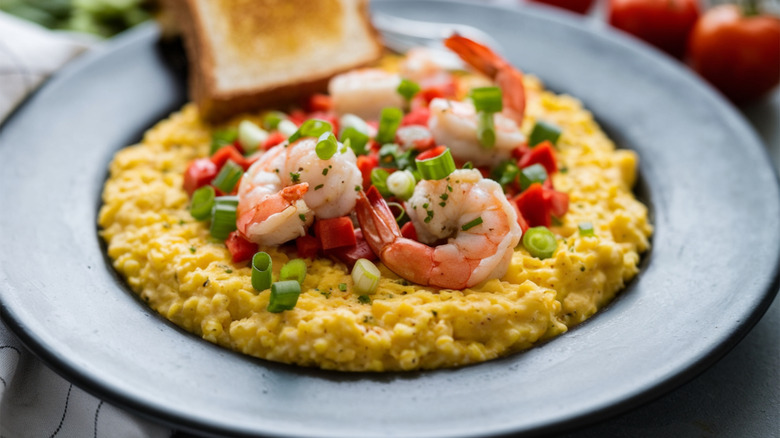
Stone-ground grits contain the bran and germ of the seed, which in combination with the coarse grind result in a dish with a toothy texture and a strong corn flavor. They are delicious on their own or with just a bit of salt and butter, but may also be the best type of grits for shrimp and grits, giving the classic dish a true old-fashioned flavor. Or, if you really want to lean into the flavor of the corn itself, try cooking stone-ground grits with corn stock.
You can pick up a two-pound bag of Charleston Favorite Stone-Ground Grits at Walmart, but you should be warned that storage for this type of grits might not be the same as what you're used to. Because stone-ground grits are made with the whole seed, those natural oils are prone to going rancid if you stick them in the pantry for too long. The best bet for long-term storage is the freezer.
Old fashioned, regular, and quick grits
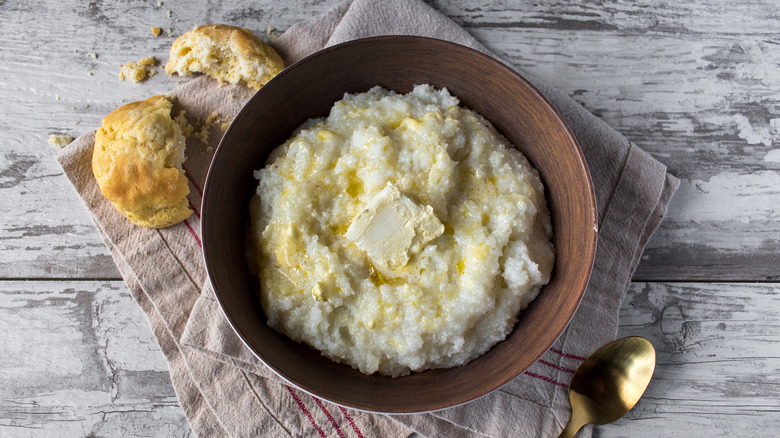
Next on the list we have a type of grits that goes by several names. You are likely to see them on the grocery store shelf labeled as either "old fashioned" or "regular" grits. They may also be called simply "grits." These are the workhorse of the grits world, and what you are most likely to be served at a restaurant or already have in your pantry.
Regular grits are a medium-grind cornmeal that cooks up in just about 10 minutes. They are processed for a longer shelf-life, meaning that they won't go rancid in the pantry, but this process also removes some of the natural flavor. Regular grits are not so different from polenta, making a good porridge that is suited to a wide variety of dishes. Quick grits, on the other hand, are almost the same as regular or old fashioned grits, with the only significant difference being the size of the grind. Quick grits are ground to a finer texture, which allows them to cook more quickly, cutting the time needed on the stove down to just about five minutes.
Whether you are talking about making a simple bowl of grits to serve with breakfast, a sweet and very Southern dish of grits cooked with sweet potatoes, or a rich and savory side dish like a cheese grits casserole, regular or quick grits will do just fine for you. The texture is smoother than stone-ground, and they are less flavorful, but they make a perfectly good base for a good old fashioned shrimp and grits recipe too.
Hominy grits
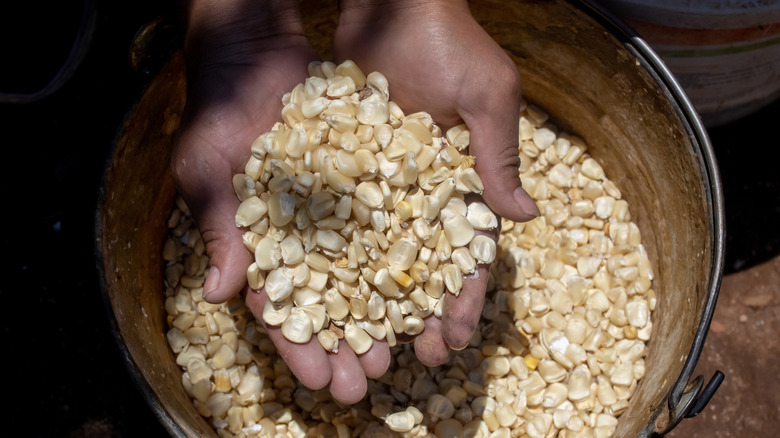
A less common but highly-prized option, hominy grits differ significantly from the other types on this list. Hominy grits are made using corn that has undergone the process of nixtamalization, in which corn is treated with alkaline substances such as wood ash, lye, or calcium hydroxide in order to make the grains more digestible and make additional nutrients in the corn bioavailable. The process also removes the outer hull and significantly alters the texture and flavor of the corn.
Nixtamalized corn is what is used to make the masa found in familiar foods like tamales and corn tortillas, and that same flavor comes through in hominy grits, with nutty and earthy notes. You can treat hominy grits just like you would any other, enjoying the extra creaminess and softer texture of the treated corn, though pairing that familiar tortilla-like flavor with savory ingredients might be a good idea. A breakfast bowl of savory hominy grits has likely been a staple breakfast in the Americas for a very long time, though the additions of butter and shredded cheddar cheese to the mix is a relative newcomer.
Hominy grits are much less widely available than the other types on this list. There are even some grits on the market that purport to be hominy but are not made with nixtamalized corn. For the real deal, look for suppliers like The Congaree Milling Company that explicitly state that the corn used has been nixtamalized.
Instant grits
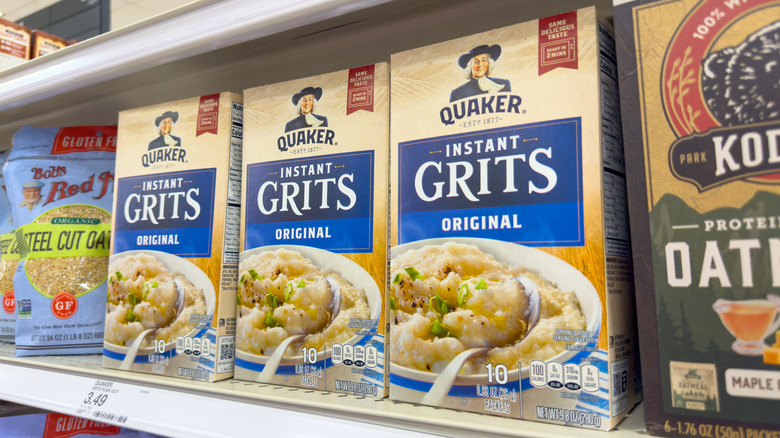
Finally, to cap things off, we have the easiest and probably least exciting type of grits: instant grits. Unlike the minor grind-size difference between regular and quick grits, instant grits have actually undergone a completely different production process. To make them cook nearly instantly — by simply adding boiling liquid and stirring — instant grits are actually pre-cooked and then dehydrated before they are packaged. The unfortunate effect of this production process is that these grits are the least flavorful of the lot and can have a gummy texture. But, given the amount of time they can save you, there is a place for instant grits in the kitchen.
If grits for breakfast is the top priority, instant grits are a real winner. You can buy them in individual pouches in lots of different flavors, such as with this Quaker Instant Grits Variety Pack, and they take almost no time to cook. Alternatively, if you are making a dish that will have a lot of flavor already, such as this Southern catfish nuggets and grits recipe, the fish and sauce can make up for the lack of flavor in instant grits. Purists might shake their heads, but sometimes you just need one less thing to think about while you're cooking dinner.
That's just about all there is to it, the main types of grits you might encounter and what makes them unique. Beyond those basic types, you will find grits made from different types of corn — blue corn grits are a favorite option — and there are always a variety of grits brands to choose from, but now you should have all the knowledge you need to grab a good bag of grits to match with your meal.