

8 Ways You're Killing Sourdough Starter Without Realizing It
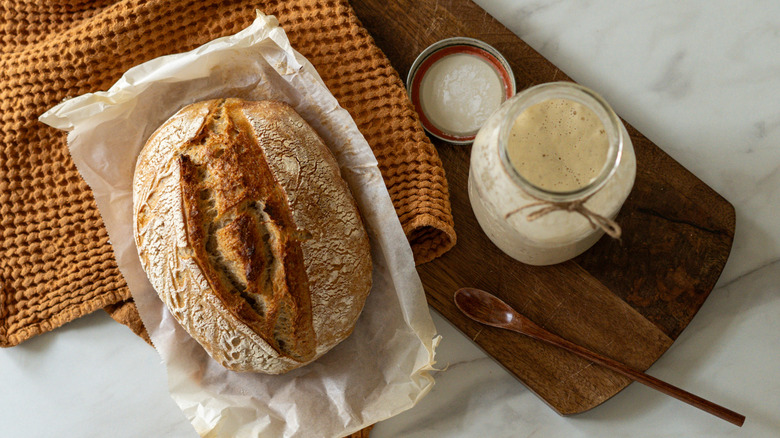
Attention, all bread-loving guys and gals: Today, it's my mission to make your sourdough journey a little easier. Whether you're a chronic starter-killer or the whole concept of making bread sans yeast sounds too complicated, you're in the right place. As someone who started and promptly ended her sourdough journey three times over before finally opening a microbakery, I've been in your shoes, and I know how frustrating the initial sourdough learning curve can be.
Fortunately, making plentiful mistakes is the best way to learn what not to do in almost any given situation, sourdough included. While sourdough starters are incredibly resilient, they still need to be properly tended to, especially during the initial bulking process (though you don't have to make your starter from scratch).
Maintenance also requires diligence and care. Think of your starter like a beloved houseplant (and yes, it is a living thing!) — you can be pretty hands-off most of the time, but you still need to pay attention to it. It will tell you when it needs some attention. The following is a list of sourdough mistakes that can keep your starter from functioning optimally or can even kill it. I've made most of these mistakes myself over the past eight years, so there's no shaming here!
Feeding it low-quality flour
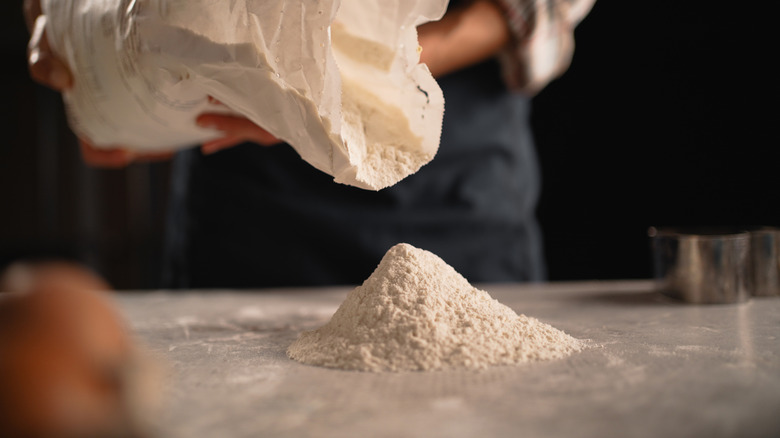
I used to think all flours were created equal; unfortunately, that's far from being true. And, just as you'd want to feed your kids the most nutritious food you can get your hands on, the same goes for your sourdough starter. Feeding your starter high-quality flour will strengthen it, which will in turn lead to better loaves. Quit feeding your starter ultra-processed, bleached, all-purpose flour; instead, choose flour that's minimally processed and retains the nutrients present in the wheat. That will give your sourdough starter some solid substance to "eat," and, therefore, grow strong.
Bare minimum, you should feed your starter with bread flour, and I usually suggest feeding it with the same flour you make your loaves with (that way, it doesn't need to adjust to eating a new flour when your dough is fermenting). I've used bread flour from Bob's Red Mill with great results. Costco also sells a two-pack of bread flour that's worked perfectly fine for me in the past. My absolute best results, however, have come from using flour from Central Milling. Even though I have to order it, I find the company's prices and delivery fees very reasonable. I use a mixture of its Organic High Mountain Flour (a high-protein bread flour) and its Type 70 Malted Flour in my loaves. I feed my starter the T-70; my starter absolutely adores the naturally present sugars.
Not sticking it in the fridge between feedings
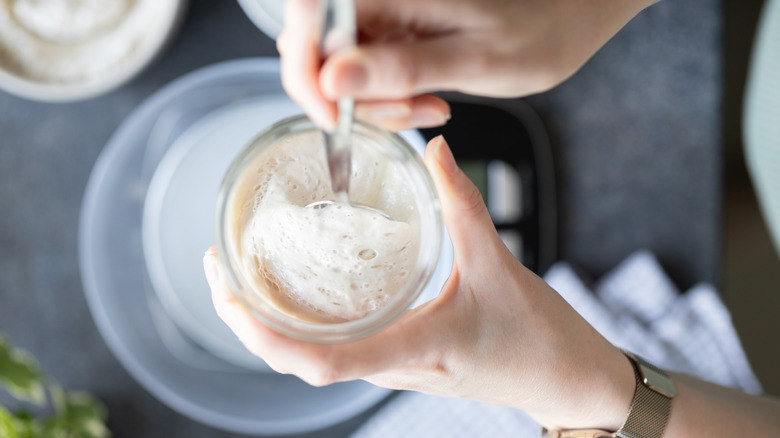
If you've gone down sourdough deep-dives before, you've undoubtedly heard about the crucial role temperature plays when making the perfect loaf — and I'm not talking about putting it into a preheated oven. The ambient temperature of your working environment can also make or break your sourdough experience. I perfected my loaves when living in the Pacific Northwest, aka the land of no air conditioning. There's a good 20-degree Fahrenheit difference in the temperature of my house between winter and summertime; as such, I've had to learn how to adapt my baking accordingly.
Because your sourdough starter is essentially a mini loaf (that just never gets baked), the temperature of your starter's environment is also incredibly important to its survival. If you're feeding your starter daily, it'll be fine if you keep it on the counter. But if you're only baking one loaf a week or you're going on vacation, you should stick your starter in the fridge. This will cause the starter to "hibernate" — the movement of the microbes slows down, and the nutrients in the starter don't get eaten as quickly, so your starter will last longer. On the other hand, if you leave your starter on the counter and forget to feed it for an extended period of time, the bacteria will work through their food faster ... and once it's gone, they'll starve.
Keeping it in a dirty container
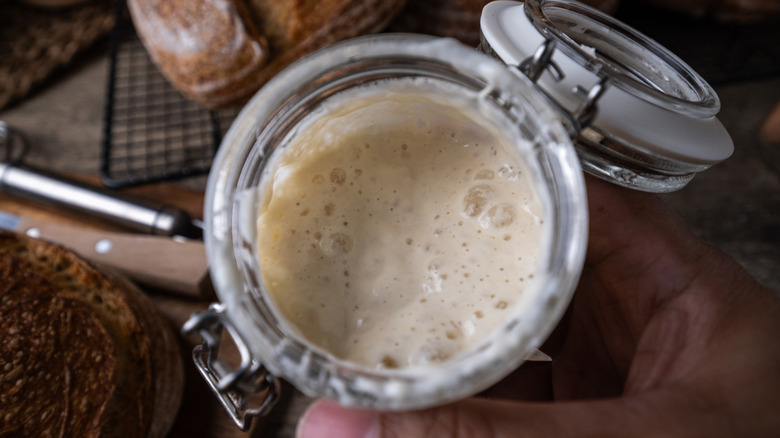
The bacteria in your starter are the good kind — it's gut-healthy bacteria, and its presence is part of why sourdough is often called "healthier" for you than other breads. But, being bacteria, it's not immune to going bad, and things can get a little moldy in your starter container if you're not careful. Don't confuse mold with hooch (a layer of often dark brown liquid that can form on top of a neglected starter) — you can discard hooch, but you should toss your starter if it molds.
Preventing mold is pretty easy. Personally, I've never had my starter mold, and it doesn't take much diligence to keep that from happening. Make sure you're storing your starter properly. I prefer to use glass canning jars or quart-sized deli containers, though I'll never keep my starter in the latter for too long. Most importantly, though, consistently change the container your starter is in, and always make sure it's clean. This will keep any foreign contaminants from tampering with your starter, in turn helping to stave away mold. It'll also keep the starter from crusting up on the sides of the container after you pour some out or feed it. Dried sourdough starter is a pain to clean off glass, anyway.
Placing it in a hot environment
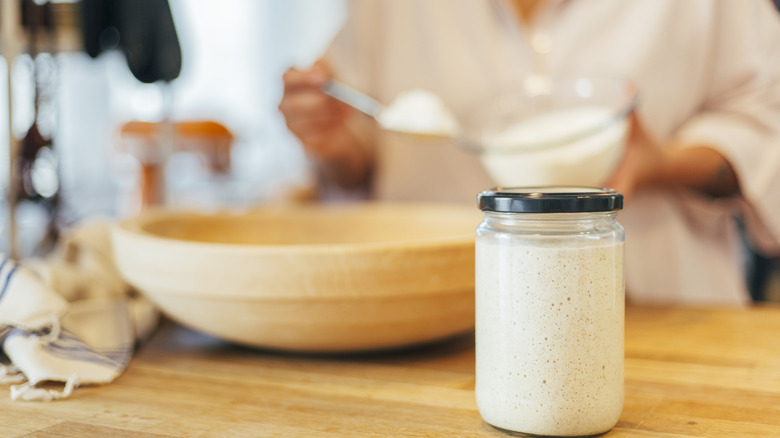
We've established that a starter in a cool environment eats more slowly, while a starter in a warm environment eats faster. There is, however, an environment that's too warm. It can be tempting to try to warm up your starter so it's ready faster when you're in a time crunch, but this is a mistake. Basically, if you'd start to metaphorically burn up at a certain temperature, so will your starter.
Again, my house gets hot in the summer — during heat waves, it's been known to reach 90 degrees Fahrenheit indoors (though that's pretty rare). When the temperature in my house is 80 and above, I can count on my starter rising pretty fast, and I'll stick it in the fridge right after I've gotten what I need. When it's much colder indoors in the winter, it takes longer for my sourdough to rise. The most I'll do to warm it up is put it in the same room as a space heater or put it near a heating source (but not too close) — but I'd never stick it in a warm oven. Being in too hot an environment for any extended period of time will kill the bacteria, ultimately making your starter inactive.
Overfeeding your starter
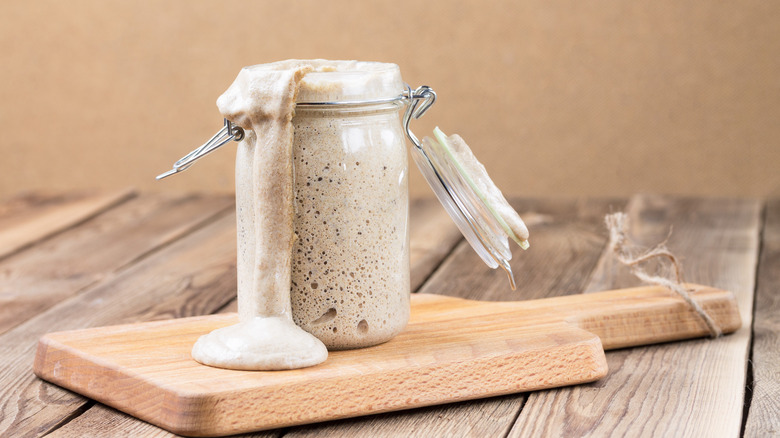
So, you have a tiny bit of sourdough starter, but you need to make a few loaves for the holidays. You'd probably assume you could feed your starter a ton of flour and water, right? Do so with caution. Ultimately, whether your sourdough will tolerate being fed four or five times its normal amount depends on how strong your particular starter is. I've had starters that can handle eating through quite a bit of food, but I've also suffocated starters from feeding them too much, too fast.
To stay on the safe side, when you need to bulk up a starter, do so gradually. And, yes, this will require some planning ahead. Feed your starter as normal and allow it to double in size; then, feed it a larger amount and let it double, and so on. If your starter seems too wet to rise appropriately during the feeding process, feed it some dry flour. Figuring out how to bulk up your starter is a process and requires getting to know your starter as a living thing. While you're becoming familiar with your particular starter, it's a good idea to play it safe in terms of how much you feed it at once.
Not feeding your initial starter long enough
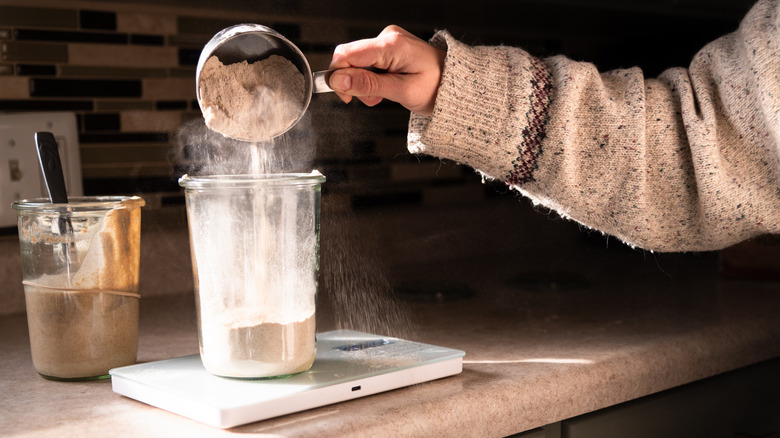
So you've built your own sourdough starter from flour and water — congratulations! That's quite the feat, and you have reason to be proud. It's fine to rejoice once you finally see your starter growing, but don't think your work is done quite yet. Your starter is still an infant, a fledgling. It still requires some pampering before it's ready to fly with its own wings.
Make sure to give your baby starter at least a few feedings before you bake with it, or before you put it in the fridge and step away from it for a minute. You want it to get into the routine of eating. Ideally, you'll know it's ready once you've fed it and it doubles in size in six or so hours (depending on the temperature of your house). If you're feeding your starter a 1:1:1 ratio (starter:flour:water), you can expect a healthy starter to rise between four and eight hours at ambient room temp. Make sure it's consistently doubling within that time window before you start using or storing it.
Feeding it improper flour and water ratios
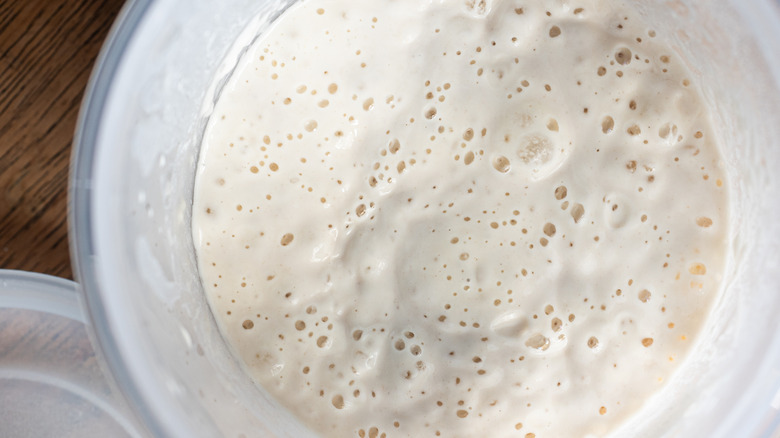
This is another "get to know your starter" tip that I can't give exact specifics for — the precise ratios you feed your starter will depend on the flour you use, your particular starter, and several other indeterminate factors (I swear, my starter can be as picky as I was when I was a kid). Don't worry, you'll learn exactly what works for you as you go. For now, here are some helpful tips.
While you're getting to know your starter, I recommend feeding it a 1:1:1 ratio of starter:flour:water. If your starter gets through that too quickly or turns soupy, try a 1:2:2 ratio; sometimes, giving it a slower and longer feed can help with its structure. You can also give your starter "dry" feedings when it seems too wet by stirring a spoonful of flour into it.
Dry feedings are helpful when my starter is pretty thin or is rising but not showing many air bubbles, or when I think it needs a little extra food. After you know what your starter likes, you can mess around with the ratios; I've gotten my starter to the point where I can feed it 1:4:4 without a problem.
Feeding it with chlorinated water
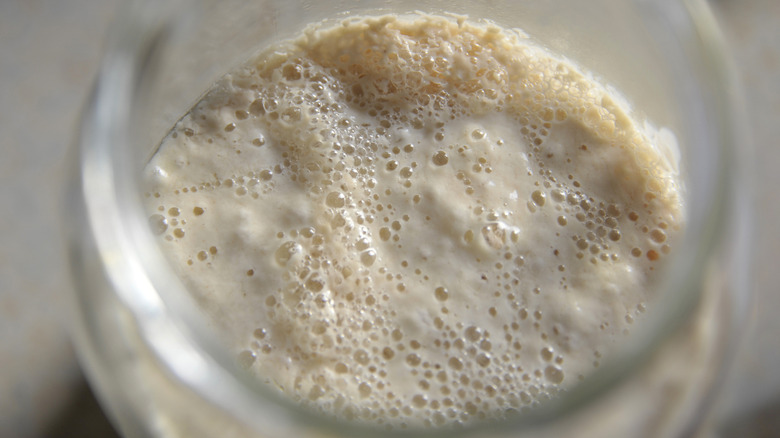
Avoid feeding your starter chlorinated water at all costs. Yes, this means checking to see if your tap dispenses chlorinated water. Chlorine, which is frequently added to municipal water supplies to help kill and stave off bacteria, will also kill the healthy bacteria present in your sourdough starter.
You can buy DPD chlorine test strips to test your tap water and see if it's chlorinated. If it shows ample levels of chlorine, don't panic — all is not lost, and there's a pretty simple solution. You could either feed your starter with bottled water or get an at-home water filter (you may already have the latter in your fridge). Don't use distilled bottled water, though; the best results come from natural spring water, which has some of the much-needed minerals your starter hungers for.
Getting into the sourdough world comes with a steep learning curve, but it's worth it. I had lots of points of confusion when I began, related to everything from maintaining my starter to the concept of autolysing dough and how to shape my final loaves. There's plenty to learn, so I set aside a whole weekend to watch YouTube videos from sourdough pros and deep dive into sourdough forums, which was very helpful. Once you're over the initial learning hump, you'll find it pretty easy to customize your loaves, add inclusions, and change their structure, without a recipe. All of which is to say, stick in there — it's worth it!