

10 Biggest Recalls Of All Time Due To Salmonella Risks
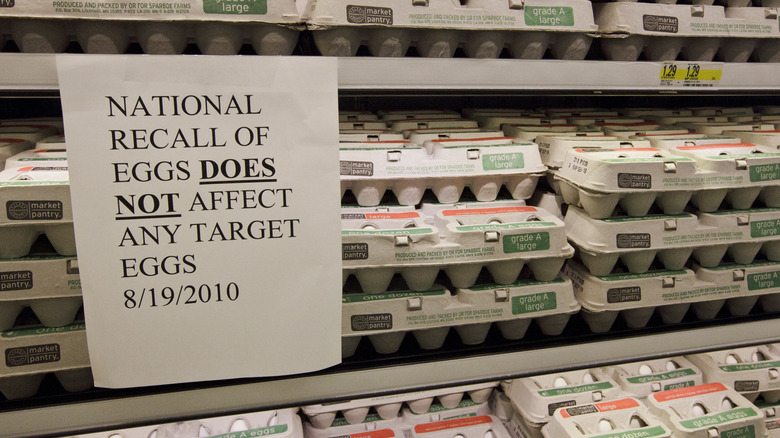
Salmonella — or more accurately, salmonellosis, the illness caused by the bacteria — is no joke, with roughly 26,500 hospitalizations and 420 deaths resulting from the estimated 1.35 million cases that occur in an average year. The old line that "it won't kill you, but it'll sure make you wish you were dead for a few days" rings rather hollow, given the context.
When you hear about a recall for salmonella, you probably think about poultry and eggs first. That's a logical assumption: Of those approximately 1.35 million salmonella cases, almost 1 in 4 are caused by eating turkey and chicken. Eggs aren't in that league, but they account for approximately 79,000 infections annually.
Surprisingly, though, when you dig into the histories of the largest outbreaks of salmonellosis in the US, you'll find that many of them were linked to foods you wouldn't expect. They range from peanut butter to fresh produce, and even to dry breakfast cereal. Reporting isn't always consistent, so it's hard to make apples-to-apples comparisons, but here are the 10 biggest salmonella recalls we could find, when measured by the quantity of food products involved.
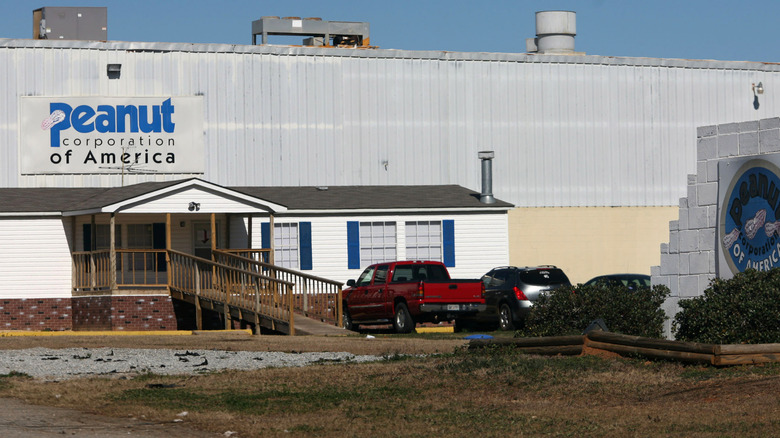
Peanut Corporation of America, 2009
Peanut butter is one of the most-loved pantry staples. It's a rare kid who doesn't grow up loving peanut butter and jelly sandwiches, or peanut butter-and-chocolate candy bars, and for adults there are any number of sweet and savory recipes using peanut butter.
So if you were an adult in the early 2000s, you'll probably remember the massive peanut butter recall that took place in 2008 and 2009. The CDC traced a substantial multi-state salmonella outbreak back to King Nut peanut butter, made by the Peanut Corporation of America. You wouldn't know that brand, because it was sold primarily to institutional buyers and other manufacturers. The CDC traced it to well over 2,000 products, including popular peanut butter crackers from Austin and Keebler.
The outbreak eventually topped out at 714 confirmed cases across 46 states, with nine deaths and almost 1 in 4 illnesses resulting in hospitalization. This outbreak was especially newsworthy, not just because of its size and severity (which impacted the entire US peanut industry), but because it quickly became apparent that the company's senior management knew about the contamination, but covered it up and continued to sell the product. Several of them would ultimately be charged and convicted for their roles in the outbreak.
Jif peanut butter, 2022
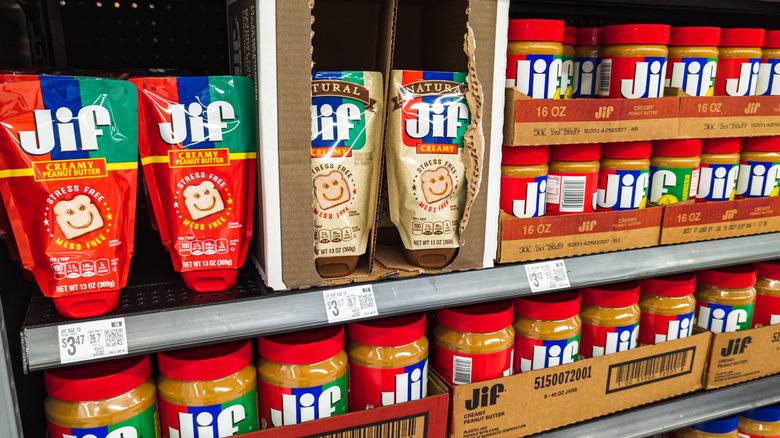
Peanut butter was back in the news again in 2022, and not in a good way. That's when the J.M. Smucker company, makers of Jif — America's top-selling brand of peanut butter — announced a voluntary recall of the product for potential salmonella contamination.
The list of affected products was impressive, totaling 49 items that covered most of the Jif product line. The affected products were produced at the company's massive facility in Lexington, Kentucky, which turns out a reported 270 million jars of peanut butter per year, making it the world's largest peanut butter factory. The company took the unusual step of of releasing a list of products not made at the Lexington factory, so customers could still get their peanut butter fix while Smuckers identified and fixed the issue.
The recall affected an estimated $125 million dollars' worth of peanut butter, and the impact went beyond Jif itself to secondary products that used the peanut butter as an ingredient. Although it was a painful experience for the food-manufacturing giant, it didn't put a lasting dent in Jif's popularity.
Cargill ground turkey, 2011
Ground turkey is a contentious ingredient among home cooks. Some really like it as a versatile alternative to ground beef (hence the range of ground turkey recipes on this site), while others find it a less than satisfying substitute.
Whatever your feelings about ground turkey's culinary qualities, it's safe to say that we all agree it shouldn't come with salmonella as an unwanted "bonus." That's what happened with ground turkey from industry giant Cargill, back in 2011. Not only was the recall huge in terms of the amount of product involved — at 36 million pounds, it was described as the "largest ever Class 1 recall" at the time — it was caused by the Heidelberg strain of salmonella, which is one of the most dangerous. According to the CDC, there are over 2,500 known strains of salmonella, of which 100 are dangerous to humans. Of these, a half-dozen account for most human infections, and Heidelberg (the strain in this case) is especially dangerous, because it is often antibiotic-resistant.
This case was also notable because, while it was first detected at a relatively early stage in the outbreak, the recall wasn't launched until after one of the people infected had died. In the wake of the outbreak, the Pew Charitable Trust's research arm would issue a scathing report on the handling of the incident, making multiple recommendations to speed the response to similar outbreaks in future.
Conagra pot pies, 2007
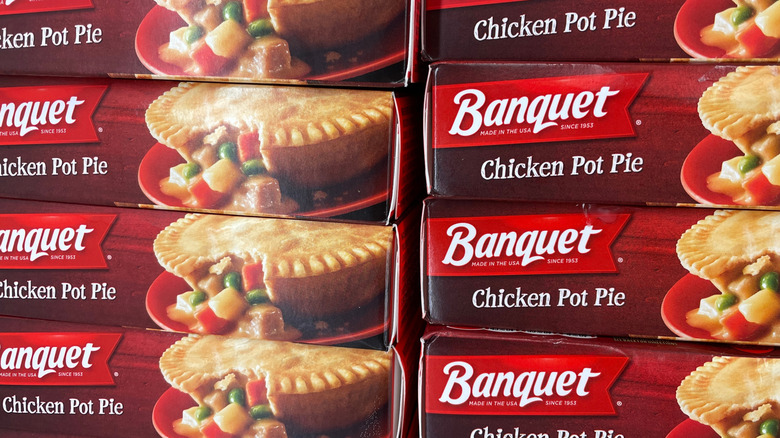
Sometimes, even on weeknights, we want to cook a proper meal when we get home. Other times, we'll just grab something from the freezer and heat it up, while we decompress from our day.
Store-bought pot pies are a popular option for nights when we're feeling low on energy and ambition. They're simple, they're comforting, and subjectively they feel more like a "real" meal than a lot of other convenience products. So when ConAgra had to recall its popular Banquet brand of microwaveable, ready-to-eat pot pies in 2007, it was a really big deal for time-stressed consumers.
The pies were sold under the Banquet brand name, and were also sold as private-label store-brand pies at many retailers. In total, the CDC found 401 confirmed cases, of which 32% required hospitalization. How large was the recall in terms of product? Well, that's harder to know, with reports citing only "an undetermined amount" of product, and with the recall affecting just two days' production. That said, the report also noted that the factory in question cranks out about a million pies a day, so two days' production is still a whole lot of pies.
Kelloggs Honey Smacks, 2018
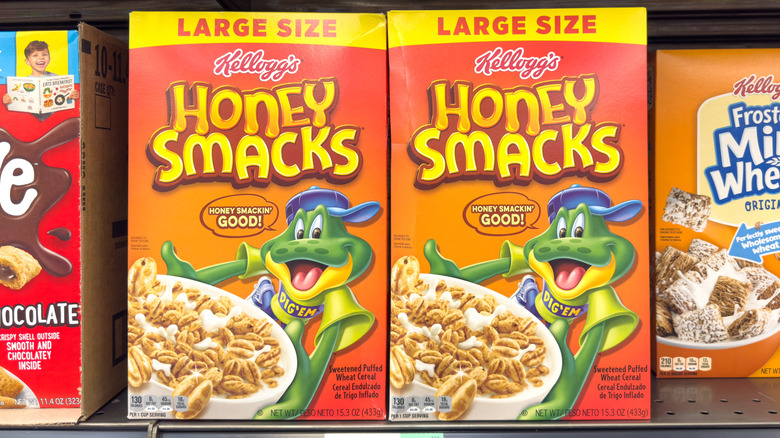
Breakfast may be the lowest-stress meal of the day. Some of us can do without it entirely, some of us are happy with eggs and toast or a breakfast smoothie, and even a holiday brunch can be easy with the right recipe.
Then there's breakfast cereal, which is also a seriously low-effort option: Bowl, cereal, milk, done! No wonder there are so many cereal options in any given supermarket. You could certainly be forgiven for thinking that the risk of salmonella in cereal is pretty low, but low is not zero. Cereal giant Kellogg's learned that the hard way in 2018, when it was obliged to recall 1.3 million cases of its Honey Smacks cereal because of salmonella.
The outbreak resulted in at least 135 illnesses, according to a recap of the case published in Food Safety News, and caused 34 hospitalizations (but no deaths, thankfully). The source of the outbreak was traced back to a specific supplier, and its factory in Gridley, Illinois. The supplier, Kerry Inc., would eventually pay a settlement of over $19 million to Kellogg's, and the company's former head of quality assurance would plead guilty to multiple charges related to the outbreak.
Wright County Egg/Hillandale Farms, 2010

Eggs are something we don't usually think about a whole lot (unless their price spikes suddenly), but they're fundamental to a lot of cooking and — especially — baking. That's why there's no single substitute that does all of the things eggs do, and if you're allergic or vegan, you'll need to know several of the best egg substitutes and which uses they're appropriate for.
For those of us who can and will eat real eggs, price is usually our main concern until the day there's a recall. Most of us can (ahem) recall a number of those, but one in 2010 set a pretty remarkable bar. In that year, the CDC tracked a salmonella outbreak resulting in an estimated 1,939 identifiable cases, all tracing back to two separate Iowa farms, Wright County Egg and Hillandale Farms. The resulting recall eventually topped 500,000,000 eggs (that's a half-billion!).
The same strain of salmonella was found in eggs from both farms, and was ultimately traced to a feed mill that supplied both of them. Wright County Egg and its parent company, Quality Egg, proved to be a repeat offender where contamination was concerned, and senior executives would later be convicted on charges related to the recall.
Hillfarm Dairy, 1985
Some things just go together naturally. Think in terms of peaches and cream, or milk and cookies. We're fortunate to live in a time and place where those things are available year 'round, if we want them, and they'll usually be safe to consume.
Where milk is concerned, that wasn't always the case. Until the early 20th century, milk was often adulterated and never pasteurized, and was a frequent source of diseases ranging from tuberculosis to diphtheria and salmonellosis. Pasteurization and improved hygiene standards changed that, helping child mortality rates drop from hundreds per thousand live births in the late 1800s, to their current levels of five or six. That's why it was such a shock when, in 1985, milk from Hillfarm Dairy in Illinois caused a massive outbreak of salmonellosis that affected hundreds of thousands of people and caused 12 known deaths.
The incident was traced to a faulty valve at the dairy, which malfunctioned and allowed tainted raw milk to contaminate the already-pasteurized milk in another tank. At the time, it was the largest-ever outbreak of food poisoning in the US, and 40 years later, it still remains the largest salmonella outbreak. Given the current push to rehabilitate and repopularize raw milk consumption, it's a salutary reminder that health regulations exist to save lives.
Malchita brand cantaloupes, 2023-2024
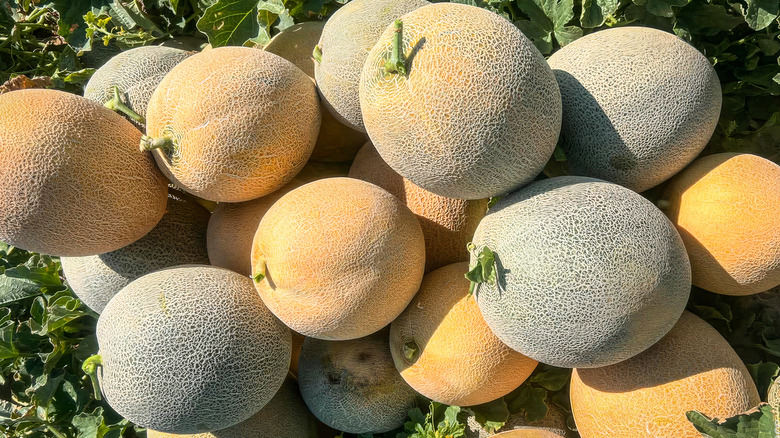
If you love a good fruit tray, there's nothing like a recall of melons to ruin your day. That's what happened in 2023 and 2024 with Malchita brand cantaloupes, imported from Mexico.
Produce items are typically exposed to salmonella contamination in the field, where the bacteria can be spread by farm workers, livestock or wild animals, infected soil, or contaminated irrigation water. Cantaloupe is especially susceptible, as it turns out, because its rough, porous surface retains bacteria beautifully, and salmonella can even penetrate into the fruit itself. In the 2023-2024 outbreak, those contaminated melons caused a total of 597 known illnesses and 15 fatalities, 6 in the US and 9 in Canada. That makes it the most lethal known outbreak, exceeding the 1985 milk recall.
The outbreak was first detected in Canada, and testing by the CDC found the identical strain of salmonella in melons sold in the US. The CDC recognized 407 known cases across 40 states, and its total of 15 fatalities made this outbreak worse than the Hillfarm Dairy case in 1985. The actual quantity of melons involved in the recall has been hard to locate, but given its 40-state extent — and that Mexico accounts for $550 million, or 57%, of America's $962 million in melon imports — we can reasonably consider it one of the largest overall recalls.
ConAgra Foods/Peter Pan peanut butter, 2007
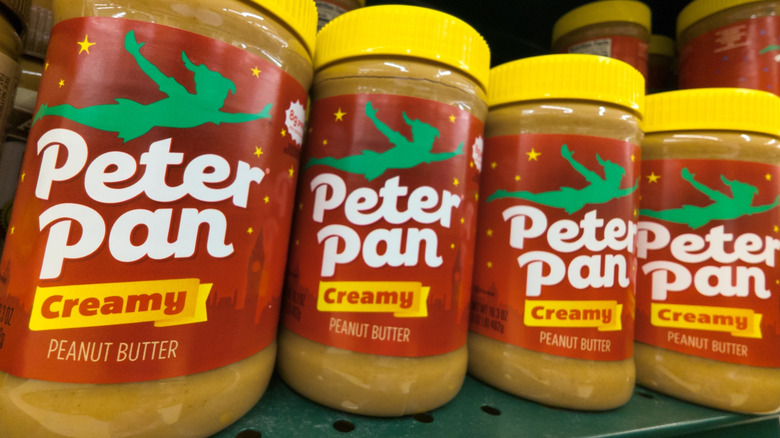
The 2009 Peanut Corporation recall and the 2022 Jif recall aren't the only black marks on the peanut butter industry's track record. ConAgra Foods experienced a major recall of its popular Peter Pan brand in 2007.
The investigation began in 2006 when the CDC and state health officials began to notice large numbers of salmonella infections, specifically the "Tennessee" strain. Ultimately, the CDC would identify 628 confirmed illnesses across 47 states, but thankfully no fatalities. Investigators eventually traced the source of the infection to jars of Peter Pan and Great Value (Walmart's private-label store brand) peanut butter, which had been produced at a single production facility in tiny Sylvester, Georgia. Ultimately all peanut butter produced at that plant, dating back to 2004, was recalled, adding up to a whopping 326 million pounds of peanut butter.
ConAgra would ultimately plead guilty to misdemeanor charges of shipping tainted peanut butter, paying fines and penalties of over $11 million. The company also paid a number of settlements to consumers as a result of civil suits.
Rose Acre Farms eggs, 2018
We'll close out our roundup of the biggest salmonella outbreaks by circling back to eggs. There have been a number of egg recalls since the beginning of the century, but most weren't nearly big enough to make our list.
That's not the case with a 2018 recall affecting Rose Acre Farms, the country's second-largest egg producer. The salmonella outbreak associated with this recall was relatively small, accounting for just 45 cases and 11 hospitalizations across 10 states. Investigators were able to trace it back to eggs from a single Rose Acres facility, located in Hyde County, NC. Despite the outbreak's modest impact and limited geographic reach, Rose Acres would ultimately recall 206,749,248 eggs "through an abundance of caution," and Cal-Maine Eggs would recall another 23,400 cartons (280,800 eggs) purchased from Rose Acre. That makes it the largest egg recall since the 2010 Wright County/Hillandale Farms outbreak.
FDA inspectors painted a damning picture of the facility. Their inspection reports detailed a range of substandard practices, from rodent infestations to unsanitary conditions, and staff failing to follow adequate sanitation practices.