

5 Pasta Dishes Worth Ordering And 5 To Just Make At Home
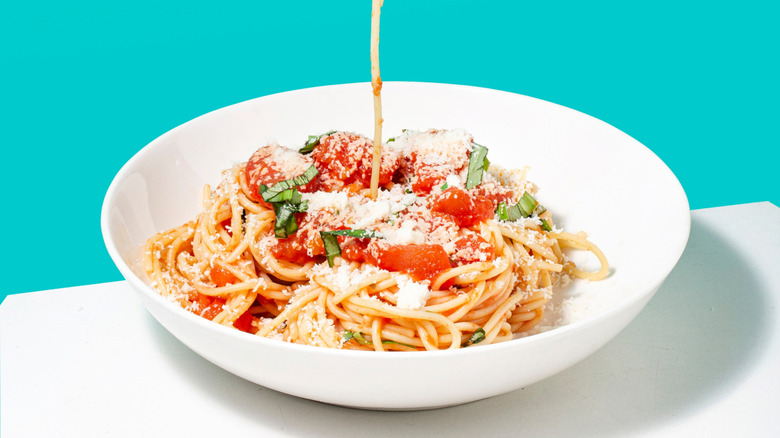
Linguine. Ravioli. Agnolotti. The world of Italian pasta is an exhilarating one with fresh, exciting options waiting at every corner. You might think that you have seen it all, but a quick stroll down the pasta aisle will make it clear that there are many new types of pasta to discover. Outside of just selecting a pasta shape, you'll also need to know when to attempt a pasta dish at home and when to leave it to the pros.
By befriending beginner-friendly pasta recipes, you will be rewarded for the time and effort you invest in the kitchen. There is a financial upside as well: Why spend on a restaurant's steep prices when you can easily whip up simple pasta dishes with everyday ingredients commonly found in pantries? Simpler dishes will also boost your familiarity with the intricacies of Italian cooking and help you develop core skills. Until you have a strong foundation to lean on, it helps to leave more complicated dishes to the pros, so that you can skip the expensive mistakes and disappointing results.
To offer some insight into which dishes you should try yourself and which you should leave up to the pros, we reached out to two experts. They are Pasquale Rufino, executive chef of Novecento Dubai, and Dayamani Singh, executive chef of CinCin.
Order: Lasagna alla Bolognese
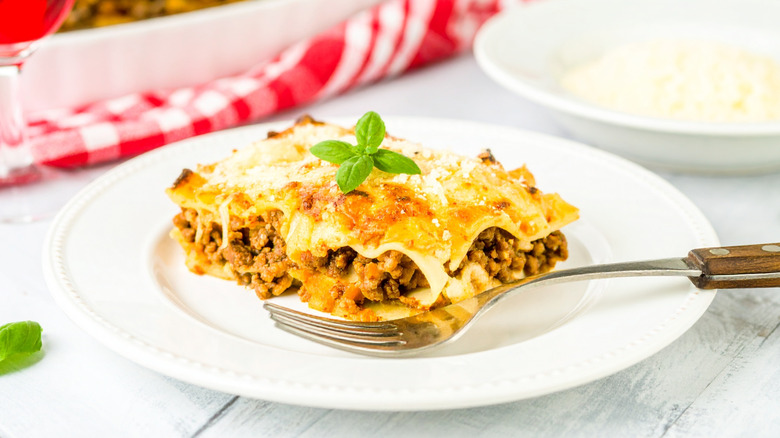
"A proper lasagna alla Bolognese is a [labor] of love — slow ragu, silky bechamel, perfectly cooked sheets, and balanced layers," chef Pasquale Rufino says. When you look at it that way, it's almost the equivalent of preparing three dishes at once. Time and technique can work against you, he cautions. Making a classic Bolognese ragu is a slow process that can take up to two hours. Any attempts to rush this process could leave you with a flavor profile that feels flat rather than velvety and heartwarming.
The bechamel, meanwhile, can seem simple — but it is deceptively so. There's only butter, flour, and milk: What could go wrong? Turns out, there are quite a few pitfalls to avoid. Among the top tips for whipping up a creamy bechamel are getting the proportions just right, adding the flour gradually, and whisking diligently. Even something as simple as adding cold, rather than warm, milk to the roux can alter your cooking time.
Finally, there is the pasta itself. "Each pasta sheet needs to be thin, even, and layered with a careful hand," chef Dayamani Singh says. The amount of filling between each layer needs to be proportionate — not too much or too little — so that the end result isn't too dense or chewy. "It's a dish where technique truly elevates the final result, making it one of the most rewarding to enjoy in a restaurant," Rufino says.
Make at home: Spaghetti aglio e olio

Spaghetti aglio e olio, which features silky pasta strands coated in the glossy kiss of olive oil, is proof that flavor and speed needn't be strangers. For Pasquale Rufino, aglio e olio is the perfect dish for budding home cooks with its straightforward ingredients, rapid cook time, and flavor payoff. Chances are that you have all the ingredients you need to make spaghetti aglio e olio sitting in your pantry already. "It proves how little you actually need to make something comforting — just garlic, [chili], good olive oil, and a splash of pasta water," Dayamani Singh says. You can also give your spaghetti aglio e olio a flavor boost with a simple addition — canned anchovies — which can be tossed with the oil and garlic.
If you are looking for more reasons to try this recipe at home, here's the most convincing one: This dish doesn't travel well when ordered from a restaurant. "At home, it's fresh, fragrant, and comforting — a beautiful introduction to authentic Italian cooking," Rufino says. However, in the time that it takes for it to be delivered home from a restaurant, the oil can thicken, and the pasta can taste greasy. "Honestly, this is one of those dishes that tastes best in your own kitchen — quick, inexpensive, and incredibly satisfying when eaten straight [from] the pan," Singh says.
Order: Lobster ravioli

The luxurious, indulgent flavors of lobster ravioli are best enjoyed in a restaurant, but Dayamani Singh doesn't want budding home cooks to be discouraged. "It's absolutely possible to make a beautiful lobster ravioli at home; it just asks for a bit of precision, patience, and respect for the ingredient," he says. But if you are attempting this dish at home, you'll need to make peace with the fact that there's little room for error. "The real challenges are in the details: Lobster cooks in seconds and turns rubbery if you miss the window," he says. Minor errors in judgment, such as placing cold lobster directly into boiling water, can make the meat cook unevenly.
Once you have braved your way through the lobster, there is the daunting prospect of mastering homemade ravioli. Overfilling the dough is among the common rookie mistakes when making ravioli, and makes the parcels more prone to splitting while cooking. "Every edge has to be sealed perfectly to prevent leaks in the pot," Singh says.
If you are dying to try this recipe, it helps to order it a few times from a restaurant to understand how it should taste and feel. "In the kitchen, we carefully balance the dough, filling, and cooking time to protect the ingredient and highlight its delicate [flavor]," Pasquale Rufino says. Once you have mastered the basic techniques of cooking lobster and sealing ravioli, you'll be rewarded with a tasty homemade rendition.
Make at home: Pesto pasta
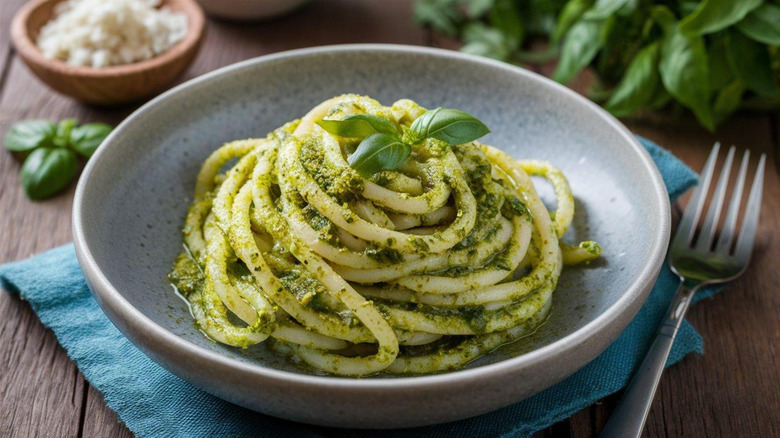
"Homemade pesto has a brightness that's hard to replicate hours later. It's a simple way to bring authentic Italian [flavor] into your kitchen with minimal effort," Pasquale Rufino says. Instead of ordering yours from a restaurant, rest assured that this forgiving recipe sets the bar low for first-timers. "At home, blending basil, pine nuts, cheese, garlic, and olive oil creates a lively, fragrant sauce that's easy and accessible for beginners," he says.
For Dayamani Singh, store-bought pesto simply cannot compete with the vibrancy of a freshly made sauce. "The basil is greener, the nuts are aromatic, and the cheese melts into the pasta instead of sitting on top," he says. You can also enjoy better control over the seasoning when it is being made freshly at home. Any extras can be easily put to use elsewhere in your weekly meal plan; the best uses for pesto include adding it to egg salads, breakfast sandwiches, or using it as a burger topping.
Pesto also easily oxidizes. When exposed to oxygen, the enzymes in the basil leaves start changing color. If you are ordering this dish from a restaurant, don't be surprised to find that the pesto has turned muddy by the time it reaches your dinner table at home. It comes as little surprise, then, that Rufino recommends making pesto right before serving to enjoy its fresh hues and aromas.
Order: Agnolotti del plin
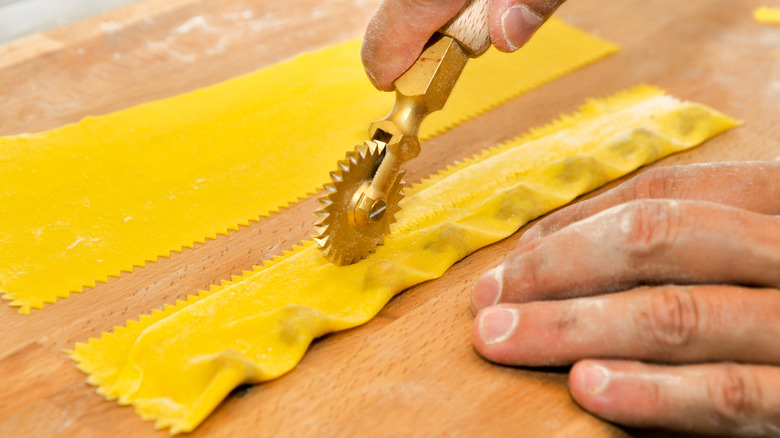
There are several compelling ways to repurpose meat leftovers. If you were to entrust the task to Piedmont locals, they would give you agnolotti del plin: pillowy parcels of pasta stuffed with mouthwatering meats. The plin refers to the delicate pinch performed along the seams to seal each piece of agnolotto.
Given the handcrafted nature of this dish, each piece is stamped with a visible sense of craftsmanship. However, this isn't a forgiving pasta. After the meat filling is sealed into the pasta dough, the delicate pinching motion is performed at 1-inch intervals. Cutting and sealing the pasta is a precarious endeavor. "Too gentle and the agnolotto opens in the water; too firm and it can burst mid-boil," Dayamani Singh says. Cutting too close to the meat stuffing can also threaten the fragile seal. Despite 16 years of culinary experience, he still makes them in batches. He has discovered that once fatigue sets in and the flow slips away, it is easy to create irregular shapes.
Both chefs also caution about the labor- and time-intensive nature of the task. "At home, shaping dozens of agnolotti becomes a time-consuming task, and slight inconsistencies affect texture and presentation," Pasquale Rufino says. Instead, he recommends enjoying the intricacies of this dish at a restaurant where it is prepared by what he calls "trained hands."
Make at home: Spaghetti arrabbiata
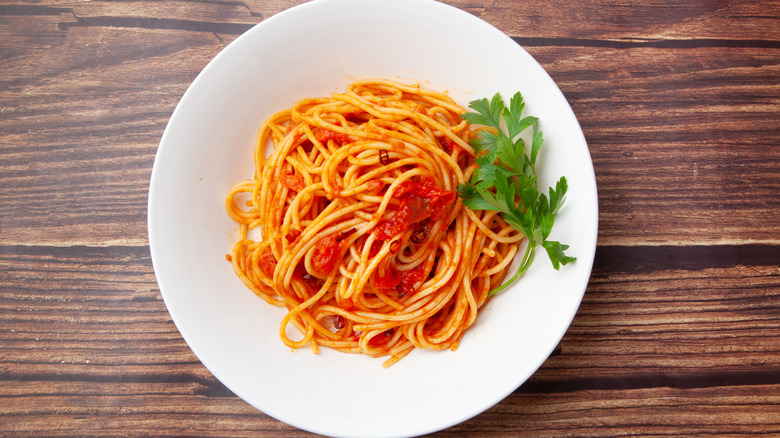
Whether you are cooking for a crowd of vegetarians and vegans or racing against the clock to get dinner on the table on a weeknight, spaghetti arrabbiata won't disappoint. Dayamani Singh believes that this dish is ideal for beginners and home cooks to try because it's hard to get it wrong, and Pasquale Rufino agrees. "Arrabbiata is a fantastic home dish because it requires only a few ingredients — tomatoes, chili, garlic, and olive oil — yet delivers bold [flavor]," Rufino says.
Making yours at home is also the best way to do the sauce justice. The literal translation of arrabbiata from Italian is "angry." In Rome, it is served with red chili flakes and garlic, but restaurants around the world often dial down the spiciness to suit the collective palate of their diners. "While delicious in restaurants, arrabbiata shines in a home kitchen, where you control the spice, acidity, and intensity," Rufino notes.
With a quick cook time of under an hour, attempting spaghetti arrabbiata is an easy way to build your confidence with Italian cuisine before attempting more adventurous pastas and sauces. "It's approachable, satisfying, and perfect for anyone wanting to explore Italian cooking," Rufino says.
Order: Squid ink tortellini
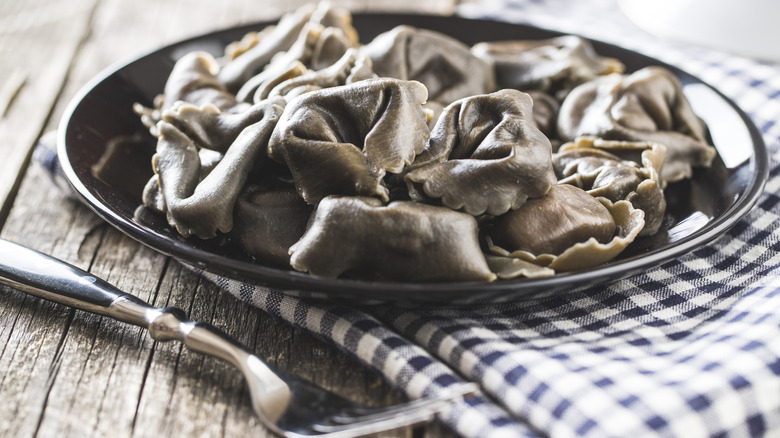
With its signature ring-shaped silhouette and charcoal hue, squid ink tortellini is a dish that is guaranteed to fetch compliments at your next dinner party. However, there is one thing that the budding home cook needs to know before attempting it at home: Squid ink dough has a will of its own. "It's softer, a little more hydrated, and that gorgeous black [color] makes it hard to spot thin or weak areas — so you don't always know a tear is coming until it happens," says Dayamani Singh.
Hydration is everything when working on homemade pasta: The softer the dough, the easier it is to knead. However, opting for squid ink may set you up for an uphill battle. For starters, the addition of squid ink tampers with the hydration levels of the dough, making it far more temperamental than your average pasta. Too dry, and the brittle dough can start developing cracks. Too much moisture, and you have a sticky mess on your hands.
And then there is the tortellini itself. "The fold has to be snug enough to hold the filling, but not so tight that it splits. And when each one ends up a slightly different size or thickness, they all cook at different speeds," Singh says. Instead of attempting to scale this culinary monolith on your own, Rufino recommends leaving it in the safe, practiced hands of the experts.
Make at home: Creamy penne pasta

Creamy penne pasta makes for an irresistible weeknight treat. But if you are ordering yours from the local pizzeria or Italian restaurant, just know that the passage of time doesn't do this pasta any favors. "Creamy pasta is at its best the moment it leaves the pan — warm, silky, and perfectly textured. When delivered or reheated, the sauce can thicken too much or separate," Pasquale Rufino says. Tossing a creamy sauce into the microwave can be especially perilous as the rapid infusion of heat causes the cheese and the cream to separate.
However, on the bright side, creamy penne pasta is a beginner's dream: All you need to do is saute the garlic, pour in the cream, melt the cheese, and add pasta water. "It's ideal for weeknights because the ingredients are simple and the technique is forgiving," Rufino says.
Singh has also found that this dish makes for an excellent make-ahead choice when prepping for a busy week. You can keep grated cheese, cooked veggies, and protein on hand to whip up a dish after a long day. "These small touches make creamy penne an ideal weeknight dish you can enjoy at its freshest," Singh says.
Order: Busiate alla trapanese

Hailing from Sicily, busiate is immediately recognizable by its distinct corkscrew spirals. This artisanal pasta is best enjoyed when it is topped off with pesto alla trapanese — a Sicilian favorite that adds almonds and tomatoes to the classic recipe. The thought of fresh basil simmering in your kitchen might sound tempting, but Pasquale Rufino advises a word of caution. "Busiate is a dish where technique truly enhances tradition, making it most enjoyable when expertly prepared," he says.
If you are unable to master the consistency of the pasta, you may end up with uneven thickness that impacts the taste and cooking time. "Busiate is definitely a bit of a workout, because each strand is rolled by hand around a thin rod, and keeping the thickness even is the real challenge — one thicker curl, and suddenly half your pot is al dente while the rest is soft," Dayamani Singh says.
Your shoulders may be screaming after a day of rolling out busiate spirals individually by hand, but the pesto has zero plans of going easy on you. "The traditional pesto alla trapanese is equally hands-on: tomatoes, almonds, basil, garlic, and olive oil crushed in a mortar until you get that slightly coarse, rustic texture," Singh says. Tossing it all in a blender will turn it into a paste, effectively ruining it. It's a dish better left up to the experts.
Make at home: Tomato basil linguine

There are several reasons to attempt this dish at home, but here is the most compelling one: "Tomato basil linguine is one of the easiest dishes to recreate at home with restaurant-quality results," Pasquale Rufino says. The list of ingredients is simple and won't need you to visit a specialty store: Just add tomatoes, basil, olive oil, garlic, and linguine to your weekly grocery run. Once you have assembled all the ingredients, you don't need to dive elbow-deep into complex tutorials. "Tomato basil linguine is all about freshness and timing, rather than complicated technique. With good tomatoes, a touch of pasta water, and fresh basil, you can create a bright, [flavorful] dish at home," Dayamani Singh says.
There is also the fact that this pasta dish can be made at home faster than it would be delivered. Not only is the cook time around 15 minutes, but you can also count on a better texture. "At home, the pasta stays perfectly al dente and the basil remains bright and aromatic," says Rufino. According to him, the transit time can rob the basil leaves of their garden-fresh hues, instead leaving behind grassy echoes. "Freshly prepared, it's light, vibrant, and beautifully balanced — proof that great Italian food often comes from simplicity," Rufino says.