

9 Mistakes You Might Be Making With Grits
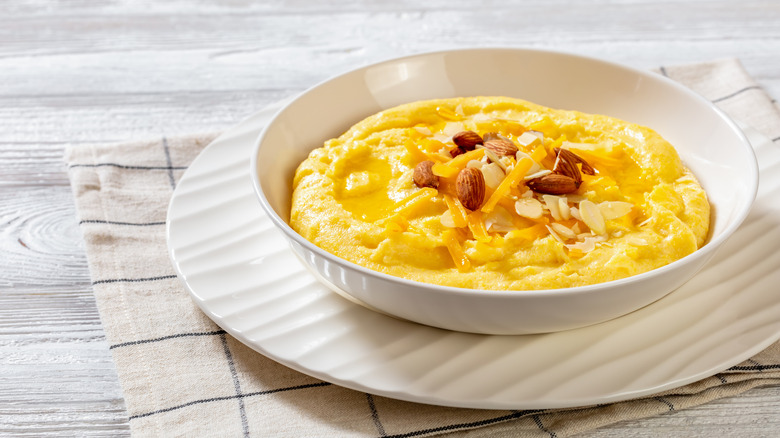
If you're not from the South, then you may not be very familiar with grits — that affordable breakfast staple that's so popular in Southern states. It's made from finely ground corn, which is combined with some sort of cooking liquid to create an oatmeal-like gruel that can be eaten with a variety of different toppings. Some people prefer their grits sweet, adding sugar or other ingredients like honey or maple syrup. Often, sweet grits may be served with dried fruit or nuts. On the other hand, some prefer a more savory flavor profile and may include ingredients like salt and pepper in their recipe.
Whichever way you prefer your grits, though, there's a chance that you're still making some mistakes when you prepare them. Although grits seem like an easy dish to cook, there are still some common mistakes that you should steer clear of if you want to cook the best bowl possible. We spoke to Rena Awada, owner, head chef, food blogger, and content creator at Healthy Fitness Meals; Jimmy Proffitt, author of Seasoned in Appalachia: Delicious Recipes From the Mountains and Hollers; and Josh Quick, executive chef and owner of Odette in Florence, Alabama, to learn how to avoid these mistakes — and how to make an incredible bowl of grits every time.
Assuming that all grits require the same liquid-to-grits ratio
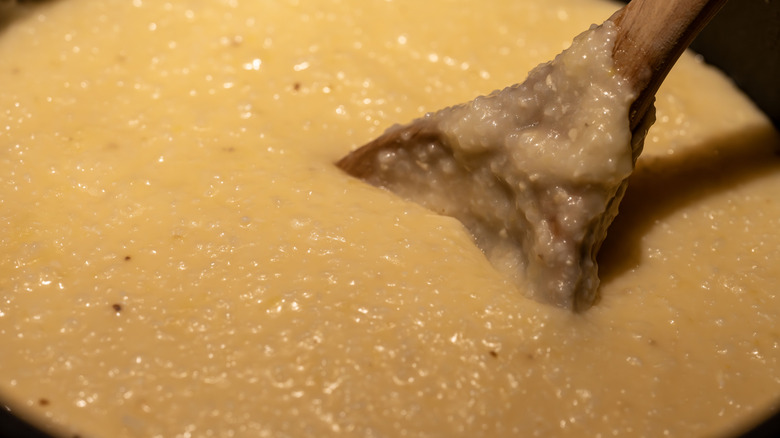
If you've cooked one kind of grits before, you may assume that you can cook any type of grits. In reality, though, not all types of grits require the same amount of liquid. According to Rena Awada of Healthy Fitness Meals, one of the most common mistakes that home cooks make with grits is using the same liquid-to-grits ratio without any regard for what type of grits they're actually using.
According to Awada, stone-ground grits require more liquid — and therefore require a longer cook time — than regular or quick grits. "As a general guide, for stone-ground grits, use a 4:1 liquid-to-grits [ratio] (or even up to 5:1 for extra-creamy results)," Awada suggests. Using regular grits? Then you'll need a ratio of about 3½ to 4 parts liquid to 1 part grits. Quick grits require even less liquid, with Awada recommending a ratio of 3:1 liquid to grits. "Using too little liquid yields dry, stiff grits," she advises, "while too much makes them loose or soupy." Stick to these ratios, and your grits will be the perfect consistency.
Forgetting the skim the hulls off
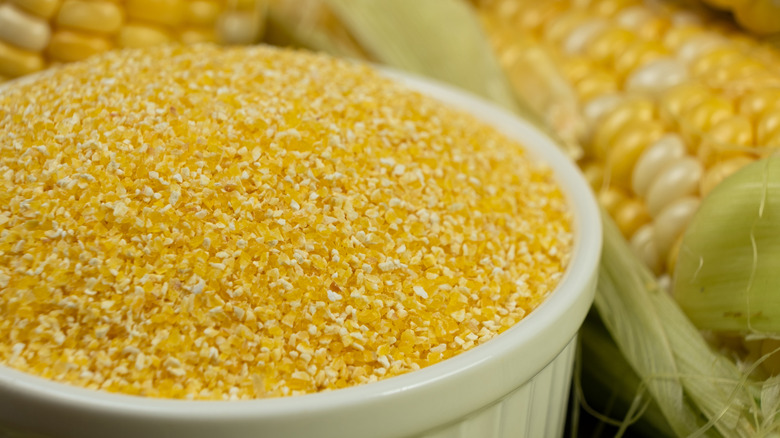
There are a few different types of grits you can choose from at the grocery store, but if you ask us, the best variety to use is stone-ground grits. They have more flavor than their regular or quick-cooking counterparts, although they do take longer to prepare. If you do choose to use stone-ground grits, though, it's important to remember that you're going to need to skim the hulls, or the protective, hard-to-digest corn coatings that stone-ground grits still contain. Not doing so, says Josh Quick of Odette, is a major grits-cooking mistake that lots of home cooks tend to make when they're not familiar enough with the ingredient.
There are two ways to do this. First of all, you can soak the grits overnight, then skim the hulls off in the morning. But Quick asks, "Who has time for all of that?" For a quicker cooking method, he says, add the liquid you're using to the pot, then add the grits and turn the heat on low. Then, stir the grits. This will agitate them and send the hulls to the surface. "Use a fine mesh strainer and skim the very top layer to remove and discard the hulls," suggests Quick. "I like to do this process three times to ensure the most creamy, tender grits!"
Trying to cook the grits too quickly over high heat
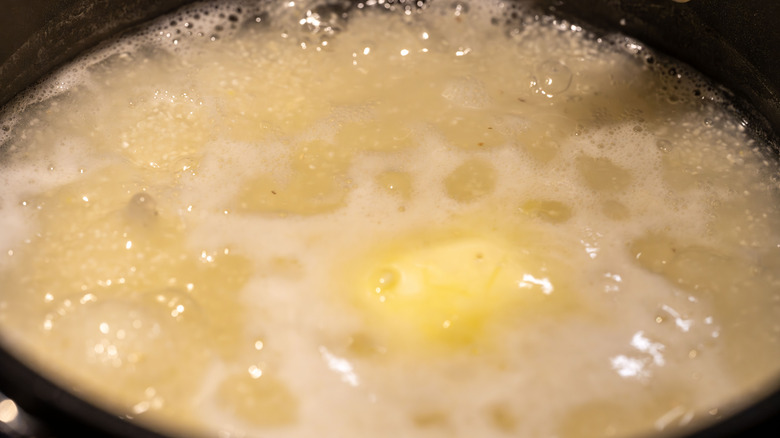
Another mistake that is particularly common when it comes to stone-ground grits? Trying to cook them too quickly. You might think using high heat is the best way to go, as it can cut the stone-ground grits' long cook time (which can be around 40 to 50 minutes). However, using too high a heat and trying to shorten that cook time generally isn't a good idea. "When it comes to stone-ground grits, you must have patience!" says cookbook author Jimmy Proffitt. "If you cook them at too high a temperature, you will dry them out before they're done, which will often cause them to burn and/or clump up." On the other hand, if you cook those grits more slowly and at a lower temperature, it will allow them to absorb the liquid properly.
If you accidentally end up burning your grits anyway, there are things you can do to save the batch. "If the burned flavor has not penetrated the whole batch, pour off what's not burned into another pot, leaving what's stuck to the bottom in the old pan, and add some water to the new pot and bring them back to a light simmer," Proffitt suggests. "You could mask any light burnt flavor with some smoky cheese when they're done."
Not using a flavorful cooking liquid
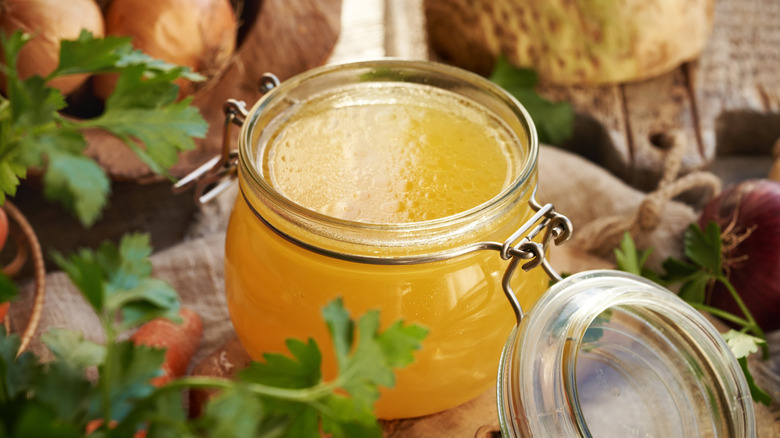
Let's be honest: Grits are a pretty bland food. That's not necessarily a bad thing — they provide a neutral base for so many other flavors, even if you're just keeping things simple with a pat of butter and some salt and pepper. But that doesn't necessarily mean that you have to lean into that blandness. We believe it's a mistake not to use a flavorful cooking liquid when cooking your grits. This is a great opportunity to add a ton of flavor to the dish, and by using plain water, you're ignoring that opportunity completely, which could leave you with a boring pot of grits.
Rena Awada suggests choosing "water, milk, stock, or a mix of both to add richness and depth." Milk can be used for both savory and sweet grits, but stock should only be used for the savory variety. Even if you're just planning on cooking the grits in water, you should make sure to salt the water generously. "For proper seasoning, salt should be added to the cooking liquid before the grits," advises Awada. "If you add the salt once the cooking process is done, the grits won't absorb the flavor, so it is essential to salt the liquid so that the grits can absorb it." Some recipes suggest about ½ teaspoon of salt for ½ cup of grits, but feel free to use more if you want a saltier dish.
Opting for instant grits
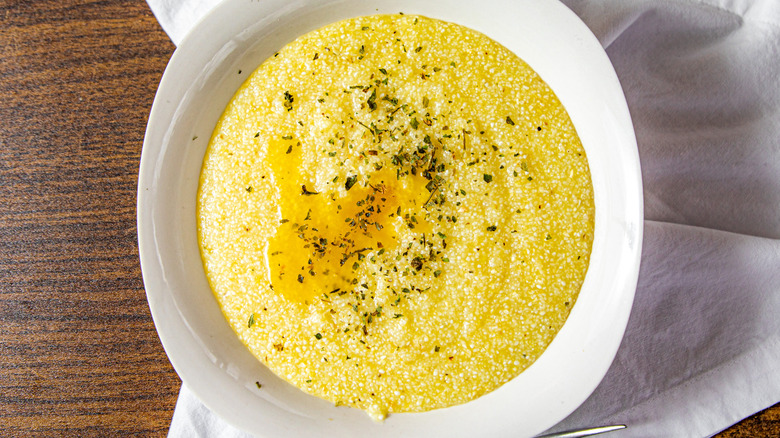
There are times when you just need to get breakfast on the table as quickly as possible. At those times, it may pay to use instant or quick-cook grits. After all, instant grits can be prepared in as little as five minutes, which makes them a solid option for busy mornings. However, there are other times when you may really want to focus on the quality level of your grits, especially if you're turning them into a special meal, like this recipe for old-fashioned shrimp and grits. That's when Jimmy Proffitt says it's a mistake to use instant grits.
"Using old-fashioned stone-ground grits offers so much more flavor and much better texture," he says. And since this is such a neutral-tasting food, a bit of extra flavor and a slightly better texture can make a huge difference in the overall dish. Yes, the cooking process won't be quite as speedy as it would be with instant grits, but you'll realize that the payoff is definitely worth it once you taste the difference.
Forgetting to stir the grits regularly
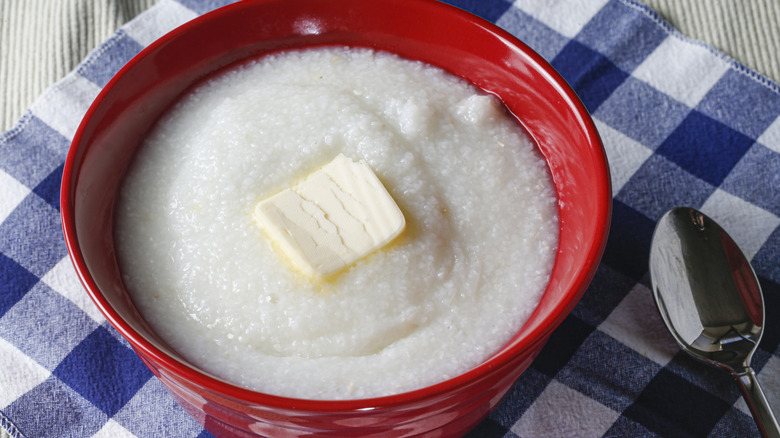
Sure, cooking grits may seem pretty simple, but there are some small mistakes you can make that will ultimately end up making a big difference. One of those mistakes, according to Rena Awada, is neglecting to stir the grits regularly, particularly at the beginning of the cooking process. "Grits may burn to the bottom of the pot and become unpleasantly scorched if they are not stirred regularly," she explains. Make sure to stir the pot every couple of minutes for the first 10 minutes of cooking to even out the texture and prevent it from sticking to the bottom of the pot and burning.
So, how often should you be stirring after that point? For the best results, give your grits a stir around every three to five minutes. Grits are a pretty hands-on food, so now is not the best time to leave the kitchen and go check on the laundry.
Not repurposing the leftovers for other dishes
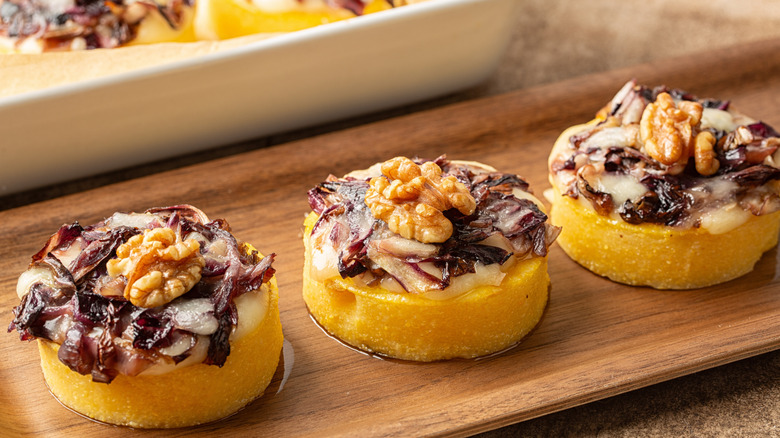
There are some foods that are truly only good when they're fresh, and if you have leftovers, it's better to toss them (even though we hate food waste, as it's detrimental to the environment and costly to our families). But luckily, grits aren't one of those foods. If you've ever tried to save leftover grits before, you may have noticed that they sort of congeal and become more solid, losing their viscous texture. Because of that, you're probably not going to use them as you normally would if they were fresh — but there are ways to utilize them, and not doing so is a huge mistake considering how delicious these preparations can be.
According to Jimmy Proffitt, "Leftover grits can be chilled, cut into cubes or slabs, and pan-fried the next day in a little butter until lightly crispy and golden on the outside." Then, top them with whatever you want, from flavorful pulled pork to a fresh Caprese salad.
Neglecting to add any fat
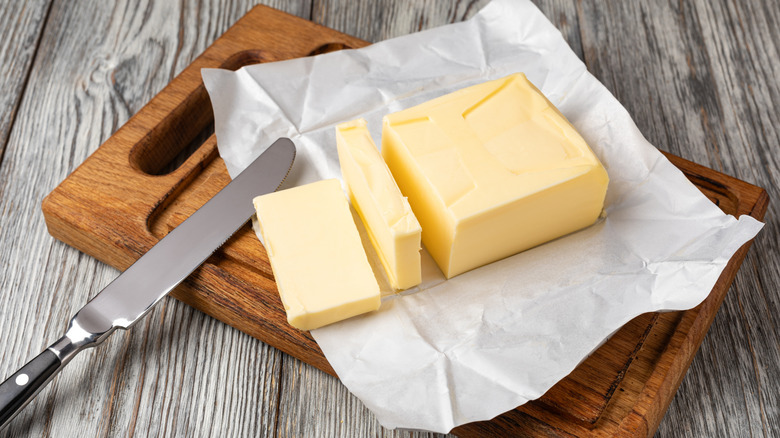
We've already discussed the fact that grits aren't particularly flavorful on their own, which means you need to be strategic about how you're adding flavor to your grits dish. This can be done through spices and various toppings, of course, but fat may be the most important element in ensuring that your grits taste as good as they can. According to Rena Awada, it's a mistake not to finish your grits with some sort of fat. "If you leave out the butter, cream, or cheese, the grits will feel one-dimensional," she says.
Luckily, though, there are a ton of different ways you can add fat to your pot of grits. Cream is a good option that really infuses flavor into the entire dish. Alternatively, says Awada, "Adding a pat of butter or a handful of cheese will give a more velvety finish and a fuller flavor." And if you really want to take things to the next level flavor-wise, consider using European butter with a higher fat content. It's one of the easiest ways to elevate your grits.
Assuming they should only be topped with shrimp
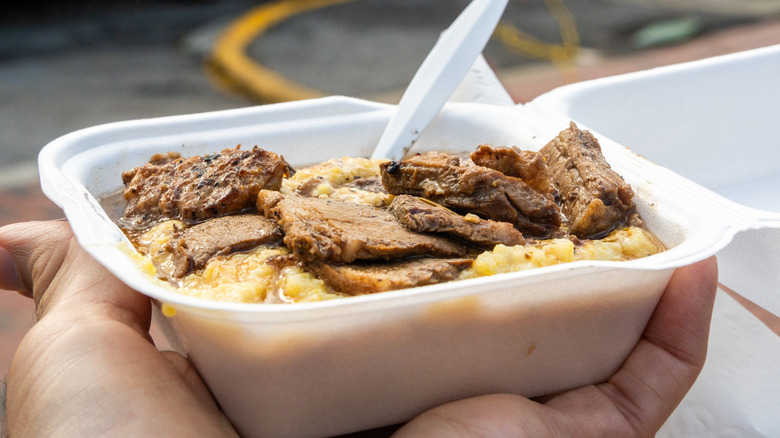
There are a lot of people who immediately think of shrimp when they hear the word "grits." It makes sense: You'll often see this classic dish on menus in the South and beyond. But grits don't have to be paired with shrimp to taste delicious. In fact, there are plenty of other foods to eat with grits besides shrimp. Some of our favorites include pork chops, catfish nuggets, eggs, and sausage. If you want to go a sweeter route, try adding jam, maple syrup, or even fresh fruit to the mix.
And once you free yourself from the prison of thinking that shrimp and grits should always go together, you can start to explore new grits preparations, like baked grits and grits made with corn stock. Don't be afraid to experiment with different toppings to harness the deliciousness of this ingredient in a whole new way. You may just find a combo you love even more than a classic bowl of shrimp and grits.