

Why So Many Of America's Top Fast Food Chains Are Nowhere To Be Found In This State
When you visit Vermont, you're sure to get your fill of beautiful scenery and maple syrup — but if you're looking for popular fast food chains, you'll have a hard time finding most of them. The state is decidedly without Arby's, Chick-Fil-A, IHOP, or Popeyes. It's also the only state without a single Dairy Queen. This is not a coincidence; Vermont is very intentional about protecting its own culture and refuses to become a hub for big national names.
It does so through its unique legislation, titled Act 250, that was passed in 1970. Vermont saw rapid growth in the '60s, and there was big concern that development projects would squash the peaceful character of the Green Mountain State. A new law was needed, one that could put the brakes on projects that clash with local culture.
Per the official website, Act 250 "ensures that larger developments complement Vermont's unique landscape, economy, and community needs." It includes the local residents in the process of reviewing building plans and applications, allowing them to voice their opinions and concerns, effectively prioritizing the interests of the community over those of major corporations looking to expand.
It's not easy for fast food chains to break into Vermont
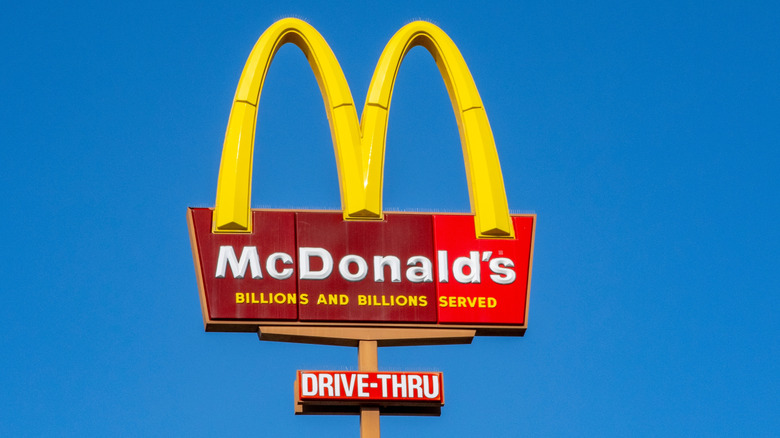
Vermont is not entirely without big-name fast food places. It has 30 McDonald's locations, yet remains the only state in the U.S. without one in the capital city. There are also seven Kentucky Fried Chickens, but again, not a single one in Montpelier. The state capital is also the only one without a Starbucks, even though the coffee chain has about a dozen locations elsewhere in Vermont. As you can see, breaking into Vermont is not an easy feat.
According to a Burlington Area History Group on Facebook, the first McDonald's in the state was built in the late '60s, but it took the chain six years from the first application (which was rejected due to locals' disapproval) to when the plan was ultimately approved (in a different location). Even then, it didn't go without its hiccups, as the classic golden-arched design the chain is famous for was seen as too extravagant for Vermont's rural scenery. And so, the very first McDonald's in the state also became the first one ever built without the arches.
The grocery store chains had it even worse, though. It took Walmart 20 years to break into Vermont, only succeeding in 2013. A year earlier, the plan for opening a Target fell through and later materialized in 2018. As of 2025, it still remains the only Target in the entire state.
Vermonters prefer local restaurants
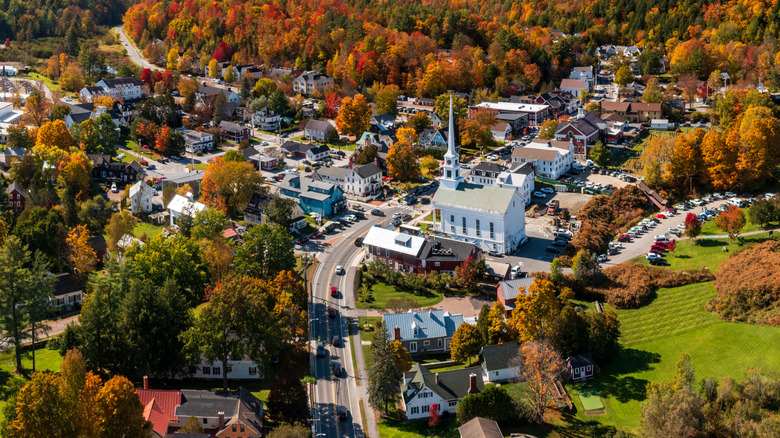
In Vermont, there is a strong sense of pride and loyalty to the local community. People are fiercely protective of small businesses and would genuinely rather dine in neighborhood family-owned restaurants, like the place with the most elaborate breakfast sandwiches, than at a big fast food chain that doesn't even cook hot dogs in maple syrup.
As one resident pointed out on Reddit, in a thread discussing the lack of big-name fast food places in Vermont, "There are plenty of small local businesses run and owned by neighbors that can provide food for folks that might be out and about," essentially saying there's no particular need for the chains, as the locals already know where to find a good bite.
In the same thread, somebody else revealed they "specifically moved to VT to get away from over commercialized wastelands and chains," showing that Vermont's culture can actually draw in people who are craving a tight-knit community and a slower pace of life. As one Vermonter put it, "The world is trying to insist we speed up. ... People in New England by and large disagree with that as an ideal." Vermont's beauty therefore lies not just in its scenery but also in a carefully preserved local atmosphere that never lost its small-town charm.