

9 Best Liqueurs To Spike Your Hot Chocolate With
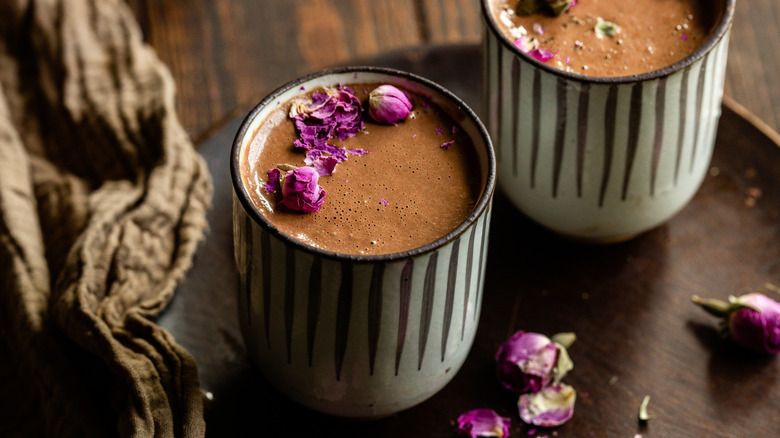
No matter how you celebrate the holiday season, chances are, hot chocolate belongs somewhere in the festivities. This most cozy of beverages is suitable for sippers of all ages, but if you want to add a little grown-up flair, it's as easy as pouring in a bit of liqueur and stirring. That said, choosing which liqueur to use is not quite so simple. There are countless options out there, and finding the ones that not only suit your and your guests' tastes but also the flavor profile of the hot chocolate can be daunting.
To help us make spiked hot chocolate a success, we spoke with three experts –- Chris Nguyen, bar manager of The Waverly in Cardiff, California; James Juedes, a sommelier at the Canter Inn in New Glarus, Wisconsin; and David Orellana, beverage director at Grand Brasserie in New York.
Before going through all the various liqueurs that these drinks experts suggested, it's important to note something that Orellana stressed: All good drinks, regardless of the recipe, start with high-quality ingredients, so make sure your hot chocolate ingredients are top notch. If you don't already have a favorite formula, or if you're looking for something that allows you to choose each ingredient instead of using a store-bought mix, look no further than our ultimate hot chocolate recipe. This recipe will give you the foundation you need for a luxurious mug of spiked cocoa, then it's time to choose one of the following liqueurs to take your drink to the next level.
Chartreuse
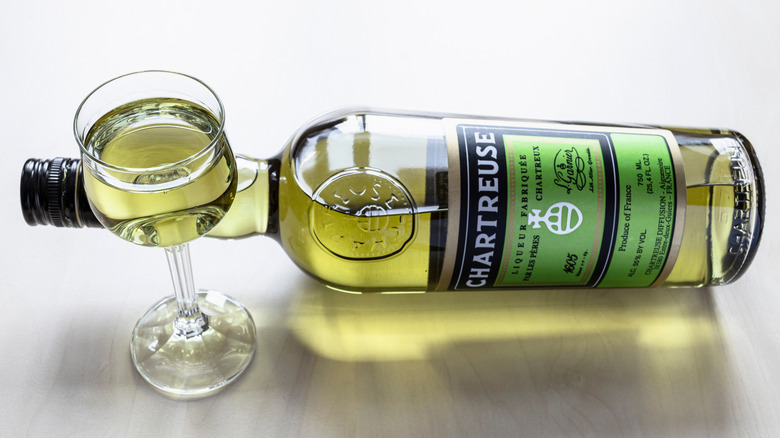
You might know the word chartreuse as meaning a bright shade of yellow-green, but the color got its name from the liqueur. Legend has it that Carthusian monks of the Monastery of the Grande Chartreuse were gifted the recipe in 1605. Since then, only two monks at a time have been allowed to know the highly secretive recipe, which is kept in a safe under lock and key.
Made of no fewer than 130 herbs and plants, Chartreuse has a powerful botanical flavor that makes it an attention-grabbing addition to drinks. With all those ingredients, it can be difficult to pin down a precise description of its taste, but suffice it to say that you'll notice lots of woody and herbaceous flavors. For some, the bitterness might border on the medicinal, but it all comes down to moderation.
All the experts we spoke to suggested Chartreuse for hot chocolate. James Juedes highlighted it specifically for hot chocolate recipes that contain a higher proportion of dark chocolate rather than milk chocolate. David Orellana noted that, in very small quantities, Chartreuse adds an alpine and almost perfumed layer to hot chocolate.
Génépy
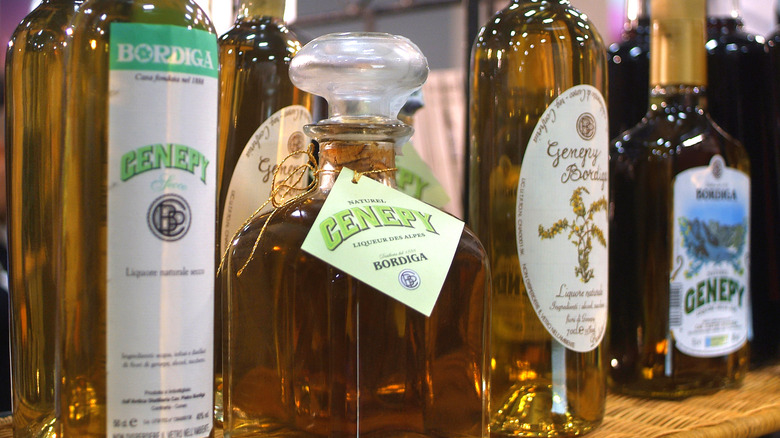
If you like the idea of a botanical liqueur like Chartreuse, our experts also pointed to génépy, a heady liqueur made from an Alpen plant called genepi. The plant grows above 5,000 feet on the slopes of the Alps and was a traditional remedy to treat various illnesses. It is a type of wormwood, the same genus of plant used for making absinthe. As such, it has a powerful, somewhat bitter flavor that some might find off-putting, but it is softer than absinthe or Chartreuse.
There is no single type of genepi-based liqueur, but two of our experts provided specific suggestions. For Chris Nguyen, Alpe Génépy is the way to go. The central herb is combined with a bouquet of other plants, including cinnamon, oregano, lemon balm, and mint, to gain its distinctive flavor.
James Juedes suggested Dolin Génépy. The brand offers multiple products using the Alpen wormwood plant, but it is more secretive about the other ingredients that give it its unique flavor. Whichever brand or product you choose, you can expect a liqueur that is more subtle in taste than absinthe or Chartreuse, making it an excellent option if you want to try something herbal without alienating half your guests.
Crème de cacao
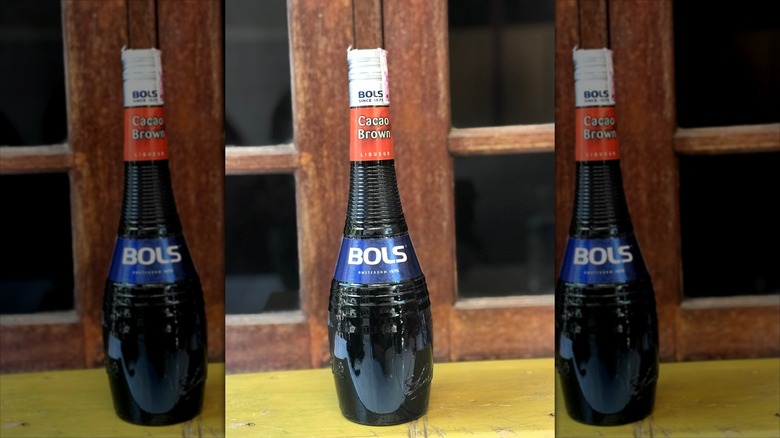
Botanical liqueurs might elevate hot chocolate to new heights, but what if all you want is to double down on the drink's central flavor? If that's your goal, crème de cacao is tough to beat. The liqueur is, as its name suggests, cacao-based, but the "crème" is merely a description of its rich, creamy taste rather than an ingredient. There are two types of crème de cacao –- white and dark. The former is clear and offers a relatively subtle chocolatey flavor, while the latter is brown and offers an intense, vanilla-inflected chocolate flavor. Some also have nutty and caramel notes.
James Juedes suggested using creme de cacao for hot chocolate that contains a higher proportion of milk chocolate than dark chocolate, saying that it enhances the richness and comfort factor of the drink. He pointed specifically to Tempus Fugit's Crème de Cacao a la Vanille, which is made with Venezuelan cacao and Mexican vanilla and offers a powerful rich, sweet flavor. Just make sure to factor in the sugariness when you're making your hot cocoa. You may want to dial back on the amount of sugar you're adding to avoid a sickly sweet drink.
Frangelico
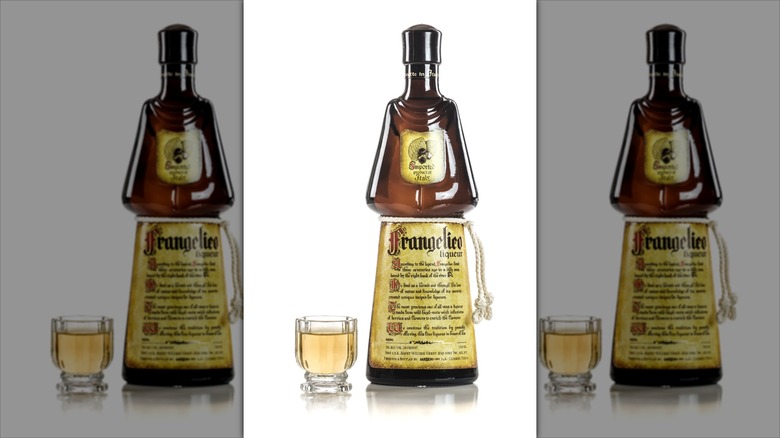
Another option for heightening the richness of the chocolate is Frangelico, a hazelnut-based liqueur known for its bottles designed to look like the monks who created the beverage more than 300 years ago. Its nuttiness is an excellent accompaniment to the chocolate, especially if you want a flavor that enhances the drink without overloading you with chocolate or deviating into herbal territory.
Like Chartreuse, Frangelico is the product of some enterprising monks who got down to business crafting a world-class concoction several hundred years ago, though these liqueur connoisseurs were from Italy rather than France. The key to Frangelico's earthy creaminess is the main ingredient — Tonda Gentile hazelnuts. You might have already consumed this sweet hazelnut variety in products from Ferrero Rocher or Nutella. In hot chocolate, Frangelico fits like a glove, a smooth, sweet, alcoholic addition that adds just the right amount of intrigue without polarizing your guests. Just keep its sugar content in mind when adding it.
Pimento dram
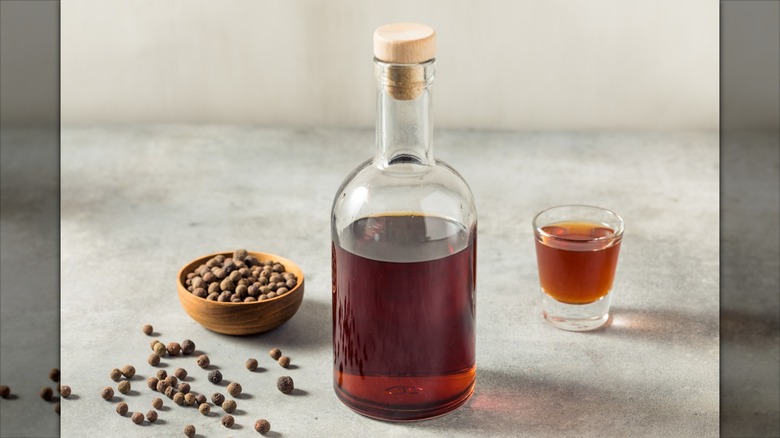
If you're planning to enjoy your hot chocolate around the holidays, there is one type of liqueur that seems tailor-made for the occasion, but somehow, it's far from the most commonly used choice. Pimento dram, or allspice dram, is a Jamaican liqueur made from allspice-infused rum. If you've ever baked with allspice, you'll know that, although it comes from one plant, it tastes like several warming spices, including clove, nutmeg, cinnamon, and even pepper. You'll find all of this in pimento dram, plus a big dose of sweetness, all of which lend themselves to the creamy chocolatey taste of hot cocoa.
Depending on where you live and shop for alcohol, you may find it difficult to buy allspice dram, but luckily, with a little bit of planning, you can make it yourself. All you have to do is steep rum and freshly ground allspice berries for about 12 days, then add sugar syrup. It's worth doing, because the resulting liqueur is the perfect alcoholic addition to winter cocktails, chocolate-based and otherwise.
Amaretto
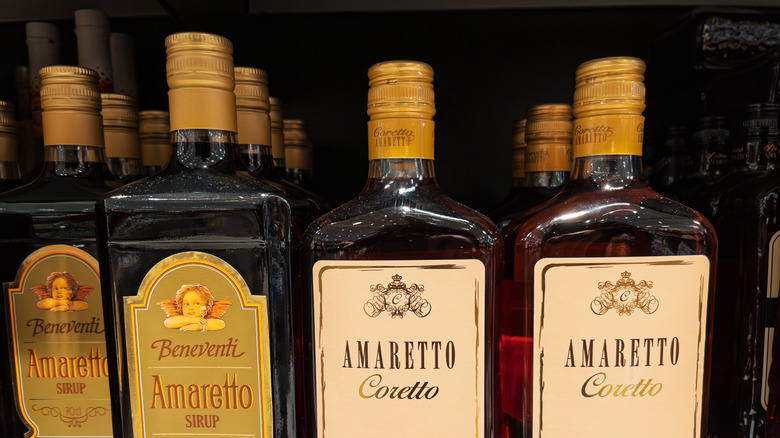
There is more than one way to add a hint of liqueur to your hot chocolate. The most obvious option is to simply mix it into the beverage, but you don't have to stop there. James Juedes recommended focusing on the garnish instead. If you're planning to top your cocoa with whipped cream, why not spike the whipped cream? You could opt for pretty much any liqueur for this, but Juedes singled out amaretto as a particular star.
The Italian liqueur has a distinct almond flavor that is usually achieved with apricot kernels rather than almonds. However, some brands use peach pits and others do indeed use almonds. The resulting liquid is sweet, amber-colored, and has a nutty and faintly bitter flavor.
You can use amaretto to upgrade winter drinks of all persuasions, but it tastes particularly delectable with hot chocolate. Its nutty richness slots right into the richness of the drink without dominating it.
Marie Brizard Chocolat Royal
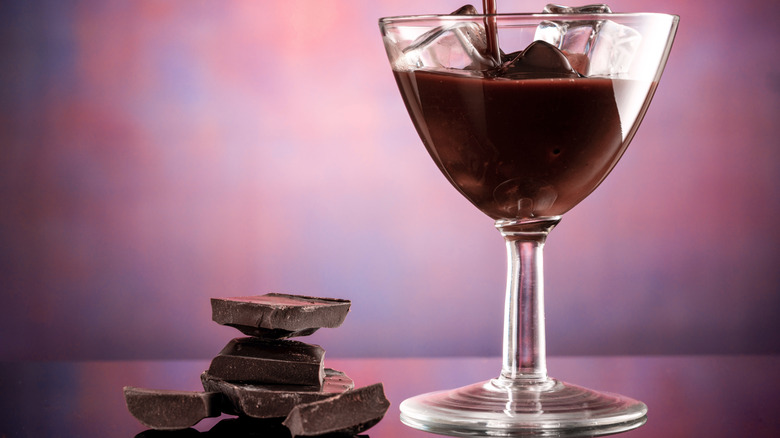
For chocolate lovers, drop everything and go find yourself some Marie Brizard Chocolat Royal. This intensely-flavored chocolate liqueur is not for the faint of palate, and you'll only need to add a small amount to your already chocolatey beverage. However, as far as Chris Nguyen is concerned, it makes the best all-around choice for hot cocoa.
Chocolat Royal is far from the only chocolate liqueur out there, but Nguyen pointed to its richness and velvety texture as being standout qualities. Created by French firm Marie Brizard, it's made with cacao beans from Africa and carries subtle notes of caramel and vanilla under all that chocolate.
When it comes to adding any liqueur to hot chocolate, James Juedes stressed that context is everything. You might like a sweet beverage with lots of alcohol or a more subtle drink, and the level of sweetness that is already in the hot chocolate will vary depending on the recipe. The best course of action is to start small and work your way up. This is particularly true of a drink like Chocolat Royal, which has an intense flavor and quite a bit of sweetness.
Irish cream
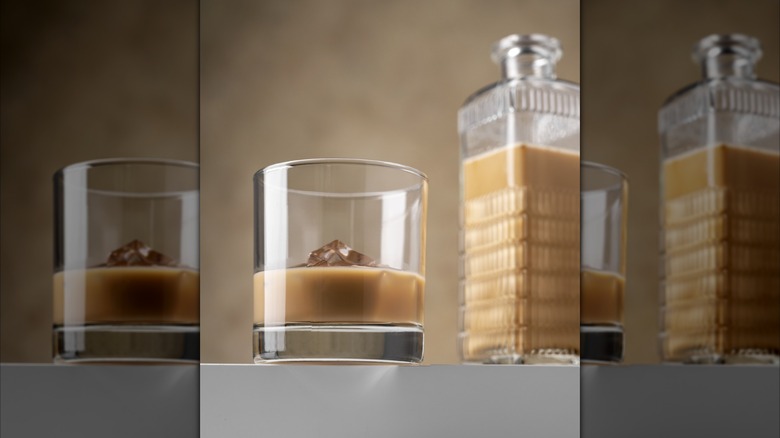
For a maximally decadent beverage, Irish cream should be at the very top of your list. Despite being an institution, Irish cream is a relatively new invention, having been created under the brand name Baileys in the 1970s. It was a product born out of opportunism rather than culinary wizardry. A group of advertising executives were tasked with coming up with a new drink for their company, which was losing money on an Irish whisky brand and also had a stake in an Irish dairy. After tasting the delights of the Brandy Alexander (a mixture of brandy, crème de cacao, and cream which is basically just a fancy spiked milkshake), the team put two and two together.
Irish cream is a combination of whiskey, cream, chocolate, and sugar, and there are plenty of products out there that fit the bill. If you're not sure where to start, we've created a handy list of 14 Irish liqueurs, ranked worst to best, and believe it or not, Baileys only rings in at number three. If you want to take this route to the next level, though, you can make homemade Irish cream pretty easily.
David Orellana did point out, though, that a cream-based liqueur like this one may run the risk of curdling if you add it to very hot or very acidic liquid. "If your hot chocolate recipe includes citrus zest or fruit purée," he advised, "Add the liqueur last and stir gently to help avoid separation."
Amaro
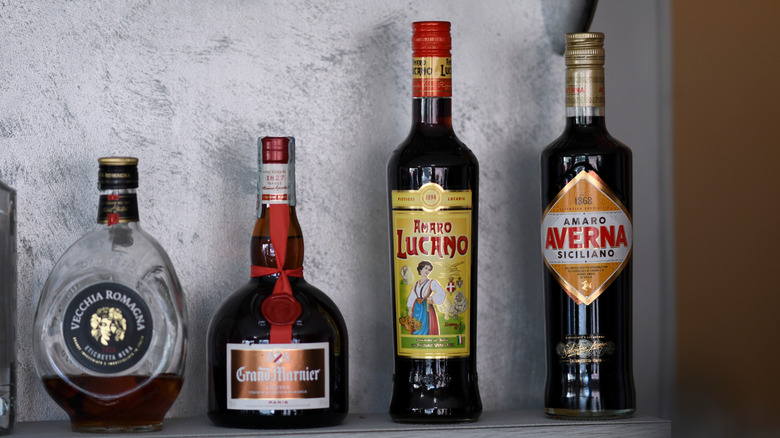
The word amaro covers an impossibly broad category of liqueurs that runs the gamut from the bittersweet neon orange superstar Aperol to lesser-known, more subtly herbaceous options like Montenegro and Amaro Nonino. Two of the experts we spoke to suggested adding an amaro to hot chocolate, but they pinpointed different ones. Chris Nguyen vouched for Chiot Amaro, which is full of botanical flavors, such as genepy and red licorice. Complex and not as bitter as other types of amaro, it will add numerous subtle layers to your hot chocolate.
David Orellana suggested Averna and Montenegro, both of which have a lighter, more citrusy flavor, but still add a hint of bitterness and layers of herbal complexity. To illustrate just how varied this category of liqueur is, Averna includes pomegranate, orange, and a hint of rosemary, a far cry from the bitterness of gentian root that dominates Aperol. Montenegro, on the other hand, is rich and sweet, with a hint of cloves alongside the orange.