

15 Cleaning Habits That Make Tidy Kitchens Easier
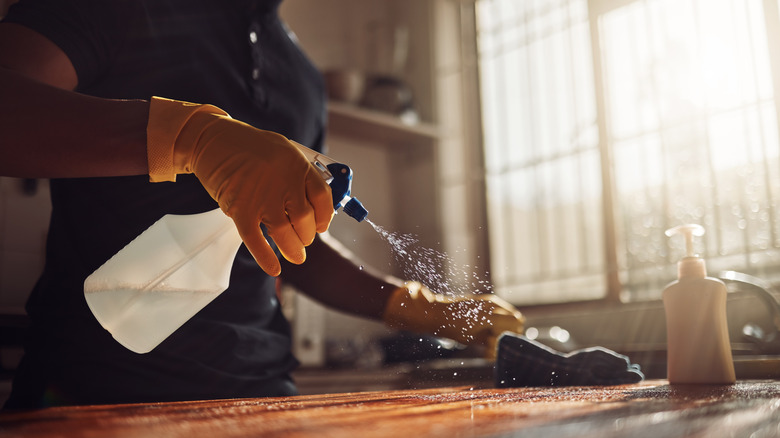
Cleaning the kitchen is not like cleaning other parts of the house. After all, you can usually get away with letting a pile of laundry in the bedroom expand for a few days (or weeks), and probably won't face many consequences if you fail to vacuum your living room twice a week. But when it comes to the part of your house where the food is kept, prepared, and eaten, things can get ugly very quickly.
On the most basic level, if you don't clean up your dirty dishes or put away perishable food? You'll be inviting all manner of guests into your home, including bacteria, mold, and the type of smell you definitely don't want lingering in your nostrils. Now, since cleaning the kitchen isn't the sort of thing that fills most of us with excitement or creative energy, we tend to put it off as long as we can. But there are ways to make this process easier, especially in the kitchen, where cleanliness really matters.
Doing little tasks here and there will ensure things don't escalate into one giant — and stressful — clean-up session. It might seem too good to be true, but forming these cleaning habits will make all the difference. And before we get into the good stuff, be sure to read through these old school kitchen cleaning habits you should retire immediately to avoid wasting time on things that don't work. Here are 15 cleaning habits for a tidier kitchen.
Clean as you go
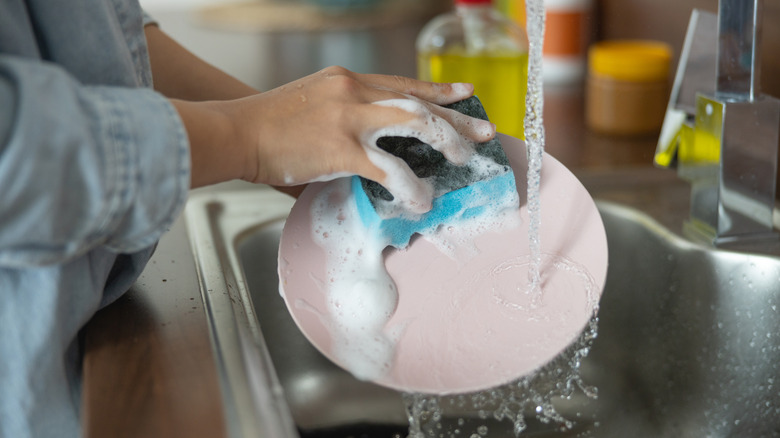
What if we told you that you could cook an entire meal — one requiring multiple pans, utensils, cutting boards, and ingredients –then finish with a clean kitchen? That's the beauty of cleaning as you go: The simple yet effective way to keep your kitchen tidy without sacrificing much time.
Cooking a big meal can be exhausting; all the chopping, sauteing, timing, and recipe following can feel like going to the gym and taking a math test simultaneously. The last thing you want to do after all that is look up and find your kitchen looks like a small blast zone. However, if you clean as you go, you'll find nothing but clean surfaces and a delicious meal ready to be consumed.
Of course, this method is easier said than done. You might not feel like washing up as soon as the ingredients have been assembled. But it will take less time to clean everything right away than it will once you've lost your momentum — and the residue on the dishes and utensils has started to harden. Plus, once you get into the habit, it will feel like second nature.
Practice mise en place when cooking
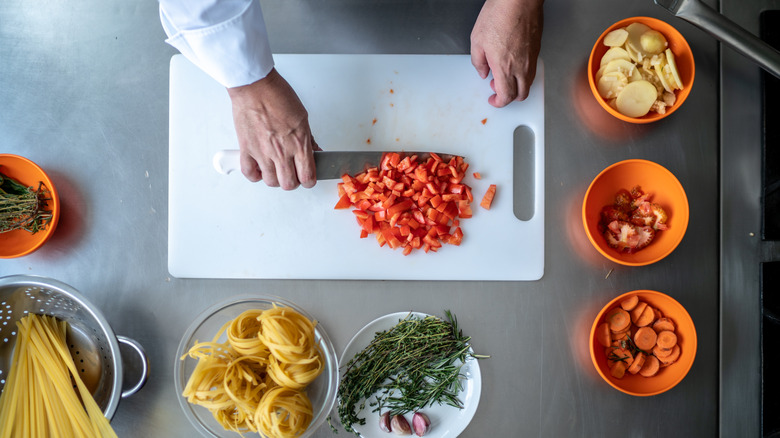
When it comes to cooking, following the French is usually a good policy. As it turns out, that applies to kitchen cleaning as well. Mise en place translates to "everything in its place," and it's a favorite method in professional kitchens (even Anthony Bourdain endorsed mise en place).
The concept is pretty simple. Before you start cooking, get all of your ingredients prepped and into separate dishes. Your counter will look like it belongs on Pinterest, but that is far from the biggest upside to the practice. For one thing, mise en place ensures that you have all the ingredients you need and that they aren't spilling out all over your clean counter. It is also helpful when it comes to washing up.
At first, you might think all those dishes just add to your washing up time. But part of the process of keeping everything in its place involves getting rid of things you're no longer using. Once a dish is empty, clean it. By the time you're finished, your kitchen will be cleaner than when you started.
Get rid of unnecessary tools and appliances
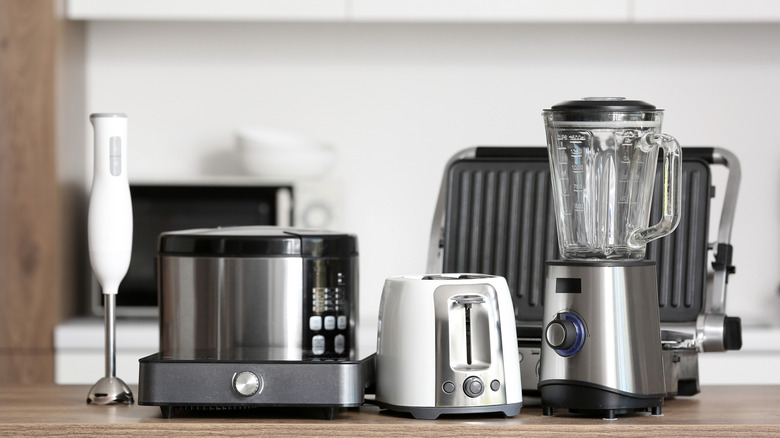
It can be hard to resist the latest kitchen gadgets, especially when there are influencers all over the internet trying to convince you that this or that appliance will change your life. But if you've fallen for the hype a few too many times, you will know that some kitchen appliances are just clutter. How often do you use your ice cream maker, for example? And when was the last time you used that electric egg cooker?
The irony is that we buy all these gadgets that promise to make our lives easier, yet often only to use them once or twice a year. For the most part, they just end up making our lives more difficult by filling up our much-needed counter space. You could put away every dish, ingredient, and utensil and still struggle to find enough room to make a bowl of cereal. Ditching those big appliances that take up so much kitchen real estate will instantly make the area feel cleaner and more spacious.
Have a scrap bowl when you're cooking

Even if you neatly lay out all your ingredients and clean them immediately after you've finished with them, the fact remains that you will almost certainly have food scraps to deal with. You could just shove them to the side of your cutting board and let them slowly but surely overflow the edges and begin to cover your counter, or, you could tee up a scrap bowl even before getting your ingredients out of the fridge.
A scrap bowl will change the game when it comes to cleaning. Instead of having to scrape carrot skins off the counter and wipe away onion juice, you can simply empty your scrap bowl into the compost. You can even have two discard bowls on the counter, one for food scraps and one for trash. This will prevent your countertop from becoming messy, giving you more space to work on and less clutter to clean.
Regularly cull items from your fridge
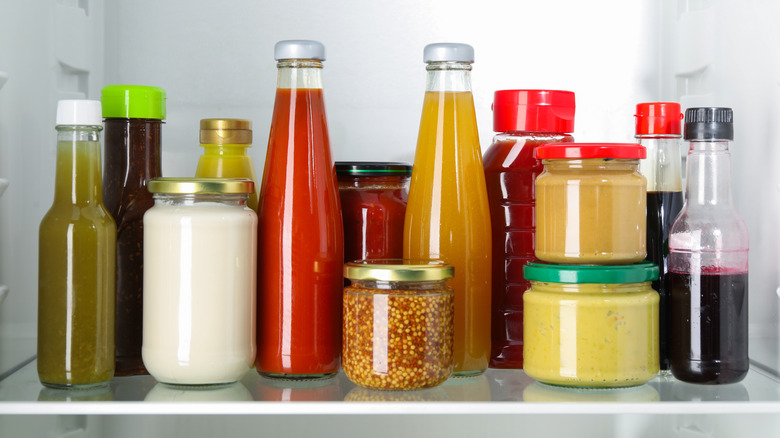
If you love to cook, you might keep your fridge at a constant state of fullness. The door is crammed with every condiment imaginable, the crisper is stuffed to capacity with fresh fruit and veggies, and the main shelves invariably have enough food to feed an army. But how much of those items are actually still edible, and how can you possibly separate the out-of-date ones from the useable ones if the fridge is so full that you can't see the back of it?
If you go through your fridge regularly and make sure that everything is within the use-by date, you will end up having a fridge that is clean by default. No more moldy jars of jam, no stacks of lunch meat of varying degrees of safety –- just the items that you can cook with and eat. Start by going through the back of your fridge and all your condiments, and avoid keeping leftovers for more than seven days. Once you get into the habit of checking all the items in your fridge, your fridge cleaning will be more like daily maintenance than a monthly intervention.
Empty your dishwasher before starting to cook
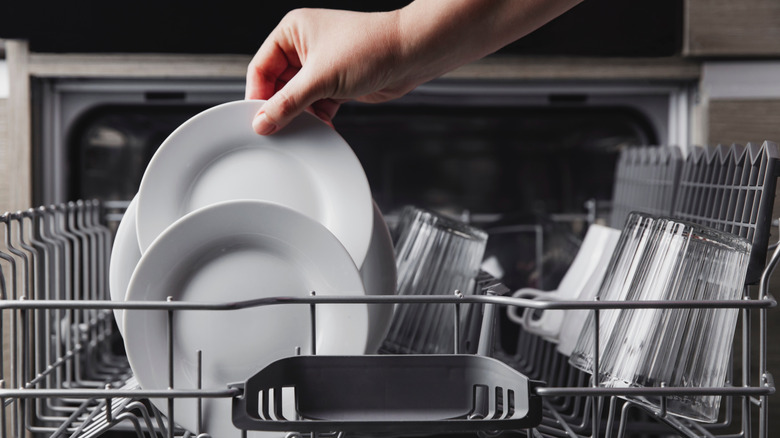
The dishwasher is one of the great inventions of the 19th century, and if you're lucky enough to have one, it's worth using it to its fullest potential. There are many mistakes people make with dishwashers, from putting plastic in the lower rack to forgetting to clean the filter, but one of the easiest to fix is all about timing.
If you're always finding that the dishwasher is either full of dirty dishes right when you need some clean ones or full of clean dishes right when you need to deposit dirty ones, it's time to get on top of your schedule. Before you start cooking, make sure that the dishwasher is empty. That way, you'll have a specific location to put the dirty dishes as soon as you're finished with them. Instead of finishing the recipe and discovering that a stack of dirty dishes has accumulated on the counter, you'll find nothing but clean surfaces and a dishwasher that's ready to run.
Wipe the counters after every cooking session
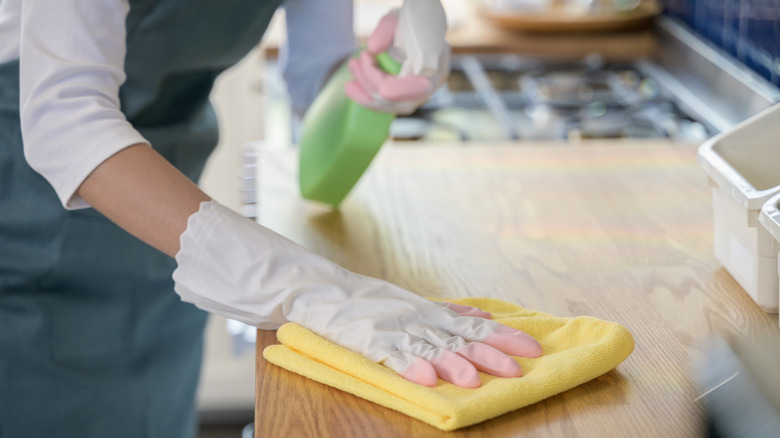
Dirty dishes are an eyesore. Whenever you walk into the kitchen, you'll see them, and you'll probably feel some sense of urgency about dealing with them. But when you're in a rush, you might leave the counters for later. No one will notice a few crumbs around the toaster and a spill or two near the microwave, right? While small messes on the countertops certainly won't attract as much attention as a sink full of dirty dishes, taking a minute or two to clean them will have a big impact.
Regularly wiping down your countertops ensures that no spills have the chance to harden and become tougher to clean. It also helps keep unwanted odors at bay and prevents layers of dust and grime from building up. On an aesthetic level, there is just something about shiny countertops that lifts the appearance of the entire room. In fact, you could even argue that a kitchen with clean counters and dirty dishes in the sink is more appealing than a kitchen with dirty counters and no dishes in the sink.
Do a kitchen reset every night

After a long day of work and a satisfying meal, it can feel impossibly daunting to tackle a messy kitchen. When all you want to do is curl up in bed and get as much sleep as you can before the alarm goes off, nothing feels more dispiriting and colossal than washing the dishes. But there are several reasons why forcing yourself to do it anyway is more than worth the effort.
For one thing, waking up to a messy kitchen just doesn't feel good. From the moment you step inside the room, you'll feel overwhelmed and behind schedule, two things that definitely don't help morale for the day ahead. Leaving dirty dishes out overnight can also make cleaning more challenging. Food residue will have hardened, and you might even have attracted some unwelcome critters like fruit flies and ants. Then, there is the fact that many of us will see that pile of work in the morning and simply postpone it until the end of the day. Over time, you'll have a kitchen that contains several meals' worth of dishes and grime, which makes the inevitable clean all the more daunting and involved. Doing a quick reset every night before bed will keep things at a manageable baseline day-to-day.
Get on top of counter and cabinet organization
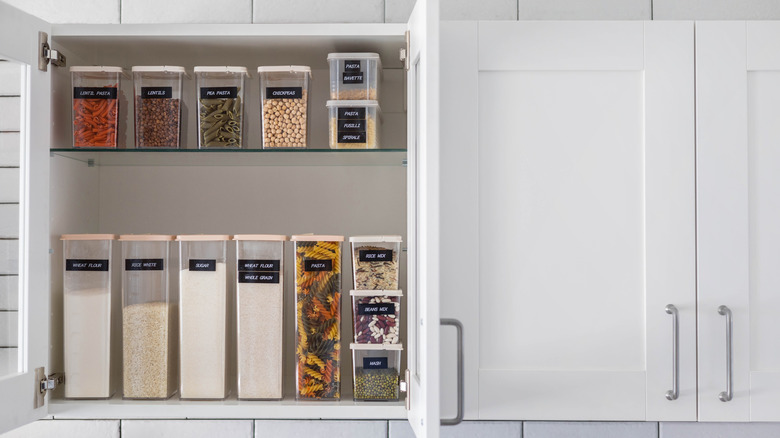
Even if you haven't jammed your counter full of appliances and gadgets you hardly use, you may exist in a state of organizational chaos that makes it impossible for your kitchen to feel clean. You could wash every dish, wipe every surface until it gleams, and keep a diffuser running constantly and still feel like the walls are closing in. If you don't have an organized storage system, your kitchen will feel permanently messy.
For those who aren't natural organizers, don't panic. You don't have to print labels for everything or display all your dry ingredients in glass jars. You can simply go down the list of these 15 tips for organizing your kitchen cabinets and work on one thing at a time. Once you've gotten on top of organization, cleaning will be a breeze. Without clutter to work around and with a place for everything to be stowed, you'll be able to fully clean surfaces and leave your kitchen neat and sparkling.
Sweep or vacuum every day
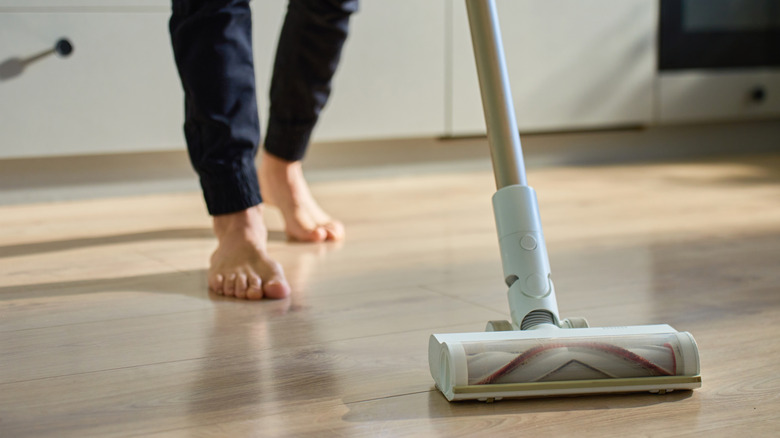
When you survey a messy kitchen, chances are, your eyes will be drawn to the piles of dishes, food scraps, and disorganized countertops. The floor will be the least of your worries. But if you think about it, the floor is the dirtiest thing in the whole room. Thanks to gravity, your kitchen floor is practically a magnet for spills, crumbs, and dirt. Grime from outside will be deposited via your shoes, and your pets will leave behind their own mess.
Cleaning a dirty floor can be hard work. If there are spills and encrusted dirt involved, you might even have to resort to the mop. But if you clean your floor every day and clean up any spills as they happen, you won't have to do a deep clean nearly as often because you won't have any hardened substances to deal with. Just make sure to leave the sweeping or vacuuming for the last step in your nightly cleaning routine. As you wipe down the counters and clean the dishes, more dirt and spills will make their way to the floor, so taking a top-to-bottom approach will ensure that you don't have to do it twice.
Have a place to put the dirty dishes
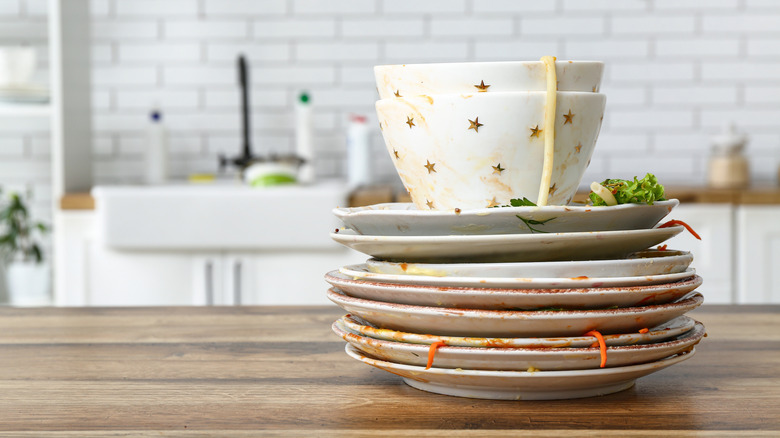
Cooking is inherently messy, regardless of whether you're spatchcocking a turkey or merely slicing some lemons. Having a scrap bowl is a great starting point for fending off messes, but what about all those dirty dishes you're generating? The best option is to pre-empt the inevitable after-dinner headache by creating a designated dumping ground for those dishes.
If you have a dishwasher, depositing dirty dishes there as soon as you've finished with them is about as easy as it gets. If you don't have a dishwasher, though, you can still put them somewhere out of the way. This is especially crucial is you have a small kitchen in which every square inch of counter space is valuable. If this is the case, putting the dirty dishes in the sink is the quickest and most discrete way to handle them, and it also means that they are ready to be washed as soon as you finish your current task.
Freeze smelly food waste
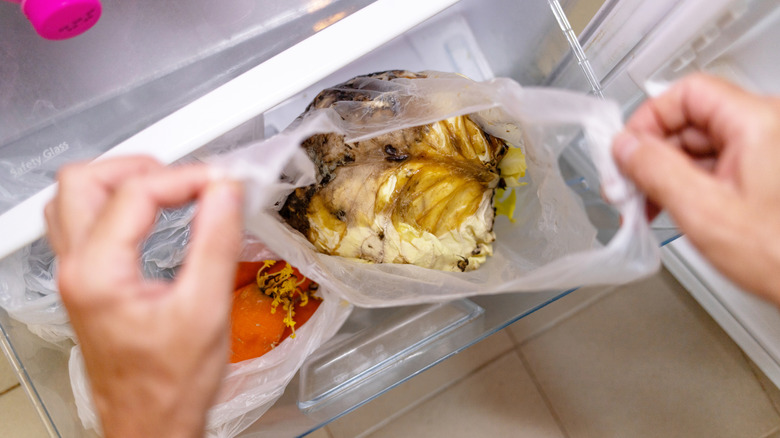
Most of us would rather not think about the contents of our kitchen trash cans any more than we have to, but sometimes, we don't have a choice. Trash cans are almost always sitting somewhere in your kitchen at room temperature, which gives the perishable items inside ample opportunity to decompose right under your nose. If you've ever cooked a whole chicken and left the carcass in your trash for a day or two, you'll know exactly what we're talking about. The foul smell can be overpowering, and no amount of scrubbing the floors, counters, and dishes can fix it. You might have the foresight to put especially icky garbage in the outdoor trash can, but that can make the area around your house pretty noxious, as well.
The best interim measure is to freeze the offending items. It might sound even more disgusting to put discarded meat, seafood, and other perishable foods into the same appliance that you keep your fresh fruit and veggies, but once they're frozen, you won't know the difference. This habit is especially helpful in the summer when the heat speeds bacterial growth and decomposition. Just remember to transfer them to the garbage in time for collection day.
Don't forget to clean your dishwasher
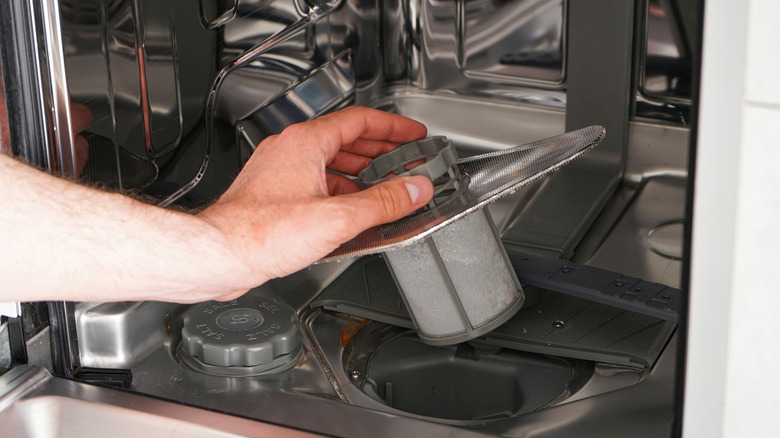
In all the rush to clean the dirty things in your kitchen, it's easy to forget to clean the things that are doing the actual cleaning. Scrubbing down your sink after washing the dishes might be easy to remember simply because you can see the grime, but don't forget to give your hardworking dishwasher some love, too.
This isn't just pesky maintenance. If your dishwasher is dirty –- be it from mold, food residue, or limescale from hard water -– it won't be able to clean your dishes as effectively, and the last thing you want to do is hand-wash your dishes after running them through the dishwasher.
If you use your dishwasher everyday or almost everyday, you should be cleaning the filter and drain at least once a month. Deep-cleaning the interior is a bit labor intensive, but you only have to do that every few months.
Spot clean and deep clean your oven
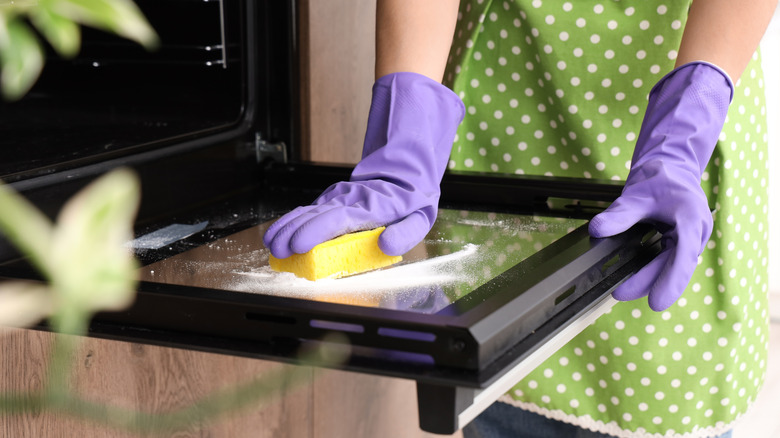
Cleaning the oven can be daunting. Most oven interiors are full of corrugated surfaces, making it difficult to scrub and maneuver around (don't even get us started on the logistics of cleaning the racks). Unfortunately, cleaning your oven is a necessity, especially if you use it frequently and have been known to spill things here and there. But there are actually plenty of cleaning tips for keeping your oven spotless, and most of them have nothing to do with deep cleaning.
The first order of business is to prevent spills from happening in the first place by using lids, and making sure the dishes you're using are the right size. When spills do happen, clean them up as soon as possible to avoid the buildup of grime and any instantaneous feedback of that terrible smell of burning. If you clean the messes as they arise, you only have to deep clean once every few months.
Don't forget to clean the microwave
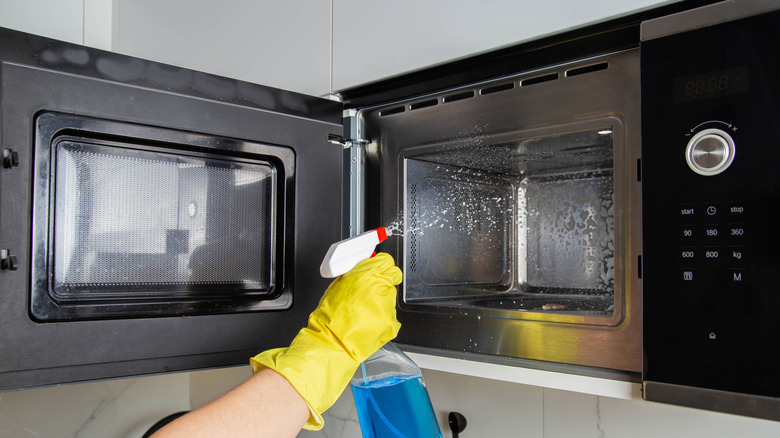
Microwaves are subject to all kinds of food debris. If you've ever had to clean bits of chicken breast off the ceiling or do a deep clean after a tomato sauce explosion, you will probably have gathered that this handy appliance can do strange things to certain foods. As the water content in the microwaved item heats up, it turns to steam, and when that steam is trapped -– such as within the walls of meat or under pockets of oil, like in tomato sauce -– it creates a mini explosion.
When these unintended splatter-fests occur, it's pretty obvious that you need to give your microwave a once-over with some cleaning products, but even when everything has gone according to plan, it's important to keep your appliance in tip-top condition. You might be wondering how often you should be cleaning your microwave if it seems to be relatively splatter-free, and the answer is about once per week. It might seem like a lot, but it will prevent nasty smells and (even worse) foul-tasting drips from making their way into your food.