

10 Kitchen Trends On The Way Out In 2026

In the world of kitchen trends, there is always a shiny new penny waiting on the horizon. While you don't need to hop onboard every fad that comes your way, it does help to have a firm grasp on what is considered in and which trends are eliciting a yawn. And it isn't just a matter of aesthetics. If you are investing all your time, energy, and money in trends that have started feeling dated, you could be reducing the perceived value of your home. Placing your bets on trends that will be on the way out by 2026 can also mean that you have costly do-overs waiting in your kitchen's future.
So, which short-lived fads and dated trends should you be giving a wide berth? Any trend that appears to be everywhere and has reached saturation should send alarm bells. Think open shelving that once dominated kitchen #shelfies but now feels like a source of visual clutter in the kitchen. Trends that have been around for longer than you can remember can also be safely retired: here's looking at you, granite countertops. Finally, you'll want to consider whether there are better alternatives to be explored. The work triangle might have had its moment in the sun, but the concept of efficient zoning can truly revolutionize your everyday workflow. To help you avoid any expensive regrets, we have compiled all the kitchen trends that will be on the way out by 2026.
1. Gray kitchens
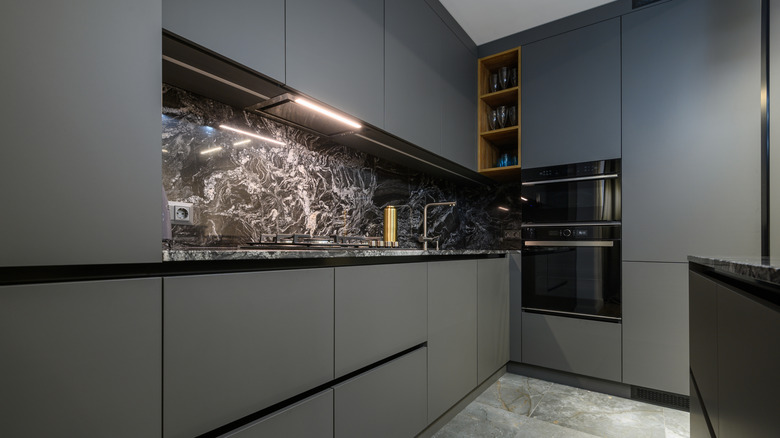
For the longest time, all-white designs held kitchens in a vise-like grip. Everywhere you turned in the 20th century, there were bright white cabinetry and islands staring back at you, but this kitchen design trend is on its way out the door. For a while, gray kitchens stepped in to fill the vacuum left by white kitchens, favored for their versatility and perceived elegance.
On paper, it is easy to see why gray kitchens had their moment in the sun. From charcoal-hued cabinetry to gunmetal gray backsplashes, this color trend seeped into every nook and cranny of the kitchen. Orange might have been the new black, but grays became the neutral of kitchens — a "safe" choice that landlords increasingly favored as a renter-friendly choice.
However, the steady influx of bright, vivid colors into kitchen design has many questioning the longevity of this hue. For starters, not all shades of gray are created equal. Cooler tones of gray can often make a kitchen feel gloomy and lacking warmth. The ubiquity of gray kitchens also worked against them as this color started feeling like a formulaic template for builders — monotonous and starved of the personality that homeowners are increasingly seeking. It comes as little surprise that gray kitchens are on the way out for 2026, but those partial to this trend can always opt for greige tones to inflect some warmth into this impassive color.
2. Granite countertops
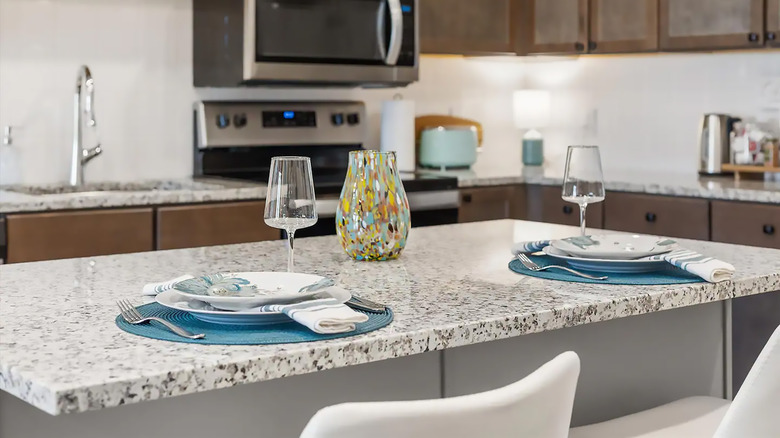
From the mid-1990s to the 2000s, the popularity of granite countertops was unchallenged. Considered as a symbol of luxury, speckled countertops in glossy finishes started popping up everywhere over the decade. However, the strong associations that it holds with kitchen design from the 2000s are the very reason why granite countertops are falling out of favor currently.
As a natural stone, every granite slab is defined by its unique veining and an organic sense of movement. However, there are several other competitors to choose from now within the realm of natural stone, from scratch-resistant quartzite to non-porous soapstone. Matters are further compounded by the frequent maintenance required by granite countertops. As one of the most heavily used surfaces in the kitchen, it is recommended that they be resealed at least once a year. The glossy finish of granite is also now counted among the countertop trends to avoid — modern kitchens are leaning in favor of velvety-smooth matte finishes that offer a more lived-in feel.
Since granite is out, quartz is the countertop material everyone wants instead. You don't have to take our word for it, either — according to the 2026 forecast by the National Kitchen and Bathroom Association (NKBA), 78% of designers, contractors, and manufacturers are preferring quartz. Granite, meanwhile, pulled in only 43% of votes from the respondents. Beyond mere statistics, the popularity of quartz can be attributed to its high durability coupled with the fact that it is non-porous and doesn't require regular sealing like granite.
3. Recessed lighting
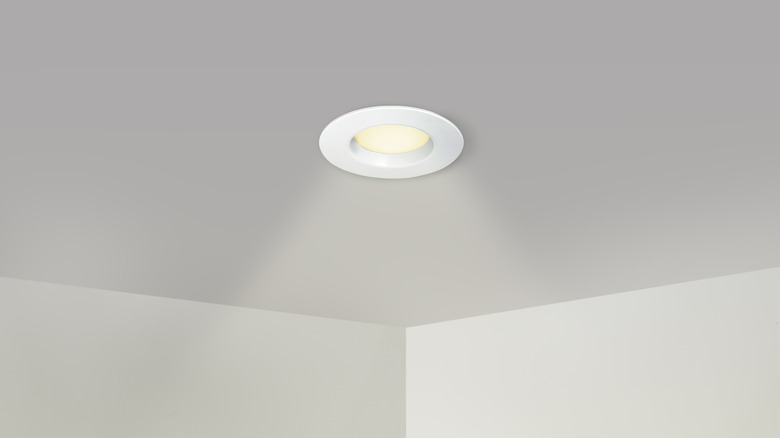
As compact lighting and fluorescent bulbs became more commonplace in the middle of the 20th century, recessed lighting rose to prominence. Sleek, compact, and designed to nest within the ceiling, this form of lighting quickly became the darling to the minimalist kitchens. However, the passage of time appears to have dimmed the shine of this lighting style — pun unintended.
Once favored for its unobtrusive silhouette, this would prove to be a double-edged sword as homeowners are increasingly turning towards decorative lighting fixtures. The modern kitchen is no longer just a place to cook — it is where loved ones gather and memories are made. Recessed lighting, while efficient, does little to add personality to the room. You might also need to opt for more fixtures than you originally planned. You will require a wider grid of recessed lights spread out across the space to offer the same level of illumination as one chandelier or pendant light.
If recessed lights can't keep pace with modern trends, what should you opt for in 2026 instead? Just like your personality, kitchen lighting is now layered and nuanced — you can no longer rely on a solitary source of illumination overhead. Why not create a joyful pool of warmth and light by trying your hand at the lampscaping trend? By thoughtfully tucking in lamps across the kitchen — from the countertop to the backsplash ledge to those dark corners above tall cabinets — you can easily brighten up the entire space.
4. Glass front cabinets
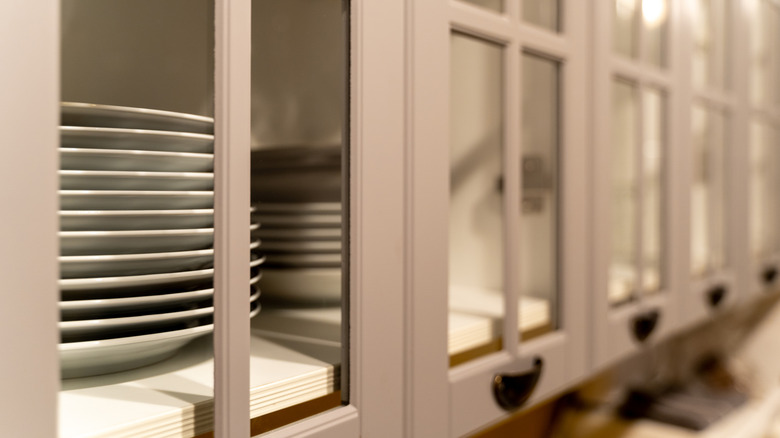
Display cabinets have been bouncing around the pages of history from the 18th century — it comes as little surprise then that their descendants, glass front cabinets, rose to fame in the 1950s. By creating a sense of visual openness in the kitchen, this style was heavily favored for displaying dishware.
For the longest time, the pros and cons of glass front cabinets appear to have balanced each other. Sure, they required heavy maintenance to keep fingerprints and smudges at bay. But on the other hand, they created a better illusion of space and made small kitchens look larger. However, as kitchens start acquiring a more lived-in feel, you might find yourself questioning the arbitrary standard of tidiness and perfection demanded by glass front cabinets. The tiniest bit of clutter will attract the eye of your guests — good luck hiding away that stack of takeout menus.
So, what will be trending in 2026, instead? Any open storage will be carefully curated, while functional items will be discreetly relegated to spaces where they can stay invisible. But what if you rather prefer the look of glass front cabinets? As a handy compromise, you can swap clear glass for frosted or etched alternatives. By offering a certain level of opaqueness, these options allow everyday clutter to be hidden from sight. If you are looking to break up the monotony, you can always add stained glass inserts at strategic intervals to add a pop of color and personality to the kitchen.
5. Open shelving
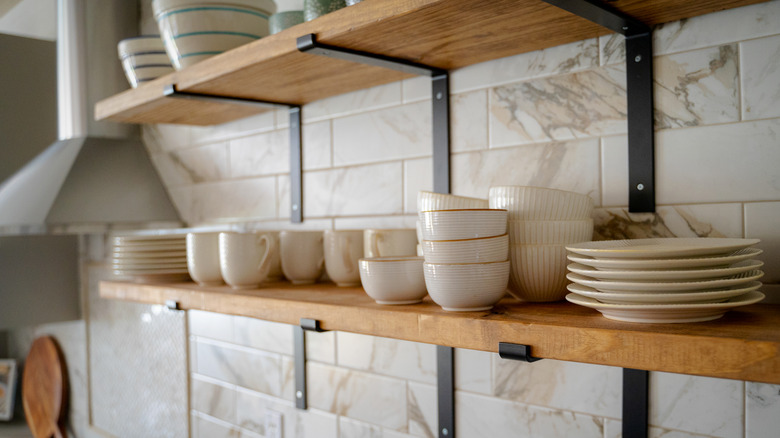
There is nothing that small or underlit kitchens hate as much as being crammed with bulky, floor-to-ceiling cabinetry — so it is easy to see why open shelving reigned supreme for several years. But despite once being favored as an inexpensive alternative to conventional cabinets, there is a sense of fatigue now associated with this design.
There is no one culprit that holds the blame for the decline of open shelves from the trend charts. The maintenance and upkeep was always a sore point for homeowners. Given the amount of grease and dust generated in the kitchen, a more diligent cleaning schedule was required for open shelves. Unless curated regularly, this vast expanse could also serve as a magnet for clutter — with no closed doors, there is no place for a chipped mug to hide. Social media played its part as well. When highly Instagrammable #shelfies started trending, open shelves were considered as a way to display your personality. But eventually, this storage style reached saturation.
As design preferences sway towards quiet luxury, visual overwhelm is being reduced in kitchens. Concealed storage is being preferred instead of high-maintenance open shelving for giving everyday, functional items a resting spot without cluttering the kitchen design: think hidden appliance cabinets and secret pantry doors concealed within the cabinetry. If you aren't in favor of ripping down all your open shelves quite just yet, you can always transform them into storage cubbies that offer greater leeway for shielding unsightly items from direct view.
6. Open plan kitchens
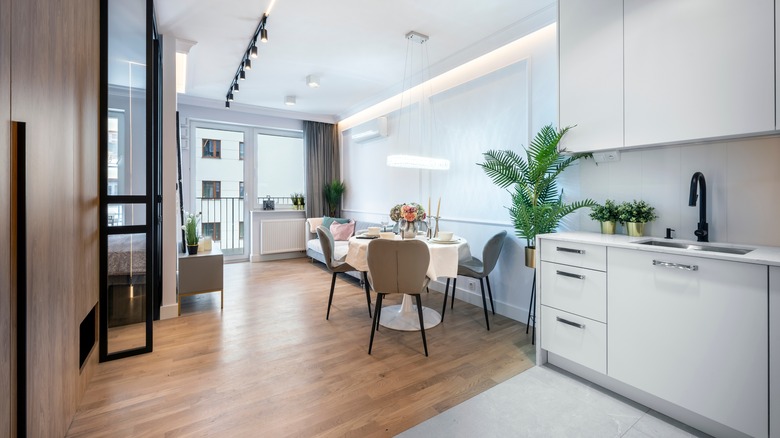
The easiest way to understand an open plan kitchen is to visualize your house without the partition walls between the living room and the kitchen — think of it as the design equivalent of a one-pot meal where everything is meshed in together. With its roots in the 1950s, this design has enjoyed a long, glorious run ... one that will have possibly reached saturation by 2026.
The case for open plan kitchens is obvious: without any partitioning walls, you can enjoy a greater sense of openness between the cooking and living areas. However, after having lived through a pandemic that necessitated us to live, work, and eat in the same space, it is possible that we are craving a sense of compartmentalization again between the different areas in our lives. Within the realm of kitchen design, this has translated into a need for partial dividers between the cooking space and the rest of the house. After all, you won't want your guests to be smacked in the face with all the heat and odors emanating from the kitchen as soon as they step within the house.
If you are hoping to tweak your open plan kitchen without opting for a full-blown remodel, there is scope for hope. Double-sided bookcases and sheer curtains make for a low-commitment change, but you can always explore glass sliding walls and portable panels as well. If you are looking to bring nature indoors, a plant wall can serve as a verdant divider.
7. Glossy surfaces
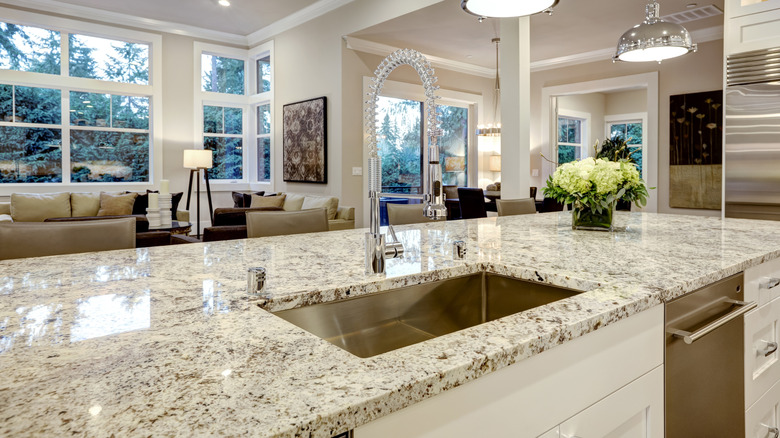
Life was good for glossy kitchens in the 2010s. Across countertops and cabinetry, these highly reflective surfaces were favored for their ability to bounce light around the room and brighten up cramped spaces. Stains could be easily wiped away, and there was no need for sealant. Life was, indeed, good for the longest time ... until matte and textured finishes started raining on its parade.
Over the passage of time, the maintenance of glossy surfaces was put under the scanner. While this finish didn't allow stains to settle, you can safely expect every last fingertip and smudge to be amplified. High traffic areas in the kitchen can also steal the luster of glossy surfaces, necessitating regularly buffing for maintaining its reflective shine. You will also find yourself restrained in matters of choice — rustic and country designs are among the kitchen styles that don't work well with glossy surfaces.
Low-maintenance alternatives have been steadily nudging glossy surfaces out of the door. Matte finishes are poised to take its crown instead, showing up across countertops in the form of honed quartz and butcher blocks. Within the world of cabinetry, soft-touch laminate panels are lending a sense of elegance to modern kitchens. Textured finishes are also having a major moment in the design spotlight for creating a tactile element among all the cold, harsh surfaces in the kitchen. Bring this trend to life in your space by exploring handcrafted tiles for the backsplash, wood grain for the cabinetry, and exposed brick walls.
8. Distressed cabinets
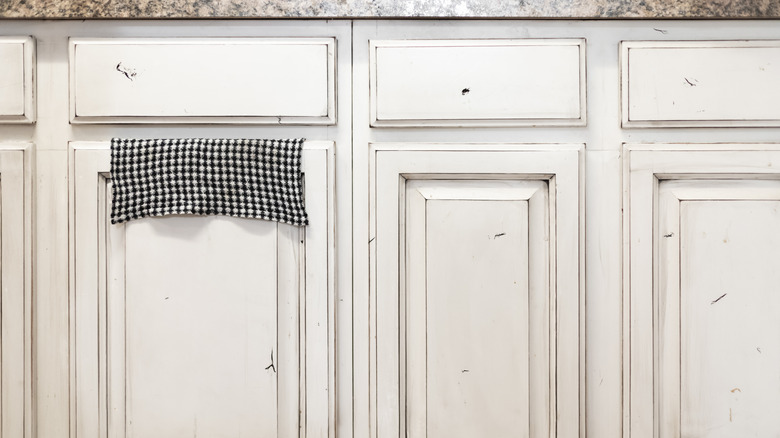
For the longest time, distressed cabinets were not seen as a design flaw but rather, as a means of romanticizing the natural aging process of wood. Freed from the need of keeping their cabinets in pristine condition, distressed options allowed homeowners to breathe easy. Cracks, dents, and rough edges were all design hallmarks to be cherished rather than hidden away.
If you have ever looked up how to design a country kitchen, you might have fallen in love with the nostalgia of all things rustic. However, distressed cabinets now find themselves facing a fast approaching expiry date. The shabby chic movement may have been all the rage in the 2000s, but hanging on to distressed finishes across your cabinetry can make your kitchen appear frozen in time rather than offering the charming throwback you'd hope for.
While some amount of texture is welcomed in the kitchen, naturally aged finishes and authentic patina are finding favor over the forced look of intentionally scuffed options. You needn't tear down all your distressed cabinets though — with a few coats of paint and on-trend hardware, they can be given a fresh lease of life. If you need more inspiration, look no further than these 8 kitchens that prove painted cabinets can transform a space.
9. Black matte hardware
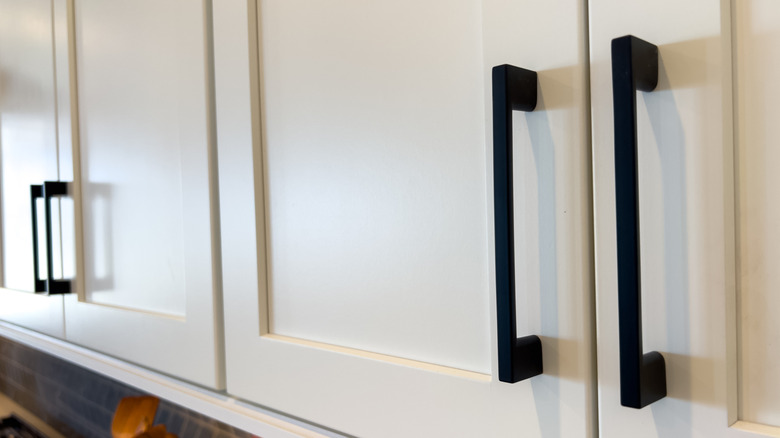
If you ever need a reminder on how the smallest design details can make or break your kitchen, look no further than the cabinet hardware. Despite occupying a minimal design footprint, these nifty drawer pulls and handles serve more than just a functional purpose. Often called the jewelry of the kitchen, the right hardware can set the tone for the space. However, if you have added any black matte options to your cart, you'll want to pause.
There was a time when white shaker cabinets topped off with black matte hardware was considered the mac and cheese of kitchen design: a foolproof, classic combination that would not let you down. However, the omnipresence of black matte hardware in budgeted rentals and inexpensive projects appears to have diluted the perceived value of this style.
The downfall of this trend has been further accelerated by the influx of warm, tactile materials in modern kitchens. Wood and stone are popular candidates, and the trend charts aren't averse to a pop of color by way to jewel-toned knobs. Elsewhere, you'll find cabinet hardware being negated altogether with the rise of push-to-open mechanisms. When faced with such stiff competition, the one-note feel of black matte hardware has justifiably started to pale.
10. Kitchen work triangle
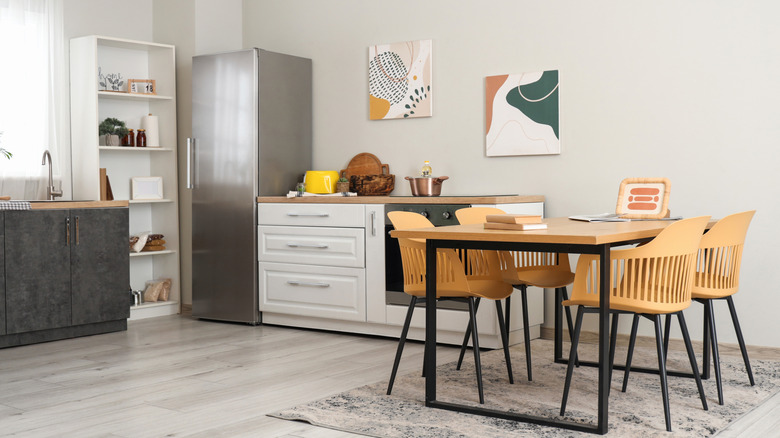
There were few things that people in the 1940s knew to be true: the earth is flat, the sky is blue, and the work triangle is the golden standard of kitchen organization. Based on the seminal work of industrial psychologist and engineer Lillian Moller Gilbreth, the work triangle quickly emerged as the default principle for minimizing the distance between different tasks in the kitchen. The theory posits that by placing the sink, refrigerator, and stove in a triangular formation, you can hop between tasks with minimal obstructions.
However, the universality of this theory has been challenged in recent times. Small kitchens with one-wall designs cannot make the most of this organizational style. The steady influx of essential gadgets, from microwaves and dishwashers, has also made it harder to simply afford the refrigerator priority in the work triangle.
If the work triangle no longer works, what will? Don't worry about your kitchen layout descending into anarchy, because there is another alternative waiting to take its place in 2026. While several theories have been bandied about, zoning has emerged as a popular candidate for organizing workflow in the kitchen. By simply allocating designated zones for various tasks — cooking, cleaning, preparation, food storage, non-consumables, and entertainment — this intuitive approach allows you to design a more efficient workflow for your everyday needs.