

The Biggest Disadvantage Of Using Glass Mixing Bowls
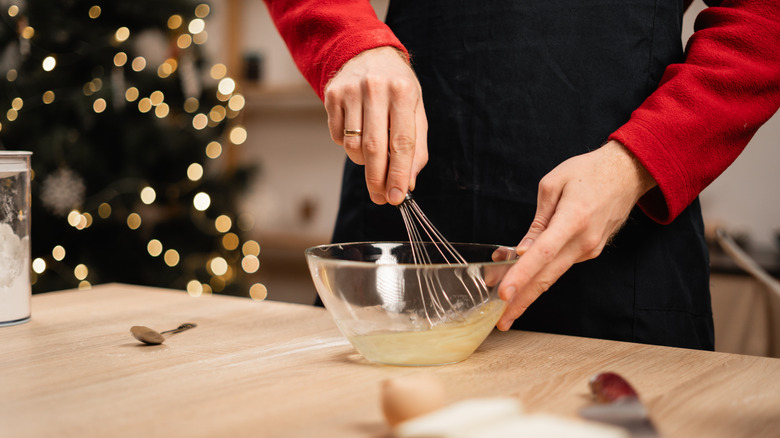
Glass mixing bowls are sparkly and pretty, they stack neatly, and it's fun to see the ingredients come together through the translucent sides. But in a working kitchen, the main drawback is structural, because glass is strong only until it isn't. A stainless steel bowl will dent and ding when dropped, but a glass bowl will shatter. Even tempered or "shock resistant" glass has a breaking point. The chaos of a cluttery counter and a single slip with buttery or wet hands can turn your batter into a minefield of shards, and once that happens, there's no salvaging what was inside, which is both the money the ingredients cost, and your time. If you end up with broken glass on your hands, you can actually use a piece of bread to pick up the pieces. It's weird, but it works.
They're also heavy. Steadying a large glass bowl full of dough or whipped cream requires real wrist strength, and the one-handed lift-and-tilt maneuver to scrape batter into a pan can be an arm workout. Stability can be iffy, because on stone countertops, glass tends to skate, unless you place a towel or silicone mat beneath. And, a quick note for anyone who collects vintage cookware. Vintage bowls, both glass and ceramic, sometimes contain lead-based glazes or decorative elements. You can't tell by looking at them, so it's really worth testing with an inexpensive at-home lead swab before using them for anything acidic or very hot, both of which are corrosive and can increase leaching.
Great for lemon juice, not lava
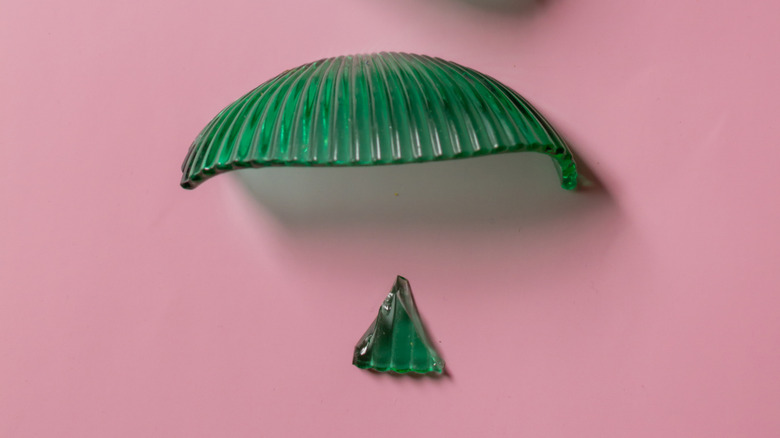
Glass, even tempered, doesn't like abrupt change, and cooking temperatures are necessarily varied and volatile. Moved too quickly between hot and cold environments, and the molecules expand and contract at different rates, creating internal stress that can lead to cracking. Pouring hot caramel or just-melted butter into a chilled bowl straight from the fridge is enough to make some bowls fracture. Even the dishwasher, through the fluctuations of hot wash and cool rinse, can introduce small stresses over time.
They're also incompatible with some common tools. The surface is easy to chip or shatter with a hand or stand mixer (which mostly come with steel bowls, you'll notice), and immersion blenders can knock the bottom with enough force to create stress cracks or break the bowl entirely. Even a small chip on the rim weakens the entire structure, and once that integrity is compromised, glass has a way of going from fine to not-fine in an instant. Stainless steel tolerates the same treatment without complaint.
That said, glass has real strengths when used intentionally. It doesn't absorb flavors or odors, so you can use it for a garlicky marinated fish one night, wash it, and make a delicate, rose scented meringue the next day. Bread bakers love being able to see dough rise from all angles. It's nonreactive, which makes it ideal for citrusy marinades, vinaigrettes, sourdough starters, or anything acidic that might discolor or pit metal. If you love your glass mixing bowls, treat them gingerly, like you would any breakable tool. Bring it closer to room temperature before adding something very hot or very cold, avoid rapid temperature swings, stack like with like and give each bowl enough shelf space that the rims don't knock together when you reach for them.