

Should You Get An Induction Stove? Here Are The Pros And Cons
If there's one thing chefs and foodies have strong opinions about, it's cooking tools. Seriously, I know people who've paid a premium to have specialized spoons just for drizzling sauce on a plate. So when it comes to something as fundamental as stoves, you can be sure we all have our preferences. It's not exactly a secret that chefs in general are big fans of gas stoves, appreciating their responsiveness and the fine control they offer over how much heat they put out.
Yet in recent years, there's been a definite swing toward induction stoves, among professionals and dedicated home cooks alike. I've been a witness to this process as a working chef, then as someone who writes about food. I've cooked on all kinds of stoves, professionally and personally: gas, electric, induction, a cranky electric-coil stove that only offered "off" and "full blast" as options, and even an old-school wood-burning cookstove.
Induction has its pros and cons, and while I'm an enthusiast, I absolutely understand that it's not for everyone. If you've considered an induction stove, here are the pros and cons that may sway your decision on getting one.
Pro: Induction cooktops don't get dangerously hot

Let's start with a really obvious one. Stoves are all about generating heat. That's what they do, whether they're fueled by coal, wood, gas, or electricity. They transfer that heat to the pan, and the pan in turn transfers the heat to your food.
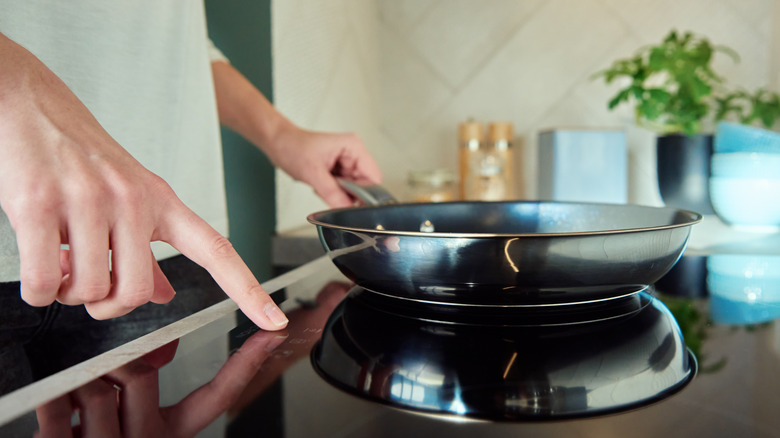
Induction doesn't do that. Instead, induction uses magnetism — a key difference between induction and electric stovetops — to create heat within the molecules of the pan's metal. This means the pan itself — not the stove or its elements — is what gets hot. To me, this is a real game-changer. To begin with it's really efficient, because you're not losing heat into the kitchen (which I really appreciate on hot days).
It's also important for another reason: if you have kids or (in my case) grandkids who are just at that "learning to cook for myself" age. Since your induction stove doesn't actually heat up like ordinary stoves (the heat is in the pan, remember), it only absorbs a modest amount of heat during the cooking process, so it stays relatively cool. Spills won't burn onto the surface, and usually — even if you do have the misfortune to put a hand on it — it will only be "painful to touch" hot, not "trip to the ER" hot.
Con: You might need to buy new cookware
One of the big issues, and a common complaint from people considering the technology, is that not all cookware works with induction. If your kitchen cabinets contain just an inexpensive boxed set of pots and pans from the department store, that might not be a big deal. But if you're a serious cook, with lots of money invested in high-end cookware, the cost of replacing what you already have might outweigh the cost of the stove.
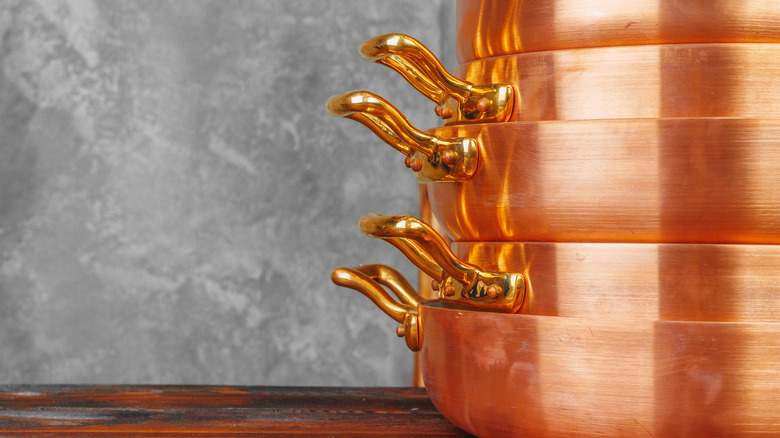
It all boils down to magnetism, because that's how induction works: You need pots and pans that are responsive to magnetism. So forget about your lightweight aluminum skillets, or that set of heirloom copper pots from your grandma. You don't need to guess about this, because there's a simple test you can use. Get yourself a magnet (a reasonably strong fridge magnet will do), and clap it to the bottom of your pots and pans. If it sticks, they should work. Recently-manufactured pots and pans usually have a logo (or language on the packaging) to tell you whether they're induction-compatible or not, so you don't need to carry a magnet to the store with you.
Broadly speaking, cast iron, carbon steel, and some (but not all) stainless steel will work. Cookware manufacturers have begun making aluminum, copper and stainless-steel pans that now include a pad of ferritic iron or steel sandwiched into the pad at the bottom, so they'll work with induction.
Pro: You'll breathe easier
If you've ever sat around a campfire on a warm summer evening, you've probably joked wryly about how the smoke seems to always follow you around, regardless of where you sit or which way the wind seems to be blowing. Outdoors that's not a big deal, because it's a small amount of smoke in a large quantity of air.
Your indoor air is a whole other story, and while gas stoves are a treat to cook on, they also do some pretty bad things for your indoor air quality. It's a big reason why some home cooks are moving away from gas. Burning natural gas produces a number of unpleasant byproducts, including nitrogen dioxide, carbon monoxide, and benzene. Nitrogen dioxide is especially problematic, because it's implicated heavily with asthma (especially in children) and other respiratory issues.
A really good, heavy-duty vent hood can go a long way toward minimizing the impact on your lungs, but that's a pretty major upgrade in itself, and a lot of people don't use their hood much, because of the noise. So if you want a high-performance stove that doesn't pollute your indoor air or the outdoor air, induction is the obvious choice for an upgrade.
Con: You may not like the price tag
I'm what the generous would describe as a frugal, cost-sensitive shopper. The less-generous would just call me "cheap." But let's face it, a major appliance is a major investment, and cost is a big deal for a lot of buyers.
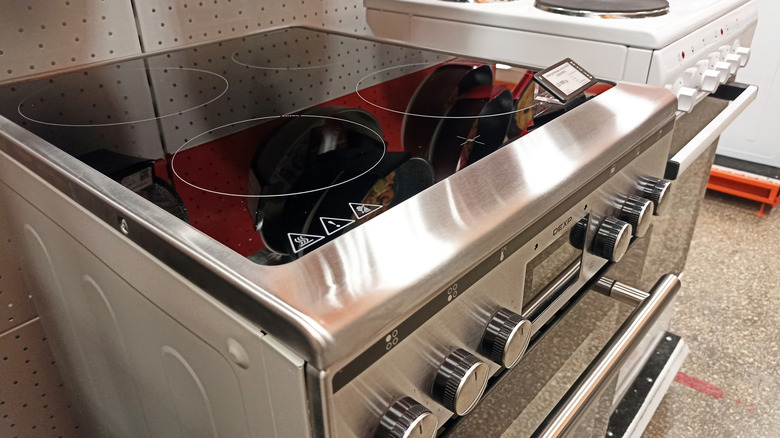
By and large, induction stoves cost more than conventional electric stoves with comparable features. The difference can grow pretty rapidly if you're looking for a premium model, with high-end features. Some induction stoves have more power levels to give you finer control of your cooking heat, additional burners beyond the standard four, or larger and more powerful induction coils.
That said, if you're looking to upgrade your cooking experience, gas stoves – especially high-end "pro-sumer" models – can blow way past induction stoves in price. Also, if your home doesn't already have a gas line, the cost of retrofitting your home for gas (and adding that high-performance vent hood I spoke about a moment ago) can cost more than the range itself.
Pro: Induction is fast. Really, really fast.
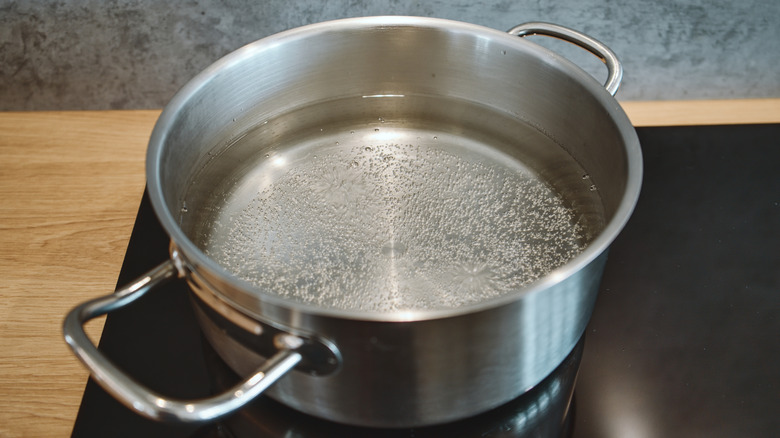
Nobody likes standing at the stove, tapping their foot, waiting for a pot to boil or for a pan to come up to temperature. That goes double when you've already had a long day, you're stressed from work, and the kids are hangry and squabbling. Understandably, fast weeknight meals are a whole thing (it's why we have so many 30-minute meal ideas), and so are microwaveable convenience foods.
I've been there myself, with my own kids and now my grandkids, and let me tell you that nothing heats up a pot or pan faster than induction. Just, nothing. So if you want to put good meals on the table in a hurry, induction is very much your friend. It's because of how efficiently induction heats. Gas or conventional electric stoves generate heat first (gas quickly, electric slowly). Then the pan needs to absorb the heat, which is quick for a lightweight skillet, but slow for a heavy, high-quality saucepan. With induction, on the other hand, because it heats the pan itself, it's quicker and much more efficient.
Want to boil water in a hurry, get a good sear on a steak, or reduce a pan sauce? Induction gets you there quicker, saving time and energy. The only downside is that it's so efficient, new induction users need to be careful not to accidentally overheat their pans, which can potentially warp them.
Con: You might hear an irritating whine
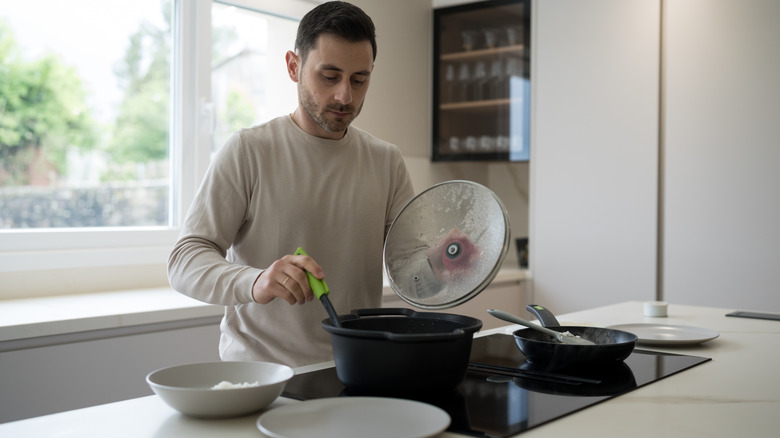
Regular stoves don't generate a whole lot in the way of noise. You might hear a bit of popping and clicking, perhaps, as the metal heats and cools, or a bit of a "poof!" when you light your gas, but that's about it.
Induction coils, on the other hand, can generate a high-pitched sound that some users find maddening. Not all of them do this, either because of better soundproofing or because their frequency is too high for even the most sensitive of ears, but it's a possibility. My mother, for example, always had super-sensitive hearing and their first induction unit made her crazy. Their second one, a higher-end model, did not.
Some models emit an audible whine more often than not. Others only show this problem while they're coping with a pot or pan that's too light, too small, warped, or only barely magnetic (all of those things make the induction coil work harder). If you can swing it, it's always good to get a live demo of the stove you plan to buy, just in case. Better yet, bring a couple of your own pots and pans.
Pro: Induction cooktops are really easy to clean

One of the things I always disliked about gas stoves, as much as I love them, is cleaning around the burners. Coil-ring electric stoves can be just as annoying, even if you use foil burner guards underneath. Ceramic and glass cooktops are much better, but because they retain so much heat, cooked-on food can require a lot of scrubbing.
Induction cooking surfaces are much easier to clean. They give you the same smooth, easily wiped surface as a glass or ceramic cooktop, but — and this is important — they don't get nearly as hot, so any splashed or spilled food takes a long time to get burnt onto the surface. In fact, you can even put a piece of parchment or paper towel under a pan, to catch splashes, without it burning (I honestly didn't believe this until I tried it myself, but it's true!).
To be clear, you'll still need to let the cooking surface cool a bit before wiping it down, lest you cause thermal shock by slapping a wet cloth on a still-hot slab of glass. On the upside, because induction units reach relatively low temperatures compared to a conventional stovetop, that takes only a few minutes. Otherwise, the only real issue is leaving food to sit too long and harden, which makes it a bigger job to clean. That's a common cleaning mistake people make with induction stoves.
Con: It might make your meat thermometer unreliable (and your pacemaker!)
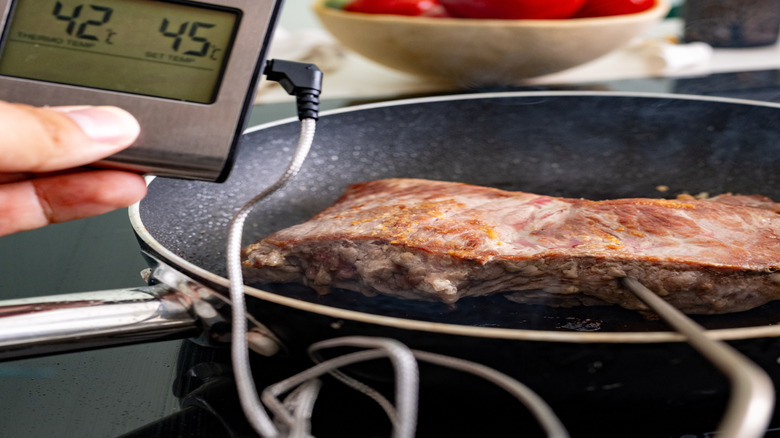
I'm a big advocate of using thermometers in the kitchen. I personally have a fair selection: old-school analog meat thermometers (the leave-in kind), digital and analog instant-read thermometers, a digital probe thermometer, and an analog candy thermometer.
One thing that hadn't occurred to me is that the electromagnetic energy emitted by the induction coil can mess with digital thermometers. Old-school analog thermometers and instant-read thermometers will still work fine for frying, braising, candy-making and so on, whether you're using induction or not. But digital thermometers and wireless thermometers are a whole other story, and I quickly found out that a couple of mine couldn't be trusted when I cook on induction. If you own a high-end digital thermometer, or plan to buy one, it's worth reaching out to the manufacturer first to double-check that their product will work with induction.
There's a closely related issue with much higher stakes, as well. It turns out that the emissions from an induction coil can also affect pacemakers and implantable cardioverter-defibrillators, which has potentially life-threatening implications. If you or anyone in your immediate circle has one, it's a really strong reason to reconsider induction.
Pro: Induction is innately safer
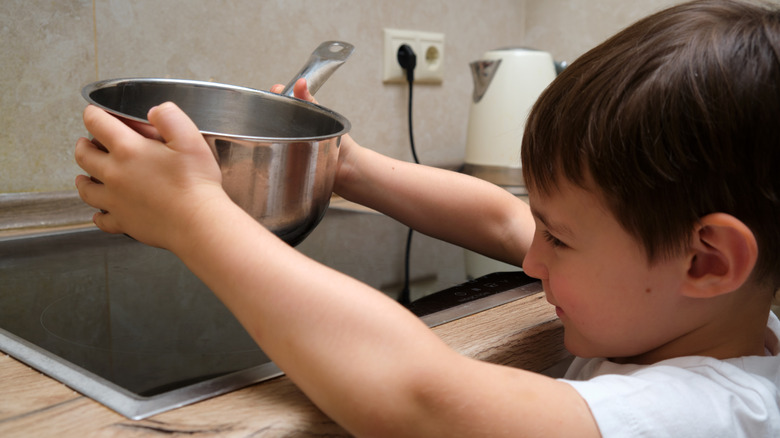
Okay, admittedly I'm undermining my own argument by putting this right after the whole "mess with your pacemaker" thing. But even after acknowledging that very specific edge case, I think this is one of the strongest arguments for induction as opposed to gas or conventional electric stoves.
I've already talked about how induction cooktops don't get dangerously hot, which is important if your household contains kids, cooks with physical challenges, or just plain clumsy people like me. Induction means no open flames, like with gas, and none of gas' issues with air quality (or, dramatically, the occasional explosion). Those are the headline items around induction and safety, but it's the subtler things that I find really important as I get older and more absent-minded.
Safety features on induction stoves vary by brand and model, but they're plentiful. Don't want kids using the stove without supervision, for example? Lots of models include a child lock. Do you frequently turn on a burner, but forget to put your pan on it? With induction, it just shuts off. Let a pot boil dry? It shuts off. A burner overheats? It shuts off. Take a pan off the burner, and forget to turn off the stove? It just — yeah, you get the picture. So when I say it's safer overall, this is what I mean.
The verdict: Do your research, try before you buy

Choosing induction versus gas or conventional electric isn't something you should make a snap decision about. As I said a moment ago, major appliances are a major investment, and you'll live with your choice for years.
So take your time. If you have friends or neighbors who have an induction stove, ask them what's good about it and what they don't love ("what would you do differently if you got a do-over?" is a great question). Read reviews and explainers on good-quality sites like Consumer Reports or Wirecutter, where they use the products hands-on before rating them. Then, do your usual due diligence before you settle on the brand and features you want.
One great thing about induction is that there are plenty of portable induction cooktops out there (the induction equivalent of a dorm-room hot plate). They're widely available at under $100, with genuinely good models available in the $100-$200 range, so that gives you a low-commitment way to see if induction is right for you. Even if you decide not to go ahead with a full-sized induction range, you'll still find your portable hob a great thing to have as an extra burner during holiday meal prep, or to keep in another room for occasional use. I won't have an induction stove until we renovate, but I have two portable units and use them a lot.