

Why Some Home Cooks Are Moving Away From Gas Stoves
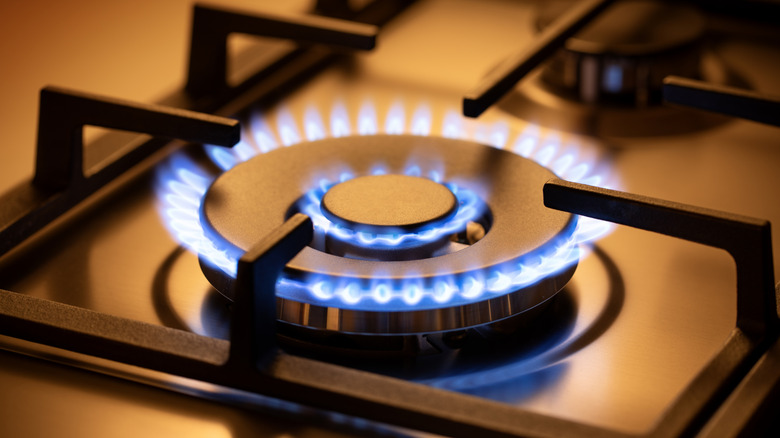
Home cooks have been told for years that gas stoves are superior to electric — mostly because gas stoves offered superior temperature control. You can turn the dial and instantly go from low to high heat, cutting down on cooking time and reducing the chance of over or undercooking food. There was also the homey feel of seeing a real flame, and the fact that you had clear visual clues as to how hot your stove was actually running. But that conventional wisdom is starting to recede, and electric stoves are increasingly replacing gas in kitchen redesigns.
The reality is that electric stoves are getting better all the time, and they hold a lot of practical and safety appeal compared to gas. The biggest rising concern with gas are the emissions it lets off when you burn it. Gas stoves burn natural gas, which gets turned into nitrogen dioxide as it heats. Not only is burning gas bad for the environment, but it raises the level of nitrogen dioxide in homes, which has been alleged to have negative health effects, including increasing the chance of respiratory illness and asthma in children.
Electric stoves also remove the chance of gas leaks which can lead to fires and have safety features like turning off automatically when there is no pan on the stove for an extended period of time. Of course, those flat surfaces are also much easier to keep clean. Should your kitchen be showing signs it's due for a remodel, that could be reason enough for you to make the switch.
Induction stoves are safer, cleaner, and increasingly better at heating than gas
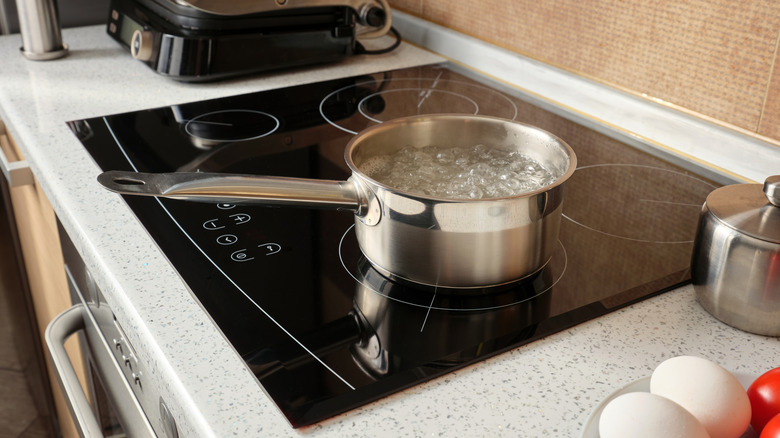
It's not just safety concerns and ease of care that are driving the demand for electric stoves, as advances in technology mean they are rapidly becoming better at actually cooking food than gas stoves. Some electric stoves now use induction cooking, which heats the pan directly through a magnetic field created by wires under the glass top. This allows cooks much more precise temperature control, with newer electric stoves to heating and cooling much faster than they used to — some far faster than even powerful gas stoves.
It has gotten to the point where even many professional kitchens are starting to switch over to induction stoves — and if professional chefs who care about the quality of their cooking first and foremost think they are better, home cooks should take note. The one downside is that, as a new and evolving technology, induction stoves are more expensive than gas stoves and older electric models. Standard electric stoves can cut down on the cost, but will have the problem of slower heating compared to gas.
Knowing that, the gas vs electric stove debate is still very real. Which is best for any one cook will depend on personal preference, but if you are already going to remodel your kitchen and don't mind spending some extra money, electric and induction stoves offer some major advantages you can't ignore.