

These Depression-Era Meals Are Popular Again With Budget-Conscious Cooks
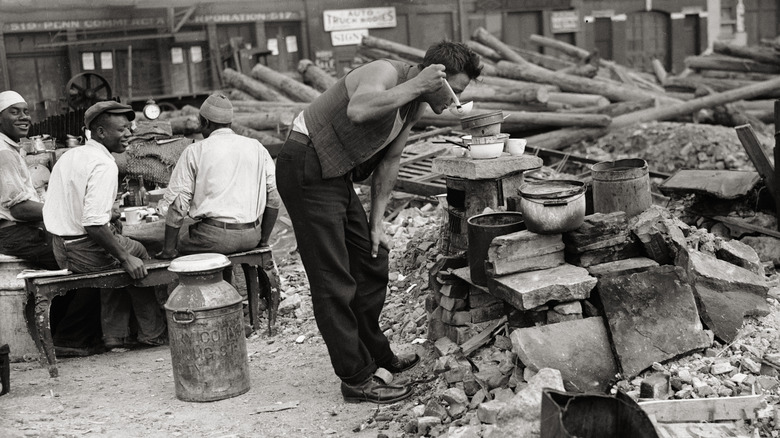
There's a well-worn saying that "tough times don't last, but tough people do." That could be the motto of the " Greatest Generation," who survived the Great Depression and then the ensuing war years. It's always hard times for someone, somewhere, but during the 1930s, few families weren't impacted in one way or another.
But no matter how rough things are, everyone needs to eat. So the Depression era brought out all the frugality and creativity cooks could muster, drawing on whichever ingredients could be bought cheaply and in bulk. Some meals drew on old family traditions, while others leaned into the still-new manufactured foods that hit the market in the early parts of the last century. Big companies even got into the game, creating inexpensive, shelf-stable products like Kraft's iconic blue-box macaroni and cheese, which provided an easy meal for very little money.
Cash-strapped home cooks have been rediscovering Depression-era dishes ever since the shortages and inconveniences of the COVID era. With the recent rise in food costs and unemployment, and the unpredictable economy, this kind of frugality is looking better all the time. So stock your pantry with inexpensive old-school groceries, and take a look at these Depression-era favorites that are regaining popularity.
Slugburger
The English are often mocked for their cooking, perhaps partly because they have a knack for giving foods less-than-inspiring names. Toad in the hole, bubble & squeak, and spotted dog are all prime examples of that "branding issue."
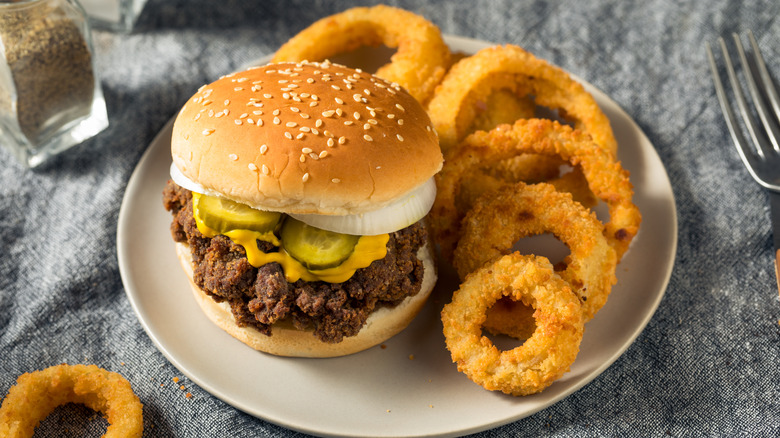
If there's an American food that belongs squarely in their company, it has to be the slugburger. Don't worry — no actual slugs are harmed in the making of a slugburger. It's just a beef or pork patty, stretched with the addition of soy or breadcrumbs, and then deep-fried and served on a bun with onions, pickles, and your preferred condiments. Although it's a Depression-era innovation, the slugburger has remained a Southern favorite over the intervening years and is now attracting attention online again. Admittedly, part of that curiosity might stem from the bizarrely unappealing name — "slug" was Depression-era slang for a nickel, apparently, which is what they cost at the time.
You don't have to follow the original formula too closely if you don't want to. Feel free to use any other inexpensive ingredient as a binder or extender, to stretch the meat (rolled oats work, and so do cooked rice or barley, bulgur wheat, and mashed beans), or to pan-fry them instead of deep frying.
Porcupine meatballs
One of the biggest rules of frugal, hard-times cookery is to lean into inexpensive, filling, starchy ingredients. Depending on where you live, the starch of choice might be grits or potatoes, but rice is arguably the best of all because of its versatility, low price, and long shelf life.
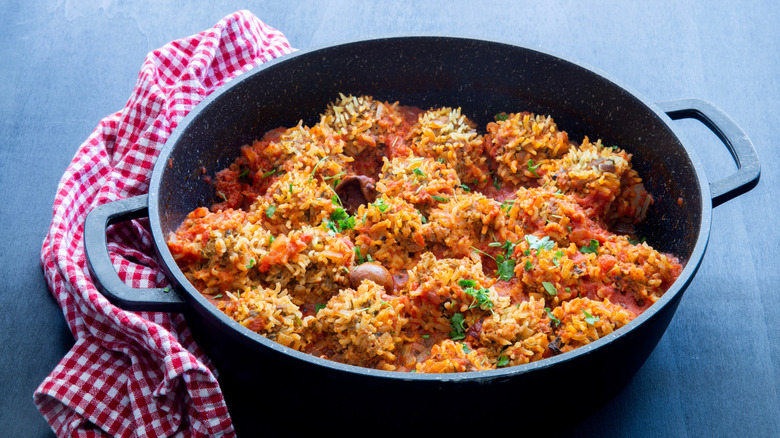
Cooking a big pot of rice and ladling a flavorful sauce over it is the obvious way to use it. But rice is versatile enough to give you lots of other options. Porcupine meatballs, an old-school dish that remains popular, are a fine example. The basic idea couldn't be simpler. Mix up a batch of meatballs, stud them all over with grains of uncooked rice, and then simmer them slowly in a flavorful sauce until the meatballs are tender and the rice is plump. The rice absorbs a lot of flavor from the sauce, and the combination is much more filling than plain ol' meatballs by themselves.
One thing to note about porcupine meatballs is that they're fun and whimsical. When your food choices are sharply price-constrained, it's important to have recipes in your back pocket that will make your family smile, and this is one of those recipes.
Potatoes and hot dogs, aka poor man's meal
Potatoes are one of the world's most important crops, ranking behind only wheat, corn, and rice among staple foods, and they are more nutritious than any of their peers. In fact, they're so productive and so nutritious that potatoes largely eliminated famines in Europe; by the end of the 18th century, it was estimated that 40% of Ireland's population lived entirely on potatoes.
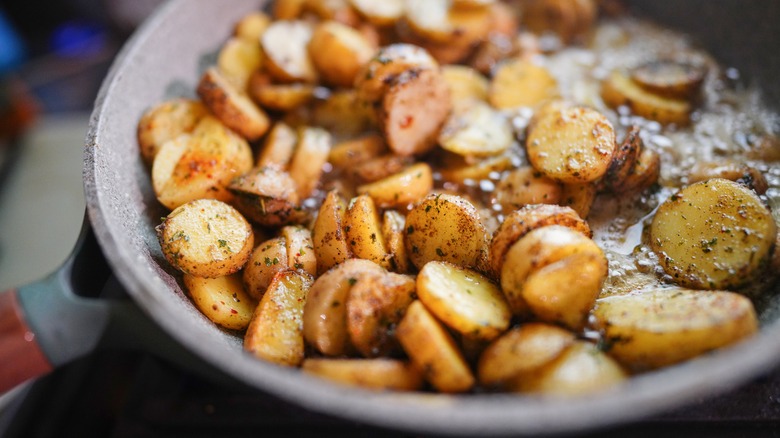
Many years later, potatoes are still cheap and plentiful year-round in the U.S. That made them a reliable staple before and after the Depression, but even more so in those tough days. One simple potato-based meal that was hugely popular during the '30s (and is making a TikTok-inspired comeback now) was potatoes and hot dogs, sometimes called "the poor man's meal." It's a very easy meal to make: Just cook potatoes and onions in a skillet until the potatoes are well-browned and the onions are soft, then add sliced hot dogs for cheap and flavorful protein.
You can swap the hot dogs for other inexpensive proteins like eggs or cheese, or leave them out altogether and just eat the spuds if your budget is really tight. It tastes best with some kind of heavily-seasoned meat in it, though, so feel free to swap the hot dogs for bologna, Spam, or whatever else is most affordable at the time.
Homemade baked beans
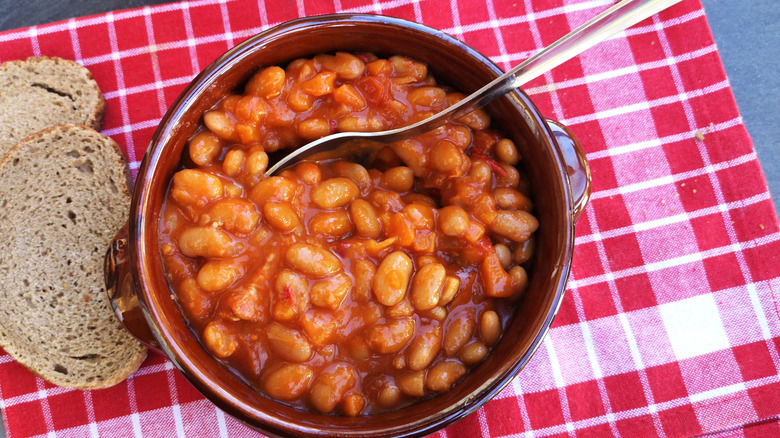
It feels odd to say that baked beans are going through a bit of a revival at the moment, because they never really went away. They're a near-universal side dish at barbecue joints and backyard potlucks, and many a time-stressed parent has stirred hot dog pieces into a can of baked beans to make "beanie weenies" for hungry kids.
When times are hard and budgets are tight, though, as they have been for a lot of us in recent times, baked beans can transition easily from a side dish to the main event. They're a slam-dunk from the grocery-budget perspective: Dry beans are just about the cheapest protein food you can buy, and the remaining ingredients (depending on your recipe) are mostly inexpensive, long-lasting pantry staples.
Don't worry if you don't like a specific version of baked beans; there are lots of different flavor profiles you can switch to, and you can check out our list of baked-bean tips for ideas. Served with a soft roll or a slab of cornbread to complete the classic grain and bean pairing.
Hoover stew
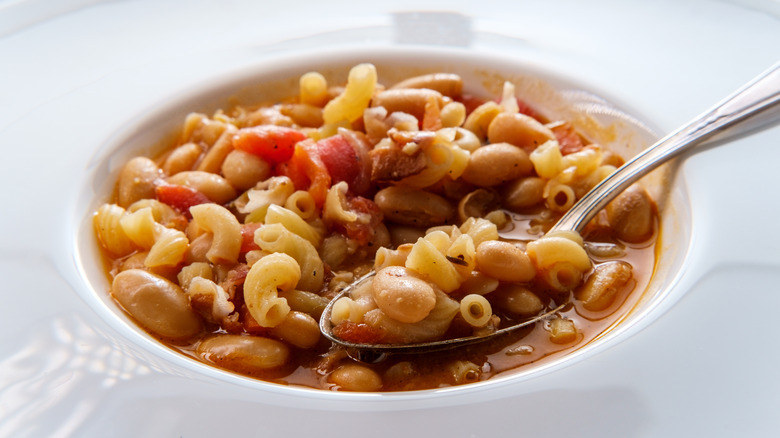
This one goes by a lot of names, though this one is the most Depression-specific. Herbert Hoover was president when the Depression hit, and disgruntled Americans made a habit of attaching his name to poverty-driven "hacks" (as we'd call them now), like removing the engine from a car you couldn't afford to run, and hitching it to a horse to make a "Hoover wagon."
So, while you may also know it as "hobo stew," "mulligan stew," or some other name, we're going to call it "Hoover stew." By any name, it's a classic Depression recipe. The exact ingredients aren't as important, so feel free to use what's cheap or on hand as long as it adds up to a hot, filling, nutritious meal.
A typical version of Hoover stew might include beans and macaroni (cheap and filling), canned tomatoes, whatever fresh or canned vegetables you have on hand, and ideally chopped hot dogs or some other form of inexpensive meat. The exact combination is entirely up to you, and so is your choice of seasonings. Regardless of how you pull it together, though, it's a hearty meal that costs just pennies per serving even today.
Fried corn mush
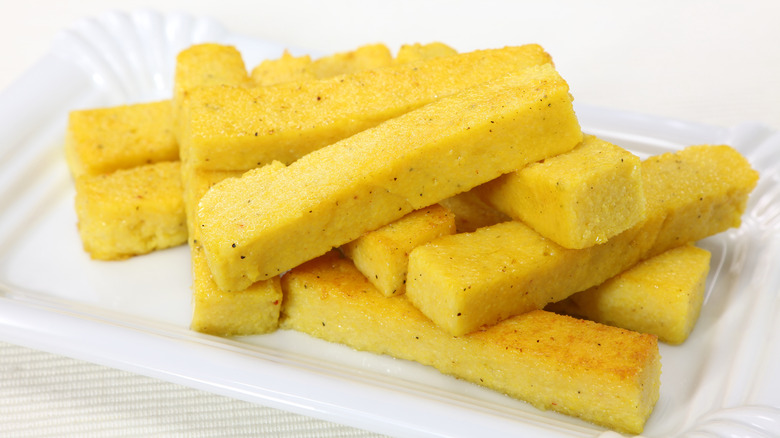
This isn't so much a meal in its own right as the basis of a meal, but it's so versatile you can take it in any number of different directions. Corn mush (another horrible food name, though accurate) isn't complicated, as it's just cornmeal cooked as porridge. You can eat it that way as breakfast, if you're so inclined, and it's a hearty way to start your day. But you definitely have other options.
You'll already know this if you're a Southerner or have Italian ancestry, because corn mush is very similar to grits or polenta. So you can serve it while it's hot and creamy, in the style of soft polenta or, say, grits and shrimp, or you can treat it as a base you can top with gravy or sauce, along with whatever meat and vegetables you can pull together.
Alternatively, you can let the porridge cool and set into a stiff loaf, then slice the cold mush and use it as the starch element of your meal. You might pan-fry it or grill it, for example, to give it a crisp, golden exterior, then serve it with an inexpensive protein option such as fried eggs, Spam, or bologna. You could also layer the slices into a casserole dish with tomato sauce, top it with cheese, and bake it until it's bubbly. Whatever direction you choose to take it, corn mush is a genuine American staple, and its revival is well-deserved.
Cabbage and noodles
Grains are great staple foods, but they have a lot of "overhead." They need to be reaped, and threshed, and then ground, and a week or two of bad weather at the wrong time could wipe out the entire year's crop. That's why highly productive vegetable foods, like potatoes and cabbage, have been such important staples in agricultural societies over the centuries.
Cabbage is a really productive crop and, therefore, a frugal food, cheap and plentiful throughout the year. In fact, it was so closely identified with poverty at one time that the smell of cooking cabbage became a literary shorthand for "poor people live here," as seen in books like George Orwell's "1984." But that close association has faded with time, and these days, we can appreciate cabbage's many virtues without facing such judgment.
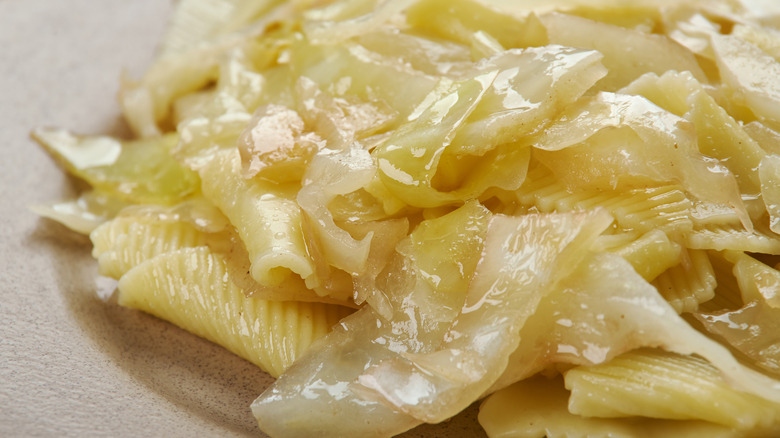
Cabbage features in a great many recipes, but one of the cheapest and simplest is cabbage and noodles, aka haluski. It's a dish that came to the U.S. along with Eastern European immigrants, but it became a Depression-era staple because it's tasty as well as hearty, cheap, and filling. The main ingredients are just thin-sliced cabbage and onions, cooked down together, with egg noodles added at the end for ballast and textural contrast. It's simple, filling, and surprisingly tasty, and of course, you can add hot dogs, bologna or Spam to give it a shot of savory protein.
Water pie (and other frugal, pantry-staple pies)
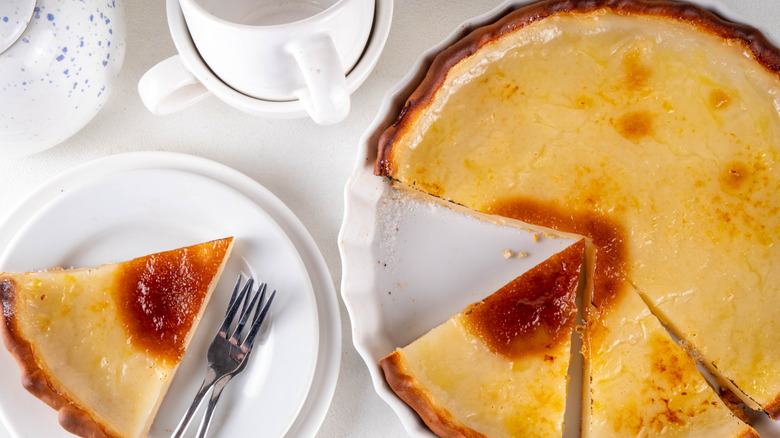
Even when times are tough and budgets are lean, it's hard to feel really down if you can still manage a decent dessert after your meals. The Depression years (and the years of wartime rationing that followed) created a lot of motivation for home cooks and bakers to devise ingenious desserts, either through spontaneous creativity or by reviving older traditions.
If you hang out on TikTok, you'll see that many of these old-school desserts have been attracting a lot of eyeballs. One that's generated a great many views, and "we tried it" videos, is water pie. It's one of several vintage pies that used just a handful of cheap pantry items to make dessert. Vinegar pie, shoofly pie, and mock apple pie all have their fans as well, but water pie seems to stand out just because the basic idea is so preposterous.
How can it be real, when the main ingredient is ... water? Well, it is. The water is thickened and flavored by flour, sugar, and vanilla, and gets a hint of richness from added butter, and it somehow just works. It doesn't have a strong flavor of its own, just a custard-y texture and a whiff of vanilla, but that makes it a pleasantly understated companion for your cup of coffee, or a supportive base for adding fruit, berries, or other garnishes.
Wacky cake
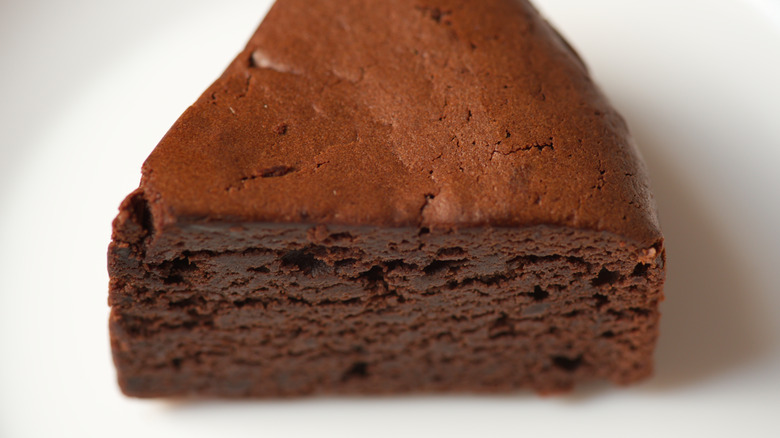
If you're more of a cake person than a pie person, one other Depression-era dessert deserves special mention. It's best known as "Wacky cake," though it has a number of other names as well.
It's a simple but surprisingly good chocolate cake, one that dispenses with eggs and butter, which were sometimes a luxury in the depths of the Great Depression. Wacky cake uses just a handful of inexpensive, long-lasting pantry staples (flour, cocoa, sugar, oil), and gets its rise from a combination of baking soda and vinegar, rather than beaten eggs or creamed butter and sugar.
It sounds odd, but hey, it works! Better yet, it's mixed right in the pan, so there's minimal cleanup. It's even vegan-friendly, if that's important in your household. That simplicity, and the cake's minimalist prep time, ensured that the cake would hang on when Depression-era austerity was replaced by wartime austerity and rationing. By that time, wacky cake was well established as a firm family favorite, and you may never have known that you were eating a 1930s make-do dessert.