

10 Outdated Kitchen Trends Making A Comeback, According To A Design Expert
The truth about kitchen design trends is that they never really die. The constantly rotating trend carousel means that what is old will eventually be considered new again. This bodes well for homeowners who are looking to upgrade their kitchen, as many comeback trends offer a sense of familiarity and nostalgia — like those terrazzo kitchen floors your little feet pattered all over as a child.
However, the onslaught of older kitchen design trends needn't mean that your space needs to turn into a time capsule from the past. Instead, interior experts like Jasmine Jhaveri, founder of Jasmine Jhaveri Design Studio, encourage you to find innovative ways to lend a fresh spin to age-old staples. That checkerboard flooring you've always loved? Why not explore fresh colorways, such as sage and ivory? The farmhouse sink that you've always wanted to see in your kitchen can be modernized with contemporary faucets and a monochromatic backsplash. From table lamps doused in micro-gingham to decorative plate racks outfitted with slim metal dowels, there are endless ways to make the trends of the past feel current and fresh.
As we collectively look to break free from copy-paste kitchen designs, it helps to plumb your past to discover the kitchen design trends that were meaningful to you. Armed with Jhaveri's guide on how to make dated trends exciting again, you'll be able to design a space that breaks free from cookie-cutter designs and feels truly unique to you.
Butcher block countertops
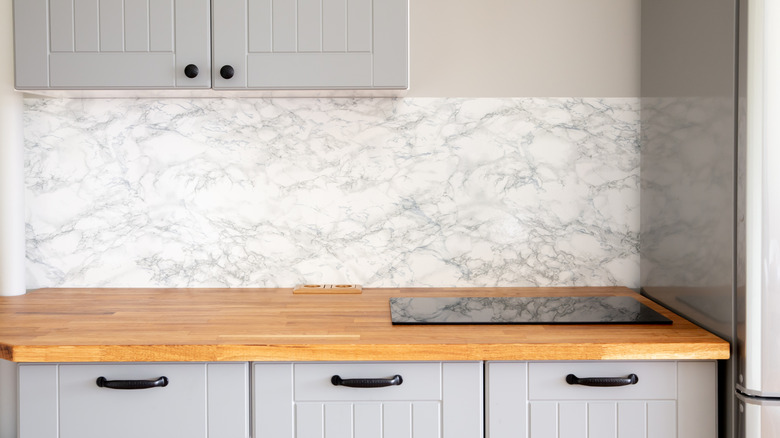
The concept of a butcher block became popular in China as a flat slab of wood that measured over 5 inches in thickness. As the concept spread across Europe, they evolved into the butcher block countertops that we know today: thick slabs of wood glued together to create a flat workspace — almost like something you'd spot in an actual butcher's shop.
However, overlooking the heavy maintenance and sealing was one of the biggest mistakes that people made with butcher block countertops, which paved the way for other low-maintenance alternatives to take its spot, such as granite. The trend pendulum has swung again though, and homeowners are gravitating towards warm, organic materials to counter the recent spell of minimalism that has settled over kitchens. Founder of Jasmine Jhaveri Design Studio, Jasmine Jhaveri, says, "Butcher block has re-emerged because homeowners are craving tactile, grounding materials in their kitchens — something warm that offsets the coolness of stone and steel." When allowed prime real estate in the kitchen by way of countertops, this uninterrupted expanse of wood can bring homey, well-worn charm to the space. "It also aligns with the broader movement toward biophilic design and sustainable, repairable materials," she says.
When bringing butcher blocks to life in contemporary kitchens, Jhaveri recommends pairing yours with unfussy silhouettes: "Pairing pale oak or maple butcher block with deep charcoal or forest-green cabinets brings a clean yet organic sophistication," she says.
Checkerboard flooring
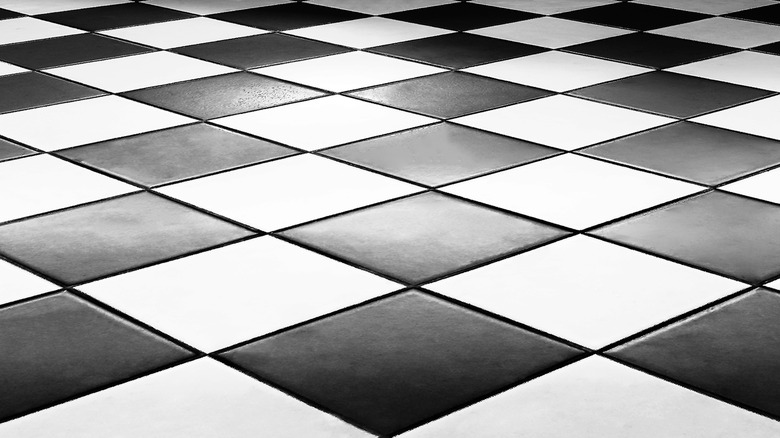
When looking for the best tips to design an '80s-inspired kitchen, "checkerboard" is a word that you'll come across all too often. While it is considered synonymous with the decade, checkerboard design has a rich and storied history dating back to Egyptian pottery in 3,000 B.C.E., before eventually becoming the flooring of choice at several historic landmarks, including the Palace of Versailles.
This flooring trend has dipped in and out of popularity ever since, and Jasmine Jhaveri believes that homeowners are leaning towards subtlety in its latest resurgence. If you'd rather not throw back to the dated diners of yore, she recommends eschewing small tiles in favor of larger formats. Larger tiles can also reduce visual overwhelm in a medium-sized space. "A honed or matte finish also prevents the floor from skewing too nostalgic," she says.
There are several ways to breathe fresh life into this age-old trend, and the easiest route is to get creative with your choice of colorways. Depending on the mood you are hoping to achieve, Jhaveri believes that there are many options to choose from. Cream and charcoal can feel like a thoughtful upgrade from the traditional black and white, while warm white and soft taupe can evoke earthy vibes. Sage and ivory also make for a winning combination if you are looking for a fresh take on the design. Experimental choices, such as terracotta and sand, will transform your kitchen into a rustic European farmhouse.
Vintage appliances
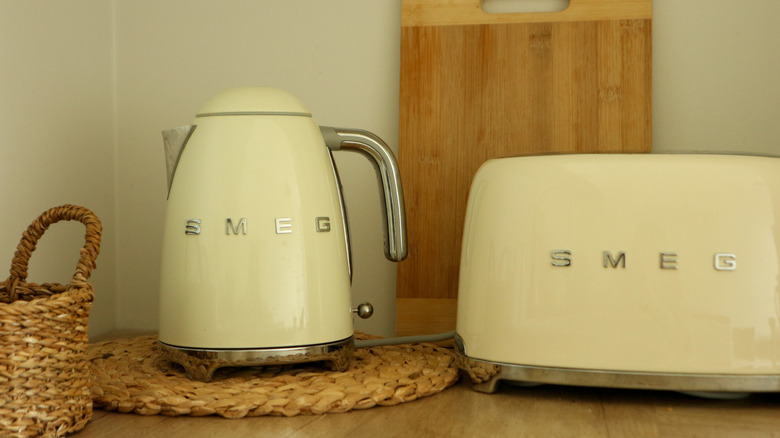
Better energy ratings. Smarter features. Advanced controls. Given the state-of-the-art gadgets and gizmos being churned out at breakneck speed, vintage appliances shouldn't merit a second look — theoretically. And yet, when faced with the sterile uniformity of modern appliances, their playful vintage counterparts are quickly currying favor again.
"In a sea of hyper-digital stainless-steel everything, vintage-style appliances offer personality, nostalgia, and sculptural presence. They remind us of slower living, but with the reliability and performance of modern engineering," Jasmine Jhaveri says. If you are worried about your kitchen design looking too one-note, a retro refrigerator with its curved edges and vivid hues can make for an instant conversation starter. If you are not ready to make a big commitment, smaller appliances, like a vintage toaster or mixer, can serve as a good starting point.
If you are ready to welcome some retro charm into your kitchen, it helps to bookmark this list of brands selling vintage appliances. Once you have done an initial lap around the block to shortlist the appliances you need, consider your colors. Those in the quest of that classic English aesthetic will find a winner in the hues of cream, ivory, and butter yellow. Saturated hues, such as racing green or burgundy, will help you nail the classic vintage look. She also recommends opting for the pastel hues of mint or powder blue if you find yourself in a wistful, mid-century mood.
Patinated hardware
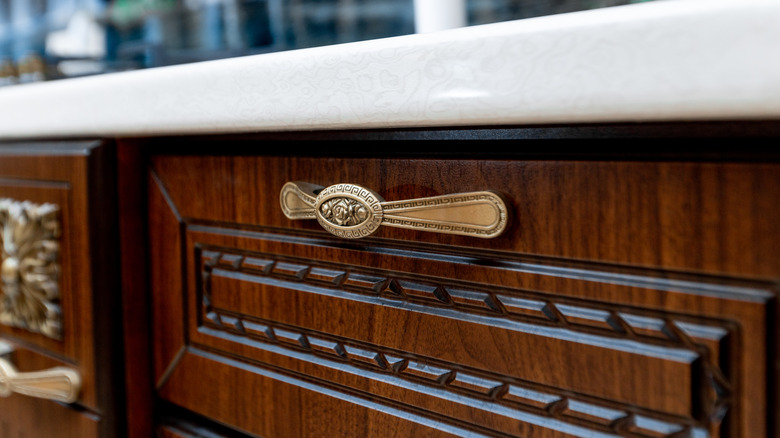
As modern kitchens break free from the arbitrary lacquer of perfection, patinated hardware is one of the key trends to keep your eye on. The easiest way to understand patina is the change in color that occurs on a metallic surface due to exposure to moisture and the passage of time. You have probably spotted it in your kitchen in several places already: that greenish-blue oxidation on your copper racks or the glossy sheen on your cast-iron pans. Within the world of kitchen design, you'll want to opt for an intentionally aged look for your knobs, handles, and drawer pulls.
Making peace with patina is one of the key principles to keep in mind when designing a rustic-style kitchen, but this aged finish can add heaps of character to any kitchen design. "Patinated finishes look best when they're thoughtfully distributed throughout the kitchen rather than sprinkled randomly," Jasmine Jhaveri says. As kitchen design trends start embracing craftsmanship and living finishes, choosing patinated metals for your hardware can create a lived-in feel to an otherwise sterile space. "The key is consistency in tone: Multiple metals can coexist, but each should feel curated, not accidental," she says.
In the quest for patinated perfection, you'll find that different materials age in different, graceful ways. Unlacquered brass deepens over time, while bronze gradually darkens with use. Copper hardware, meanwhile, can develop a green or blue patina that only adds to its nuanced warmth.
Farmhouse sinks

Are farmhouse sinks still trendy? If this question has been on your mind, you aren't the only one. With a celebrated history that dates back to the 17th century, farmhouse sinks have been for more than a few spins on the trend carousel. While minimalism took kitchen design by hold in the 2010s, the farmhouse aesthetic has been fighting back. As the world turns towards rustic, soulful details, exposed-front sinks are becoming a common occurrence in contemporary kitchens.
The good news? "Farmhouse sinks don't have to lean traditional," Jasmine Jhaveri declares. By playing with colors and materials, you can easily bring this staple into the 21st century. "They pair beautifully with sleek quartz or terrazzo countertops, contemporary single-handle faucets, or even floating shelves instead of upper cabinets," she suggests. When swatching colors, she wants you to look beyond the traditional white: How about color-tinted fireclay or matte black composite?
The exposed front design of farmhouse sinks means that they can serve as a worthy focal point in the kitchen — but if this is surrounded by chunky countertops and heavy cabinetry, it can add to the visual bulk. Instead, Jhaveri wants you to surround yours with linear, streamlined design elements. "Slim cabinet rails, minimal hardware, and monochromatic backsplashes help balance the presence of the sink," she says. If you do plan to lean into the bulkiness of the sink, you can opt for a bold faucet and statement lighting to serve as the visual anchor of the room.
Terrazzo
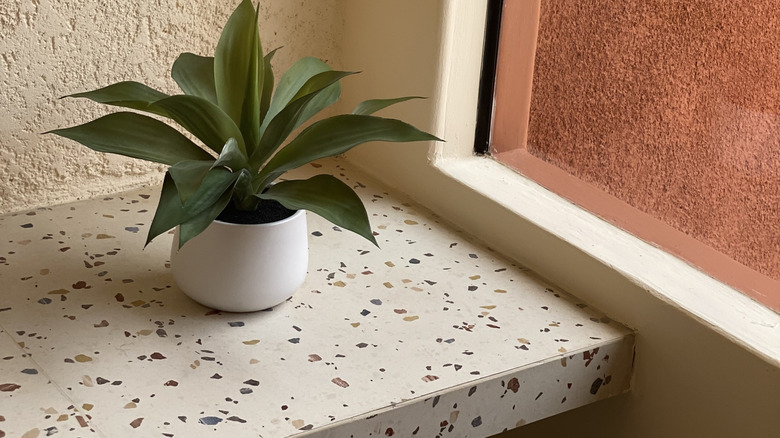
The fact that the "terra" in terrazzo is Latin for "ground" should explain the grounded, homey feel that emanates from this nostalgic material. Terrazzo dates back to the 15th century and is made by adding marble, quartz, or granite chips to a binding element, such as cement. While its merrily speckled appearance once sparked joy, the business of the design likely clashed with the minimalist fervor of the 2010s.
This material has since been released from the captivity of irrelevance and unleashed on modern kitchens across flooring, countertops, and backsplashes. The easiest way to understand its resurgence? "Terrazzo embodies craftsmanship, longevity, and playfulness — three attributes homeowners crave today. It's sustainable, low-maintenance, and introduces pattern without being overwhelming," Jhaveri says. The fact that it can be made with post-consumer waste, such as recycled glass and porcelain, also makes it a kinder choice for the environment.
So, where can you spring some terrazzo-induced color in your kitchen? Flooring is an obvious choice since this durable material has an expected life span of 75 to 100 years. "Its speckled character also complements minimalist cabinetry beautifully," she says. You can also use yours for a statement-making backsplash or on kitchen islands with waterfall edges to spotlight its distinctive pattern. In terms of color palettes, Jhaveri has a few pointers as well. She recommends pairing a blush base with burgundy and cream-colored chips for something modern, or a white base with warm neutrals and micro-chips for a more serene look.
Decorative lamps
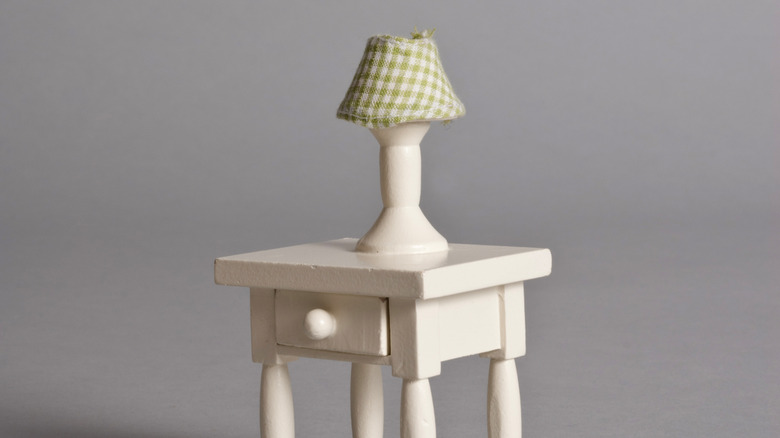
From recessed lighting to sculptural pendants, the modern kitchen is not one to shy away on the subject of adequate illumination. Given the newer inventions being churned out at lightning speed — voice-activated smart lights, anyone? — you would expect homier options to be nudged out of the door. However, as kitchens increasingly become social hubs and an extension of our living spaces, decorative lamps are finding takers once again.
"Table lamps, petite buffet lamps, and even pleated-shade pendants usher in a cozy 'furniture-first' feeling — transforming the kitchen from a purely functional workspace into a lived-in, mood-rich environment," Jasmine Jhaveri says. It also helps that decorative lamps are the easiest workaround to fix bad lighting in the kitchen.
If you have the space to spare, a floor lamp always makes for a visual statement. But if every inch of your kitchen is crammed with stuff, you can always use a table lamp to brighten a dark, unused nook. If all else fails, wall lamps will consume a minimal footprint. When it comes to choosing patterns, Jhaveri doesn't want you to pick yet another white lamp; pleated drum shades are for beginners. Instead, level up your game by opting for vintage florals, ticking stripes, micro-gingham, and soft ikats. In matters of color, she wants you to think bold; look for muted reds, warm ochres, dusty blues, and sage greens for what she calls a "gentle glow."
Statement range hoods
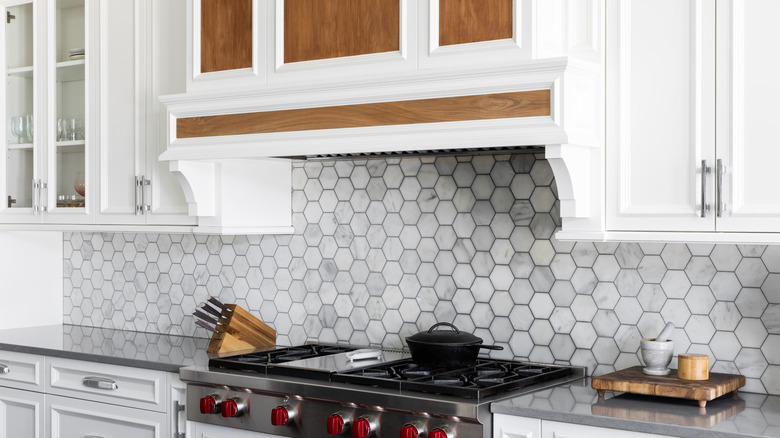
Why hide your hood when it can serve as the visual anchor of your kitchen instead? This seems to be the question that homeowners are mulling over as statement range hoods come out of hibernation once again. "After years of ultra-minimal design, homeowners are longing for focal points again," Jasmine Jhaveri says. Bigger is definitely better, and the designs are running bolder as well: Think geometric silhouettes instead of the traditional funnel shape. If you are feeling particularly adventurous, you may even choose to cover yours in handmade tiles coordinated with your backsplash.
"A statement hood offers architectural presence and a sense of craftsmanship. It creates hierarchy in the kitchen — the eye knows where to rest," Jasmine Jhaveri says. Instead of hiding it away with discreet silhouettes, you can leverage yours to add architectural interest to the space with unexpected shapes, decorative trims, and exaggerated silhouettes. A statement range hood works especially well for adding a pop of color to kitchens that are predominantly white or doused in neutral hues.
"The best designs combine style with practicality — smooth surfaces, inset details rather than protruding ornaments, and materials that can handle steam and heat," Jhaveri says. For the silhouette, you can experiment with everything from French country-style curves to boxy options with relaxed edges. Brushed brass, patinated steel, or plastered options in matte black, olive green, or putty-inflected hues also make for a winner in her book.
Mesh cabinet fronts
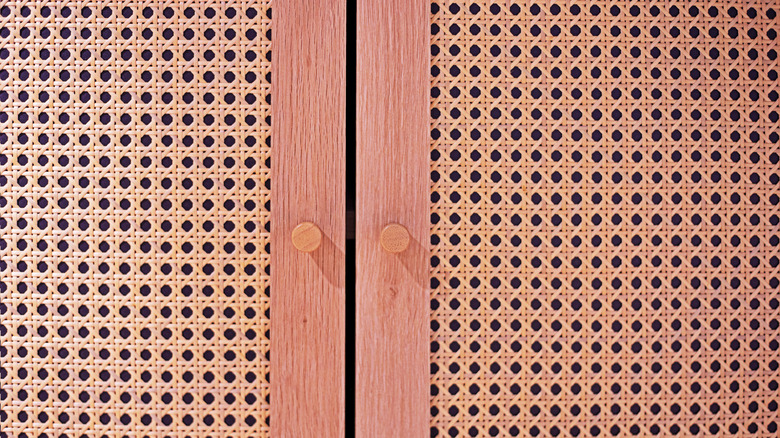
There is something about the sight of mesh blanketing a cabinet door that can transport you to the idyllic countryside. While the minimalist memo of the 2000s didn't care much for overly themed flourishes, the rise of the cottagecore movement in kitchen design — fueled by a collective yearning for simpler times — has once again thrust this design into the spotlight.
Jasmine Jhaveri believes that nostalgic mesh is steadily gaining the upper hand over glass-fronted doors. "Yes — mesh adds texture, softness, and a hint of transparency without the starkness of glass," she says. "It brings character and vintage charm while still feeling functional and airy." Swapping your existing cabinet doors with mesh-laden designs can also make for an interesting DIY project. You'll need a wire mesh panel, cabinet door frames, and a screwdriver or staple gun to secure the mesh in place.
If you are wondering where to work mesh into your existing kitchen design, Jhaveri has some ideas. "Mesh works beautifully on upper cabinets, dry bars, appliance garages, or built-in hutches where you want a mix of utility and display," she says. When perusing patterns, she encourages you to direct your attention towards fine brass, perforated bronze panels, and even woven cane-metal hybrids. Diagonal weaves are often favored by homeowners for lending a decorative spin to this industrial design. And for her choice of color? "Aged brass, matte black, warm pewter, or antique bronze depending on the cabinet tone," she says.
Decorative plate racks
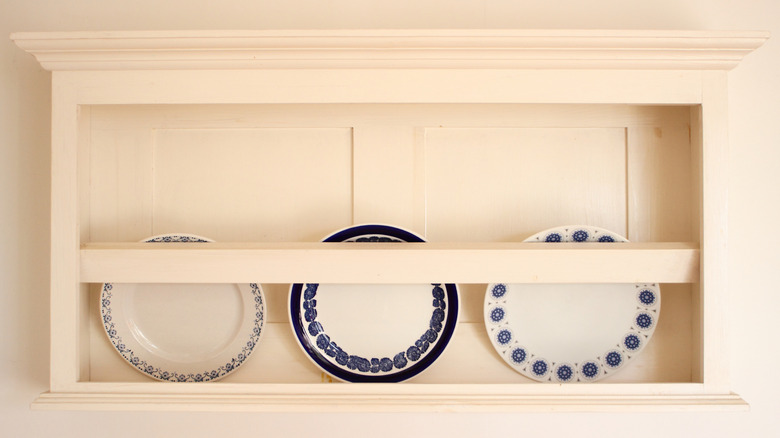
The long reign of minimalism may have guilted you into keeping your precious china and finest tableware hidden out of sight. But the return of decorative plate racks to the trend spotlight is your excuse to display your most treasured pieces front and center. "As kitchens shift toward open storage and personal display, plate racks offer both function and charm. They celebrate imperfect, handmade ceramics, and encourage use of beautiful tableware rather than hiding it away," Jasmine Jhaveri says.
However, if you want your decorative plate racks to read as a reverential nod to the past rather than slyly suggesting that your kitchen is caught in a time warp, Jhaveri recommends putting a fresh spin on this essential staple. "Paint the rack in the same color as the cabinetry for a built-in look," she says. If you truly want yours to stand out, you can add a plate rack in an unconventional shape and leave the rest of your walls intentionally bare.
As much as we may all have loved Gwyneth Paltrow's larger-than-life wall of china, not all kitchens have the space to spare. Fortunately, Jhaveri has a handy workaround hidden up her sleeve. "Install a mini version inside a pantry wall or above a coffee station," she says. With a mix of contemporary designs peppering vintage plates, she is convinced that you will be able to keep this trend from feeling antiquated.