

5 Outdated Countertop Trends To Avoid And 5 To Try Instead
Countertops might be billed as the primary workspace in the kitchen, but they have so much more to offer. Running along the wide expanse of cabinets and islands, they occupy prime real estate in the kitchen. When chosen thoughtfully, they can instantly elevate the look of the kitchen — perhaps even adding some crucial zeroes to the resale value of your home.
However, not all countertop designs and trends are created alike. Some designs, while practical, may have outlived the trend cycle — now keeping the kitchen unflatteringly stuck in the past. We all may have loved the granite worktops that we grew up with as kids, but it is time to explore modern options: Scandinavian-inspired concrete countertops, anyone? Certain finishes have also ticked past their expiry date — here's looking at you, glossy surfaces — while once-popular materials like laminates are no longer in favor.
A higher focus on understated luxury and kindness towards the environment means that a host of exciting options are springing to the forefront instead. Think reclaimed wood laden with character, caramel-hued quartz for adding warmth, and velvet-like matte finishes for a tactile touch. Not sure how to tell apart what's outdated from what's trending? To help you understand the difference between the two, Kerrie Kelly, CEO and creative director of Kerrie Kelly Studio, has drawn up an easy cheatsheet of the countertop trends to avoid and which options to try instead.
Avoid: Speckled patterns
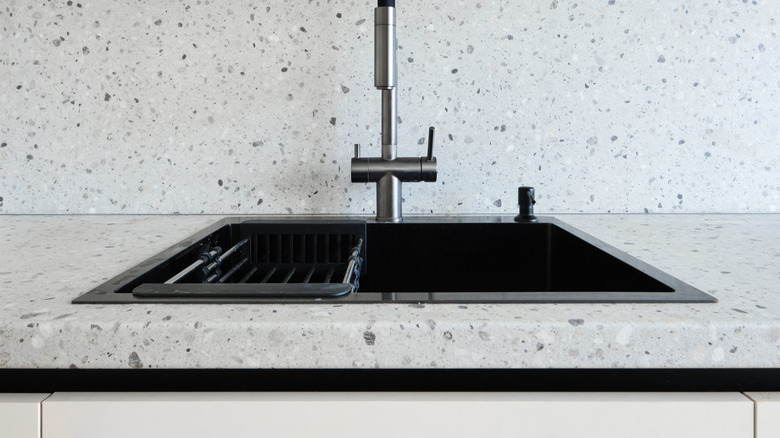
The famous speckled countertops owe their name to their characteristic pattern of small, scattered dots of specks — often created when crushed materials, such as quartz, are blended with other resins to create a grain-like appearance. The fact that speckled stone shows up among the best ways to design a retro kitchen should clue you into the origins of this trend. "Speckled countertops once symbolized durability, but now tend to feel visually busy and nostalgic of the early 2000s," says Kerrie Kelly.
Make no mistake, speckled countertops enjoyed a stellar run — and with good reason. While every last leftover crumb from your hasty breakfast will stand out like a sore thumb on a solid countertop, speckled patterns are more forgiving as they camouflage imperfections and minor stains. The visual density of speckled patterns, however, will limit your other choices in the kitchen. Pairing it with busy patterns, such as mosaic backsplashes or textured cabinetry, can make it overwhelming to the eye.
This ethos stands in direct contrast to the restraint preferred by modern homeowners. "Today's design language favors refinement over randomness — more controlled, organic veining that reads as natural movement rather than scattered dots," Kelly observes. If you are hoping to bring speckled patterns into the modern era, she recommends opting for subdued flecks or tone-on-tone color patterns that can convincingly pass for natural stone. "The goal is to evoke texture, not chaos," she iterates.
Try: Sustainable materials
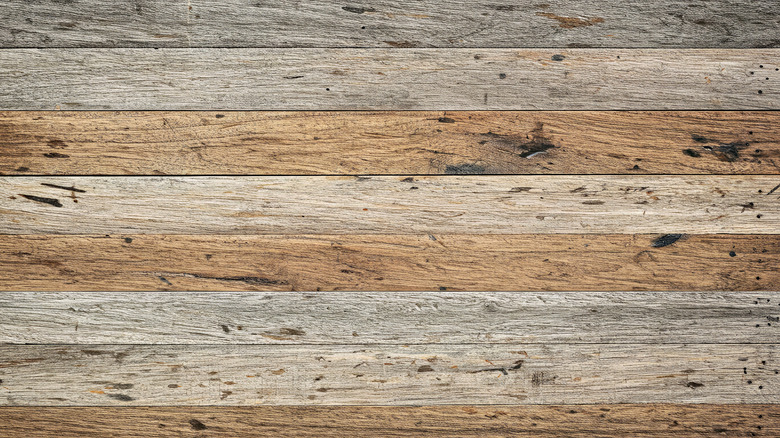
Contemporary homeowners are more conscious of their environmental footprint than ever before. As a consequence, there is a surge in interest in recycled materials and locally sourced options that can reduce your carbon footprint. But perhaps the most compelling reason for embracing an eco-friendly future for your countertops is the dawning realization that sustainability and style can exist together. " Homeowners want longevity — materials engineered to last decades, not years. Surfaces made from natural minerals, recycled content, and low-waste production processes provide both performance and peace of mind," Kerrie Kelly intones.
If you are looking to switch to countertops that are kinder to the environment, the good news is that you won't run out of options anytime soon. The first and obvious place to look is for recycled materials that can reduce waste: industrial glass fragments are often revived to create merry terrazzo surfaces. Your quest for eco-friendly alternatives can also include materials that have been created with renewable resources, such as reclaimed wood rescued from old warehouses and demolished buildings. Materials that can be easily recycled at the end of their life cycle, such as quartz, also deserve a spot on your radar.
When choosing sustainable materials for your countertops, Kerrie Kelly recommends keeping some key principles in mind. "Look for certifications around durability and environmental responsibility, and pair those with timeless design choices that won't need replacing as trends shift," she says.
Avoid: Tiled countertops
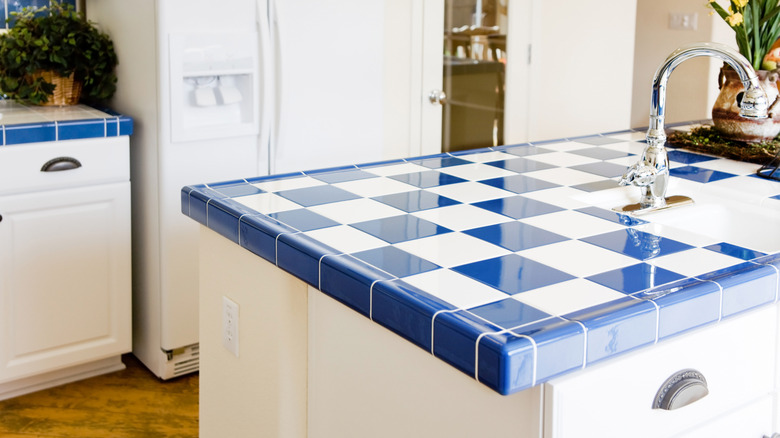
The 1970s loved an affordable countertop trend, so it comes as little surprise that tiled countertops were all the rage for several decades. The name does give it all away: Visually, tiled countertops appear as individual tiles that are installed across the countertop with visible grout lines between each. This trend was most often topped off with a bullnose trim to create a smooth, rounded edge. Since ceramic tiles are cheap and inexpensive to install, this trend unsurprisingly became a mainstay in kitchens through the '70s, '80s, and '90s.
While there have been some murmurs of interest in the resurgence of this design trend, it helps to note that ceramic tiled countertops will cause nothing but headaches in the long run. "Tiled countertops were once loved for their color and DIY flexibility, but the heavy grout lines interrupt the flow of a clean, continuous surface," Kerrie Kelly agrees. Ceramic tiles are prone to cracks and chipping, both of which can trap harmful bacteria. There is also the matter of the grout that needs to be frequently resealed.
When faced with this heavy upkeep, trends have swung in favor of seamless designs — Kelly has witnessed a rise in preference for uninterrupted slabs that lend greater cohesion and visual harmony to the kitchen. "What felt handmade and charming in the '90s now feels fragmented and hard to keep pristine. The modern aesthetic is all about fluidity, easy maintenance, and elevated performance," she points out.
Try: Waterfall edges
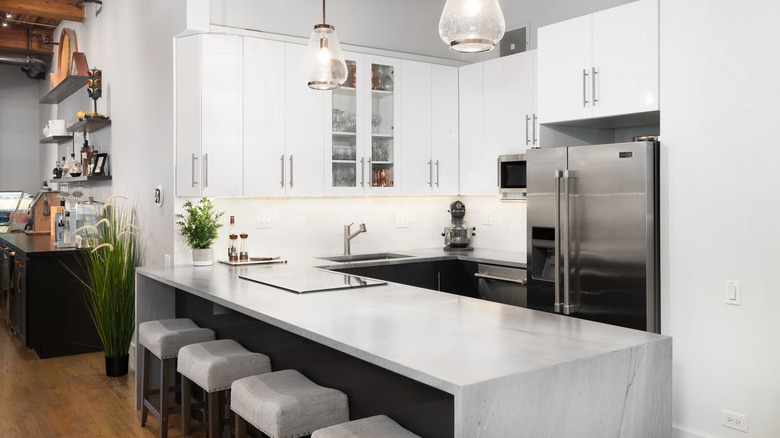
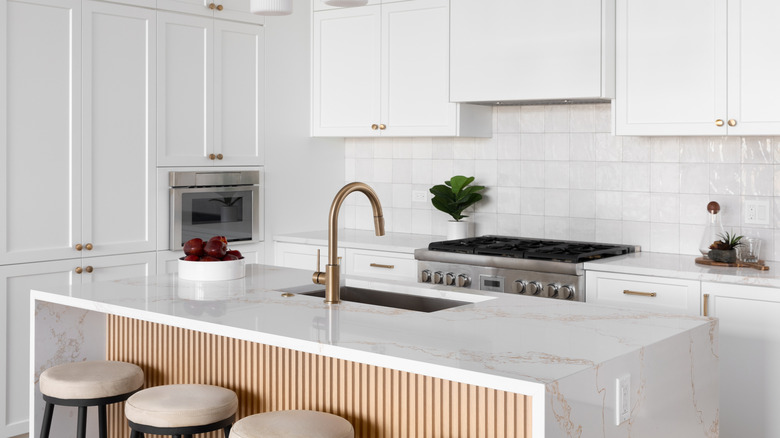
While most countertop materials stop at the edge, waterfall designs are like that straight-A student seeking extra credit. Instead of stopping at the edge, they flow down mellifluously to the floor, negating the need for legs for support. "Waterfall edges turn countertops into architecture — they visually anchor an island while creating a sculptural, seamless flow," Kerrie Kelly says. She believes that this trend has captured the fancy of homeowners because of its design duality: There is drama, but there is also restraint.
However, you won't want to labor under the illusion that waterfall edges are a recent invention, not by any stretch of the imagination. The Art Deco movement of the 1930s and 1940s birthed this trend, with the edges of dressers and cabinets taking on gently curved proportions. Given the inevitable churning of the trend cycle, what's old is always new again, and waterfall edges have been steadily sneaking their way into countertop design in recent times.
When choosing a waterfall edge for your countertop, Kelly recommends working with proportions: Bold veining needs to flow seamlessly down the edge to create a sense of continuity and visual cohesion. "Materials with consistent density and edge integrity make for the most refined result," she says. For your reference, quartz and porcelain are generally counted among the most durable options for the kitchen.
Avoid: Bright colors
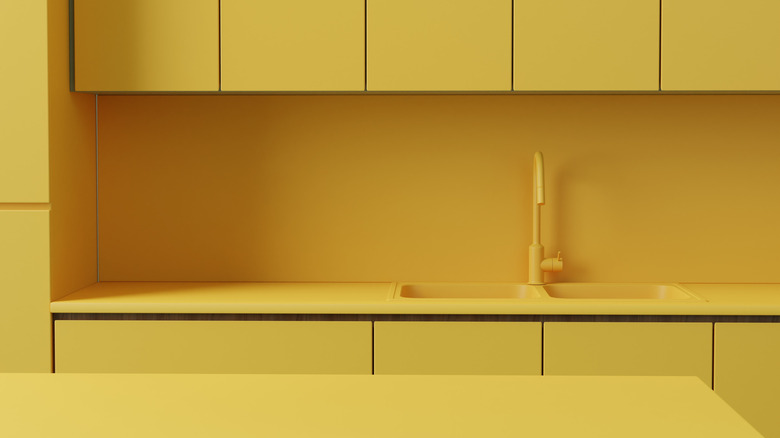
There are several ways to leverage vivid colors to add personality to your kitchen — colorful appliances, for instance, are a one-way ticket to a fun kitchen. However, there is one design element that you'll want to avoid using vivid hues for: the countertops. Think bright, made-you-stare primary colors, such as cherry reds, taxi cab yellows, and electric blues. Why? "Overly saturated countertops can overwhelm a space and limit its longevity," Kerrie Kelly surmises.
It is likely that mustard yellows and avocado greens sprang up as a popular choice, given the nature-inspired bent towards all things decor in the 1970s. While the nature-first memo continues to live on in contemporary kitchens, the trend pendulum has since swung in favor of earthy, grounded hues. Kelly believes that your color palette should now include everything from soothing taupes and creamy neutrals to terracottas and mineral greens.
Soft, light-reflecting neutrals can make a kitchen feel more open and inviting, making even smaller spaces look spacious. Earthy greens, such as sage and olive, are also highly coveted for channeling the cozy, grounded warmth of the outdoors. In Kelly's experience, these choices trump the loud-and-proud pop of bright colors as they whisper, rather than screech, for attention. "They also layer beautifully with mixed woods, brushed metals, and matte finishes, creating spaces that feel curated rather than themed," she adds.
Try: Matte finishes
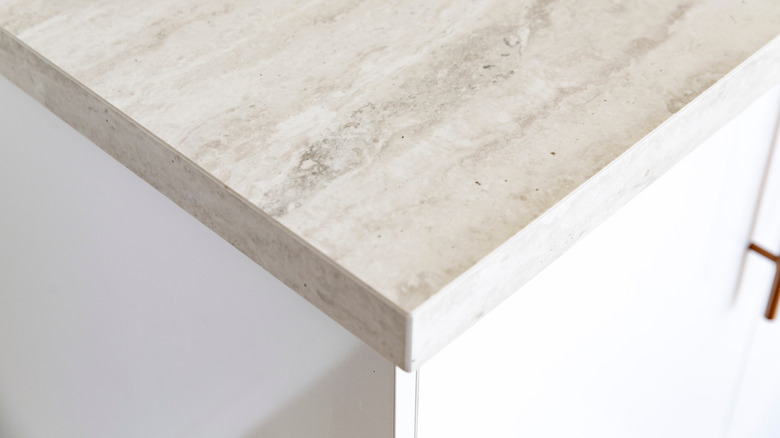
Remember the era of glossy, mirror-like surfaces that nearly blinded your eyes when blasted with too much illumination? Yes, we'd rather not, either. The days of glossy surfaces have long been numbered, and there is a new candidate waiting to take its spot: matte finishes that are perched proudly at the pinnacle of the quiet luxury trend. "They absorb light rather than reflect it, allowing other elements — wood grain, stone veining, or sculptural fixtures — to take the spotlight," Kerrie Kelly enthuses.
There are several reasons to fall in love with matte finishes for your countertops, aside from the fact that they are the darling of insiders and tastemakers. For starters, they are blissfully devoid of the harsh glare of glossy finishes. Instead, any light thrown on a matte surface is gently diffused through the room. "Beyond aesthetics, matte surfaces minimize fingerprints and enhance the tactile experience," she adds. This means that you have greater license to get away with minor blemishes that occur over the course of everyday use.
When shopping for matte countertops, you'll also find a wide world of options to choose from. "Materials with micro-textured, suede, or velvet-like finishes provide that soft-touch feel that designers and homeowners alike crave for everyday livability," Kelly suggests. If you are looking for more time-tested options, matte quartz and honed granite make for a safe choice.
Avoid: Granite
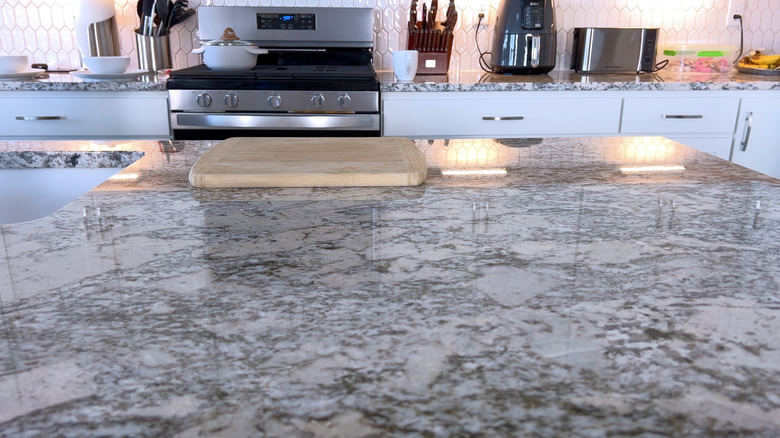
It is a principle as old as time: What goes up must come down. Despite soaring to atmospheric levels, it was always inevitable that the popularity of granite countertops would ultimately come crashing down. "Granite defined luxury for decades, but its distinct patterning and high-gloss finish now feel predictable," Kerrie Kelly explains. Team yours with cherry cabinetry and glossy surfaces, and you have a time machine back to the 2000s on your hands.
As kitchen trends began to shed the heavily tiled look around the turn of the millennium, it is easy to see how granite emerged as a popular contender. A natural yet durable material, it was favored in moody hues for adding a sense of visual richness to the kitchen. However, this ubiquity of granite would prove to be a double-edged sword as the material now feels impossibly overdone. "The shift is toward more nuanced surfaces — matte textures, honed finishes, and larger-scale movement that read as understated luxury," Kelly says.
If you are particularly loyal to granite, there are some workarounds that you can opt for to make this material feel modern rather than dated. Kelly wants you to start by dropping the glossy finish and softening the reflections that it casts around the kitchen. A good mix of contemporary materials, such as rift-cut oak cabinetry or satin brass hardware, can also bring this material into the modern age. "Balancing contrast through texture can instantly make granite feel intentional again," she agrees.
Try: Concrete
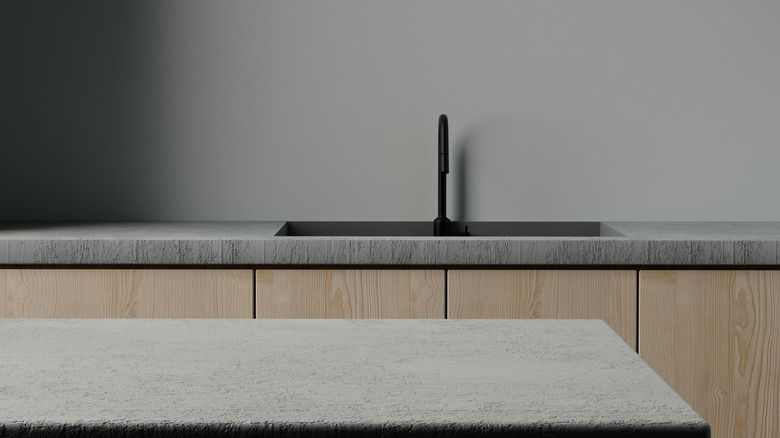
If you thought that concrete was only for warehouses and industrial facilities, you'll want to think again. Concrete is being increasingly favored for kitchen countertops, and it is nothing like the lifeless expanse of industrial grey you always imagined. Instead, modern concrete countertops are infusing a quiet sense of Scandi-style chic into kitchens with luxe matte finishes that develop a graceful patina over time. "Concrete's popularity comes from its raw honesty and tactile appeal — it feels grounded, architectural, and authentic," Kerrie Kelly affirms.
DIY enthusiasts will also take heart in the fact that concrete countertops can be made from scratch in little over a day. After creating a mold with a melamine particle board, the concrete needs to be carefully poured, and any air bubbles need to be flattened. Once sanded and sealed, your new concrete countertop is ready to be installed in your kitchen.
But beyond simply adding concrete countertops to your kitchen, you'll also want to consider how they are styled. "To soften its industrial edge, designers are pairing it with warm metals, natural woods, and soft-sheen finishes," Kelly suggests. For the finishing touches, you can opt for metal stools, handcrafted stoneware, and exposed bracket shelves — bonus points for adding stainless steel appliances for leaning into the industrial memo. Textured linens and woven pendants also score highly in Kelly's book for adding balance. "It's that modern organic contrast that makes concrete so relevant today," she says.
Avoid: Laminates
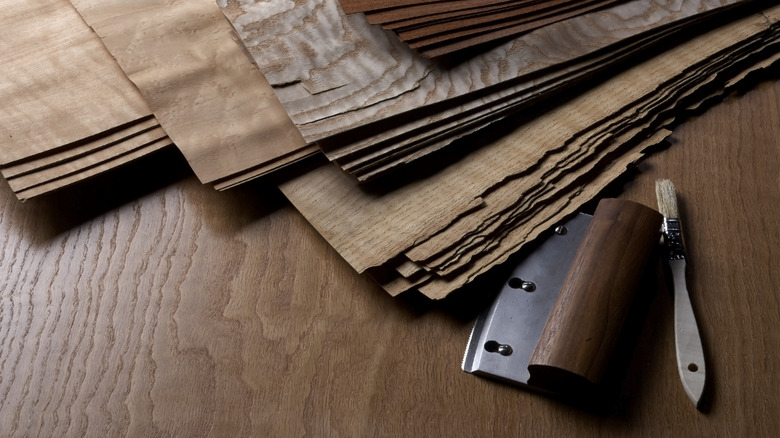
Speckled granite. Textured wood. Brushed steel. If you can dream of it, there is likely a lookalike laminate that can convince you to forgo the real thing. Crafted by applying decorative paper to plywood under hard pressure, laminates promised to mimic the countertop material of your dreams — all at a fraction of the price.
In the post-war world of the 1950s, functionality was championed, and easy-to-install laminates quickly rose through the ranks as a crowd favorite for countertops. However, this material is also prone to chipping and scratches. Certain sections can also get swollen with water damage, and overall, the plasticky finish might also mean that you are lowering the perceived value of your home. "Laminate technology has advanced, but achieving the tactile depth of natural stone or engineered composites is still difficult," Kerrie Kelly rues.
If you are looking to save money on your countertops, laminate is a more affordable option, starting at around $20 per square foot. But Kelly recommends making some strategic design choices. For starters, matte finishes and large-scale veining can make this humble material look more elevated. "Pair with minimalist edge profiles and refined cabinetry to reduce visual seams. Good lighting and tone consistency also help create a higher-end impression," she suggests.
Try: Warm tones
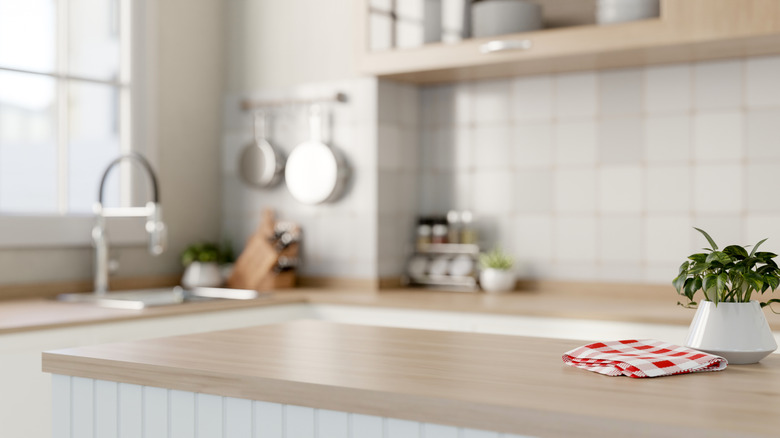
If 1970s kitchen design trends were all about cramming your personality into every inch of your kitchen (groovy, graphic wallpapers, anyone?), the larger design preference has now swung towards the opposite end of the spectrum. With quiet luxury observing a rise in modern kitchens, there is greater interest in functional countertops that whisper the promise of refined elegance.
With the all-white kitchen design trend headed out the door, warmer hues are instead blanketing kitchen countertops. "Warm tones connect people to comfort and nature — a counterbalance to the cool minimalism of recent years. Creamy beiges, soft clay neutrals, and toffee-inflected stones are leading the way," Kerrie Kelly notes. So, what does this mean for your choice of material? If you are looking for an oldie but a goldie, the timeless allure of marble will not let you down. Quartz doused in the cozy hues of beige can work as well. If granite has your heart, it helps to look for caramel-toned options.
Kelly believes that you can also enhance the sense of warmth in your kitchen by opting for materials with gentle movement that respond differently to changing light conditions, such as mineral composites or sintered stone. "Pairing these hues with brushed brass or walnut accents adds depth and timelessness, resulting in kitchens that feel both sophisticated and lived-in," she signs off.