

9 Small Changes That Make Tired Kitchen Cabinets Feel New Again
Updating your kitchen cabinets from scratch can be a costly and time-consuming process, and it isn't always realistic when you have a busy schedule or tight budget. However, if you're looking to revive worn cabinets without a complete overhaul or replacement, you'll be glad to know that there are some relatively simple ways to give them a refresh. We reached out to Kylie Mawdsley, a home design expert, blogger, and founder of Kylie M. Interiors Design Consulting, to get her advice on the matter.
Mawdsley offered plenty of suggestions on how to refresh your cabinets without having to call in the professionals. From simple tips like switching up the color scheme — Mawdsley also happens to be a professional color consultant — to swapping out your hardware, she has several excellent ideas for giving your kitchen a new look. The following tips vary in terms of difficulty, so while having a few DIY skills will certainly help you tackle this project, you don't have to be a master. Read on for expert advice on how to make your tired cabinets feel new again.
Update the hardware for a new look
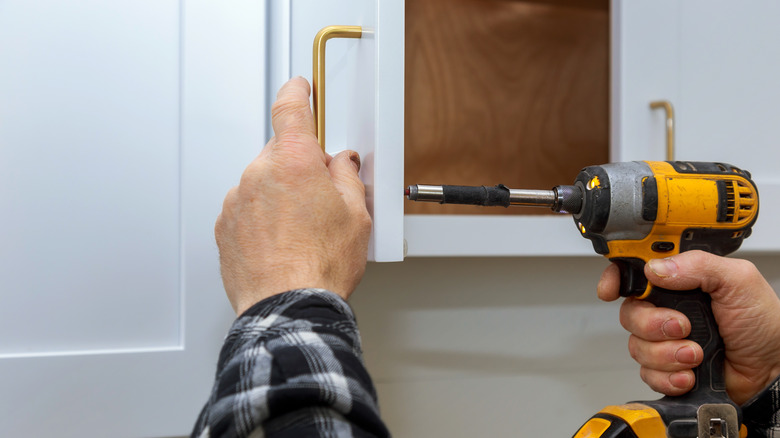
If you're looking for a fast way to alter the appearance of your cabinets, swapping out the hardware is a small upgrade that can make a big statement. Finding a new set of doorknobs or drawer handles can instantly enhance their overall look. That said, it's also important to consider the overall design scheme before purchasing new hardware. In terms of color, Kylie Mawdsley recommends considering whether your upgrades will work with the rest of your kitchen. "A lot of people love black hardware," she explains, "but it can look really high-contrast and harsh in some white kitchens."
Updating the hardware also lets you keep up with current design trends, meaning your cabinets will look fashionable even if they're far from new. You could embrace the unique charm of vintage ceramic knobs, or opt for a classic option if you don't want to keep switching out your cabinet hardware to chase the latest styles. "For a timeless look, polished nickel is often the best bet," suggests Mawdsley. However, she also warns that oil-rubbed brass and bronze can be a little trickier to incorporate into some kitchens, due to clashing design styles.
Give your cabinets a fresh coat of paint or stain the wood
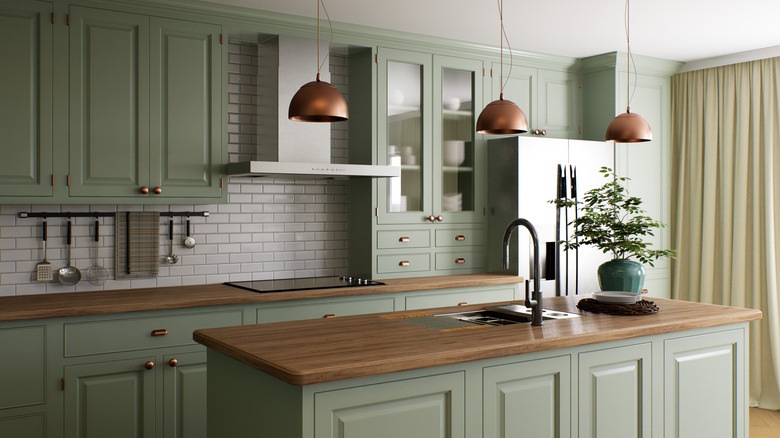
According to Kylie Mawdsley, painting your kitchen cabinets is the best way to achieve the most noticeable results. "While it takes longer and costs more, the potential bang for buck is WAY bigger!" says Mawdsley. If your cabinet doors are made from real wood, you may prefer to stain them to showcase the natural wood grain. "Moderate grain and stain can go a long way," she notes, "so don't rush to paint them." While Mawdsley cautions that staining is more time-intensive than painting, the outcome is worth it if you're working with high-quality wood.
Bear in mind that finding a suitable color is not as simple as picking your favorite hue at the paint shop. "Don't get hung up on the color YOU want for your cabinets," warns Mawdsley. "Consider your surrounding finishes and the colors that best suit them." You can add pops of your favorite color to your kitchen with minor decor additions or alterations, but the cabinet paint should be selected with the overall color scheme in mind.
Add lighting to brighten up your kitchen space
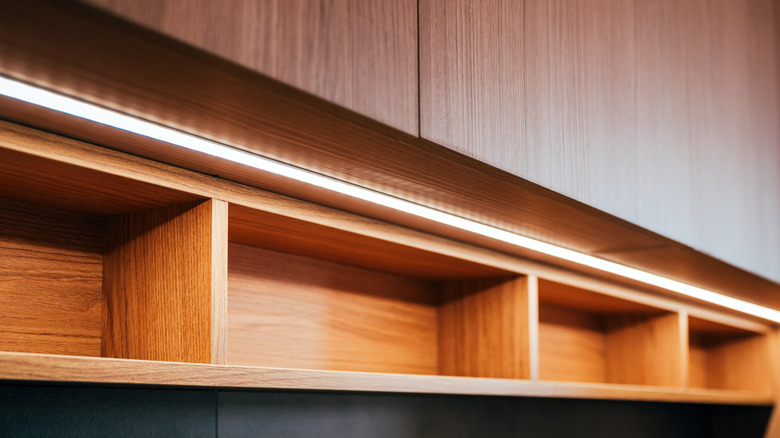
The right lighting can transform your kitchen, and strategically placed accent lights can make even outdated cabinets look their best. Not to mention, insufficient lighting can make any space look tired and in need of an upgrade. If your upper wall cabinets have glass doors, adding interior lighting can provide a touch of dramatic flair. However, if you're highlighting the contents of your cabinets, you'll need to ensure you keep everything neat and tidy — nobody wants to see your mismatched Tupperware collection.
You can also use undercabinet lighting for a more modern vibe. Besides bathing your backsplash and countertops with a charming glow, undercabinet lighting can be functional, too. Whether you want adjustable mood lighting in the evening or extra visibility for food prep, the additional light offers practical illumination while enhancing the overall look of your kitchen. Battery-powered options work well, as they're safe and easy to install without needing an electrician.
Match your cabinets with the backsplash or countertops
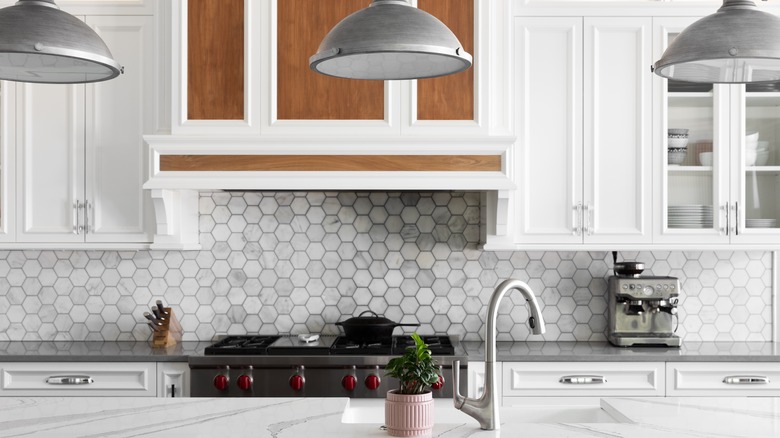
Unless you want the small changes to your cabinets to necessitate a kitchen-wide redecoration, be sure to factor in existing features. "Consider your surrounding finishes and the colors that best fit them," recommends Kylie Mawdsley. "In many kitchens, the backsplash calls more shots than the countertop, as it's on the same vertical plane as the cabinets, and your eyes connect them first," she explains. Mawdsley notes that there's a bit more wiggle room when it comes to countertops, as they're not level with the cabinets.
When choosing a new color or finish, you should work backwards from what you already have to avoid ending up with cabinets that clash with the rest of your kitchen. Even with a seemingly simple color, you'll want to test it against your existing tiles or countertops. For example, a white paint with cool undertones can look drastically different next to one with a warmer hue. "If you want white cabinets, consider painting them the same white as your trim," advises Mawdsley. "If that's too bright for your backsplash and countertop, it also means your trim isn't the right color for your kitchen."
Consider refacing the cabinets
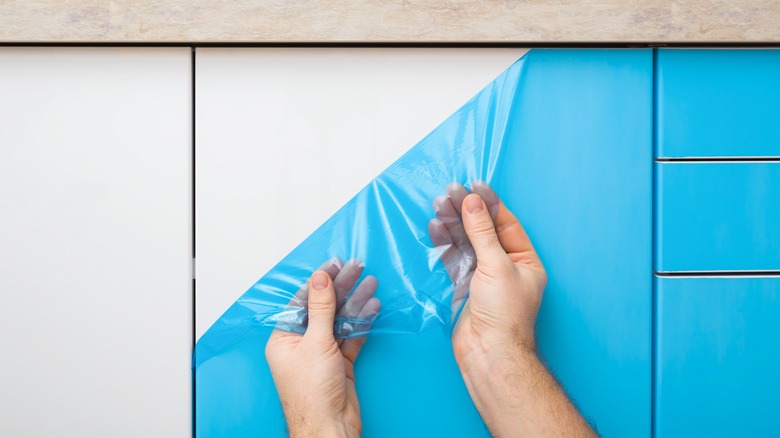
Depending on the degree of wear, it might be worth refacing your cabinets instead of painting them. According to Kylie Mawdsley, refacing may be the best option if the boxes are still in good condition, your current layout doesn't need changing, and you can't justify a complete replacement.
Rather than completely rebuilding your cabinets, you can just update the doors. This might entail applying a new veneer or laminate coating, adding a layer of peel-and-stick wallpaper, or replacing the doors entirely. Unless your existing kitchen has a unique custom layout, you should be able to source cabinet doors that fit. Refacing cabinets is also a great opportunity to switch up their style. For example, you could swap out traditional cathedral-style doors for timeless shaker doors, or perhaps for more modern slab designs. It's also worth considering different materials — for instance, adding glass panes to the doors.
Create contrast with the rest of your kitchen
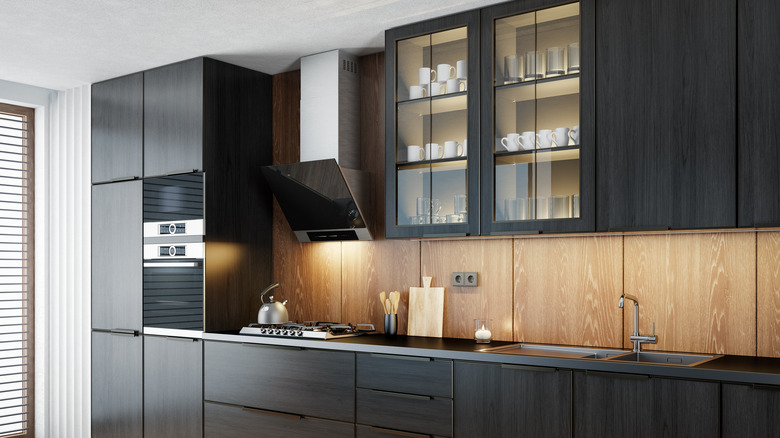
Matching the color of your kitchen cabinets with the backsplash and countertops can create a more cohesive aesthetic, but you may prefer a high-contrast effect. Whether you're leaning towards a maximalist design scheme or trying to make a statement, opting for distinct yet complementary colors that create a visual pop can help you achieve it. However, there's a difference between simply choosing any colors on the wheel and selecting combinations that work together to maintain continuity.
When selecting a color palette, stick to three tones: a main, a secondary, and an accent. Use these in decreasing order — about 60% of your space should feature the main color, 30% the secondary, and 10% the accent. In addition to the cabinets, backsplash, and counters, consider your walls, flooring, and appliances as part of the palette, too. For example, if all your kitchen appliances have a stainless steel finish, you may want to avoid choosing a gray palette for the rest of the kitchen elements.
Use crown molding or trim detailing for an elegant touch
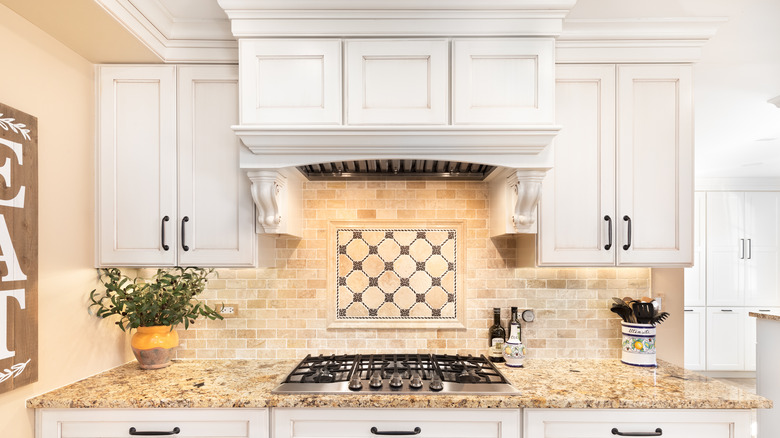
You might think of crown molding as a feature a kitchen either has or it doesn't, but you can actually retrofit it to your cabinets. Crown molding comes in a range of styles, from smooth, flat profiles to more detailed and elaborate options. You can add molding to the top of your cabinets and even stretch it up to meet the ceiling, depending on the height of your space.
In addition to adding crown molding atop your cabinets, you can also use it around the door trim or encase your range hood for a decorative touch. In any case, choose molding that matches the existing style of your kitchen to maintain a sense of continuity. Otherwise, it may end up looking like an afterthought rather than an intentional design feature. Be sure to match the wood stain or paint color with your cabinets for a polished, unified look.
Remove cabinet doors for open shelving
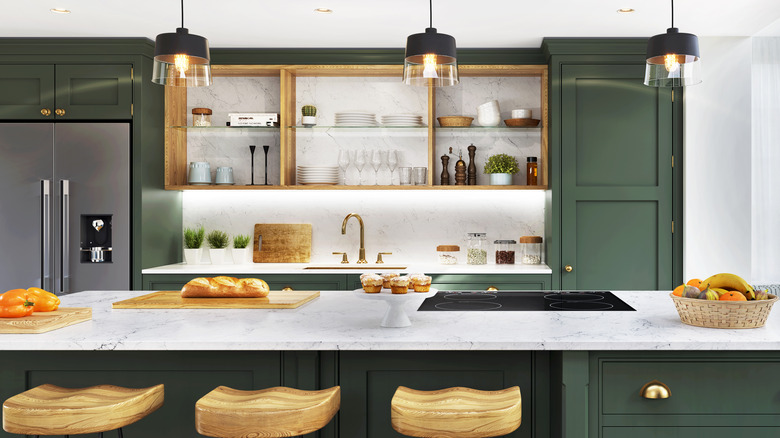
While you might be inclined to spruce up your doors with paint or trim, another option is to remove them altogether. Open shelving may not be suitable for your kitchen, but if you're careful about keeping your space tidy and want to show off some unique pieces of pottery or keep certain items within easy reach, it's a great option. Removing the doors from your upper cabinets will the room feel more spacious, which can be an advantage in tighter kitchens. It also works well in open-plan kitchen layouts by limiting visual barriers and creating a more airy and expansive view, allowing the gaze to flow more smoothly around the space.
To start, you'll need to remove the doors and hinges, then fill in the holes with screw caps or wood filler. Sand everything down, then give the frame a fresh coat of paint. Make sure your cabinet interiors are in good shape, or paint them as well. Alternatively, lining the insides with printed wallpaper could make a playful addition to your kitchen decor. Most importantly, avoid overcrowding the shelves and dust them regularly to ensure this change improves the aesthetics of your kitchen, rather than creating clutter and mess.
A deep clean can revive your cabinets
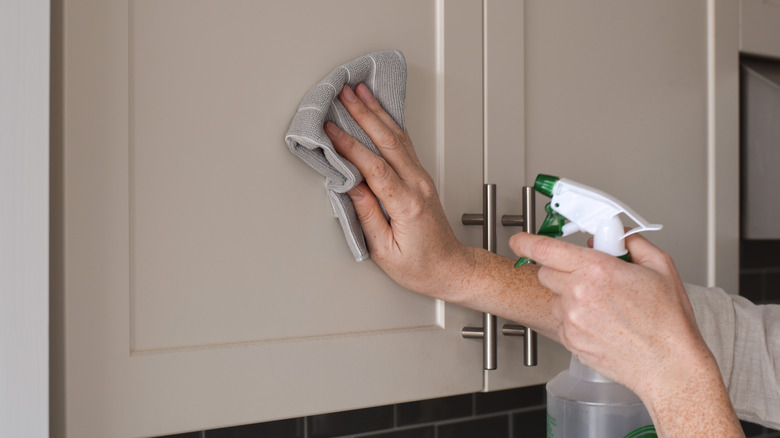
It might not seem like much, but sometimes a deep clean is all it takes to liven up tired kitchen cabinets. Even if you're giving the doors an occasional wipe-down, chances are you're not removing all the grime that accumulates over the years. Even with a reliable exhaust fan, cooking grease, food splatters, dust, and sticky fingerprints can build up over time. A deep clean is necessary to properly remove this residue, which causes the cabinets to look streaky, dull, and grimy.
Nevertheless, avoid pulling out the heavy-duty cleaning supplies, as it's important not to use anything abrasive that could damage the surface of the doors. You also need to be careful not to use too much water when cleaning them, as excess moisture can damage some materials. Instead of furniture polish, try using a mixture of dish soap and warm water applied with a microfiber cloth. Once you're done, your cabinets will be clean and shiny, just like when they were first installed.