

15 Popular Food Names Everyone Pronounces Wrong
We've all been there, staring down at a menu, trying to decipher words that bear no resemblance to anything we've ever read before. Crudo. Jus. Fricassee. In your moment of panic before the waiter reaches your table, you are probably more concerned about what these mysterious words mean rather than how to pronounce them. But the truth is that you don't need to be at a fancy restaurant to stumble upon foods that are difficult to pronounce, and like it or not, there are probably a few that you have been getting wrong for quite a while now. You shouldn't feel embarrassed about it, though. Chances are, you only pronounce them that way because that's how everyone else does.
Some of the most frequently mispronounced foods are just tough for Americans. Italian foods, for example, often contain one or two c's, which, for those who do not speak the language, could be interpreted as making an "s" sound, a "ch" sound, or a "k" sound. Other words are just so similar in spelling to a different food that they become easily confused. Cacao and cocoa look remarkably similar, and they describe very similar ingredients. Read on (if you dare) to discover the foods that you've been mispronouncing all along, or take a smug victory lap as you discover that, contrary to what all your friends have been saying, you've been pronouncing turmeric correctly this whole time.
Gyro
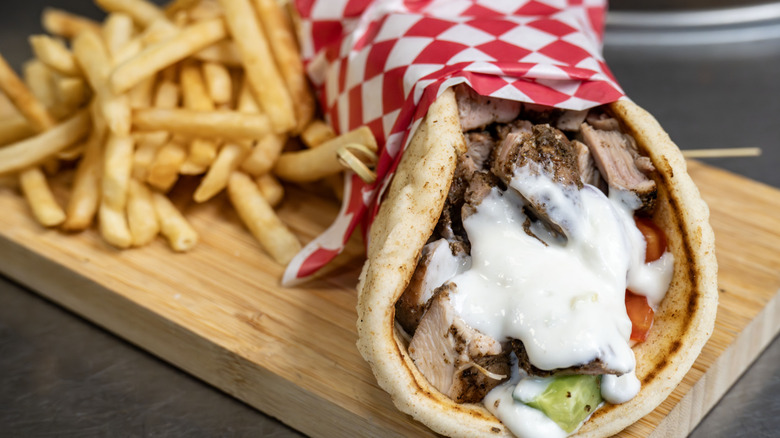
A gyro is a delicious Greek street food made of rotisserie-roasted spiced meat served with pita bread. Tzatziki is usually included to round out a flavor-packed wrap akin to Turkish kebabs. If you've ever ordered one, chances are, you pronounced the word with the "g" sounding like it does in the word "gin" and the "y" sounding like it does in the word "fly," resulting in "jy-ro." But in reality, it should sound more like "yee-ro." The only thing correct about the typical U.S. pronunciation of gyros is the emphasis on the first syllable. Gyros comes from the Greek word for "turn," which makes sense given that the slow turning of the rotisserie is a key part of the food's flavor.
To make things even more confusing, "gyros" is actually the singular of the word, not the plural, so if you're ordering one of them, you would ask for one gyros. The plural is "gyri," pronounced "yee-ree." Luckily, the gyros has become so popular throughout the country that most vendors will know what you're asking for when you ask for two "jy-roes."
Bruschetta
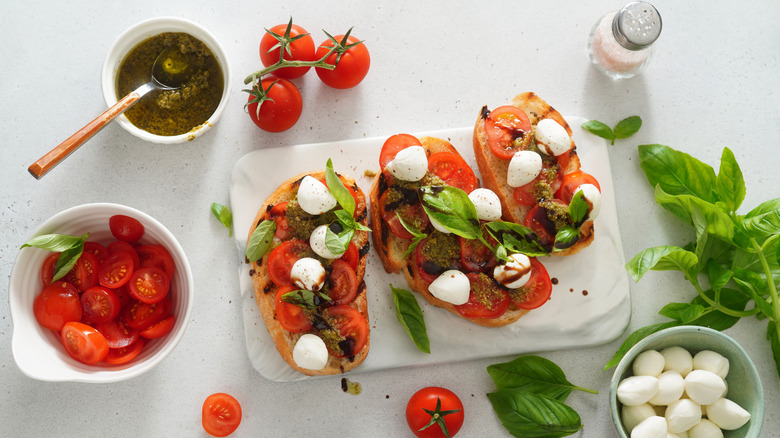
Do you correct people who say "broo-sket-ah" and inform them that it's actually pronounced "broo-shet-ah"? The way to say bruschetta may seem pretty obvious, as "sch" makes a "sh" sound in various foreign-language words that we've adopted into English, like the Germans' schadenfreude, the Russians' borscht, and the Yiddish word schtick. But when it comes to the crispy Italian appetizer, that "sch" is, in fact, pronounced like it is in countless English words like school, scheme, and schedule.
The word comes from the Italian verb bruscare, meaning "to toast," and therefore refers to the crunchy bread base rather than any particular topping. Diced tomato is a common addition, but just because the menu lists bruschetta does not guarantee that the dish that is brought to your table will include it. And since we're getting technical about it, let's also establish that the plural of bruschetta is bruschette, not bruschettas. So, if you go to an Italian restaurant and ask what toppings come with the 'broo-sket-ee,' you will be impressing your server on multiple levels.
Açai
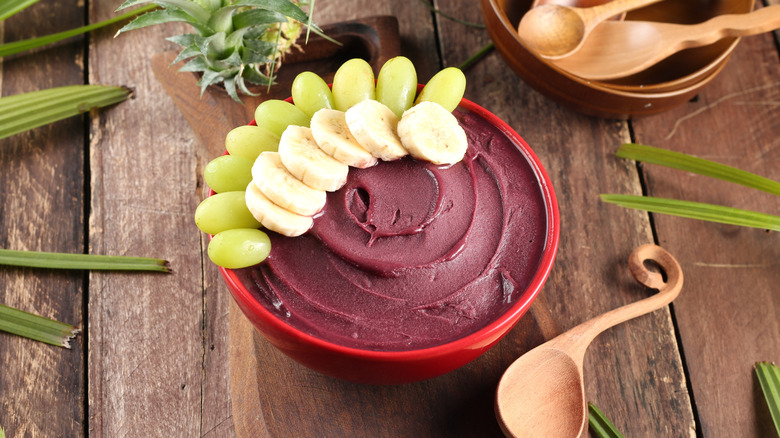
Açai poses a challenge for American speakers because the letter ç is not in the English language. Even if you knew that it sounds like an "s," you might still struggle to come up with the proper pronunciation for this dark purple fruit. You might have heard it called everything from "ah-ky" to "ah-sy" to "ah-kay." You might even have heard "ah-ka-see," which actually isn't as far-fetched as it sounds because, contrary to many common pronunciations, the word contains three rather than two syllables.
Açai, or açaí to be more accurate, is a fruit from Brazil that is probably most commonly known to Americans as the base ingredient in those gorgeously Instagrammable bowls of purple puree called açai bowls. The correct pronunciation of the word is "ah-sy-ee," with the emphasis on the last syllable. This can be a bit tricky to master, but as long as the letters sound about right, you should get a pass. If you've never had this fruit, either in its natural, savory form or the viral, heavily sugared pureed version, we've got a rundown of what açai actually tastes like so you can be well-versed in more than its pronunciation.
Gnocchi
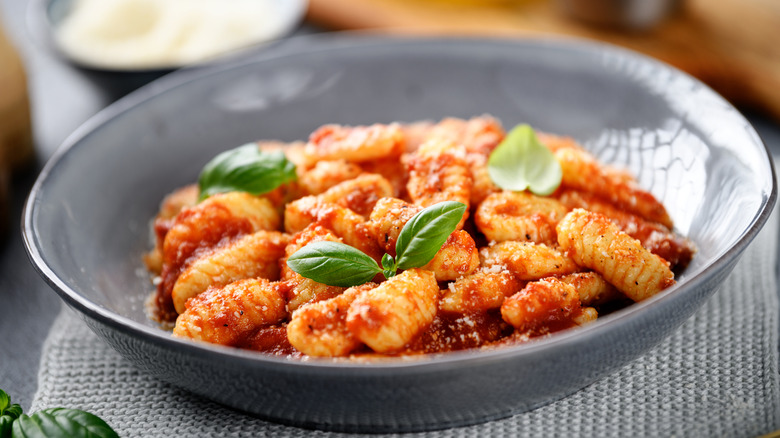
You don't get the letters "gn" at the beginning of many English words, and when you do, such as in the words gnome, gnat, and gnaw, we simply pronounce them as if the g wasn't there. If you were to take this approach with the potato-based Italian dumpling called gnocchi, you would say something along the lines of "noh-kee" or "noh-chee." An Italian speaker, on the other hand, would pronounce the g and the n differently, like an "ny": "nyoh-kee," with the emphasis on the o. The "cch," meanwhile, makes a hard "k" sound.
Interestingly, if you do a quick internet search for the pronunciation, some English dictionaries ignore the Italian pronunciation and simply go for the Anglophone "noh-kee" — so perhaps our dogged mispronunciation has finally cut short the pursuit for accuracy. If you want to sound like you know what you're talking about, though, "nyoh-kee" is the only way to go. And if reading this has gotten you craving the springy Italian delicacy, we've got a roundup of gnocchi recipes for you to try.
Pho
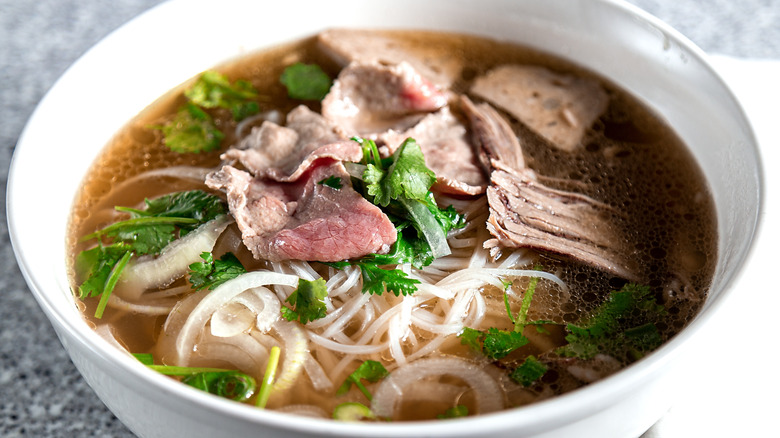
Pho has become wildly popular all over the world in recent years. The Vietnamese soup is made with rich, meat-based broth and noodles, and usually contains beef. It is often topped with bean sprouts, fresh herbs, and peppers, creating a flavor bomb of deliciousness and comfort. Despite having only three letters, the word is often mispronounced. In the U.S., a lot of eager customers refer to it as "foe," as in "friend or foe," when in truth, the "o" is softer, sounding more like "uh."
The confusion probably stems from the translation of the Vietnamese letters into the English alphabet. The word first appeared in English in 1935, when the original spelling of phở was anglicized to pho. For those who saw the word in English first and had never heard it pronounced in Vietnamese, it was logical to treat it the same way we do the words phone and phobia, skipping over its unique context entirely.
Worcestershire sauce
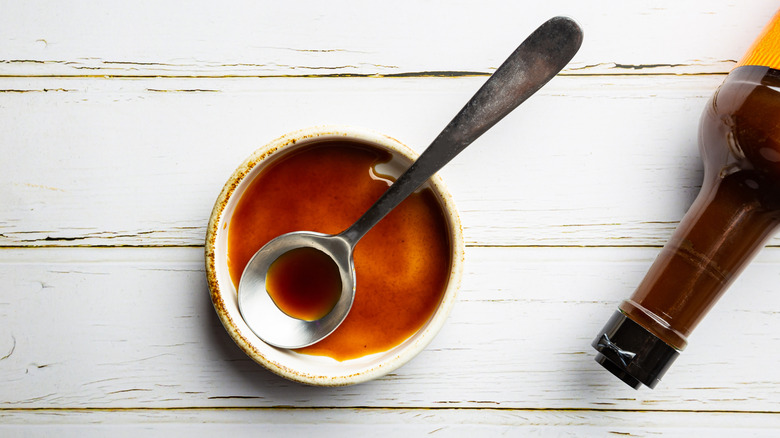
There are many examples of British English and American English being entirely different languages. There are vocabulary differences, such as bin instead of trash can, boot instead of trunk, and lorry instead of truck, but perhaps the most confounding tongue-twister of all is the fiendish ingredient known as Worcestershire sauce. Is it pronounced "Wor-sess-ter"? "Wur-ster"? "Wor-sess-ter-shyr"? Or "Wor-sess-ter-sheer"? Or is it, to quote the unforgettable TikTok video, pronounced "Roy's sister Sheree?"
Luckily, there is a correct answer. Just ask the good people of Worcestershire, the town in the West Midlands of England, for which this vinegar-based condiment was named. It is "Woo-ster-sher" or, if you want to go all the way and adopt the British accent, "Woo-stuh-shuh." It may comfort you to know that even Gordon Ramsay says it wrong. In the course of correcting an American cook, he insisted that the word was pronounced "Woosh-ter." Perhaps the best takeaway from that exchange is that the most important thing when it comes to pronouncing this particular word is confidence.
Poke bowl
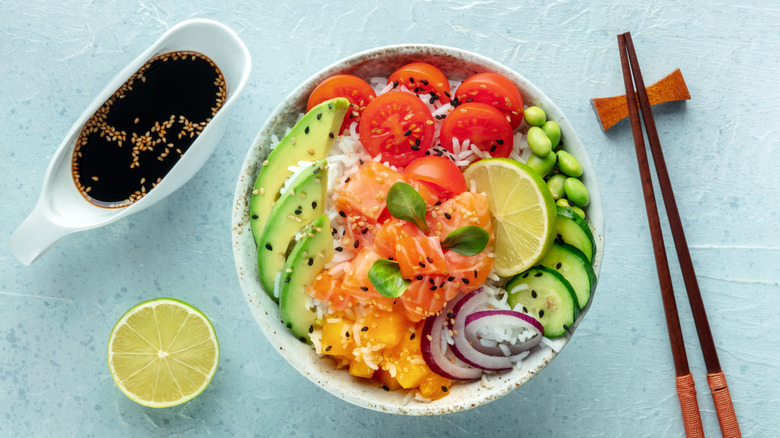
Like açai bowls, poke bowls have become popular in recent years thanks to their aesthetic appeal. To put it more plainly, they look great on an Instagram feed. Bursting with color, poke bowls are often arranged by ingredient, creating a painter's palette with food. Raw or cooked fish, veggies, and seeds are common choices, while vegetarian protein sources such as tofu and chickpeas are also popular. Since poke is also an English word (albeit with a totally different meaning), it's reasonable to assume that a poke bowl would be pronounced the same way. However, the word actually stems from the Hawaiian verb "to cut" and is pronounced "po-kay," not "poe-k" or "poe-kee."
Originally, poke bowls contained only cubes of raw fish, seaweed, and kukui nuts, but now you can find nearly endless iterations. In fact, the dish is so open-ended that it can be hard to know where to start. If you're stuck on inspiration, make sure to read our guide for making poke bowls at home.
Charcuterie
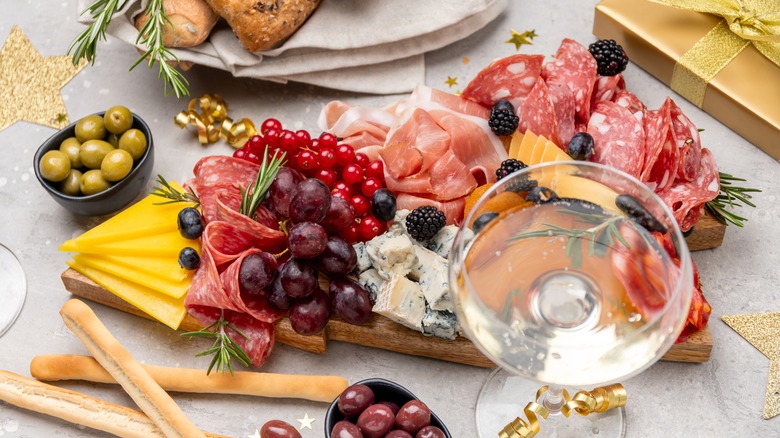
Who doesn't love a charcuterie board? Something about having all that cheese and meat spread out on an artsy board makes this indulgent appetizer seem classier than its components might be, nutritionally speaking. Then, there's the fact that the word itself is French, which, as we know, automatically makes a dish 50% more sophisticated than it would be with an English name. There is, however, one small snag with this francophone word: pronunciation. Is the "ch" pronounced like church, Christmas, or chef? And what about the rest of those letters?
The first question has an easy answer. That "ch" is pronounced like other French words adopted into English, such as chef, chic, and chiffon. But things get a bit murkier when you get to the rest of the letters. If you've been pronouncing it "shar-coot-er-ee," you're not wrong, exactly, but you aren't pronouncing it the French way. In France, they all but drop one syllable, making the word sound more like "shar-coot-ree." And if you're mouth is watering at the very mention of the dish, make sure to check out our ultimate guide to building a charcuterie board, no matter how you choose to pronounce it.
Arancini
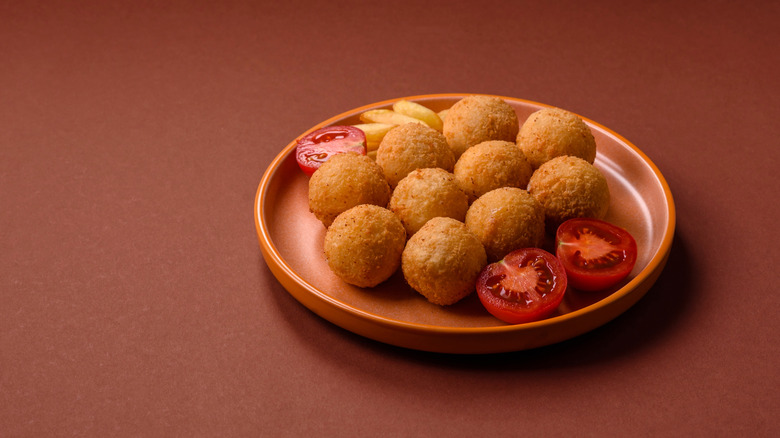
Ah, Italian. A beloved cuisine and a language that American diners struggle to get to grips with. If you go to an Italian restaurant, you may well find arancini on the menu. These fried balls of rice are crispy on the outside, often cheesy on the inside, and full of salty, creamy goodness. But how are you supposed to pronounce that ever-confounding Italian "c"? Do you say "ah-ran-see-nee," "ah-ran-chee-nee," or "ah-ran-kee-nee"? This one is pretty straightforward. It's the second one, "ah-ran-chee-nee."
Things get a little more complicated when you think about the singular and the plural. For the most part, this doesn't come up at restaurants because it's rare to be presented with a single ball of fried risotto. However, if you do, make sure to refer to this solitary item as an arancino rather than its plural, arancini. The word itself has nothing to do with rice or frying, but with a fruit. Due to its shape, the arancino is named after the word for little orange.
Macaron

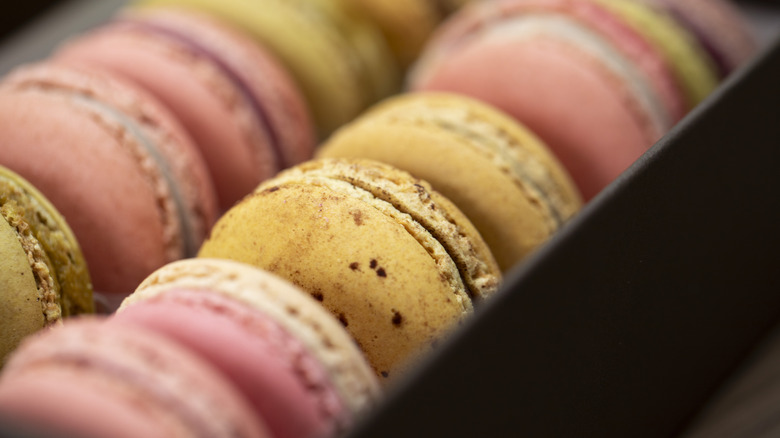
If you've never paused mid-sentence to deliberate over whether to use the word macaroon or macaron, perhaps you've just been assuming they were different pronunciations of the same word all this time. It's easy to see where the confusion comes from. Both items are sweet treats made of meringue that are the size of small cookies. However, that's where the similarities end. Macarons are a delicate French confection made of brightly colored meringue disks sandwiching a sweet filling. They are notoriously hard to make and are so beautiful to look at that it's a shame to eat them.
Macaroons, on the other hand, are small cookies made of egg whites, sugar, and desiccated coconut, shaped into balls and often emerging from the oven browned and spiky. They are not, to put it mildly, in the same league as the breathtaking macaron when it comes to appearance.
Unfortunately, we're about to make the confusion between these two confections all the more thorny by revealing that the French spelling of macaron is, in fact, macaroon. The coconut treat was named after the dainty French cookie, and some dictionaries even list macaron as one of the definitions of macaroon just to mess with our heads. Does that clear things up? We didn't think so.
Focaccia
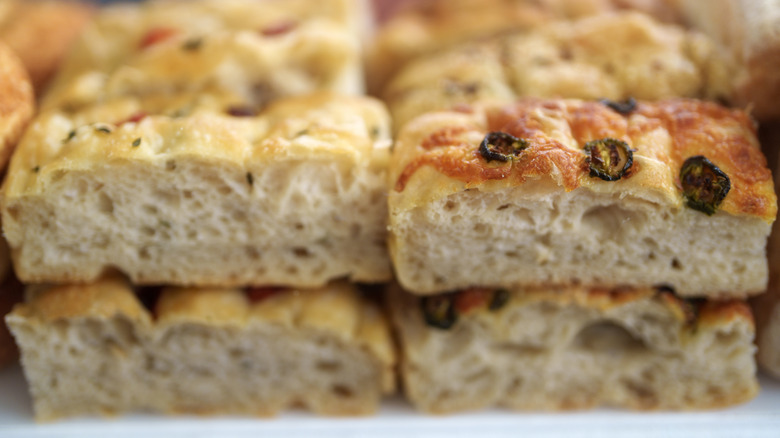
Are you a "fo-ka-sha" person or a "fo-katch-ah" person? Maybe you're neither. In the U.K., it is not uncommon to hear the word pronounced with an extra syllable, as in, "fo-katch-ee-ah." Apparently, there are even some people out there who say "fuh-ka-ka," too. When it comes to Italian breads, there is reason to be intimidated. In addition to focaccia, there is ciabatta, fugassa, friselle, and ciriola, to name a few. All of them pose complications for English speakers, but focaccia is perhaps the most popular and difficult of them all. That said, most of us do not have a choice but to say the word out loud because this oily, airy flatbread is irresistible. As it turns out, focaccia is the perfect recipe for novice bakers, too.
So, how is it pronounced? Luckily, it isn't as tricky as gnocchi or charcuterie. It is simply pronounced "fo-katch-ah." Like ciabatta, which was named after the slipper it resembles, focaccia is not named after food. Instead, it comes from the plural Latin word for hearth, focacia.
Turmeric
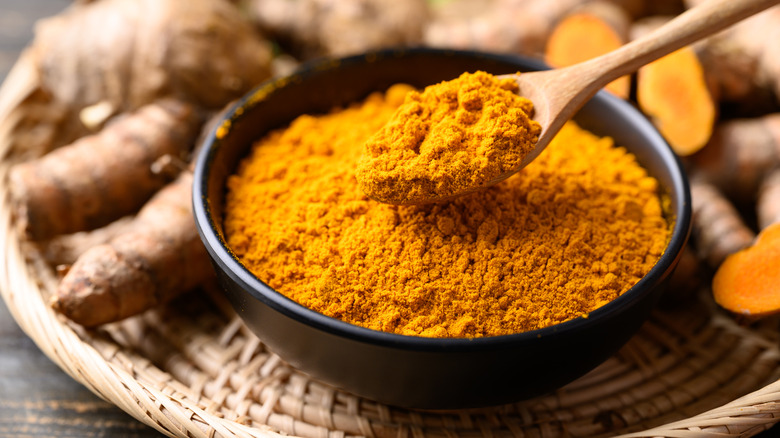
Turmeric is an unusual example in the world of mispronounced foods for several reasons. For one thing, the English name for this Indian herb has been in the English language since the 16th century, meaning that we have absolutely no excuse to be getting it wrong in the year 2025. For another, there aren't any tricky combinations of letters that sometimes make different sounds, like the different ch sounds in charcuterie and bruschetta. And yet, no one seems to be able to agree on whether it's pronounced phonetically, as in "tur-mer-ick," or non-phonetically, as in "too-mer-ick."
Even some dictionaries seem nonplussed by the whole thing. While the Cambridge Dictionary opts for "tur-mer-ick," Merriam-Webster provides both versions. According to the American Heritage Dictionary, which also lists both pronunciations, the 16th-century origin of the word came from the Middle English termeryte, which was similar to the French terre mérite and the New Latin terra merita, meaning earth roots. If they are indeed related, it would seem that the "r" should, in fact, be part of the pronunciation, since it's difficult to say "terra" without the "r." However you pronounce it, though, it's worth buying, because there are countless delicious uses for turmeric that you won't want to miss out on.
Cacao
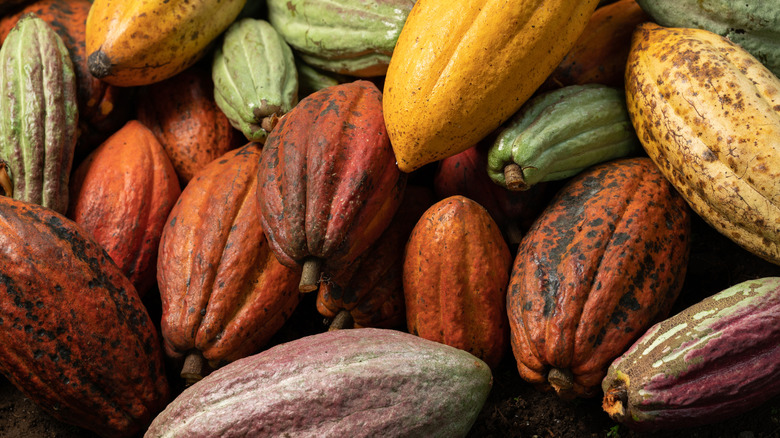
If you've ever wondered what the difference between cacao and cocoa is, you probably don't have dyslexia, because those of us who do have probably been reading them as the same word this whole time. And why wouldn't we? Cacao and cocoa are key ingredients in chocolate, and they both come from the same plant. However, the way they are processed is different. They both start with the cacao plant, which produces cacao pods containing cacao beans. But when you get to the grocery store, you will see options for cacao (often in the form of cacao nibs or cacao powder) and cocoa. The former is the less processed version of the bean, which has been dried or cold-pressed. Because of its minimal processing, it retains more of its bitter flavor.
Cocoa, on the other hand, is made from beans that have been fermented and roasted, which gives them a rich, nutty, smooth flavor. Although both ingredients have a distinctly chocolatey taste, it's important to know which one your recipe calls for to achieve the desired results.
Kefir
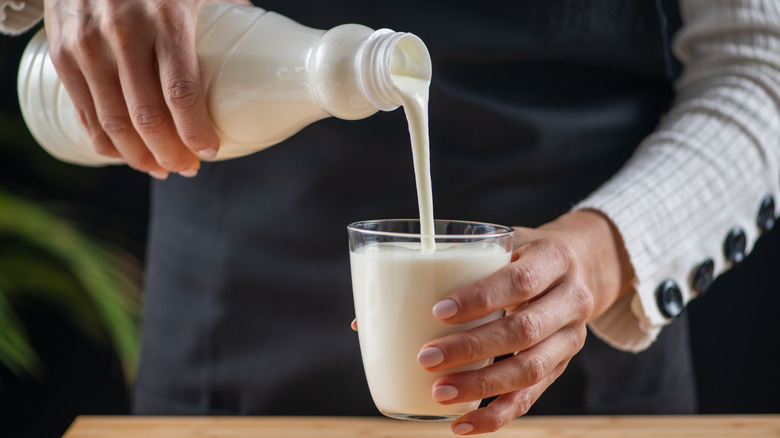
Gut health has had a meteoric rise in popularity in recent years, and with it, foods that supposedly support a healthy gut microbiome have become the darlings of the food and nutrition world. Kefir is one of them. The sour drink is made from fermented milk and is touted for containing beneficial yeast and bacteria for our gut health. But how do you pronounce it? You might have heard everything from "keh-fur" and "kee-fur" to "keh-feer" and "kee-feer." In reality, it is none of these, though the difference is subtle. The correct pronunciation is actually "kuh-feer," with the emphasis on the second syllable.
The drink originates from herding communities in Russia and Turkey, and the name can be traced to the Turkish word for "good feeling." Such an etymology supports the theory that kefir is good for your health, but you don't have to take our word for it. Add some kefir to your overnight oats and thank us later.
Quinoa
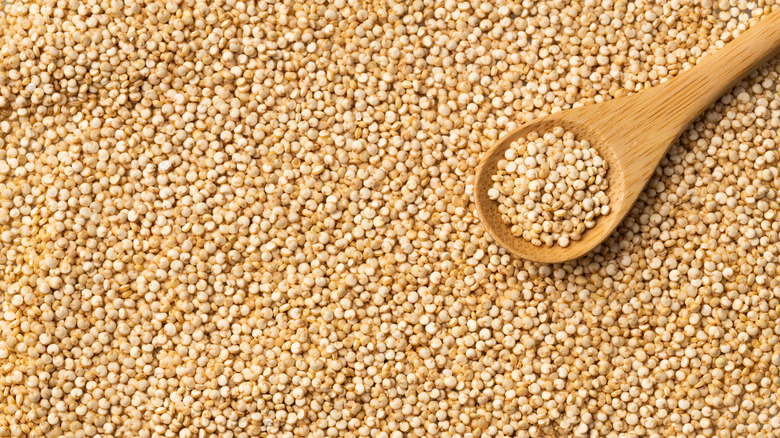
In the ever-escalating pursuit of more protein, quinoa looks like the perfect ingredient. It might seem like a simple rice substitute, but it contains twice as much protein, making it the ideal choice for anyone trying to increase their macros wherever they can get them. Despite its popularity, though, quinoa still poses a challenge for some shoppers. With only two consonants out of six letters, what are you supposed to do with all those vowels? Is it "kwin-wah"? "Kin-oo-ah"? "Keen-wah"? The answer lies in its language of origin.
Quinoa has been growing in the Andes for a staggering 7,000 years, and the word stems from the Quechuan language, which was spoken by the Indigenous tribes of the region who descended from the Inca. Their word for the grain-like grass was kinua, which the Spanish changed to quinoa. Unlike turmeric, there is no mystery to this one. The correct pronunciation is "keen-wah."