

6 La Colombe Single-Origin Coffees, Ranked
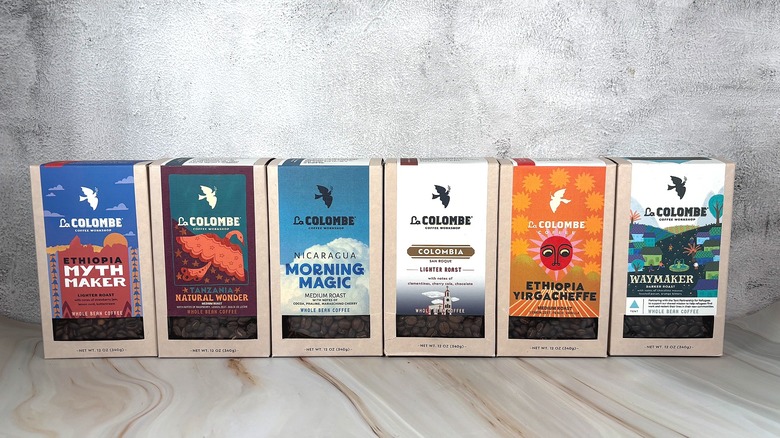
ICYMI, I'm a huge coffee enthusiast. My obsession began with what was supposed to be a side job in a cafe in Northern Virginia. Upon going through the company's barista training and discovering that no two coffees are alike (shocker, I know), I've made it my mission to craft perfect brews and taste every single-origin coffee I can get my hands on. Why single origin? Blends certainly have their place, as do flavored cups (I did love the fall lineup from Bones Coffee Co.), but brewing beans grown in a single location really lets you get a fuller sense of their character. You'll find lots of wild tasting notes in single-origin coffees because the beans aren't diluted with those from another terrain.
That said, of course I jumped at the chance to try the full line of single-origin coffee beans from La Colombe (which you may know from having its draft lattes). Ranking single-origin beans isn't the easiest task — each is vastly different from the next, and everyone has their own tasting note and brew intensity preferences. Before going into this ranking, I'll clue you in to my own palate. I love bright, light-roasted coffees that boast ample fruity and floral notes. The best coffee I ever tried tasted like a blueberry tea. My own preferences will come into play when ranking the following, but I'll also take into account more objective views of the brew, considering which tasting notes come through and how each stacks up to other single-origin beans I've had from the country (where applicable). For more about how I'm approaching this piece, refer to the end of the article.
Some recommendations are based on firsthand impressions of promotional materials and products provided by the manufacturer.
6. Waymaker
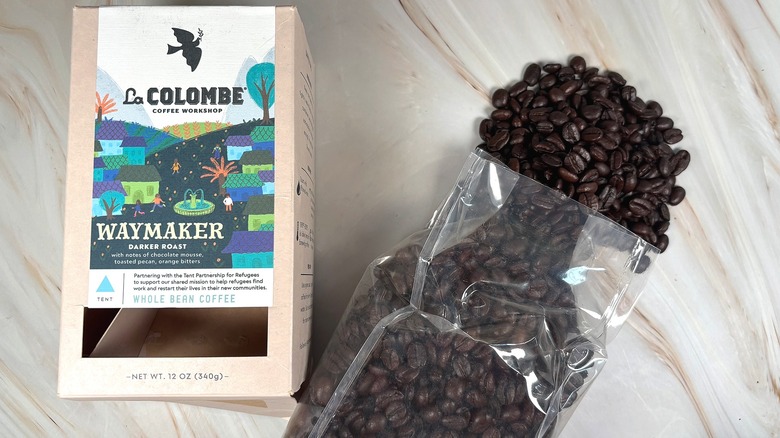
Given what I said above, you probably aren't surprised to see that the one "Darker Roast" coffee on this list takes last place. But this is a good time to give my overarching opinion of the beans — if you want to do your own single-origin taste test, you won't go wrong buying La Colombe's lineup. Though Waymaker (of Colombian origin) was my least favorite of the coffees I received, in terms of dark roasts, I quite liked it. If I were comparing this to other dark roasts I've had in the past, it would easily come in near the top of the list.
Yes, the coffee is definitely dark, but it's far more palatable than I usually find dark roasts to be. You don't get any burnt or bitter flavors here, and I was pleasantly surprised to find that the beans weren't at all oily (which you'll commonly find with ultra-dark roasts from big brands). I got ample cocoa notes. I often say it's a cop-out to claim chocolate and caramel notes in dark coffees — those notes will always come out the longer you roast any coffee, and they don't really indicate anything special, but they're apparent and tasty in this cup. It's rich and smooth enough that I could easily be persuaded to drink it black; at the same time, it wouldn't get lost if paired with cream. Congrats, La Colombe — you roasted a dark coffee I actually dig.
5. Nicaragua Morning Magic
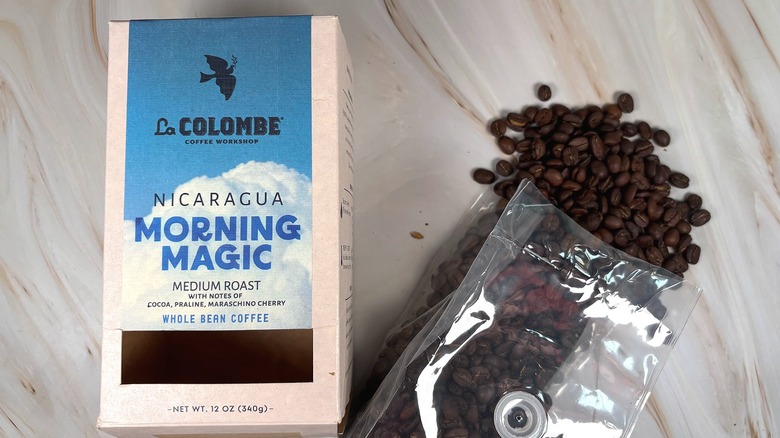
Were these Nicaraguan beans my favorite? No. Will I be brewing them again? For sure. I'd call this one of the most mellow cups of the bunch, but I don't at all mean that as a bad thing. It's very well-rounded and won't surprise any consumer, but still provides enough uniqueness to keep your morning interesting. I recommend drinking this cup black before adding anything to it — it's certainly smooth enough to not need accoutrements.
I got tons of fruity cherry notes in this cup, whereas the chocolate was more subtle. I really enjoyed the dark stone fruit appeal, which, combined with the slight toasty notes, gives this cup a lot of depth and character. It leans slightly more acidic in that it sat on the roof of my mouth with a sort of zing. Morning Magic is very fruit-forward and I did quite like it, but at the end of the day, the following beans just appealed to me more.
4. Ethiopia Yirgacheffe
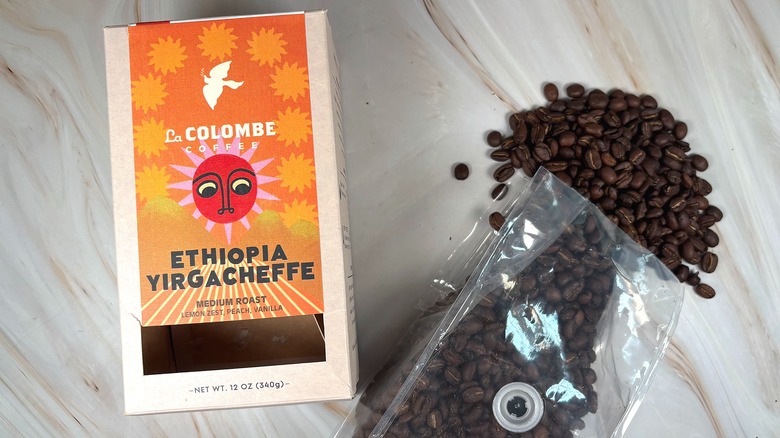
Ethiopia is my favorite coffee origin country (closely followed by Kenya and Rwanda — I adore African coffees), so, yes, my bias is showing here. But that's not necessarily a bad thing. I was actually less impressed with this cup than I typically am with Ethiopian coffees, which is why it's only getting the fourth spot on my list. However, I couldn't rank it lower because I think these beans would make a really good introductory cup if you're not quite ready for the bright, fruity acidity of a light-roast Ethiopian coffee.
Personally, I'd never go any darker than a light roast for a Yirgacheffe coffee. I've found that Yirgacheffes shine as light roasts, but I won't fault La Colombe for making this one medium — it'll allow the beans to appeal to an entirely different audience. That said, what I usually look for in a Yirgacheffe wasn't there when I drank this. It wasn't as bright and acidic as I expected, and I had trouble getting the lemon zest noted on the box. Peach (and stone fruit in general) did come through, and I got some warming notes reminiscent of vanilla. There's a full richness to this cup that gives it a lot of character while still remaining palatable, and it'll make an exceptionally good Yirgacheffe for those just branching out in their coffee journey.
3. Colombia San Roque

These final three coffees were impressive, and I've tried my fair share of single-origin beans, so that's saying something. I was especially surprised to rank the Colombia beans this high. Colombian beans are pretty standard in the North American coffee biz, which isn't to say they're bad, just that I'm not regularly impressed by them. So, I didn't expect much from this cup — what I got, though, made me rethink how I view beans of Colombian origin.
Perhaps it's because most Colombian coffees I've tried are a medium roast, and this one is lighter (my preferred roast anyway). But this was an exceptional coffee that displayed everything you'd expect to find in Colombian beans, dialed up to 10. I got ample cherry and chocolate notes, and though I didn't really get the "cola" aspect listed on the box, there was a sweetness to the coffee that I didn't expect. Bright citrus came through, as well. At the end of the day, I didn't find this to be a standard Colombian bean — rather, I thought it one that exemplifies how Colombian beans should be enjoyed. Will I be changing my tune from now on and seeking out light-roast Colombian coffees? Most likely.
2. Tanzania Natural Wonder
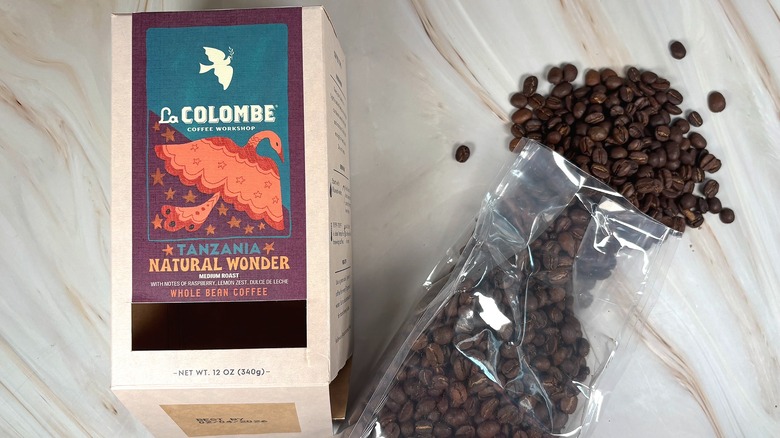
I can't say I have a ton of experience with Tanzanian coffees, but you can bet your bottom dollar I'll be familiarizing myself with this origin country more after trying these beans. The fact that they're a medium roast and got the second-to-top spot on my list should tell you everything you need to know about these beans — namely, that I was a little starstruck by them. And admittedly, as a sucker for aesthetics, the gorgeous box art only helped matters.
To get as much bright, fruity character out of a medium roast as I found in this cup is quite the feat. Lemon (and zingy citrus in general) sat at the forefront of the sip, but the cup quickly mellowed out with some deep berry notes. It's very light for a medium roast and has a ton of character — so much so that I could see this being a divisive cup. If you like your coffee on the wilder side of the flavor spectrum, you should absolutely try this bag. It won't be very amenable to cream, but honestly, I'd hate to taint it with any accompaniments anyway. It's just really good, pure, and very much my ideal cup.
1. Ethiopia Myth Maker
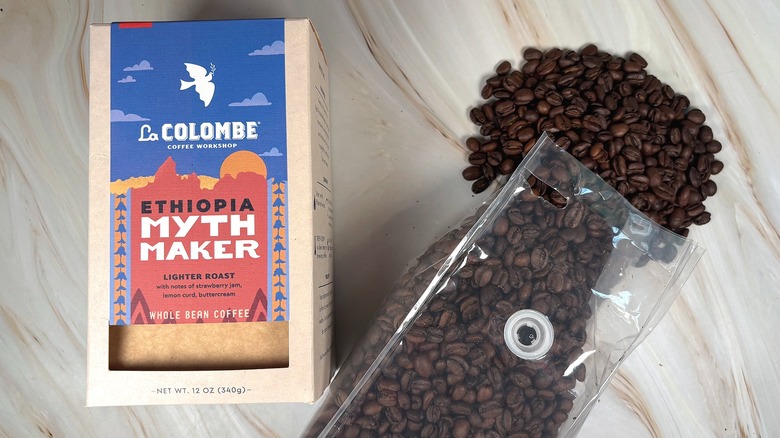
However, the Tanzania simply couldn't match up to La Colombe's Ethiopia Myth Maker. The two were very similar, though if you look at the beans side-by-side, you can tell the Ethiopian beans are roasted just a touch lighter than the Tanzanian. One thing I especially adored about this cup was that it managed to be bright, interesting, and still amenable to a variety of preferences. In other words, if you're a little scared of floral and fruity coffees but want to try them out, this would be a really good entry point.
I got ample floral and citrus appeal right after sipping the cup. It has that bright punchy-ness that I absolutely adore in Ethiopian coffees, but that quickly gave way to a creamy quality that provided a ton of balance. While I love tasting straight berries throughout a sip, other palates will prefer the journey this takes you on, moving from something a bit wild to something tamer, ultimately finishing very smooth and easy. This was a well-rounded, impressive cup that will easily become my go-to, and I think it will impress coffee experts and novices alike.
Methodology
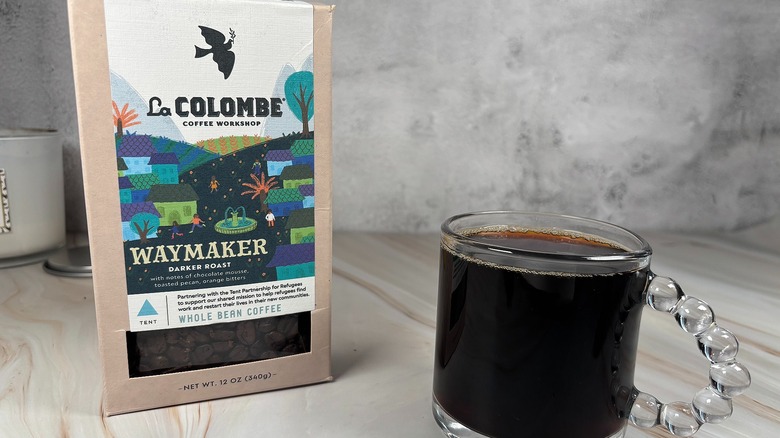
I occasionally do cuppings when trying coffee, but I've found that I prefer tasting coffees as regular brews. So, for this taste test, I went through the full process of making a pour-over for each of the coffees. I tried them sequentially and ranked them right after trying them, so there was no time gap to alter my preferences. I ranked each based primarily on my own personal preferences, also taking into account how each coffee compared to others I've tried from the region. Waymaker was my least favorite, but it was still an exceptionally good dark cup.
I encourage you to read my descriptions and choose your coffee accordingly — don't just pick my top choice because it was my favorite. Everyone has different coffee preferences; for example, I know that Waymaker would be my best friend's favorite, as she loves my dark roast coffee pods. If you can swing it, buy the full line and do your own tasting with your friends. I promise — it'll make for a fun time.