

9 Myths About Aldi You Shouldn't Believe

Aldi is very quickly becoming a big deal with American shoppers. The German discount retailer has surged in popularity, largely thanks to its range of products and seriously affordable prices. In fact, Aldi is hoping to open 800 new stores in the U.S. by 2028. So, it's safe to say its popularity is unlikely to die down anytime soon.
But, as the Kardashians are all too aware, with more fame comes more rumors. There are many myths circling around Aldi, and they range from easy mistakes to some, quite frankly, odd beliefs about the chain (like deliberately lying to customers about selling horse meat and bacon grown in labs).
We're pleased to say that many of the negative things you've heard about the budget retailer are probably not true. Keep reading to learn nine of the biggest myths about Aldi that you definitely shouldn't believe and why.
You should always avoid the produce
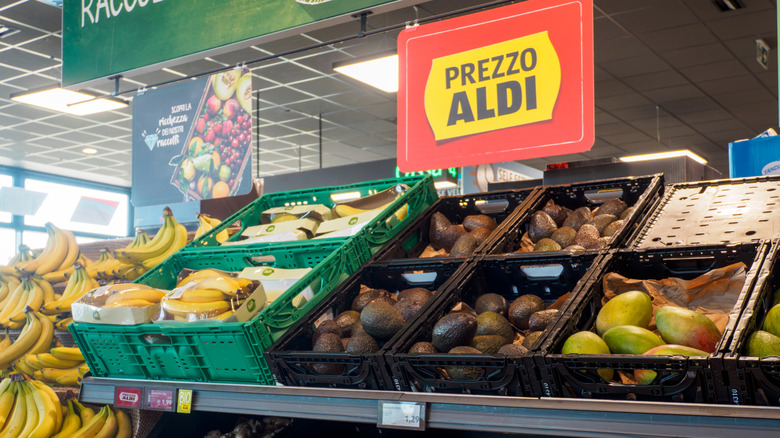
Aldi's produce receives a lot of negative attention. Some of this is undeniably warranted. On Reddit, for example, people have described heading to their local Aldi store to stock up on fruit and vegetables, only to find that most of it was rotten. However, this isn't the case for every single Aldi store in the U.S.
There are more than 2,500 Aldi locations in the country, and plenty of them sell good-quality produce. Many people say they buy fruits and vegetables from Aldi regularly and don't encounter any problems. In fact, some say that the quality of the produce at their local Aldi grocery store is better than that of other retailers.
There's no doubt that sometimes, Aldi's produce quality falls short. But overall, the company maintains it is committed to high standards of food quality. And the truth is, all stores can be vulnerable to bad produce every now and again. Walmart, Kroger, Whole Foods Market, and Trader Joe's are just a few examples of grocery store chains that have come under fire on social media for selling bad-quality produce. So, in short, this is far from just an Aldi problem.
It sold horse meat on purpose
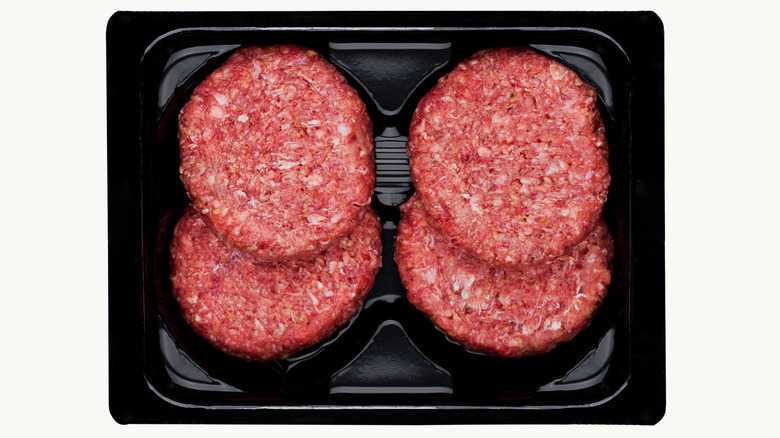
In 2013, it was revealed that Aldi had sold European customers horse meat, labeled as beef. Years later, rumors would continue to swirl about the scandal, with some believing that the retailer deliberately mislabeled its meat to mislead customers. This wasn't the case. The truth: Aldi sold horse meat to customers, but it was by accident.
Aldi was caught up in the 2013 horse meat scandal alongside other major grocery stores, like British supermarket chain Tesco, after tests conducted by the Food Safety Authority of Ireland revealed that several burgers and pre-prepared meals with beef contained horse DNA. The problem was later traced back to a meat processor in France, called Spanghero, as well as two Dutch meat traders.
In 2013, Aldi responded to the scandal by removing all potentially affected products from its shelves. At the time, a spokesperson for the chain said that Aldi was angry and disappointed at being misled. So, to sum up: Yes, there was horse meat, but no, it wasn't sold intentionally, and it was never sold in the U.S.
Aldi doesn't sell organic food

If you're looking for organic produce, you might assume that you need to steer clear of budget retailers like Aldi and instead opt for more expensive stores like Whole Foods Market. But actually, Aldi does sell lots of organic options within its Simply Nature line. Plus, a quick search on Aldi's website brings up plenty of organic fruits and vegetables to choose from.
Some people on Reddit have expressed skepticism over whether the grocery chain's "organic" label is legit, but it's worth noting that Aldi produces its organic range in accordance with the USDA Organic guidelines. This means that its organic food must meet high standards, like strict cultivation practices, limited use of pesticides, and the avoidance of genetic engineering.
In fact, you can expect to see more organic choices at Aldi in the future. Its range of affordable organic food and healthy staples is one of the biggest reasons why it is growing in popularity across the U.S., and as it expands, it is planning to keep this focus as it opens new stores.
Aldi's affordable wine isn't that good

Aldi's wine is cheap, let's be clear about that. It is a budget store, after all. But just because its range of tipples is more affordable than other stores, it doesn't mean the quality is always bad. Sure, some of its wines fail to hit the mark for wine-lovers, but the retailer does have some big hitters in the wine world.
In our ranking of Aldi's private-label wines in 2024, for example, our sommelier praised Aldi's Specially Selected Willamette Valley Pinot Noir. They noted that while the wine wasn't particularly complex, it was still a good example of a classic everyday pinot noir with lots of good qualities, including earthy notes and bright acidity.
But don't just take our word for it. In February 2025, Aldi's $12 Specially Selected Sparkling Brut Rosé was selected as the best wine in the annual Product of the Year awards. The award was based on a survey with 40,000 participants.
Its dupes are never good quality

Aldi is known for two key things: discount prices and dupes. The chain has long specialized in making more affordable versions of branded products. Sometimes, it gets into serious trouble for doing it. In June 2025, for example, Oreo filed a lawsuit against Aldi for copying its packaging design. The legal case had a huge impact, and going forward, Aldi has pledged to shake up its packaging design. The dupes will still be there, but they'll look less like, well, dupes.
It's not just big brands that get frustrated with Aldi over dupes. Some customers say that the retailer's copycat products just aren't as good as the real deal. On Reddit, for example, users have complained about its attempt at Maple & Brown Sugar Oatmeal and its Cheez-It knock-offs. But Aldi doesn't always get it wrong. In fact, there have been many occasions when people say it has got its dupes spot on.
Some say that Aldi's Countryside Creamery Pure Irish Butter, for example, is just as good as Kerrygold Pure Irish Butter. Other products that have been praised for being as good as, if not better than, name brands include the Cheddar Baked Turtles (which are like Goldfish), Shells & Cheese (like Velveeta), and Frosted Flakes.
Trader Joe's and Aldi are the same company
Trader Joe's and Aldi have many similarities. They both sell predominantly private-label products (which they've both been in legal trouble for), and they're both considered to be more affordable than other retailers. You might have even been told in the past that Trader Joe's and Aldi are the same company, and while this is not totally off the mark, it's not quite right, either. There is, indeed, a connection between the two retailers, but they are not the exact same company. Let's explain.
Aldi was first founded in Germany in the 1940s, but in the 1960s, it split into two companies after a family feud. After this, there were essentially two Aldis: Aldi Süd and Aldi Nord. In the U.S. and many other countries, the Aldi stores are run by Aldi Süd. Elsewhere, and in countries like France and Spain, Aldi stores are run by Aldi Nord.
Still with us? We'll get to the point. Some of the families that own Aldi Nord, not Aldi Süd (which, in the U.S., is known simply as Aldi), also own Trader Joe's. The two companies operate independently, however.
Aldi accepts coupons

Coupons are a great way to save a bit of cash. They've been around since the late 1800s, when Coca-Cola started offering hand-written vouchers that could be exchanged for free glasses of the popular soda. They're still a huge part of society, of course, and many people collect them in the hope of receiving a little money from their grocery shopping. But while some people have tried to use coupons at Aldi in the past, we regret to say that Aldi doesn't accept manufacturer coupons in exchange for its products.
According to the grocery store, this is because the majority of its offerings are private-label. It does, however, claim that it always negotiates the best prices with all of its suppliers, so there is a silver lining.
Plus, in even better news, Aldi sometimes issues its own coupons for shoppers. This is not a regular occurrence, but occasionally, it will send coupons in the mail, especially if a new store is opening nearby.
It never accepts returns
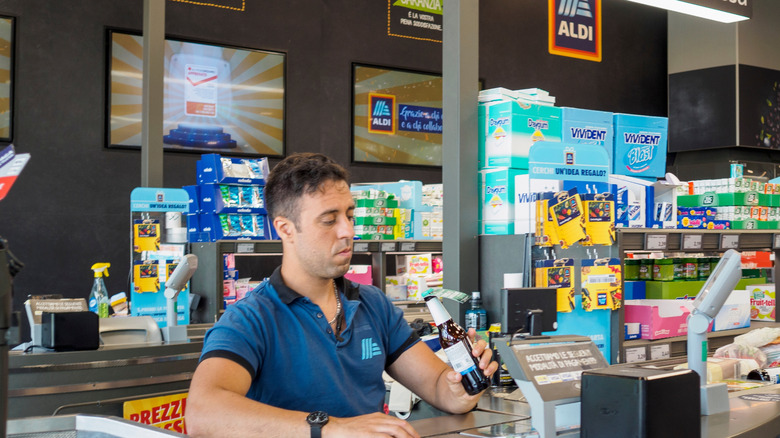
Aldi has received some complaints about its return policy. In January 2025, for example, one social media user posted on X that they had tried to return an unopened bottle of wine to the store with a receipt, only to be told that they could not have their money back. They were irritated with the situation and claimed that both Kroger and Publix had better return policies.
However, it seems like the situation may have been out of Aldi's hands. The store's online return policy notes that returning alcohol is subject to state regulations and may not be permitted. This isn't the only time that customers have complained online about Aldi's return policy, however. Reddit users have also complained of difficulties returning products to the store. The truth, though, is that Aldi does accept returns. It clarifies online that as long as the returned item is intact, has a receipt, and is brought back within 90 days, it will issue a refund.
Aldi bacon is grown in a lab
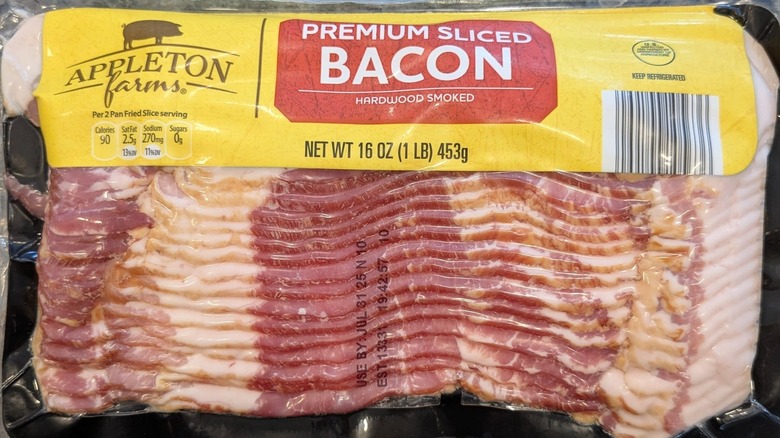
Lab-grown meat, also known as cultivated or cultured meat, is very much a thing. In fact, in 2023, meats produced in a lab were actually approved for sale in the United States. This and the general rise of the lab-grown meat industry may have given some credibility to the rumor that Aldi's bacon is grown in a lab, but that's actually not the case. Who knows? Maybe it will be in the future, but certainly not now.
It turns out, the rumor stemmed from confusion over a name. Some people on social media saw that Aldi's bacon is sold under the brand name Appleton Farms, and confused it with the lab-grown meat company Appleton Meats. Just to make sure everyone was clear on the matter, Aldi confirmed in a statement sent to media outlets that it does not have any association with Appleton Meats and its bacon products are not grown in labs.