

10 Peated Scotch Whiskies Every Fan Should Try
For me, peated whiskies hold a unique distinction of being something I love while completely understanding why some people may hate them. For casual drinkers, their high smoke and often medicinal flavors can be overwhelming. For many others, peat smoke can give these whiskies unrivaled depth and character no other spirit can match. If you're interested in the world of peated whisky, there are some classics that you need to check out. These will give you an appreciation of this unique type of Scotch, which is made by drying the malted barley over a peat fire.
Peat is an organic fuel that is made from decayed plant matter. This precursor to coal was long used as a heating source and covers more than 20% of Scotland, being especially prevalent in the islands of the West. Having tried countless peated whiskies over the years from all the island distilleries, I have an expert insight into which of these you should try. Due to wanting you to try all these whiskies, I've excluded any limited editions and stuck to one expression per brand. With my vast experience, I'll not only guide you through the tasting notes but also give you some fascinating nuggets of knowledge along the way.
Lagavulin 16-year
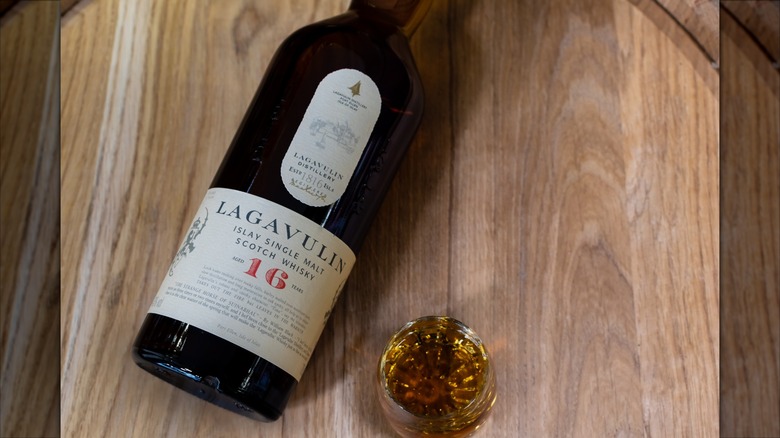
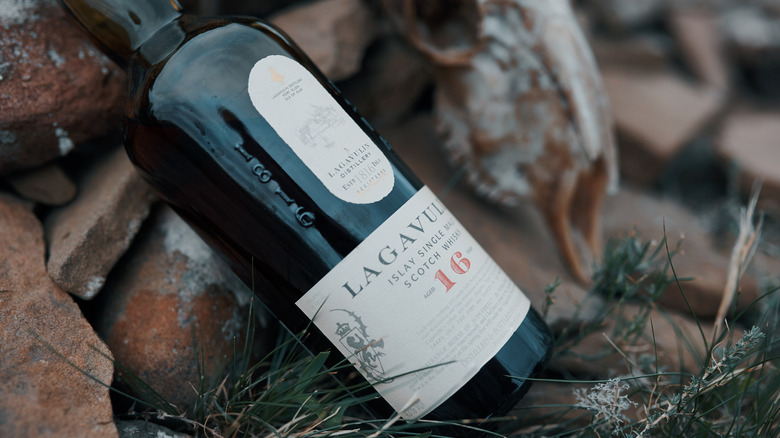
I start this list with two absolute classics. Any experienced whisky-lover could have probably guessed what those two Scotches are. Lagavulin 16-year is an iconic whisky that I see as the perfect melding of complexity and craftsmanship. It has the intense power that comes from a peated Scotch while somehow also giving you an elegant tasting experience. Distilled on the iconic Island of Islay, its long maturation process gives it a smoothness that contrasts against those rough maritime flavors. The smell is divine, with the expected smoke along with sea salt and iodine. Those latter two aromas are common with any whisky that has been made with coastal peat.
The palate has a full body that you'd expect from the 16 years it spent in a barrel. The mouthfeel is silky and supports a deep sherry sweetness and vanilla that sits above those earthy flavors. All the notes from the nose are carried over and are joined by oak and a subtle spice. The finish is about as long as it gets, with that gentle salinity continuing to the end.
The peat influence of some whiskies here can be overwhelming for some, but the quality and aging here mean it sits nicely alongside those other flavors. At around $100, the Lagavulin 16-year is one of the more expensive peated whiskies, but most fans see it as a price worth paying.
Laphroaig 10-year
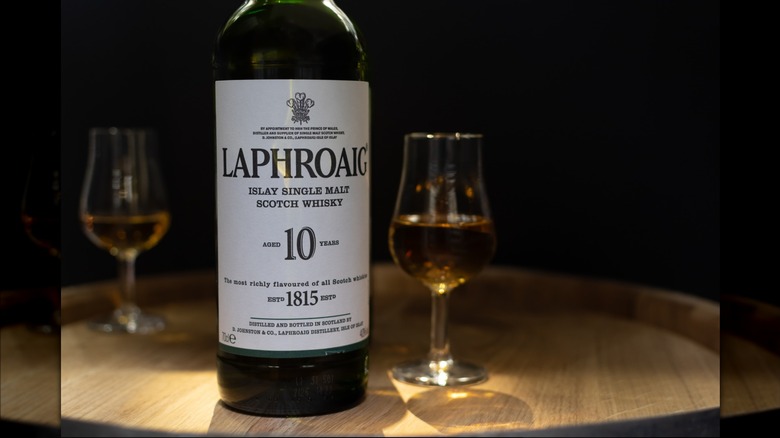
If there was one whisky that most closely defines Islay peat, it would be the Laphroaig 10-year. It's one of Scotland's most distinctive single malts, and in my experience, most people have a strong opinion about it. Whether you love it or hate it, it's unforgettable. Not only does it embody all the qualities of peat smoke but also from its remote coastal setting. On the nose, you get that peat smoke instantly, but it's the brine and iodine that make it so distinctive. There is sweetness here in the form of vanilla, along with a little citrus. The palate has many of these characteristics with its unapologetic character.
It has all of those earthy qualities with a slightly oily mouthfeel. The likes of oak, salt, and smoke may not sound like appealing tasting notes, but they sit beautifully in your mouth. Sitting on that bold bedrock is honey and butterscotch, which make it a complex tasting experience, but one that is impressively balanced. The finish is long, with that smoke carrying through to an ashy finish.
The Laphroaig 10-year has intensity, but its popularity shows that it appeals to a lot more than just a niche audience. It's also one of the best Scotches under $50, making it highly accessible to anyone who wants to try a classic peated whisky. It's a must-try for not just those interested in peated Scotch, but those who like whisky in general.
Ardbeg Corryvreckan
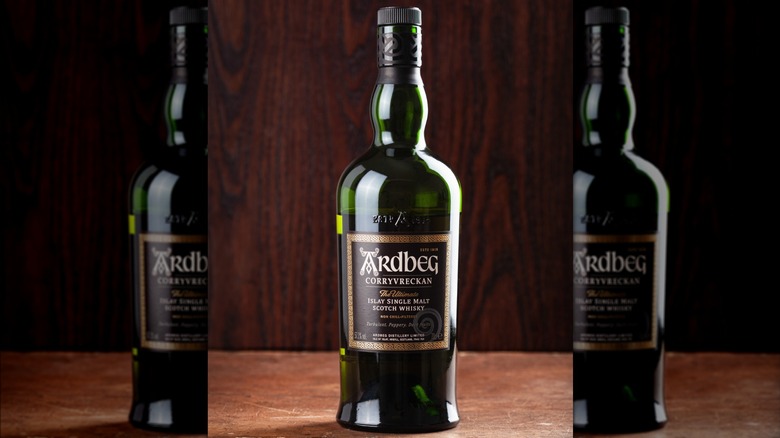
I wanted to stick to one expression per brand for this list, but Ardbeg made that very difficult. The distillery's full range is worth checking out for any peat lover, including its classic 10-year bottle. However, there are a few reasons why the Corryvreckan stands out a little more than the others. Ardbeg describes this as "not for the faint-hearted" on its website, and that's not an exaggeration. The brand's unique selling point is how its whiskies are unapologetically peat-heavy and bold. Named after a whirlpool off the Scottish coast, it matches that energy by being an intense whisky. All of these Scotches are naturally smoky, but this takes it to a new level on both the nose and palate.
It's one of those whiskies where, if you look beyond the explosive opening, you'll find plenty of nuance. On the nose, it presents in the form of dark chocolate, espresso, and pepper. There is no age statement here, but the rich body tells you it has a fairly long maturation. The pepper on the nose stands out in the palate and is joined by some dark fruits of blackcurrant and cherry. There is a charred oak quality here that is joined by some other spicy notes, namely pepper. Each time you take a sip, it feels like you can pick out a new note.
The Corryvreckan feels like a rugged and untamed whisky that somehow happens to be beautifully constructed. That controlled chaos is a testament to Ardbeg's mastery of heavily peated whisky.
Port Charlotte 10-year
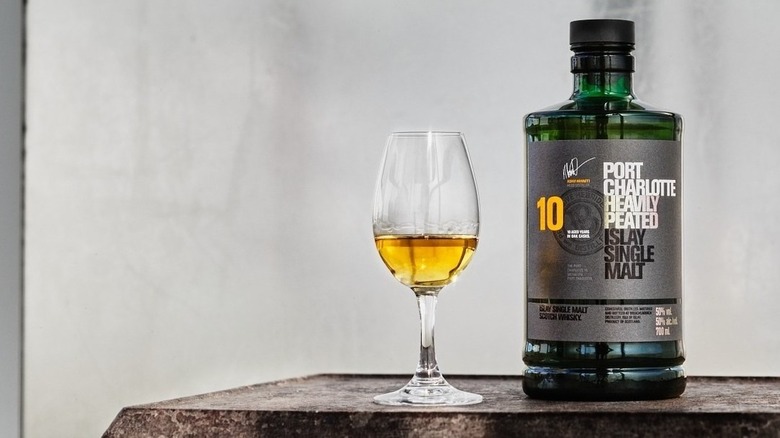
Here's yet another whisky from Islay, with still a couple more to come. The island has vast peat bogs that have been exposed to the coastal elements over many centuries. This makes Islay synonymous with peated whisky, but as you'll see, not all distilleries on the island rely on it. Interestingly, Port Charlotte is made by such a distillery. Its creator, Bruichladdich, doesn't use peat in its own brand whiskies. However, the Port Charlotte 10-year is a masterclass in how to create an elegant whisky that can still hit you with a wall of power.
A part of that elegance comes from how it has secondary maturation in French wine casks. That helps to give it a slightly fruity quality, but it's lemon zest and vanilla that are most notable on the nose. When it greets your lips, you'll notice a rich and creamy mouthfeel that you'd usually expect from whiskies with an even higher age statement. The smoked barley is especially delicious, but it's well supported by toffee, oak, and stone fruits.
The finish is sumptuously warm. There is a salinity there, but it's much less noticeable than with other bottles here. Bruichladdich has long proven itself to be a versatile and creative distillery, with the Port Charlotte 10-year being one of its most impressive creations.
Benromach 10-year
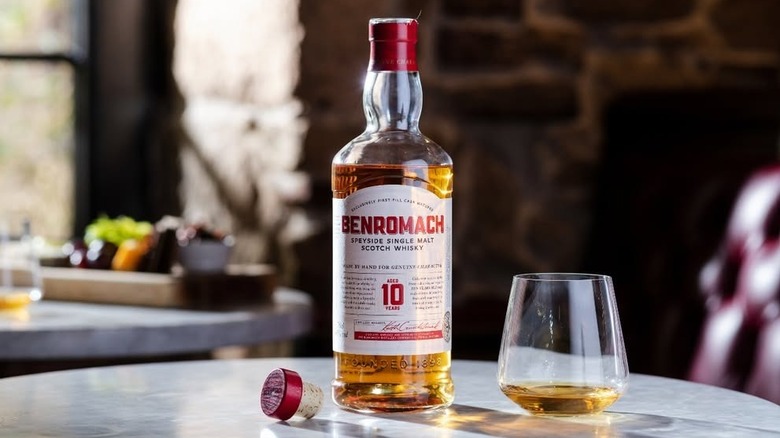
If you are intrigued by peated whiskies but are unsure they would suit your palate, the Benromach 10-year is a great place to start. That's because it's about as affordable as the Laphroaig 10-year but isn't as intensely peated. A part of this reason is that this is one of only two inland whiskies in this list. Speyside, where Benromach is made, is known for its soft and elegant Scotches. It makes for a unique whisky when you combine that with the power of peat. The aroma is beautiful, as you're greeted with ripe red apples along with sherry and toasted nuts. Smoke does play its part here, but only with a wisp.
Rather than dominating, the peat influence simply adds a few layers of depth. When you add creamy toffee, a gentle spice, and cherry, it all combines to create a complex palate. There is also that gentle spice that joins the peat to give this Scotch an earthy foundation. With so many Speyside distilleries leaning towards making whisky with beautiful floral and fruity notes, it's great to get something a little different. The Benromach 10-year doesn't have the robust nature of many whiskies in this list, but that's a part of its charm.
Ledaig 10-year
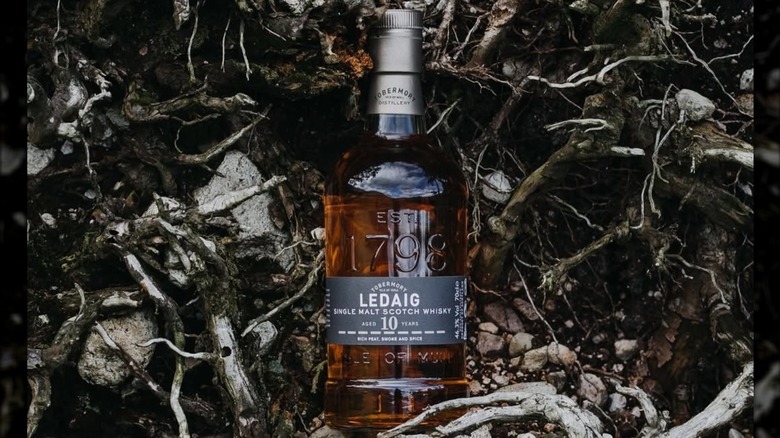
Islay may dominate the world of peated whisky, but it's not the only Scottish island that can make a great Scotch. Ledaig is such an example, with its 10-year expression coming from the Isle of Mull. Made at the Tobermory distillery, it doesn't have the notoriety of some whiskies here, but it's no less impressive. I'd place the peat level here somewhere on the mild-to-moderate range. It's more pronounced than with the Benromach but far from the heaviest Scottish island offerings. You get a little iodine on the nose that is contrasted by some deep, sweet notes in the form of rich toffee and dark chocolate.
Those sweet notes develop into more of a salted caramel feel on the palate. The medicinal and coastal influences also continue, along with pepper and charred oak. All of these flavors sit in a creamy and malty mouthfeel, showcasing its extended aging. The finish is surprisingly intense, but in a good way. The spiciness seems to build up, with the pepper joined by clove and cinnamon. It's an impressive Scotch that balances elegance with a rugged edge. If you've already tried a few of the more renowned expressions here and enjoyed them, you'll likely love Ledaig, as well.
Talisker 10-year

Here is the second and last whisky in this list that comes from an island that isn't Islay. Talisker is made on the Isle of Skye and has all the characteristics you'd expect from a rugged maritime Scotch. One of the most popular Scottish whiskies, I don't think there's another distillery that is so notably coastal. You can almost smell the sea air on the nose, and you can instantly picture waves crashing on jagged rocks. There is sweetness here in the form of honey and a brightness that comes from citrus peel. Also on the nose is a bit of black pepper, which strongly transfers to the palate.
It gives the whisky a high level of heat, which is reminiscent of the fire you get from high-rye bourbon. Likewise, you feel it's one of those spirits that could warm you up on the coldest of nights. On the palate are also the notes you'd expect from the peat influence, but they're also joined by caramel and orchard fruit. Throughout the entire experience is a smooth salinity, including in the long finish.
The Talisker 10-year is not overly peated, but it's hugely distinctive in other ways. It's a whisky that you couldn't mistake for any others, which, for a good Scotch, is a huge compliment in my eyes.
Caol Ila 12-year
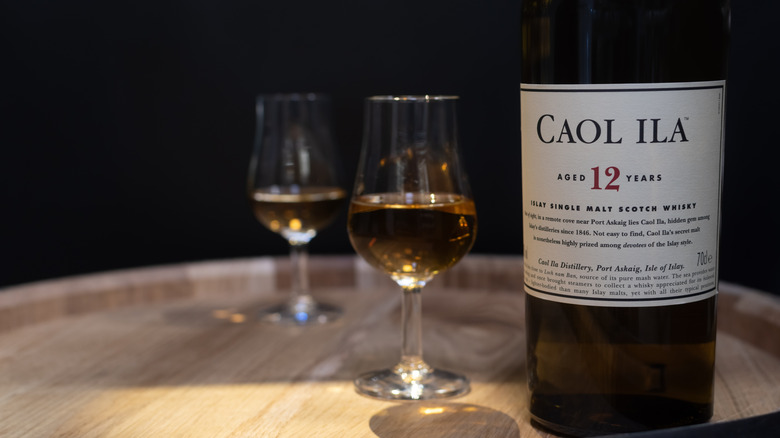
If you thought you'd gotten past the hard-to-pronounce whisky names, think again. The Western Isles of Scotland have retained most of their original Gaelic names. There is also a meaning behind them all, with Caol Ila (cull-ee-la) meaning the "Sound of Islay," due to the distilleries sitting on the banks of a strait of the same name that separates Islay from Jura. But that's enough geography and history, let's talk about this fantastic whisky that I think is one of the most underrated to come from the country. If you've never tried an island peat before and want a gentler introduction, this is a great place to start. It's elegant in much the same way as the Lagavulin above, but without such a heavy smoke influence.
It has a surprisingly bright aroma for a smoked whisky. Among the expected notes you've read about a few times here, you get some citrus and green apple. There is an herbal quality, as well, giving it a lovely scent. The palate presents a softer interplay of smoke and sweetness. The general citrus smell develops into a more pronounced lemon zest on the tongue, with vanilla and honey giving it the sweetness.
A slightly oily texture carries the coastal notes, and it finishes with traces of ash and spice. The Caol Ila 12-year is a lighter peated Scotch, but one that is still deeply satisfying.
Kilchoman Machir Bay
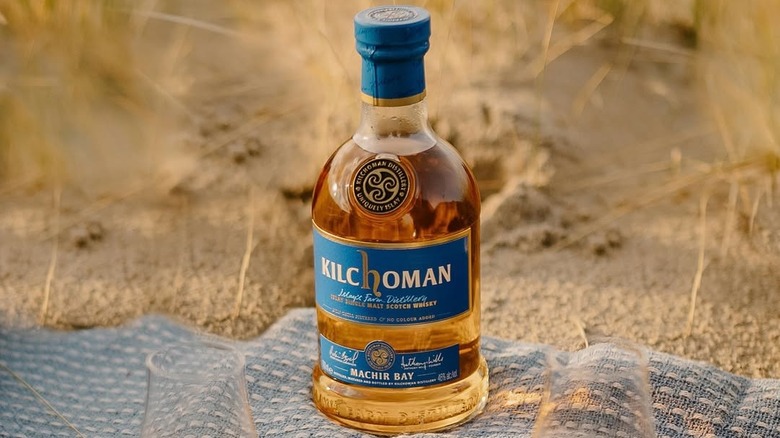
Our tour around Islay ends at Kilchoman. There is no age statement with this expression, but I would guess that it's comfortably the youngest Scotch here. That isn't a bad thing, as it's a good example of how extended maturation can be overrated. Taking its name from a nearby beach, you can almost picture a bottle of Machir Bay being washed ashore, considering how heavily influenced it is by its surroundings. It's a vibrant whisky that immediately hits you with its coastal influence. Sea salt and smoke hit your nostrils with a punch, but behind that is some complexity. There are some honey and vanilla notes there, along with some citrus.
You immediately notice the lower age, as it doesn't have the rich mouthfeel of others here. That being said, I wouldn't come close to describing it as thin. The campfire warmth supports orchard fruits on the tongue, along with beautiful caramel. There is very little here in terms of a medicinal taste, and it has a gentle spice that continues on to an impressively long finish.
Kilchoman grows its own barley on its farm, which gives drinkers a 100% Islay experience. Don't be put off by its young age here. Machir Bay captures the best qualities of a rugged coastal spirit without feeling underdeveloped.
Benriach The Smoky 12
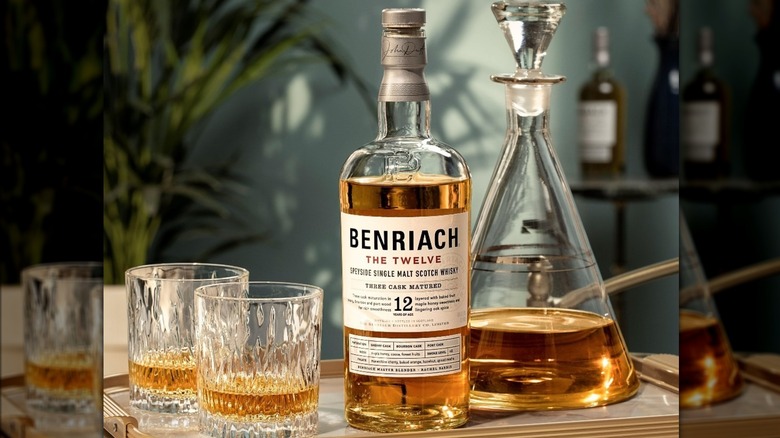
The Smoky 12 is a unique Scotch that blends many different styles into one. Made in Speyside, it is matured in a combination of three barrels that contained bourbon, sherry, and wine. Added to this, it blends together a combination of peated and unpeated spirits. It makes for a fruit-forward style of smoky whisky that is more approachable than many other options here. There are plenty of subtle fruit notes in the aroma, with even more sweetness coming from vanilla and honey. Toasted oak is present, too, and it makes for a lovely nose.
The palate is multi-layered, as you initially get hit with the more dominant notes of smoky malt along with dark chocolate and oak. Then comes a pleasant wave of more subtle flavors such as sultanas, caramel, and orange peel. There is a slight nuttiness that complements the expected peated notes. Those earthy notes continue to a long and warming finish.
Enjoying this whisky is more about learning how peat can be used to create further depth, rather than how it can dominate the tasting experience. On the face of it, you fear it's a Scotch that has tried to do too much. However, this Benriach bottle has impressive balance and purity of flavor. It's perfect for those looking for a more sophisticated and softer peated whisky.