

10 Old-School Condiments You Don't See Much Anymore
We may receive a commission on purchases made from links.
Condiments are the underrated jars, bowls, and bottles of things that make our food taste better and more interesting. They can often be the backbone of food culture and cuisines, but as culture evolves, so too do our condiments. Some condiments are made with new techniques or recipes, or incorporate new ingredients, while others disappear completely. Either way, a look back at some of the condiments we don't see everywhere anymore, including the ones we grew up with or that our parents remember, can offer a fascinating glimpse into this evolution. They also signal which foods were trendy, or just widely accessible at a specific point in time. Naturally, as we find better ways of eating and cooking, there are some we may be happy to leave in the past. However, this surely doesn't apply to every condiment that's gone out of style.
Those of us with a curiosity for food and recipes may even want to recreate some of these at home, or even track them down in whatever corner store or specialty food store we can find them. From pickles and sauces to jellies, there are so many condiments that are becoming harder to find. Here are some of the old-school condiments you don't see much anymore.
Cane syrup

This Southern classic is a dark, sugary syrup you don't see as much anymore, and you may be surprised by how it was once used: for savory applications, like on sausage biscuits. Perhaps it was the "candied bacon" of its time, but many people preferred a sweet addition to their breakfast sausage biscuits, and this syrup was what would be served for that purpose. This syrup is more than just sweetness though, and is said to have a rich, molasses flavor. If you've ever chomped down on some fresh sugar cane, this is hardly shocking.
Cane syrup used to be the common syrup in the South, and you would be able to find it in any grocery store or gas station. Then came the proliferation of maple syrup, which has almost completely replaced cane syrup in many households. Unfortunately, many younger generations haven't even gotten the chance to try it. If you're disappointed that this syrup is one you don't see much anymore, then you'll be happy to know you can get some online. You'll be able to use it on anything you usually use syrup on, but to get the authentic experience, make sure to keep some handy next time you have some Southern biscuits.
Salad cream

This condiment may be lesser known in the U.S., but it was a pantry staple in most British households, and in those of former British colonies. It's a tangy, mayonnaise-like "cream" that is used in more than just salad, although also a popular salad dressing. It was also used in potato, egg, tuna, and fish-based salads and coleslaw. Beyond salad, salad cream can be spread on sandwiches or served as a dipping sauce for fried food. Perhaps it's because the world has started becoming more health-conscious that this sauce isn't really as fashionable anymore, although many of its fans in the U.K. are still loyal to it.
It's thick, creamy, and has a pale yellow or even orange tinge to it. It was popularized by Heinz, and that's the brand you're most likely to find. You can find it occasionally in the U.S., but it's not very common. If you're dying to try some, you can get some of Heinz's iconic salad cream online.
Southern pepper sauce
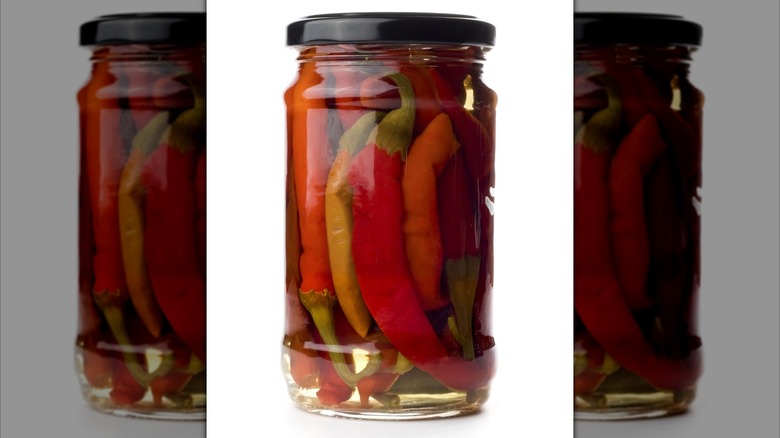
This isn't only an old-school condiment, but it's one that you'll likely only ever find in the South. Southern pepper sauce, also known as pepper vinegar, or hot vinegar, is the hot sauce swap you need to try. This pepper sauce doesn't have a sauce-like consistency at all. Instead, it's made of whole or sliced peppers suspended in vinegar. It's usually found on the table along with other common condiments, and is used liberally on anything that needs a little kick. Other than heat, however, this condiment is loved because its acidity adds brightness to all kinds of food, including heavy dishes and vegetables.
Southern pepper sauce is traditionally served on cornbread, collard greens, oysters, crispy potatoes, fried chicken, and all kinds of stews. It's relatively easy to make at home since it requires just a few ingredients. The taste gets spicier the longer it sits, so be sure to consume it before it's too hot, or let it sit longer if you like a ton of heat.
Monkey sauce
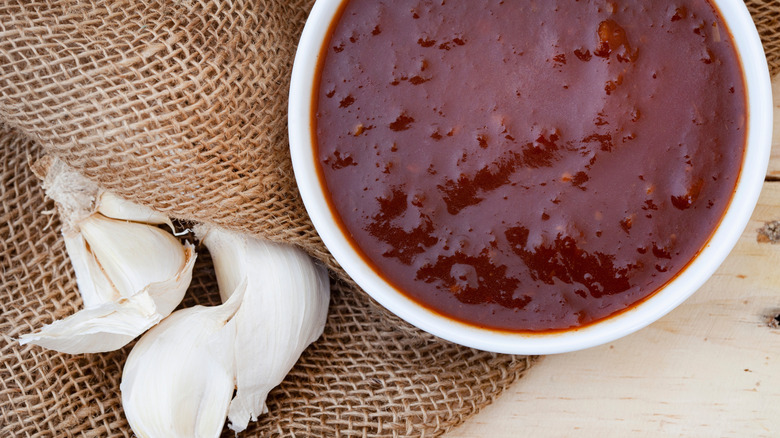
If you've never heard of monkey sauce, don't be alarmed, it doesn't contain any monkey! This old-school sauce is believed to have been created in South Africa and used as a sort of barbecue sauce. While its exact origins are debated, there's a theory that it was created as a joke when a chef mixed a bunch of other household condiments like ketchup, chutney, and Worcestershire sauce. But the joke was on the prankster, as it turned out to be a huge hit.
It's commonly served with burgers, steaks, hot dogs, ribs, and all things meat. Growing up in South Africa, I was very familiar with monkey sauce (or monkey gland sauce, as it was known), and there was rarely a steakhouse restaurant that didn't serve it. Its tangier and sweeter edge made it the perfect complement to meat.
It became popular in the United States in the '50s and '60s, where it was served in the same way as it was in South Africa. If you want to try it for yourself try experimenting with other flavorings like onions, garlic, tomatoes, red wine vinegar, and brown sugar. Once you taste it, you might want to pour it over everything, and perhaps ask for it to make a comeback.
Mint jelly
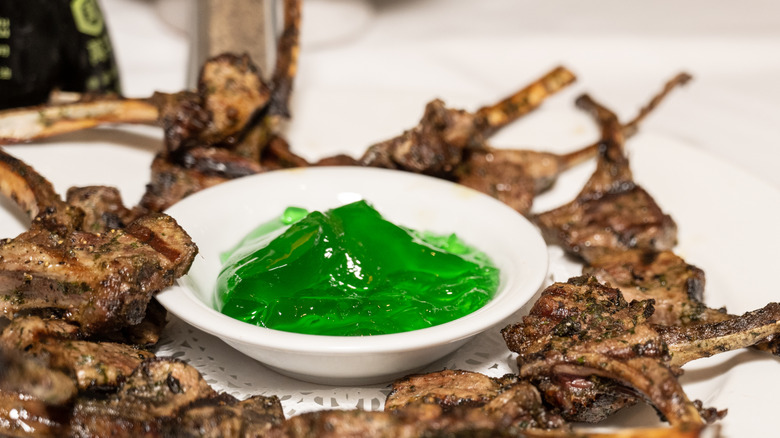
Many of us can remember the jar at the back of the fridge containing an almost-fluorescent bright green jelly that was brought out whenever there was lamb roast on the table. It was arguably the cranberry sauce of Easter dinner. However, its off-putting color and sometimes artificial mint flavor were overpowering rather than complementary. In truth, mint is one of the best flavors to pair with lamb, so it's a shame that mint jelly has such a bad reputation. Perhaps it went out of fashion because we all grew up with a disdain toward it. It's now only served in some classic restaurants.
Thankfully, it's not super difficult to make your own using fresh mint, and the difference is stark. Homemade mint jelly is miles better than the store-bought stuff, and deserves to be given a second chance. If you'd like to make your own, this classic mint jelly recipe is a great place to start and requires only five ingredients: mint, sugar, water, liquid pectin, and lemon juice. It's not going to be bright lime green, but that's a very good thing.
Catsup

The word "catsup" may sound familiar to you, even if you don't know why. Of course, the younger generation may only know "ketchup" and not "catsup," but they are mostly thought of as being the exact same thing. "Ketchup" has all but replaced the use of the term "catsup" in today's age. Especially as ketchup has become one of the most ubiquitous condiments across the country — and perhaps even in many other parts of the world — it's hard to think of its origins bearing anything other than the central ingredients and flavor of tomatoes.
Interestingly, catsup is a condiment made with fish sauce. The fermented, anchovy-based sauce made its way to the U.S. from China via European merchants and has evolved into what we now call ketchup. However, in some parts of the country, you can still find people calling catsup "tomato catsup" to refer to the modern tomato iteration. This is because catsup wasn't always about a concentrated tomato flavor, and you could find things like mushroom or oyster catsup, especially if you look through historical cookbooks and recipes. If you ever come across a different type of catsup somewhere, be sure to give it a try for a glimpse into food history and a condiment that made its way across oceans.
Chocolate gravy
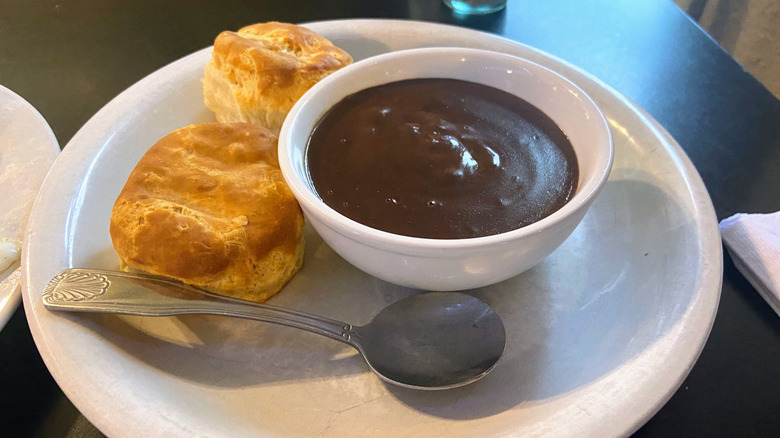
You may think people are just trying to be cute by calling something chocolate gravy instead of chocolate sauce, but there actually is a difference. Chocolate gravy is a Southern condiment made similarly to any gravy including by starting with a roux. Except, in this roux, cocoa powder and sugar are added to the flour. Then, milk is added until it thickens into a gravy-like consistency. The other difference is that you don't start out with butter, like you would in a savory gravy. Instead, the fat is added in at the end to give it a glossy finish.
Chocolate gravy isn't as thin as chocolate sauce; it has a more pudding-like texture. Traditionally, it's poured over savory biscuits for a sweet version of biscuits and gravy. While its origins are debated, one theory is that it's based on Mexican chocolate that was brought to Appalachia by Spanish colonists and developed over time to become what it is today. For example, modern recipes use flour instead of corn, which thickens the gravy. It's pretty simple to make chocolate gravy at home, so while it's an old-fashioned food, there's no reason it should disappear or become hard to enjoy anytime soon.
Piccalilli
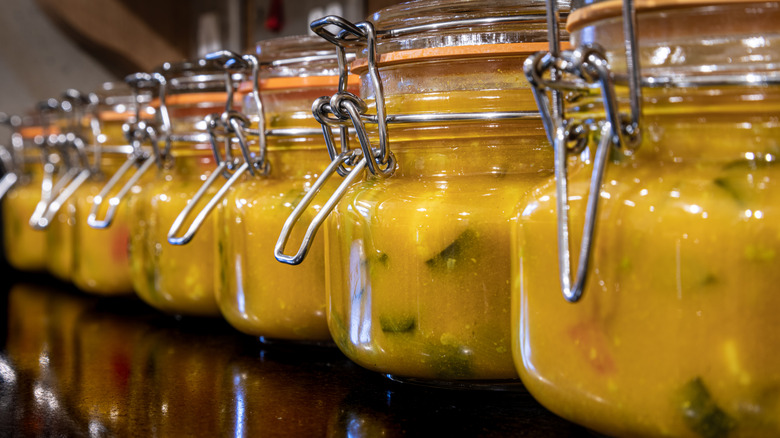
Piccalilli is the retro pickle that graced many a plate of fries, eggs, or on a sandwich across the pond. It was the British take on an Indian pickle-style condiment and was usually made with ingredients like turmeric, cumin, shallots, oregano, mustard, and more. Some recipes use cauliflower, carrots, or even cabbage as the vegetable base, but there is no one way to make piccalilli. The condiment, which went mainstream in grocery stores thanks to Heinz, was bright, tangy, and could add a burst of sweet, acidic, and spiced flavor to anything it was paired with. To many people's disappointment, Heinz discontinued its piccalilli in 2024.
To get a taste of piccalilli stateside, it might be best to make your own, and there are plenty of recipes you can follow and even customize to your taste. Otherwise, get your hands on some Southern chow-chow for a similar taste. Chow-chow is an American condiment that's said to be based on piccalilli and is sometimes even referred to as "Indian pickle."
Anchovette
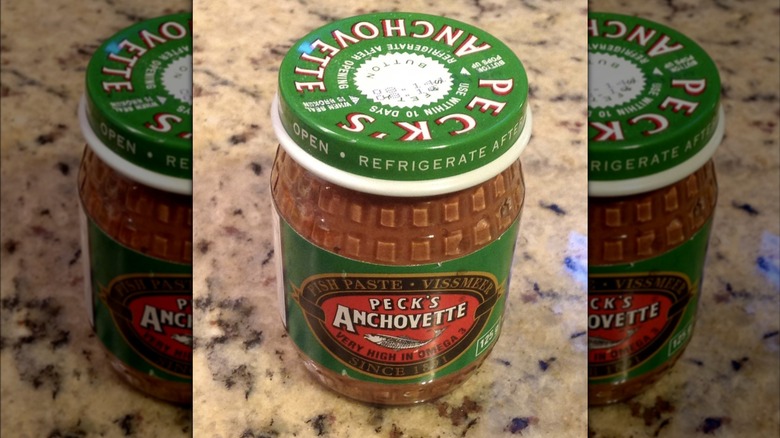
If you didn't grow up with Anchovette, it may sound really strange or even off-putting. In truth, even for those of us who grew up with it, it still does. Anchovette, specifically Peck's Anchovette, was a paste made from anchovies. It was often spread on toast for a salty, fishy breakfast or snack. While I wasn't a fan of it, it was a constant in my family's home and was beloved by many for being a cheap, protein-packed flavor bomb. While it may not be the most fashionable ingredient, and is now associated with the older generation, anchovy paste might be just what our cooking is missing.
Anchovy paste like Anchovette adds a potent hit of umami and salt and can be pretty useful in pumping up the flavor of dishes like steak, pasta, stews, and even salad dressings. If you think of it this way, rather than as a simple spread for toast, it becomes a lot more interesting and appetizing. Many of us never would have imagined such fancy ways to use this old-school, humble ingredient, but it's actually pretty genius.
Currant jelly
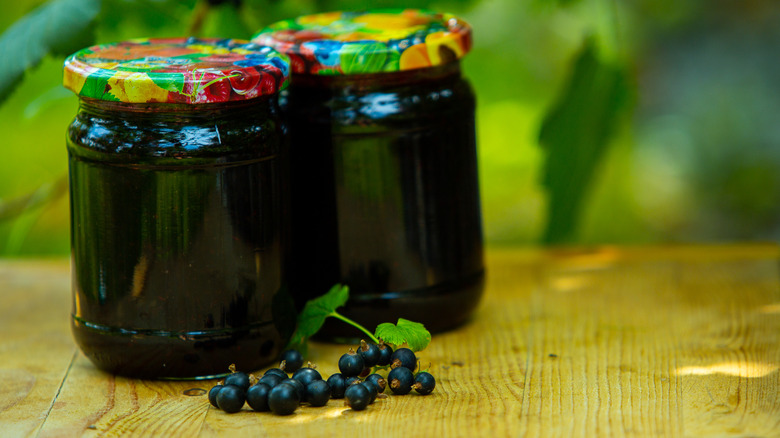
People who grew up on the classics like "Little Women" might be quite familiar with currant jelly. While you really don't see it as much anymore, currant jelly is a recipe you will find in many old American cookbooks. Of course, there are people who make their own jams and jellies during red and black currant season, so it's not exactly something that will ever truly disappear, but currants are certainly not as popular an ingredient as they used to be. In fact, it was one of the first types of jellies used in peanut butter and jelly sandwiches.
Currant jelly was often served alongside meat, including lamb, beef, and poultry. While it might seem very retro, we do the same thing with cranberry sauce and roast turkey on Thanksgiving. The meeting of meat with something sweet and sour is always a pleasant flavor combination. Perhaps this Thanksgiving you can really go old-school and make your own currant jelly to serve instead of cranberry sauce.