

7 Store-Brand Olive Oils, Ranked
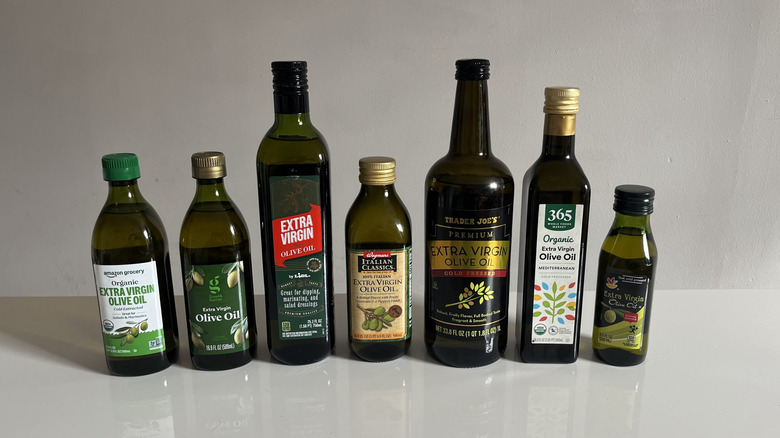
If you've ever stood in the grocery aisle staring at a dozen extra virgin olive oils, wondering whether the $5 bottle could possibly be as good as the $25 one, you're not alone. Olive oil is one of those ingredients that runs from sublime to shockingly bland, and the price tag doesn't always correlate to quality. Often, in a given grocery store, the store-brand olive oil is the cheapest, but is it worth cutting the cost? Depending on which store you're at, it might be.
I gathered bottles from major U.S. grocers and put them through a head-to-head taste test. The goal wasn't to crown the fanciest oil, but the one that best balances taste and value. I evaluated these contenders based on appearance, aroma, and, most importantly, flavor. Some turned out to be disappointingly flat, while others were peppery, complex, and delicious. Whether you're sautéing vegetables, whisking together a salad dressing, or dipping slices of warm baguette into its golden goodness, the right bottle can transform the ordinary into something special.
7. Amazon
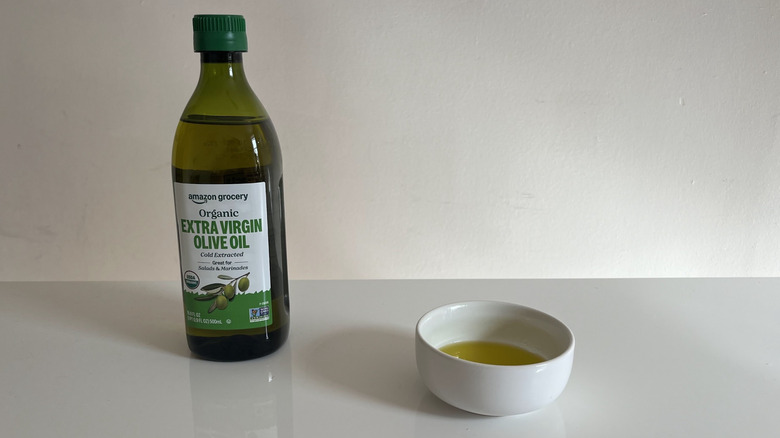
At first glance, Amazon's store-brand olive oil doesn't inspire much confidence. Its pale, yellowish tint immediately raises doubts about whether it's truly extra virgin, and those suspicions only deepen once you take a whiff. The aroma is muted, and it lacks grassy or fruity notes that distinguish higher-quality oils. It's not the bright, peppery kind of bitterness that comes from fresh olives; rather, it's a heavy, dull acridness that coats the tongue and refuses to let go.
Tasting it straight feels almost punishing, with the oil clinging to the mouth in a way that's more reminiscent of a blended vegetable oil than a first-press olive product. Even used sparingly on bread or in salad dressing, it imparts an unpleasant aftertaste that overshadows other flavors. Swallowing it was genuinely difficult, partly because of its texture, but also because it feels low quality, as though it's been overly refined or blended down.
Unfortunately, this disappointing product fits a broader pattern in my experience with the internet retailer's in-house food brand. There's no denying you can save money buying Amazon Fresh groceries, but while the price and convenience are tempting, the flavor often comes up short. If you care about olive oil, steer clear. And if you do find yourself with a bottle of this olive oil in your pantry, you can use it to polish and condition wood furniture, a flavor-blind application for which it's entirely suitable.
6. Wegmans
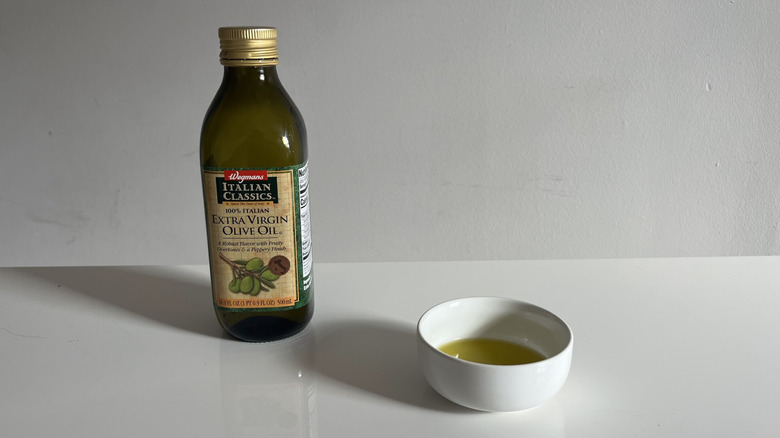
If you live on the East Coast, be careful before you start trashing Wegman's. The regional grocery store has a fiercely loyal following that's well-deserved considering Wegman's is cheaper than other grocery stores and has a store brand that often rivals brand names in quality and value. Unfortunately, its extra virgin olive oil doesn't live up to that reputation. At first pour, the oil looks promising, with a rich, deep green hue that suggests boldness and flavor.
On the nose, there's a faint sourness that's not exactly off-putting but not inviting either. And once tasted, the olive oil is startlingly neutral, so light and flavorless that, if blindfolded, you might mistake it for canola or even sunflower oil. The oddly hollow flavor reveals no grassy freshness or peppery tingle on the finish, as though the essence of olive itself has been stripped away. The only moment of recognition comes right at the end, with a faint sharpness at the back of the throat.
For a brand as consistently impressive as Wegmans, this bottle is a rare misfire. If you're sautéing vegetables or baking, it might work as a neutral fat. But for dressings or a finishing drizzle, where the oil's character matters, Wegmans' olive oil (literally) doesn't bring enough to the table.
5. 365
There was a time when it wasn't so annoying to shop at Whole Foods. The store's 365 line was a benchmark for reliable organic pantry staples, but since Amazon acquired the company, many loyal shoppers (myself included) have noticed a meaningful decline in quality. Unfortunately, 365 Extra Virgin Olive Oil seems like evidence of yet another cut corner.
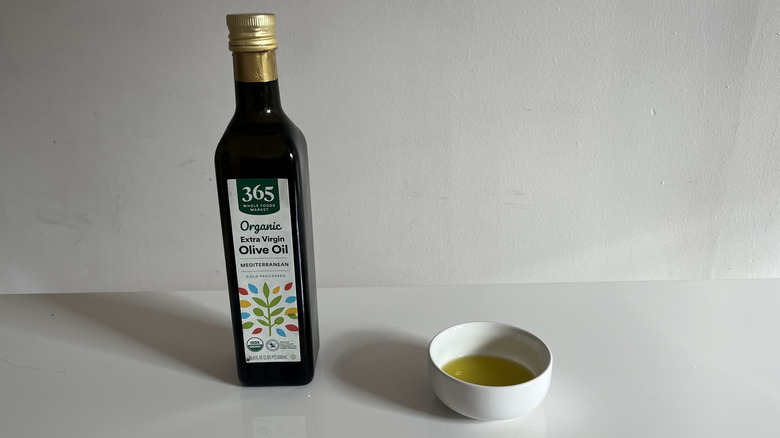
Visually, the oil looks respectable, shining with a light golden-green color that sits within the normal range for an everyday EVOO. Its aroma is gentle and reassuringly olive-like, with subtle grassy and floral undertones that give off a fresh odor. On tasting, though, the flavor is too mild, lacking the vibrant fruitiness or piquant bite that some better-quality olive oils achieve. A faint tickle at the back of the throat is its only bold moment before the flavor fades away.
It's not horrendous, and it's unmistakably olive-derived, which can't be said for every store brand; it's just entirely unexciting. You could use it for roasting potatoes or making marinades where you don't need a strong olive presence. If you're looking for a mild, organic oil for everyday cooking, it'll do, but don't expect to be wowed.
4. Good & Gather
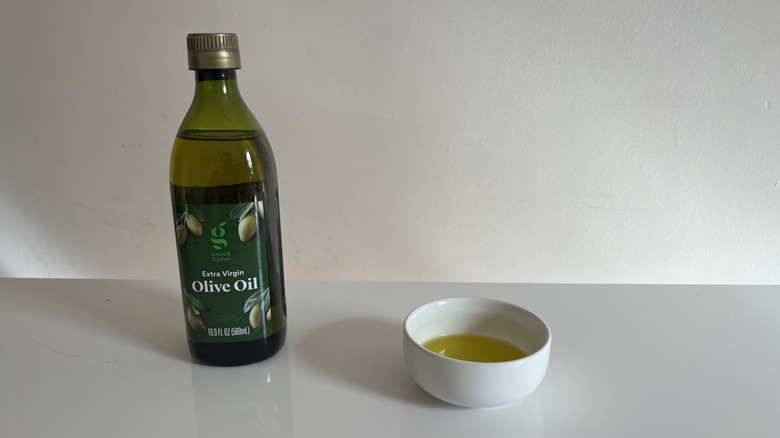
Target's in-house brand, Good & Gather, has built a solid reputation for combining affordability and often surprisingly good flavor. The oil comes in a plastic bottle, which can sometimes suggest a lower-end product, but my doubts quickly vanished once I poured it out. The color was a rich green-gold, deeper and more inviting than I expected, and had an enticing, slightly spicy aroma.
On tasting, this olive oil stands out for its fruitiness. It's smooth and full without being heavy, opening with soft notes of green apple and ripe olive before rounding into a lightly buttery finish. But it lacks the peppery bite that makes some oils pop at the back of the throat. That makes it less ideal for dipping bread or finishing grilled vegetables but perfect for salads, pasta, or dishes where a gentler touch is desirable. It's generally a mistake to use extra virgin olive oil in your marinades, but if you must, opt for a lighter one like this.
What impressed me most was the balance between flavor and accessibility. This is an olive oil that feels fresh, pleasant, and easy to like, and it's not aiming to compete with boutique imports, but it holds its own in the everyday kitchen.
3. Stop & Shop
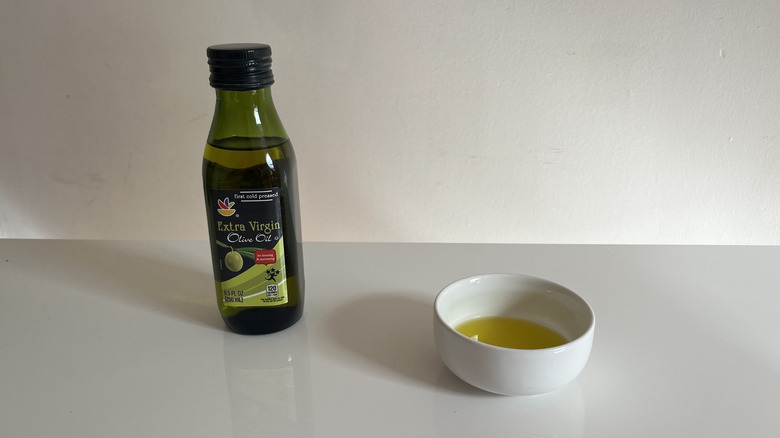
Upon first pour, Stop & Shop's store-brand extra virgin olive oil was a pale golden hue that was noticeably lighter and yellower than most of the other oils in this lineup. While you might think this is a cue that signals lower quality, it actually has to do with the maturity of the olive when it was pressed for oil.
The aroma is pleasantly fruity with a hint of freshly cut herbs. On the tongue, the oil blooms into a robust body before giving way to a distinct, peppery finish that lingers at the back of the throat. That sharpness feels lively and authentic, the kind of tickle you only get from a genuine extra virgin pressed from ripe olives. According to the label, the oil hails from the Mediterranean, a detail that makes sense once you taste its robust, slightly sun-warmed flavor profile.
This is an oil that's both affordable and genuinely versatile. It has enough character to elevate a simple vinaigrette or drizzle over roasted vegetables, but it's not so strong that it overwhelms milder ingredients.
2. Lidl
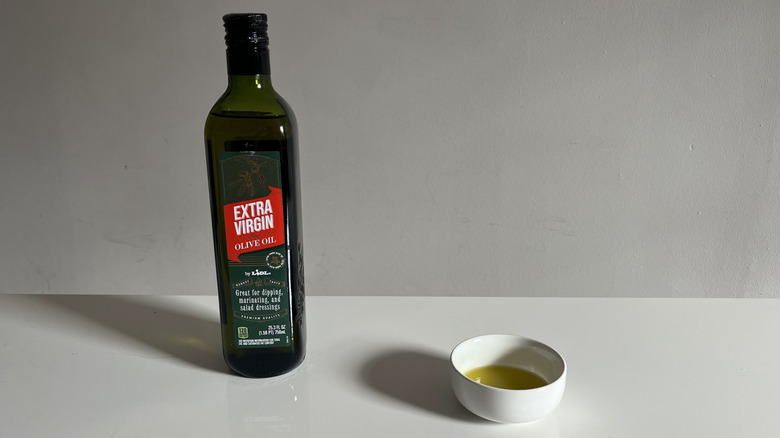
There's something quietly thrilling about finding a product that overdelivers, and Lidl's extra virgin olive oil is one of those little triumphs. I wasn't expecting much, but from the first pour, it was clear this bottle had personality. The oil is strikingly dark, a deep, lush green that looks like it belongs in a much fancier kitchen. Even before tasting, the grassy, gently spicy aroma hints at something special.
The flavor opens with a burst of richness that's round, buttery, and a little floral and then builds to a sharp, peppery crescendo that makes you cough just a little. That back-of-the-throat kick is a welcome addition, signaling an olive oil that's perfect for dipping bread.
Lidl's olive oil feels alive, as though it still carries some of the character of the olives themselves. It's an oil you could easily drizzle over bread or fresh mozzarella and call a meal, and it would absolutely shine in a salad dressing with just a sprinkle of salt and pepper. That this level of depth and balance comes from a budget-friendly supermarket brand feels almost otherworldly.
1. Trader Joe's
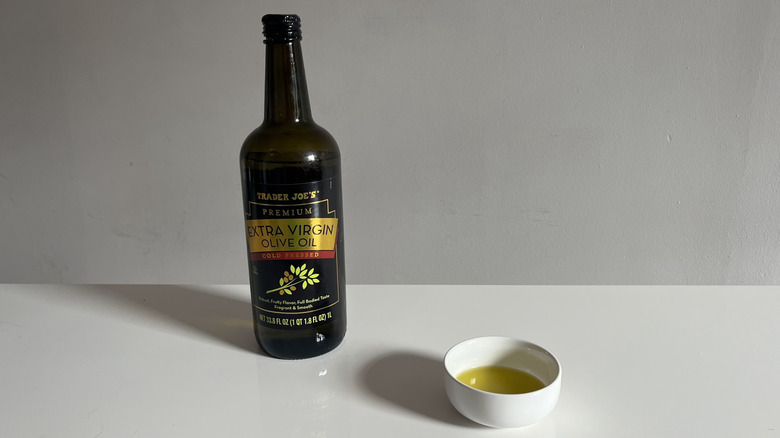
Trader Joe's proves you don't need a trust fund to enjoy truly great olive oil. This one comes in a generous bottle that looks more practical than fancy, but what's inside is gold (literally). The color gleams with a golden-green luster that's bright and clean — a visual clue that you're in for something vibrant and balanced. It's not the darkest oil on the shelf, which makes sense once you taste it: This is an oil that leans toward the fruity side of the spectrum rather than earthy or bitter.
The aroma is fresh, grassy, complex, and inviting, with that unmistakable scent that lesser bottles can never quite fake. On the palate, it's full-bodied, showing off a lovely interplay between ripe fruit and green spice. I detected hints of ripe banana, artichoke, and a hit of black pepper that lands squarely in the back of your throat.
Trader Joe's version manages to walk a delicate line between assertive and harsh. You could drizzle it on anything (I use mine over Persian cucumbers and Greek yogurt with flaky sea salt, on grilled bread, or whisked into a vinaigrette).
Methodology
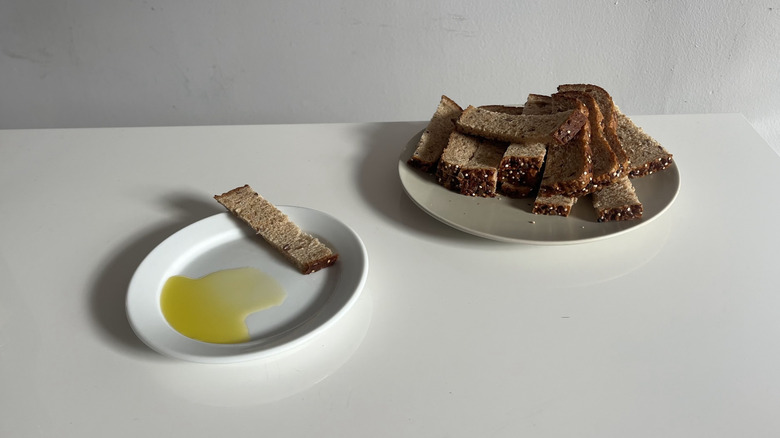
To give each olive oil a fair chance, I started by setting all the bottles out at room temperature and then poured a small amount of each into identical small glasses. First, I tasted each oil on its own, following the same technique used by professional olive oil testers. I warmed the glass slightly in my hands, then took a sniff to get a sense of its aroma, followed by a small sip that I swished around my mouth for a few seconds to release the oil's flavor and texture. This method highlights every nuance: the initial fruitiness, the bitterness on the sides of the tongue, and that distinct peppery burn at the back of the throat. I took notes on color, aroma, flavor, and finish, focusing on whether each oil felt balanced.
Next, I tasted each oil again with plain bread, since most home cooks use olive oil with food rather than sipping it straight. Bread testing helped reveal how the oils behave in real-world situations. Some oils that felt overpowering on their own mellowed beautifully with bread, while others that seemed mild were suddenly lifeless.