

4 Starbucks Coffee Blends You Should Drink Cold And 3 You Shouldn't
No matter what the weather's like outside, sometimes you just crave a creamy, fully dressed-up iced coffee. Or, maybe you just want to drink your iced coffee black. Whatever your particular hankering may be for, there's no denying that sometimes iced coffee just hits different — it can tickle a midafternoon craving and scratch a certain itch that hot coffee can't seem to reach. However, not all iced coffees are created equal.
Obviously, personal preference varies widely in the coffee world, but there's no denying that coffee tastes different when cold than it does when hot. Chilling a coffee can amplify or mute certain tasting notes, often giving the drinker a nuanced impression of the beverage when they enjoy it both ways. I have over a decade of barista experience under my belt, but I couldn't say I've ever taken the time to taste certain roasts side by side at both temperature extremes — until today, that is.
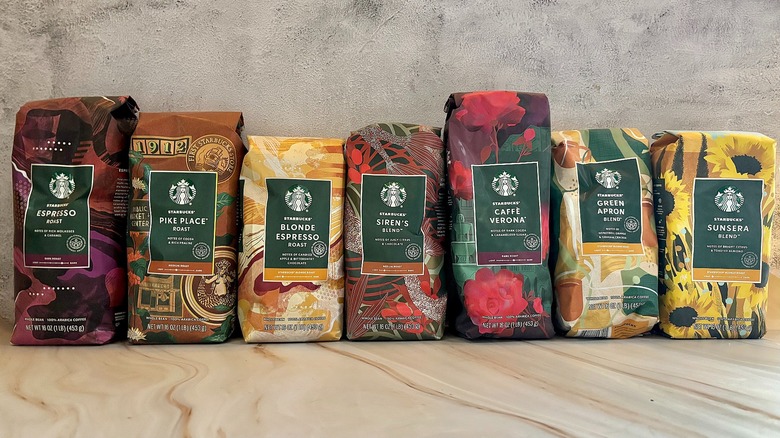
I grabbed seven of Starbucks' whole-bean coffee blends and tried each hot and cold, to determine which were worth taking the time to ice. I actually found that four of the bunch made great cold coffees. The other three are best enjoyed as a piping hot morning cuppa. For more about how I conducted this taste test, check out the "Methodology" section at the end of this piece.
Some recommendations are based on firsthand impressions of promotional materials and products provided by the manufacturer.
Sunsera tastes great cold
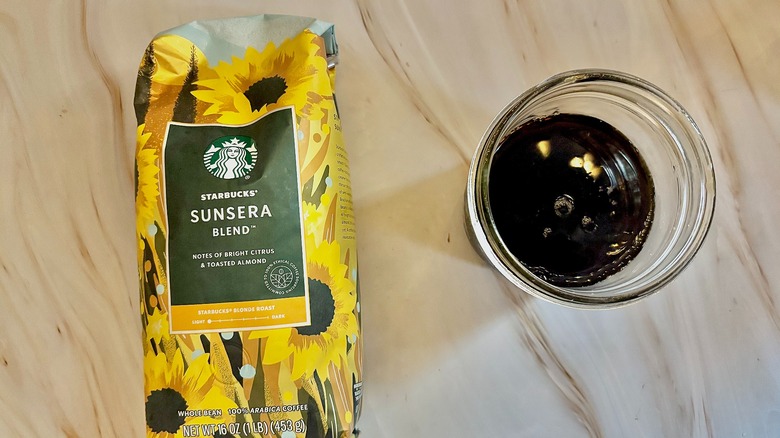
Starbucks' Sunsera blend is relatively new as of the writing of this piece, so if you've seen any hype about any of these blends, it's probably this one. I first tried it when sampling products at the company's 2025 Leadership Experience, and I'll admit not being that impressed — at the time, I thought of it as a perfectly fine coffee, but nothing to write home about. Moreover, I felt it wasn't quite a "light" roast, as it seemed more on the light-medium side to me.
I brewed this at home to try hot and cold, and it was an enlightening experience. When enjoyed hot, notes of toasted almonds and a roasted cereal flavor came through, but I only got slight hints of the bright citrus claimed on the bag. It was still smooth, and if anything, veered slightly on the sour end of the spectrum. I had a different experience drinking it cold, though. Chilling the coffee brought out some sweet, almost floral characteristics in the brew. It smoothed out the hint of acidity I'd tasted while drinking it hot, but you still don't lose the fullness of that nutty base.
Green Apron is best enjoyed hot
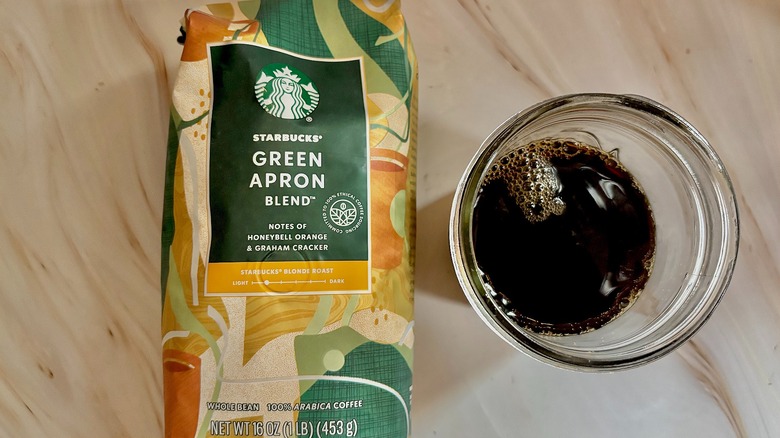
On the other hand, I found Starbucks' Green Apron roast to make for a rather disappointing cold coffee. This blend is named as such to honor Starbucks baristas, who all wear the chain's famous green aprons. It's made of a mix of Latin American and African beans, two regions that contain some of the best countries for sourcing coffee beans, and the bag claims notes of honeybell orange and graham cracker.
When I sipped this hot, I got ample nuttiness from the brew, along with some cereal-forward notes that slightly resembled graham crackers. The end of the sip brought in a little brightness from the citrus, but nothing overbearing. As with Sunsera, I wouldn't have classified this as a "light" blend on my own (then again, I adore when my coffee has a tea-like translucency to it). However, I do think it's better hot than cold. Even though I didn't use any ice to chill this brew, it still tasted watered down when I tried it cold. The tasting notes had wholly muted and left behind nothing but a mild citrus appeal.
Caffè Verona is better when it's cold

If you want a cold, dark-roast coffee blend from Starbucks, reach for a bag of Caffè Verona. I'll start by saying that personally, this blend isn't my cup of tea (er, coffee) — I prefer light roasts to dark, and I always think that claiming cocoa and caramel notes is a bit of a cop-out, as those tasting notes will always come out when you roast coffee beans past a medium level. However, my opinion isn't a universal one, and if you like coffee so dark it'll make your hair stand on end, this wouldn't be a bad bag to grab.
All I tasted when I drank this coffee hot was dark, bitter, over-roasted beans. It wasn't very pleasurable to drink black, and I was too overtaken by the bitter appeal to even think about parsing apart tasting notes. My cold-coffee taste test did yield somewhat better results — the lower temperature muted some of the bitterness and allowed those cocoa notes to be more amplified.
Blonde Espresso isn't great when cold
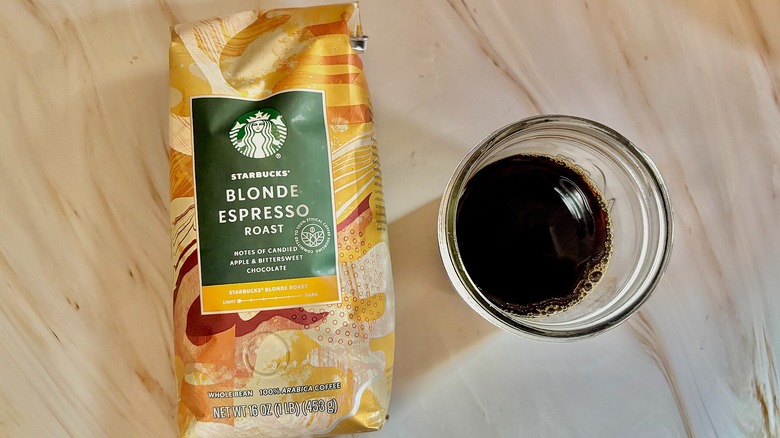
Up next we have Starbucks' Blonde Espresso, a self-proclaimed light roast that purports notes of candied apple and bittersweet chocolate. I was surprised that I liked this better hot than cold, especially given that drinking Sunsera (another light roast) cold brought out more of its bright, fruity notes. Alas, such wasn't the case here — had it been, I could have easily been persuaded to only enjoy this iced.
I got bittersweet chocolate from the hot brew, but not much candied apple came through at all, though I did get some fruity notes toward the end of the sip. I also found this brew to be bitter, but not undrinkable. I hoped that chilling it would soften its bite and bring out more of that fruity appeal, but it didn't; instead, it veered toward the acidic end of the spectrum, and I didn't get as much chocolate as I did when I tried it hot. I could see this one going either way depending on the consumer, though.
Siren's Blend makes a good cold coffee
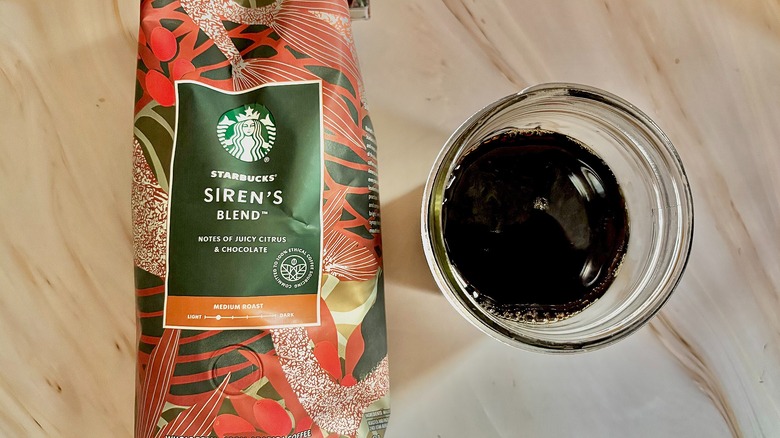
An admittedly tantalizing name, Starbucks' Siren's Blend takes its moniker from the company's famous logo, and is intended to pay homage to women who have led innovations in the coffee industry. It's supposedly a light-medium roast, and the bag claims notes of chocolate and juicy citrus. This may have been my favorite of the blends I tried, and while I enjoyed it hot and cold, I found it to be a bit more preferable when chilled.
I got ample bitter cocoa notes when drinking it hot, but I liked tasting that in this cup — it married well with the full-bodied, thick mouthfeel of the brew, and it really did taste like cocoa powder. I got a little lift from the citrus, but not a ton. I liked it even better cold. Way more citrus came through without making it an acidic brew, and I found it was brighter and sweeter overall. Similar to the Sunsera blend, I even got hints of floral appeal making an appearance after it had chilled.
Pike Place should always be enjoyed hot
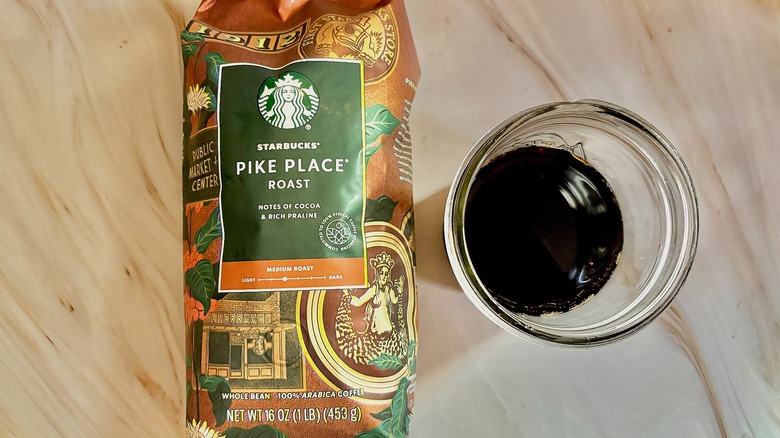
Likely the company's most famous blend, Starbucks' Pike Place roast takes its name from the store's oldest location in Seattle, and the blend has been around since 2008. One would think that a product with such longevity lends itself to versatility, but I didn't find that to be the case here. Now, perhaps I'm being picky, and we should remember that I was very intentionally looking for differences between hot and chilled brews of each blend — still, I'd say Pike Place is best enjoyed in a mug that doubles as a hand warmer.
Drinking this one hot gave me some slight candied praline notes, and I did indeed get some cocoa. It made for a smooth, easily palatable blend that won't be polarizing to any consumer, and it was easy to see why the company chose this in particular as its house blend. After it had chilled, I found that it tasted more bitter, and I lost the candied notes entirely. It wasn't necessarily bad cold, but I didn't enjoy it as much without those hints of nutty sweetness.
Espresso is actually better iced

Last but certainly not least, we have what is perhaps Starbucks' darkest roast: its Espresso blend, a bag which has previously ranked toward the bottom of our taste test of Starbucks' whole-bean coffees. I knew it wouldn't be my favorite due to its intensity, but I was bound and determined to give this cup as fair a shot as the rest of them, and I ended up liking it way better cold than hot.
When I sipped this one hot, I could hardly taste anything beyond a dark, bitter quality that muted any tasting notes that may have otherwise made an appearance. It definitely begs for some cream, but alas, the constraints I put on this taste test prevented me from adding anything to soften the blow. As it turns out, chilling it did soften it a bit — it brought out some of the chocolatey appeal of the blend and made it slightly more palatable as a black cup.
Methodology
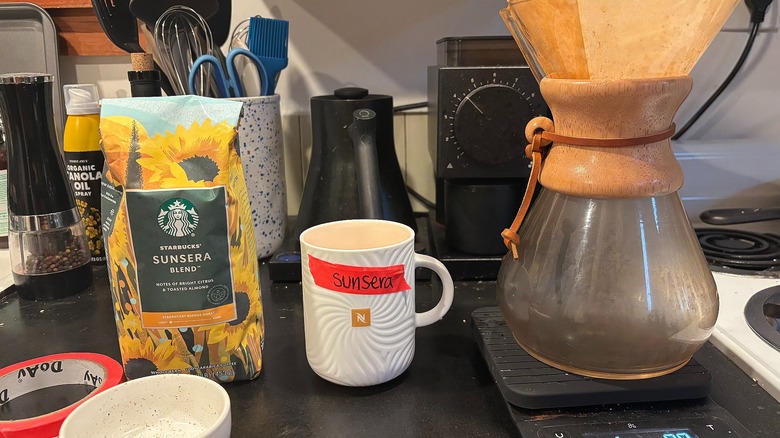
To do this taste test, I brewed each coffee using the same meticulous pour-over method I use to make my own coffee every morning (24 grams of ground coffee to 350 grams of water at 204 degrees Fahrenheit, brewed in three pours over a three-minute time range). I tried each and took notes on it while it was still hot; then I set the labeled mug in the fridge for about five hours, until it was cold. I avoided using any ice when testing coffee for this piece, as I didn't want to risk watering the coffee down. Though I considered using coffee ice cubes to chill the coffee, there was still too much room for inconsistent results (how should I account for any notes the coffee ice cubes may add to the brew?).
So, though I usually try to conduct my testing in alignment with what the typical consumer will do, I diverged from that here in favor of a method that would yield more accurate results. And, as always, preferences vary, especially when it comes to coffee. I always recommend conducting these tests yourself if you can, to see what you end up enjoying. If a DIY approach isn't an accessible option, this piece should provide a good starting point.