

9 Retro Chicken Casseroles You Might've Forgotten About
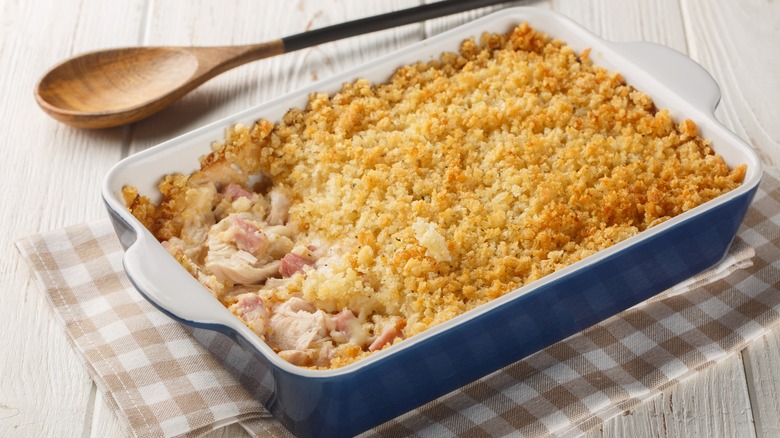
Recipes are often born from the popular or convenient foods of their era. The ingredients used can shape culinary styles for years or even decades, ushering in distinct food traditions, such as casseroles, three-bean salads, or jelly molds that were common in the mid-20th century. While many of these recipes are handed down from generation to generation, some become lost and forgotten. Whether it's because of faded memories or advanced cooking techniques, some dishes just don't stand the test of time. As a result, meals of days gone by disappear from kitchens, even if they were some of the best.
Chicken casserole is one such dish that's both loved and convenient but often forgotten. Though many retro foods and styles live on and are enjoyed over decades — such as chicken and rice, chicken and biscuits, or cheesy chicken noodle — others become distant memories. Retro or not, forgotten or not, these meals are still a great idea for dinner. Since chicken casserole was such a go-to hit for families in the 1940s to 1960s, there were a plethora of variations. We dug into the archives and rediscovered some old favorite chicken casseroles that just might take you back in time.
Chicken tetrazzini

Chicken tetrazzini was created and named for a famous early 20th century Italian opera singer, Luisa Tetrazzini, and originally, was a super-rich dish. It was once viewed as an elegant showpiece and not just an oven-baked casserole. Whether we're talking about the classic original or the many spin-offs, chicken tetrazzini often goes by the wayside, forgotten in lieu of a simple chicken-noodle casserole.
Most recipes follow tetrazzini's core ingredients: pasta, chicken, mushrooms, and cream. But the original chicken tetrazzini featured two decadent French sauces for an extra creamy topping. Chicken velouté and hollandaise — the first adds extra chicken flavor and the latter adds rich, creamy umami. You end up with a tetrazzini that's jam-packed with buttery, earthy, and cheesy flavor.
How chicken tetrazzini could have fallen off the radar with such comforting flavors is a good question, but it might have something to do with the labor involved. Casseroles are typically an easy, throw together dish that takes minimal ingredients and stretches them into a family feast. The original chicken tetrazzini was something worthy of a chef at a high-end restaurant. But as with most recipes, it's adaptable. Today, tetrazzini can feature various protein and fewer sauces and welcomes the addition of vegetables alongside mushrooms.
Chicken Divan
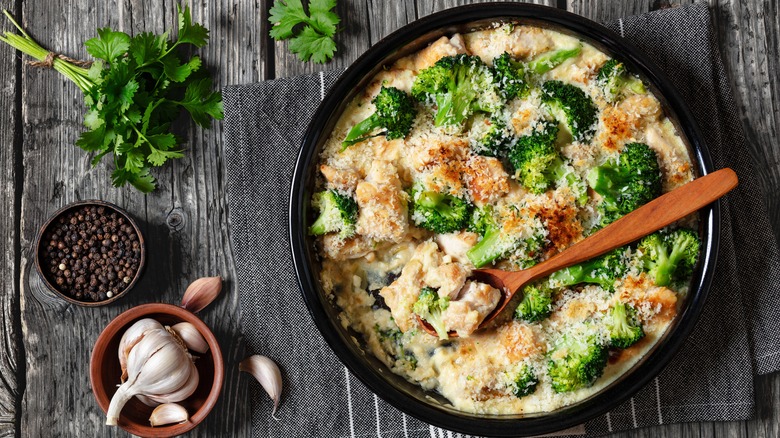
Chicken Divan is a simple recipe that originated in the 1930s (or 1940s, it's unclear) at the Divan Parisien Restaurant located in a New York hotel. Since then, the dish has seen many tweaks, but the premise of broccoli and chicken remains the same. The exact recipe is unknown — probably why there are so many ways to make it — but some variations feature cheese, pasta, rice, cream sauces, or acidic dressings.
The basic casserole consists of layers of broccoli and chicken, topped with a creamy white sauce, and sprinkled with Parmesan cheese. It's then baked in the oven. The chicken can be whole pieces or chunks depending on the end result you want. Originally, it was said to be a béchamel or hollandaise sauce topping, two French mother sauces that add richness, depth, and umami to just about any recipe. But in the 1950s when home cooks were reaching for convenient staples to make quick meals, cans of chicken or mushroom soup became the creamy, saucy stars of this retro casserole.
Some variations of chicken Divan include cheddar cheese. Similar to making macaroni and cheese, cheddar is mixed in with chunks of chicken and broccoli florets, spread out in a pan, topped with breadcrumbs, and baked in the oven. For those who prefer a lighter version of this retro dish, chicken chunks and broccoli pieces can be dressed in olive oil and lemon juice instead and seasoned with garlic and Parmesan cheese. That's the version we grew up with, tossed with pasta.
King Ranch chicken
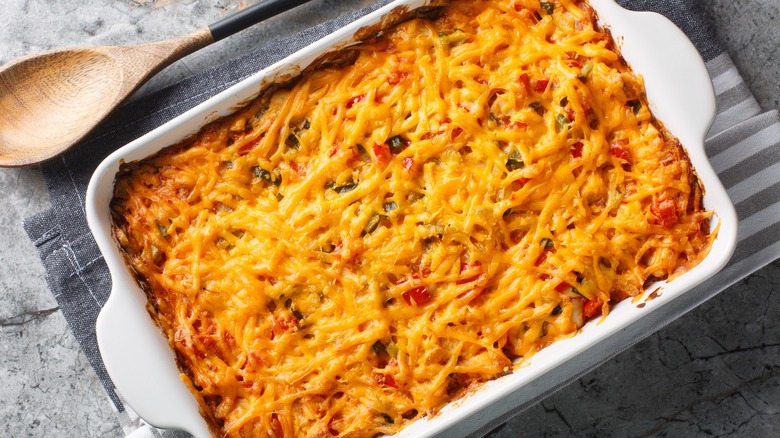
King Ranch chicken casserole is either loved or hated, but it's also been forgotten. Claims of it being boring and bland probably had something to do with it not making it to family dinner tables anymore. But back when casseroles were a weekly night meal, King Ranch chicken was a Southern Tex-Mex go-to. And there actually is a King Ranch in Texas. In fact, it's known as the biggest ranch in the U.S. and it's larger than the state of Rhode Island. But no one has any idea if the casserole is related to the actual ranch. Regardless, King Ranch chicken casserole could feed a horde of cowboys.
This retro chicken casserole dish includes, of course, chicken, as well as cheese, tortillas, and a cream sauce or two. Diced tomatoes and green chiles are optional but add flavor and spice to a somewhat boring dish. Since its popularity was around the time of convenient canned foods, cream of mushroom or cream of chicken soup were frequently the saucy additions to this casserole. Ingredients are layered in a deep dish, much like a lasagna, finished with a topping of cheese, and baked in the oven. With a name like King Ranch, we'd personally add in some ranch dressing to add a little pizzazz.
Chicken and potato sticks
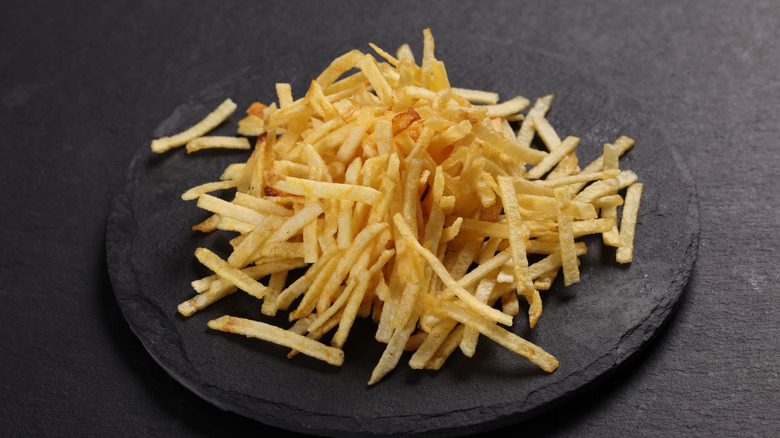
Chicken and potato sticks casserole might be lesser known and more forgotten than chicken and potato chips casserole, but they're very similar. What began in the early 1900s as a tuna casserole with a potato chip topping turned into a 1950s chicken casserole with potato sticks topping. The early- to mid-20th century was ripe with casseroles of all kinds and tuna and chicken were interchangeable enough to create similar but different results. Like most recipes throughout time, there are endless ways to make the basic dish. Originally, it was flaked tuna mixed with mushrooms and crumbled potato chips, and — surprise — topped with a white sauce. More crumbled potato chips were sprinkled on top before it was all baked in the oven.
Chicken and potato sticks is a spin off the original tuna casserole becoming popular through the 20th century. Not veering much from the recipe of 1912, this uses the familiar staple of canned cream soups: specifically, chicken and mushroom. Veggies are frequently added to the casserole to create an all-in-one dinner that could be made quickly and feed the whole family. But instead of potato chips, potato sticks are used as the topping, which yields a crunchier, denser, more resilient topping than thin, crumbled chips. We grew up eating chicken and potato sticks casserole and think the topping is much better than simple chips.
Chicken à la king

It's largely unknown how chicken à la king came about, though this old-school dish has been around longer than you might think. Like chicken tetrazzini and chicken Divan, chicken à la king was born from a hotel restaurant chef who was inspired by someone — in this case, one of two men with the last name Keene. But it's also entirely possible the dish was derived from a hotel cook named King. While we don't know exactly how the chicken casserole appeared, we do know it was a higher-end dish, much like tetrazzini and Divan. And just like those casseroles, chicken à la king turned into a quick, convenient meal using handy pantry staples.
Originally, chicken à la king was served with a brandy cream sauce. Now, it's typically served with a simple white sauce. Modern versions may include sherry, but the main ingredients remain similar: chicken, vegetables, and a creamy sauce. These simple ingredients are combined with pasta or rice to create a casserole, though some recipes call for spooning the mixture over bread, pasta, or rice instead of baking it in the oven.
Million dollar chicken
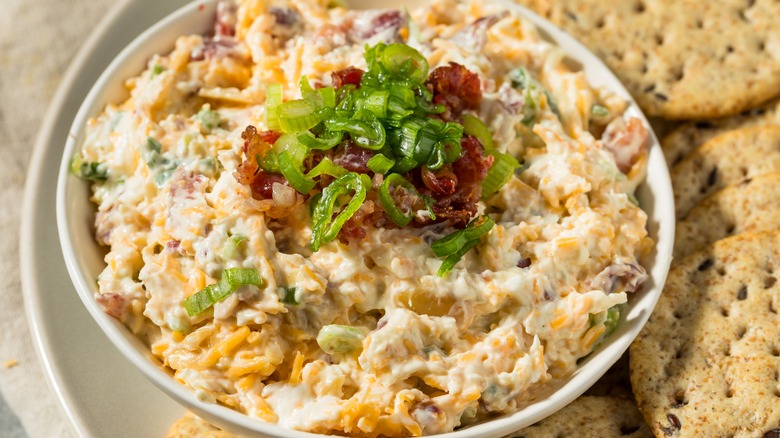
The eyebrow-raising term "million dollar" isn't specific to chicken casserole and it's not how much it costs. It's a catchy way to describe indulgent recipes — recipes that are rich and decadent and taste like a million bucks. Hence, a million dollar chicken casserole is luxurious, creamy, and comforting, all at the same time.
But how did million dollar recipes even get that name to begin with? The story starts with Neiman Marcus in the 1950s, at least the food version does. It's possible million dollar drink recipes date back as far as the 1800s. But the chicken casserole was inspired by a drool-worthy dip of cheese and toasted almonds, which was a classic menu item at The Zodiac Room in the Neiman Marcus flagship store, located in Dallas, Texas.
As the dip became popular, it earned its high-value nickname and was thus named the million dollar dip. Ingredients in the dip included cream cheese, cheddar cheese, bacon, green onion, sliced almonds, and mayonnaise. It was served with crackers. The chicken casserole spin off features the same ingredients, only chicken is mixed in and crackers make up the crunchy topping. There are, of course, slight variations and some recipes include sour cream or condensed soups.
Mexican chicken cornbread
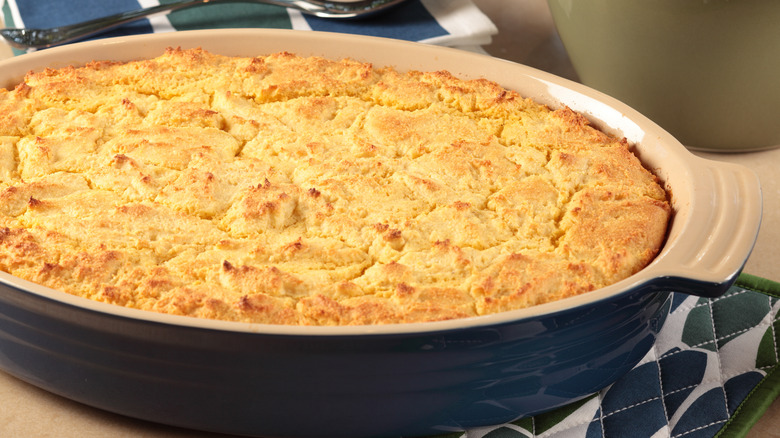
A retro chicken casserole that goes by many names, Mexican chicken cornbread casserole has been around for decades, at least. Its debut is unknown but likely originated around the same time as every other casserole either remembered or forgotten — in the late 19th century to the early- to mid-20th century when cheap, convenience foods stocked the shelves of most kitchens due to the Great Depression and world wars. In a time when families were rationing ingredients, dishes like Mexican chicken cornbread were one way to deliver a hearty dinner while pinching pennies. The popular brand, Jiffy, was also prominent in kitchen pantries just like Campbell's soups. And what better way to add flavor and heft to a casserole than topping it with cornbread?
There are many ways to make this casserole and growing up, we knew it as chicken taco cornbread pie. It's also been called chicken tamale pie, Southwestern cornbread casserole, and Mexican chicken casserole. Whatever you'd like to call it, it features chicken (or burger), lots of cheese, spicy tomatoes, green chiles, taco seasoning, and of course, cornbread. Other common ingredients used are sour cream, black beans, and tortilla chips. It's typically all layered in a baking dish or cast-iron pan, topped with cornbread mix and extra cheese, and cooked in the oven.
Chicken and corn
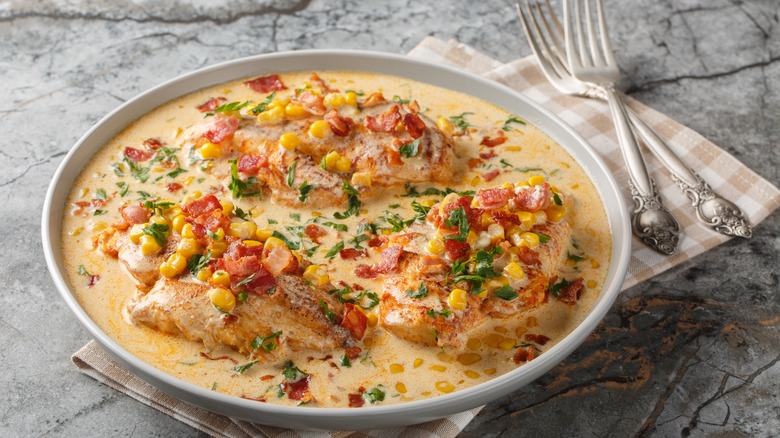
Not to be mistaken for a chicken cornbread casserole, chicken and corn casserole is very simple with only a handful of ingredients. The main stars include chicken, corn, white sauce, and a crunchy topping. Different types of cheese are often added to the mix, as well as bits of bacon, for a pop of umami. The version we grew up with was fairly basic: shredded chicken and creamed corn, topped with crushed corn flakes (as a kid it was our job to crush the corn flakes). But there are many variations to this warm, comforting dish.
Given the preference for canned condensed soups in the mid-1900s, it was also common to use cream of chicken soup as the white sauce for this casserole. Cream of mushroom soup also added a layer of flavor, though chicken and corn pretty much remained the only two flavors in the original casserole. Other versions feature more basic staples like rice or vegetables and upgraded recipes like rich and creamy skillet street corn and chicken offer a fresh new take on the old classic.
Chicken and spaghetti
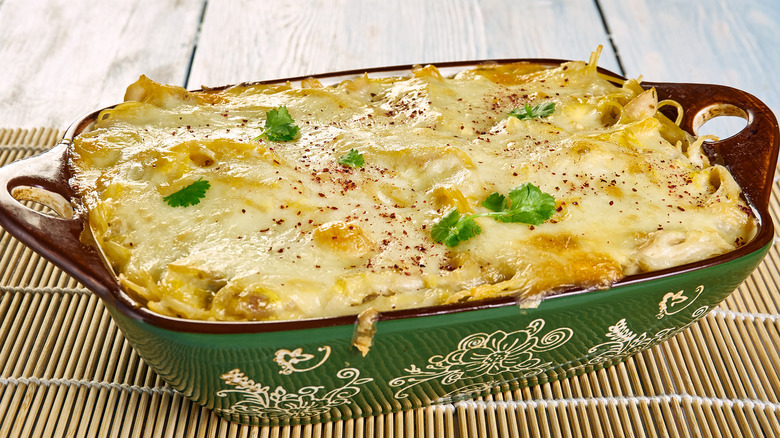
Chicken and spaghetti casserole is another retro dish that has seen multiple versions over the years. What started as a simple way to use cheap ingredients morphed into a creative way to use up leftovers. The original recipe is simple: Chicken and spaghetti are combined with a cheesy white sauce and baked in the oven. Instead of using cream of chicken or cream of mushroom soup, upgraded versions of this casserole call for making your own white sauce from scratch and using higher-end ingredients like white wine. Adding fresh mushrooms and using Parmesan cheese elevates the old-school classic above the cheaper ingredients commonly found in mid-20th century kitchens.
While vintage chicken and spaghetti casseroles used Velveeta cheese — another cheap and convenient food item of the 1930s and 1940s — more modern versions opt for shredded cheddar cheese, instead. And newer versions of the casserole include diced tomatoes or spicy elements like cayenne or chili peppers.