

10 Of The Most Iconic Fast Food Sandwiches Of The 1980s
Along with big hair, leg warmers, Walkmen, and Ataris, there are certainly some fast food sandwiches that come to mind when we think of the 1980s. The iconic fast food sandwiches of the '80s are just as much a part of our collective memory of the decade as the movies and music that define the era. We often remember the first time we tried one, and we have memories of eating them with family and friends.
Interestingly, the majority of the fast food sandwiches that came out or stood out in the 1980s are ones that still exist on menus today or make occasional comebacks. A few are still top sellers that many of us know and love.
These sandwiches from the '80s may be ones that you've forgotten or perhaps never knew in the first place. Do you remember the burger wars? Yeah, that was a thing. Sit back and take a stroll down the annals of fast food history to learn more about the sandwiches that ruled the '80s.
Arby's Beef 'N Cheddar
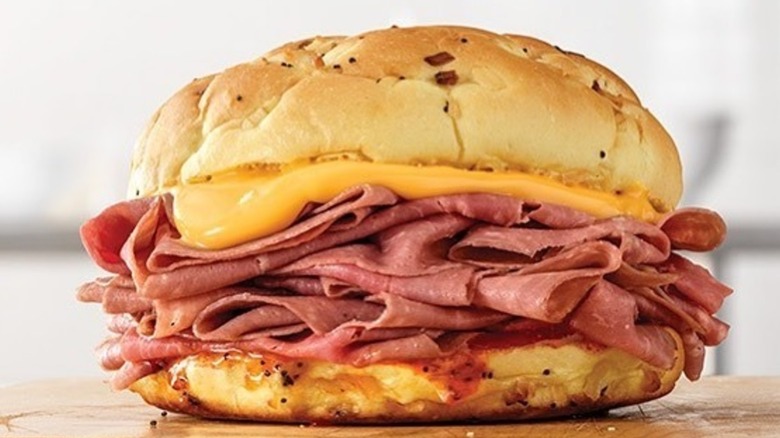
The first iconic fast food sandwich to cruise into the '80s was Arby's Beef 'N Cheddar. In a decade when we were pouring hot Cheez Whiz and melted Velveeta cheese sauce on everything (including our vegetables), it's no wonder that Arby's did well with a sandwich featuring a creamy cheese sauce. While Arby's Beef 'N Cheddar sandwich came out in 1978, it was certainly still going strong in the 1980s.
The first time customers ever tried one of these sandwiches in the '80s, with its flavorful onion bun, mounds of thinly sliced roast beef, specially created red ranch sauce, and cheese sauce, they asked themselves, "What is this alchemy?" It was something different than what other fast-food places offered. And if you wanted to, you could even add items like tomatoes, onions, lettuce, and extra sauces from the toppings bar to make it even better and messier. The company even tried to sell the idea of this sandwich being a healthy choice in 1986, when it advertised that its roast beef only contained 9-12% fat. Perhaps it's leaner than some of the hamburgers of the era, but today's recipe contains 21 grams of fat, with 6 grams of saturated fat.
Nowadays, the sandwich is still a favorite order, coming in not just the classic size, but also a double and half-pound size. While the classic roast beef sandwich is still the best-selling menu item, this elevated version of the original Beef 'N Cheddar is still a favorite for many.
McDonald's McChicken
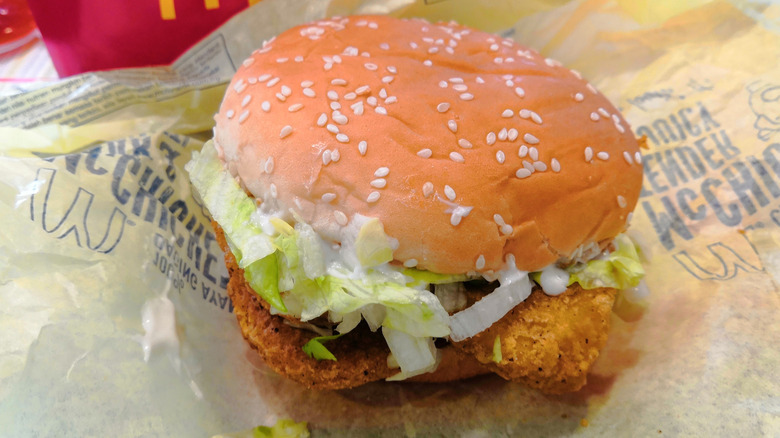
While you might remember McDonald's McChicken from the 1980s, it actually didn't do as well in sales as the company thought it would when it debuted in 1980. Other fast food chains like Burger King already had chicken sandwiches on the menu. So McDonald's felt that it was time to get in the game and offer something besides just hamburgers.
The chicken sandwich McDonald's first sold was a fried patty that contained half white meat and half dark meat. It came on a toasted bun, and the toppings were simple: just shredded lettuce and mayo. However, that type of chicken worked better for the Chicken McNugget, which came out a year later in 1981. Even though they weren't made from solid chicken, they won the hearts of fans — not least of all because of their flavorful dipping sauces.
The McChicken disappeared from the menu for a while but reappeared in 1988, with the McNuggets' fame able to bolster the sandwich this time around, since customers no longer just thought of McDonald's as a hamburger chain. Plus, it was a better sandwich. This time, the McChicken was "country style." While it was still a processed chicken patty, the revised and better version contained all white-meat chicken, which customers seemed to like better than the previous version or today's McChicken. The patty was so large that it came on the same bun that the quarter pounder did, unlike today's, which comes on a smaller bun.
Hardee's chicken fillet sandwiches
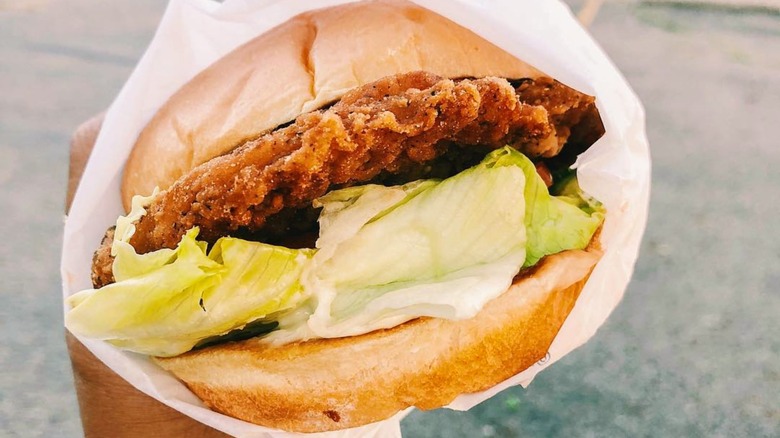
While plenty of fast food restaurants have chicken fillet sandwiches today, none can top our memory of Hardee's chicken fillet sandwiches from the 1980s. Today's chicken fillets just aren't as flavorful as they once were. The original ones from Hardee's that came out in 1981 were thick, juicy, peppery, and delicious. They came on a toasted sesame seed bun and were topped with shredded lettuce and mayonnaise, which became slightly warm from the freshly fried fillet.
One stand-out quality of Hardee's chicken fillet sandwiches was that they were made from a real chicken fillet rather than being pressed ground chicken. Former Hardee's employees remember thawing out the huge fillets and then dredging them in buttermilk and flour by hand before frying them. We remember always having to wait longer for chicken fillet sandwiches than other menu items because they were fried fresh rather than pre-cooked and left sitting under a heating lamp. The fillets were so big, they hung over the sides of the bun, and eating the overhanging chicken was one of the best parts of the sandwich experience.
In an effort to have a healthier alternative in the late '80s, Hardee's released a grilled chicken breast sandwich that wasn't fried. However, it wasn't nearly the hit that the chicken fillet had been. Grilled chicken sandwiches never seem to stay on the menu long at restaurants that sell something other than chicken. Hardee's now has a hand-breaded chicken sandwich served on a potato bun, but it's not the same as the original.
McDonald's McRib
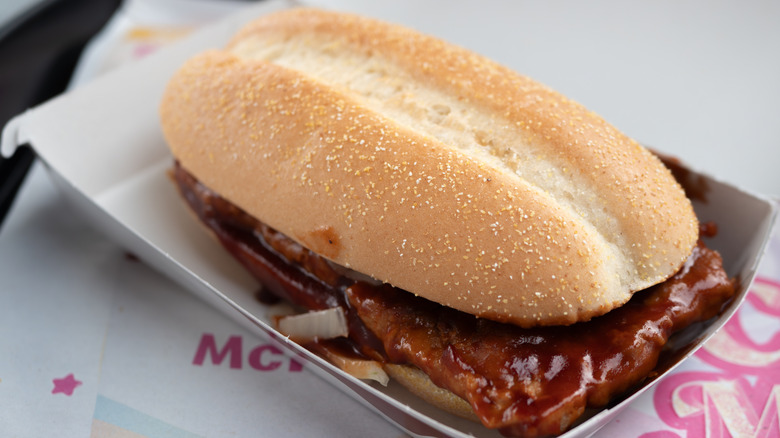
One 1980s McDonald's sandwich that has disappeared and returned to the McDonald's menu time and again is the McRib sandwich. Like McNuggets, these barbecued pork sandwiches are formed into processed patties rather than being whole meat. And their rib-like shape gave them their name. The first time the McRib appeared on the menu was 1982, and it was supposed to try to take up the slack for the chicken shortages McNuggets were causing.
The original sandwich came on a long roll rather than a bun like other McDonald's sandwiches. Plus, it came topped with plenty of thick barbecue sauce, pickles, and onions. The idea for the sandwich was to use pork shoulder to recreate the flavor of Southern pulled pork sandwiches, but in a format that was easy to mass-produce. Like the McNugget, the patty style is similar to the types of chopped and shaped meats that the U.S. military served in its MREs.
Despite our fond memories of the 1980s McDonald's McRib, the sandwich didn't sell as well as the chain had hoped. Customers thought the sandwich was messy and the taste was off. However, fans keep demanding them, and they always create a sensation when they return. Now, other fast food chains use the McRib's comeback scheme to get customers in the door for the return of their "discontinued" items. Thanks a lot, McRib!
Burger King Croissan'wich
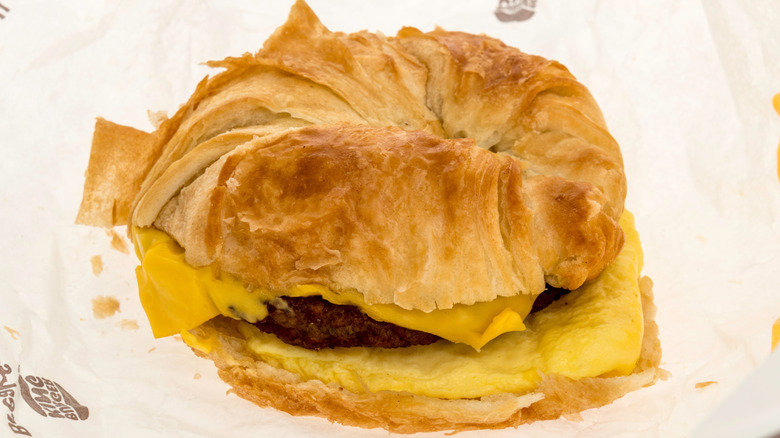
In the 1970s, Hardee's started making breakfast biscuits, and McDonald's started making breakfast McMuffins. So it made sense for Burger King to make a breakfast sandwich to set it apart from the others and get customers to think of them for breakfast. The Burger King Croissan'wich has stood the test of time, staying on its breakfast menu since it first debuted in the 1980s.
The croissant wasn't well-known in the U.S. until Sara Lee started selling frozen ones in 1981 to try to turn its fortunes around. In just three years, croissants started showing up everywhere, with supermarkets selling $100 to $200 million worth of them each year by 1983. So Burger King jumped on their popularity in 1985 by offering a breakfast croissant sandwich, or Croissan'wich. These breakfast sandwiches came with egg, cheese, and a choice of meat: bacon, ham, or sausage.
Like so many fast food menu items, customers find today's Croissan'wich to be of lesser quality. People on social media say that the sandwich started out bigger and more flavorful than it is today. Now, the egg you get is half as thick as it once was, while the price keeps rising. So if you're feeling nostalgic about the Croissan'wich you once enjoyed in the '80s, don't expect to have the same experience if you stop in for one now.
McDonald's McD.L.T.
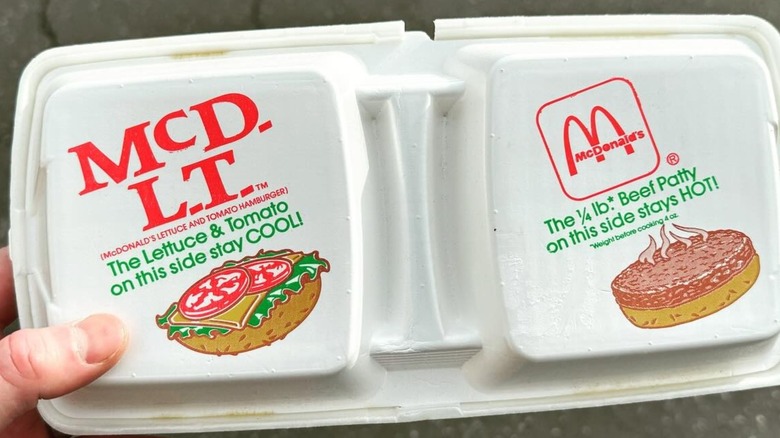
If you ever get the 1980s McDonald's menu song jingle stuck in your head (or even just the first part of it), you'll suddenly wonder whatever happened to the McD.L.T. The sandwich from 1985 was a bit of marketing genius in that it was similar to today's deluxe quarter-pound hamburger, but its packaging set it apart.
The idea was that it came in dual-sided styrofoam packaging that allowed the burger to stay hot in one side of the container, while the lettuce, tomato, onion, pickle, and cheese stayed cool in the other. Granted, some customers on social media said they thought the cheese should have gone on the warm side of the sandwich. Some people report that all the ingredients ended up warm anyway if both sides of the container ended up under heat lamps. Although some customers reported online that some locations had special machines for these burgers to keep one side cool and the other side warm.
McDonald's got rid of its styrofoam packaging in 1990, which meant that the McD.L.T. had to go, too. While the packaging issue means that we don't expect it to make a return like some other menu items, it's not entirely impossible with a creative packaging upgrade. We'd advocate for the bun, burger, and cheese to all be on the same side this time around.
Burger King Whopper
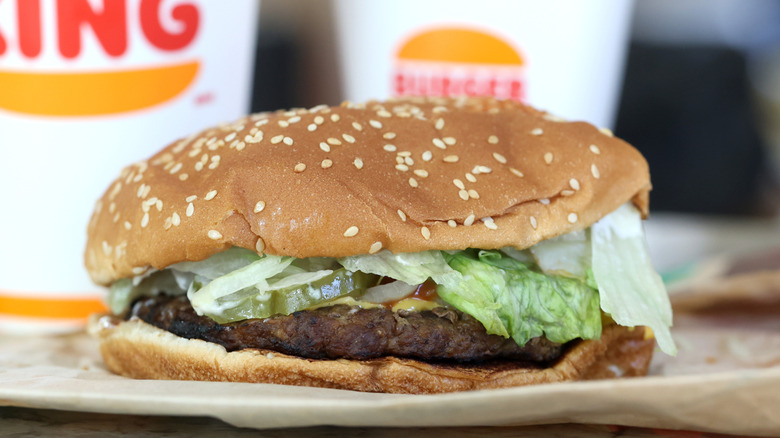
Yes, the Burger King Whopper has been around a long time — since 1957, to be exact. However, you can't think of 1980s sandwiches without thinking of it, largely because of the "burger wars," a marketing battle between Burger King, Wendy's, and McDonald's that started in 1982 and ended in 1985.
In the first few years of the 1980s, Burger King sales weren't going so well, so it decided to bolster itself by launching an attack ad at McDonald's. Ads claimed that McDonald's burgers had 20% less meat than Burger King. They further argued that customers didn't like McDonald's fried-style burgers as much as BK's flame-grilled-style ones. Then, it attacked both McDonald's and Wendy's together by saying that taste tests revealed that customers liked BK burgers better. Both McDonald's and Wendy's fought back with lawsuits and commercials of their own.
The Whopper did get bigger in the 1980s in response to sales declines, especially after Wendy's counter-attacked with its "Where's the Beef?" campaign to highlight its competitors' smaller burgers. As a result, Whopper burger patties increased from just under a quarter pound (3.6 ounces) to just over a quarter pound (4.2 ounces). Then, it launched a $32 million ad campaign full of high-profile '80s celebrities like Mr. T eating its new and improved Whoppers. Not only did they have more meat, but they also had a different type of cheese and came on a larger Kaiser bun.
McDonald's Big Mac
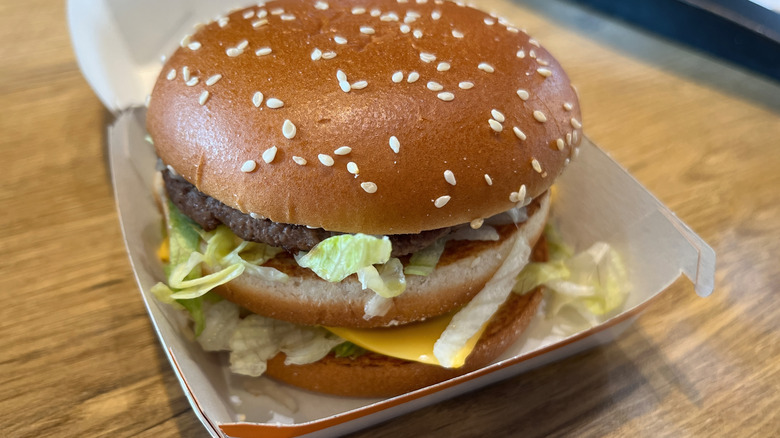
Similar to the Burger King Whopper, McDonald's Big Mac was around long before the 1980s, making its appearance on the menu in 1967 as a bigger burger option. However, we bet most people would mention the Big Mac first when asked to list iconic fast foods of the '80s.
Attack ads from Burger King launched the burger wars in 1982 but didn't seem to hurt the reputation of the Big Mac. It was so popular in the 1980s that The Economist created the Big Mac Index in 1986, with the idea that the price of the Big Mac in different countries could give a more realistic image of how much buying power different currencies really have. The chain still sells somewhere approaching a billion Big Macs each year around the world, which makes the Big Mac Index still a fairly valid measure of purchasing power.
Additionally, thanks to the prevalence of Big Mac ingredient jingle commercials (originally from 1974), every '80s kid could recite the ingredients in four seconds in the hopes of winning a free small fries and a Coke. All these years later, we all still remember that the sandwich contains "two all-beef patties, special sauce, lettuce, cheese, pickles, onions on a sesame seed bun." Some people have claimed that the sandwich was larger in the '80s, but it appears that perhaps they only seem smaller now since there are so many truly gigantic burgers on fast food menus.
Wendy's big classic
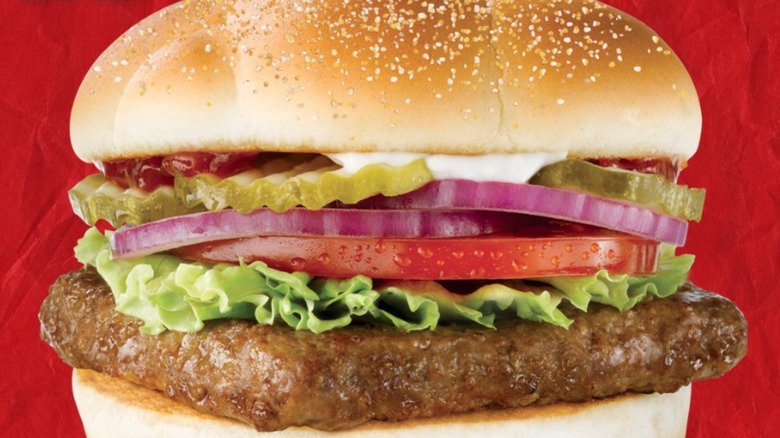
With other burger chains already having big burgers on the menu, Wendy's sought to compete by debuting its new big classic in 1986. It was a quarter-pound burger that came on a Kaiser roll, along with lettuce, tomatoes, pickles, and onions. Plus, it included mayonnaise and ketchup.
This burger came out two years after Wendy's classic "Where's the beef?" commercials from the height of the burger wars. The commercial had already claimed that Wendy's single burger had more meat than the Whopper and Big Mac. Borrowing the idea from the new version of the Whopper, Wendy's used a Kaiser bun on its new big classic burger, which made its regular quarter-pound burger feel even bigger.
Fans of the burger on social media say that they miss the Kaiser bun. Today's equivalent to the big classic at Wendy's is Dave's Single, which comes with American cheese, but it lacks the all-important Kaiser bun, which is sadly a distant fond memory now.
KFC's Chicken Little
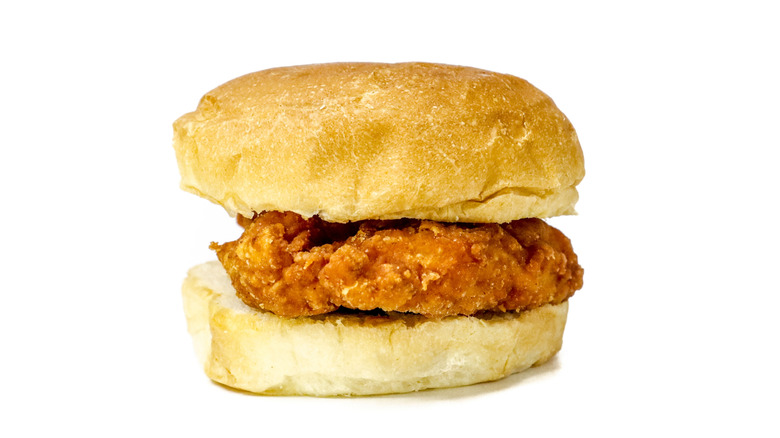
Finally, we have KFC's Chicken Littles to remember fondly as iconic '80s fast food sandwiches. These chicken sliders came out in 1986. With White Castle and Krystal not having chicken sliders at the time, Kentucky Fried Chicken attracted customers who liked the slider concept but were in the mood for chicken rather than burgers. They came on a square slider-style bun and were a simple combination of mayo, pickle, and a chicken patty.
At just $0.39 each, you could probably find enough change in the couch or even in the parking lot to buy one. And it wasn't uncommon for people to buy a whole bag full of them for the whole family to enjoy. At that price, they were extremely accessible and affordable to practically anyone.
The Chicken Little has made a few comebacks to the menu over the years, but they are served on different buns, with the chicken portion seeming to be much thicker. At $3.19 in 2025, the sandwiches cost eight times as much as they once did, which is far more than the actual inflation rate, which should have Chicken Littles only costing $1.15. Customers who remember the original sandwiches report that the new ones' bread is worse and that they're little more than regular chicken sandwiches now rather than the tiny, affordable sliders of old.